

Barbell Decline Pullover vs Barbell Incline Bench Press: Complete Comparison Guide
Barbell Decline Pullover vs Barbell Incline Bench Press — two barbell chest moves that use similar equipment but load your pecs through very different vectors. You’ll get a clear breakdown of primary and secondary muscle involvement, exact technique cues (incline angle, bench setup, grip width), biomechanical reasoning (length-tension, force vectors), and practical programming tips (rep ranges, tempo). Read on to learn which exercise to prioritize for hypertrophy, strength, rehab-friendly work, or limited-equipment training so you can choose the best move for your goals.
Exercise Comparison
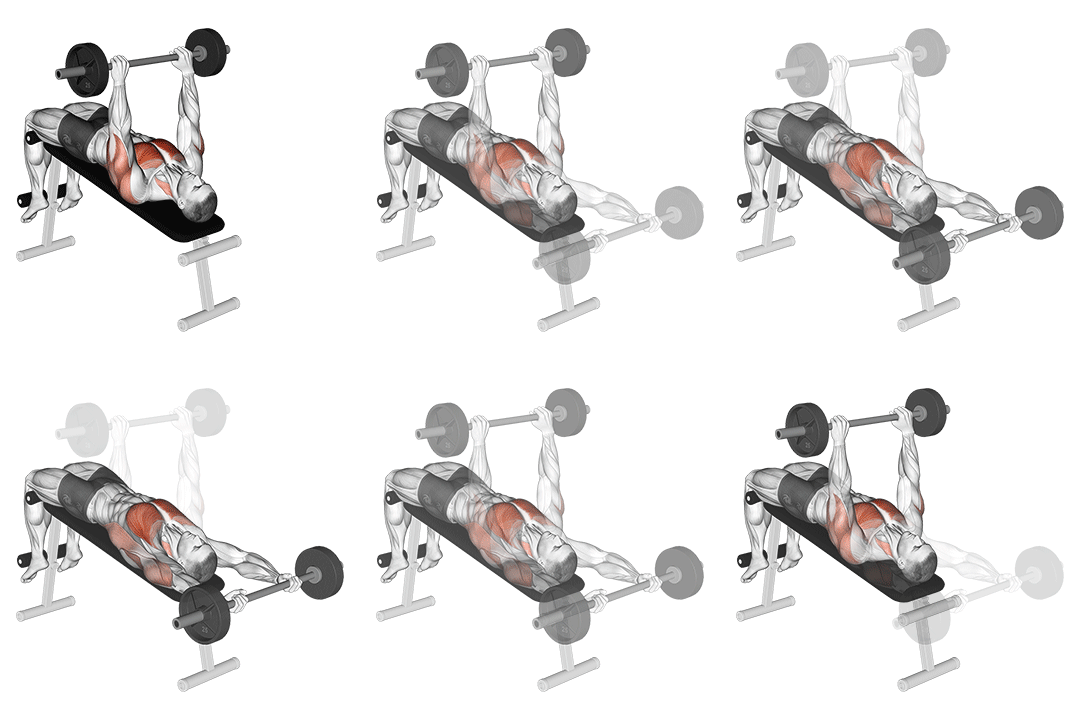
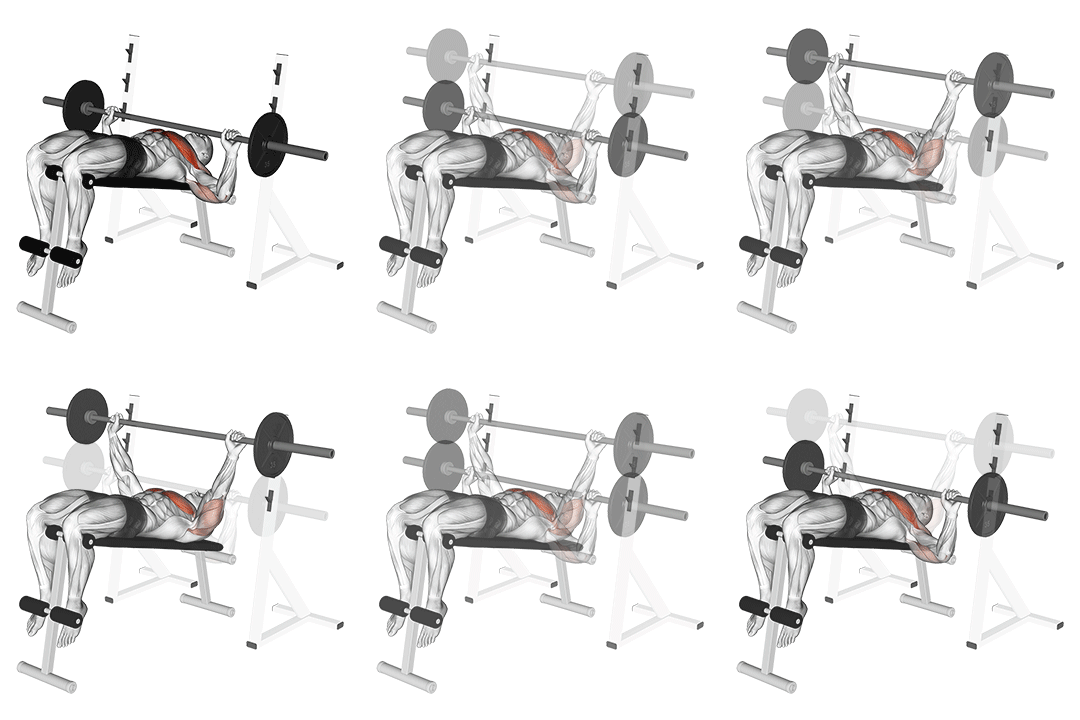
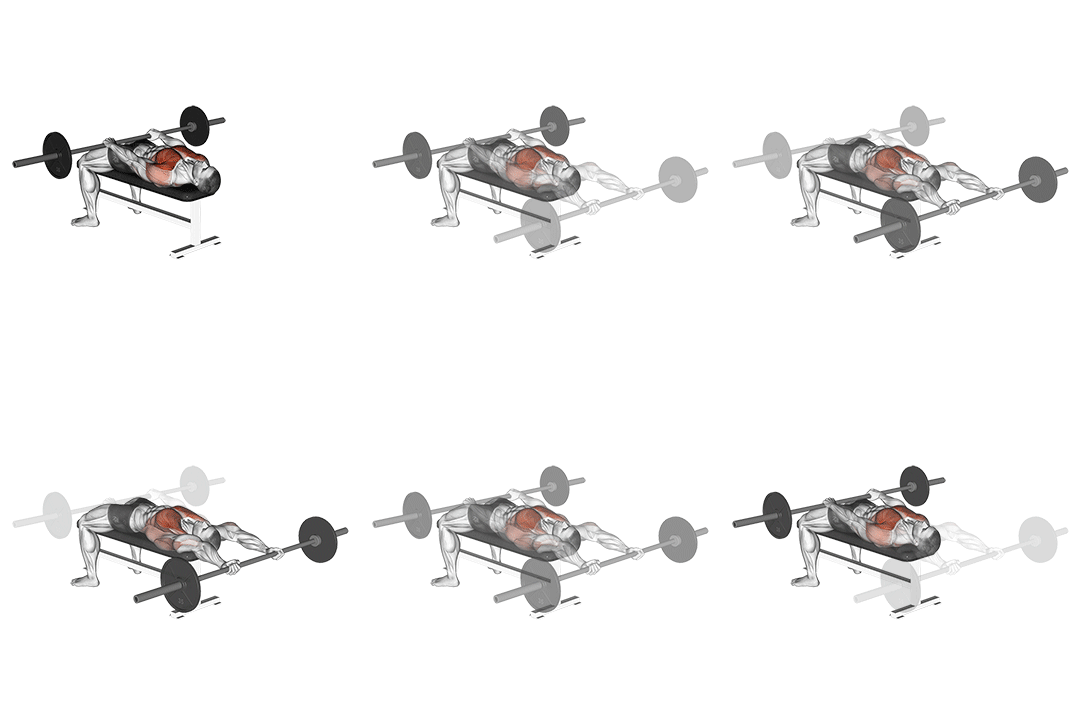
Barbell Decline Pullover
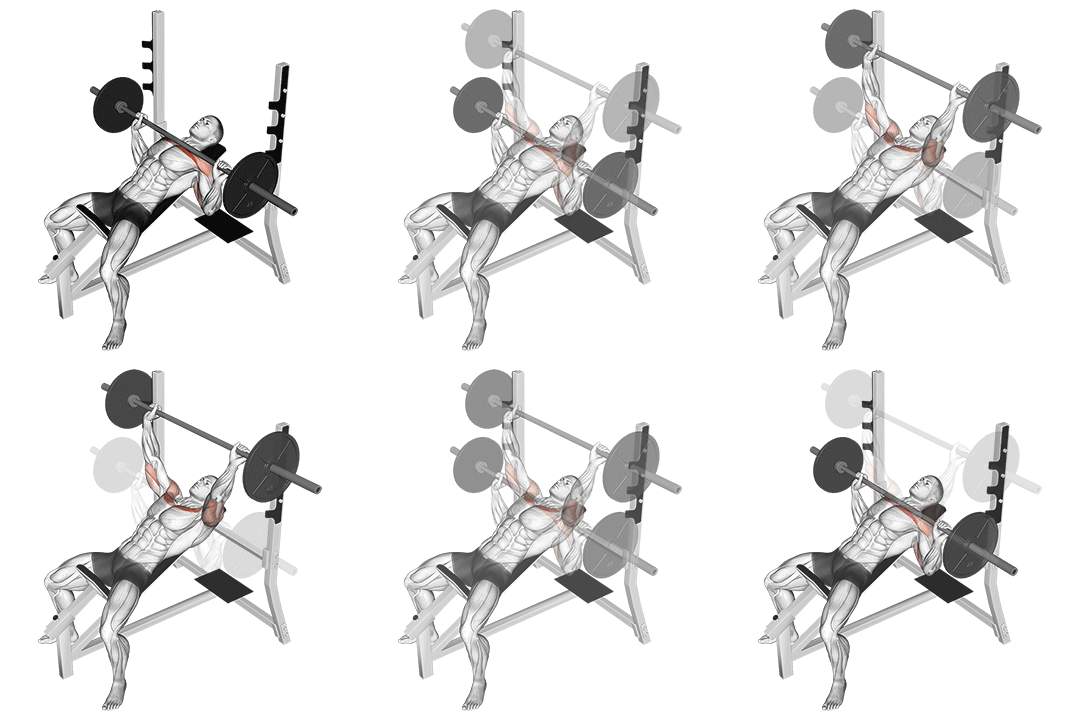
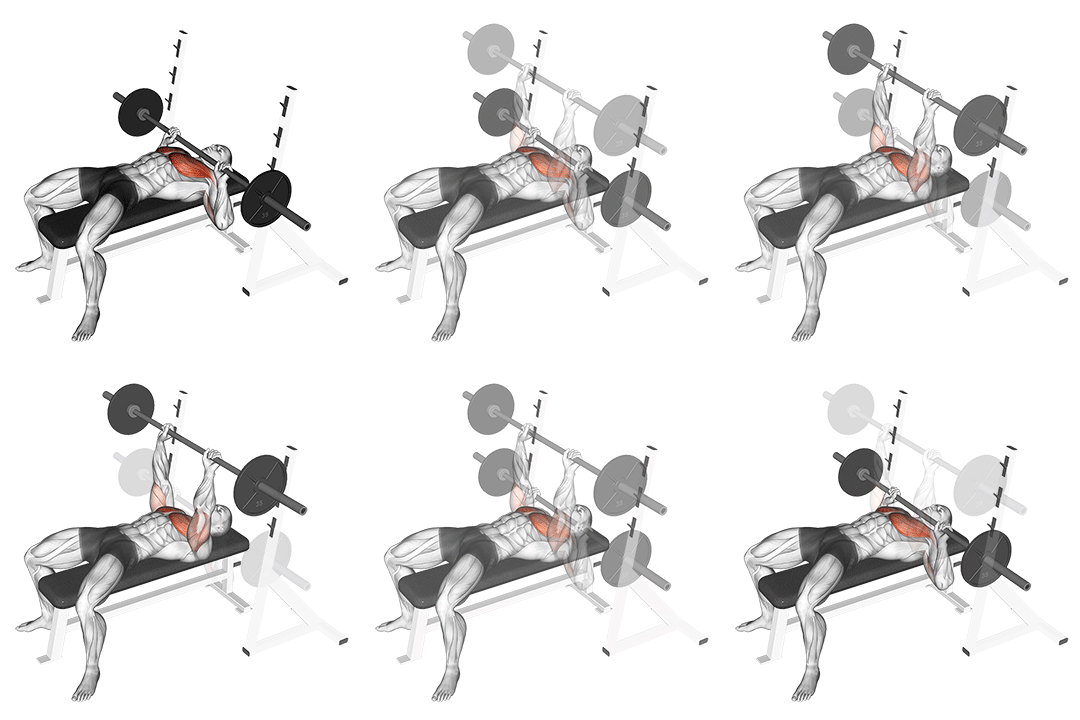
Barbell Incline Bench Press
Head-to-Head Comparison
| Attribute | Barbell Decline Pullover | Barbell Incline Bench Press |
|---|---|---|
| Target Muscle |
Pectorals
|
Pectorals
|
| Body Part |
Chest
|
Chest
|
| Equipment |
Barbell
|
Barbell
|
| Difficulty |
Intermediate
|
Intermediate
|
| Movement Type |
Compound
|
Compound
|
| Secondary Muscles |
2
|
2
|
Secondary Muscles Activated
Barbell Decline Pullover
Barbell Incline Bench Press
Visual Comparison
Overview
Barbell Decline Pullover vs Barbell Incline Bench Press — two barbell chest moves that use similar equipment but load your pecs through very different vectors. You’ll get a clear breakdown of primary and secondary muscle involvement, exact technique cues (incline angle, bench setup, grip width), biomechanical reasoning (length-tension, force vectors), and practical programming tips (rep ranges, tempo). Read on to learn which exercise to prioritize for hypertrophy, strength, rehab-friendly work, or limited-equipment training so you can choose the best move for your goals.
Key Differences
- Both exercises target the Pectorals using Barbell. The main differences are in their movement patterns and muscle activation angles.
Pros & Cons
Barbell Decline Pullover
+ Pros
- Delivers a strong eccentric stretch to the sternal pecs, improving length-tension stimulus
- Targets lats and chest in a single long-arc movement for thicker chest depth
- Useful as an accessory to increase ROM and chest flexibility
- Can be performed with moderate weight and slow tempo to prioritize hypertrophy
− Cons
- Requires a decline bench and good shoulder mobility
- Limited loading capacity due to long lever arm
- Higher risk of shoulder strain or impingement at end range
Barbell Incline Bench Press
+ Pros
- Allows heavy axial loading for measurable strength and progressive overload
- Strong triceps involvement helps transfer strength to other pressing movements
- Works upper-pec (clavicular head) reliably at 30–45° incline
- More accessible in most gyms and safer to load with a rack and spotter
− Cons
- Less end-range pec stretch compared with pullovers
- Can overstress anterior shoulder if elbows flare above 60°
- May under-recruit lower sternal pec fibers without complementary exercises
When Each Exercise Wins
Incline bench lets you progressively overload the pecs with heavier weight and recruits triceps and anterior deltoid to support higher loads. Use 6–12 rep sets at a 30–45° angle and include pullover-style stretch work as an accessory for fuller development.
The incline press supports heavier absolute loads and a clear strength progression (3–6 reps, 3–5 sets) with rack safety. Mechanical advantage and direct transfer to pressing strength make it the superior strength option.
Incline pressing is simpler to learn, easier to scale, and safer with a rack. Beginners can develop pressing mechanics and triceps strength before adding complex long-arc movements like pullover.
Most home setups include an adjustable bench and squat rack that handle incline press. Decline benches are uncommon and pullover requires careful setup and mobility to perform safely at home.
Frequently Asked Questions
Can I do both Barbell Decline Pullover and Barbell Incline Bench Press in the same workout?
Yes. Sequence the incline bench press first for heavy compound loading (3–5 sets) and use the decline pullover as an accessory later (3–4 sets of 8–15) to exploit eccentric stretch without fatiguing your pressing strength.
Which exercise is better for beginners?
Barbell Incline Bench Press is better for beginners because it’s easier to learn, safer to progress with a rack, and builds foundational pressing and triceps strength before adding complex ROM movements like the pullover.
How do the muscle activation patterns differ?
Incline bench produces a push-dominant pattern with peak activation during mid-range concentric press due to vertical force vectors and heavy triceps contribution. Decline pullover creates a long-arc extension pattern with peak eccentric stretch and greater lat involvement, loading pecs at longer muscle lengths.
Can Barbell Incline Bench Press replace Barbell Decline Pullover?
For most lifters focused on hypertrophy or strength, the incline press can replace the pullover because it supports heavier progressive overload. Keep pullovers in the program when you want extra sternal pec stretch, thoracic mobility work, or to target chest depth.
Expert Verdict
Use the Barbell Incline Bench Press as your go-to compound when you want reliable progressive overload, upper-pec emphasis, and measurable strength improvements. Program it for 3–5 sets of 3–6 reps for strength or 6–12 reps for hypertrophy at a 30–45° angle, keeping elbows tucked ~45° to protect the shoulder. Reserve the Barbell Decline Pullover as an accessory when you want to load the pectorals at longer muscle lengths and add chest thickness or improved ROM — perform 3–4 sets of 8–15 slow reps (3–4 second eccentrics) with lighter weight and strict scapular control. Prioritize incline press for heavy cycles and add pullovers for targeted stretch and finishing work.
Also Compare
More comparisons with Barbell Decline Pullover
More comparisons with Barbell Incline Bench Press
Compare More Exercises
Use our free comparison tool to analyze any two exercises head-to-head.
Compare Exercises