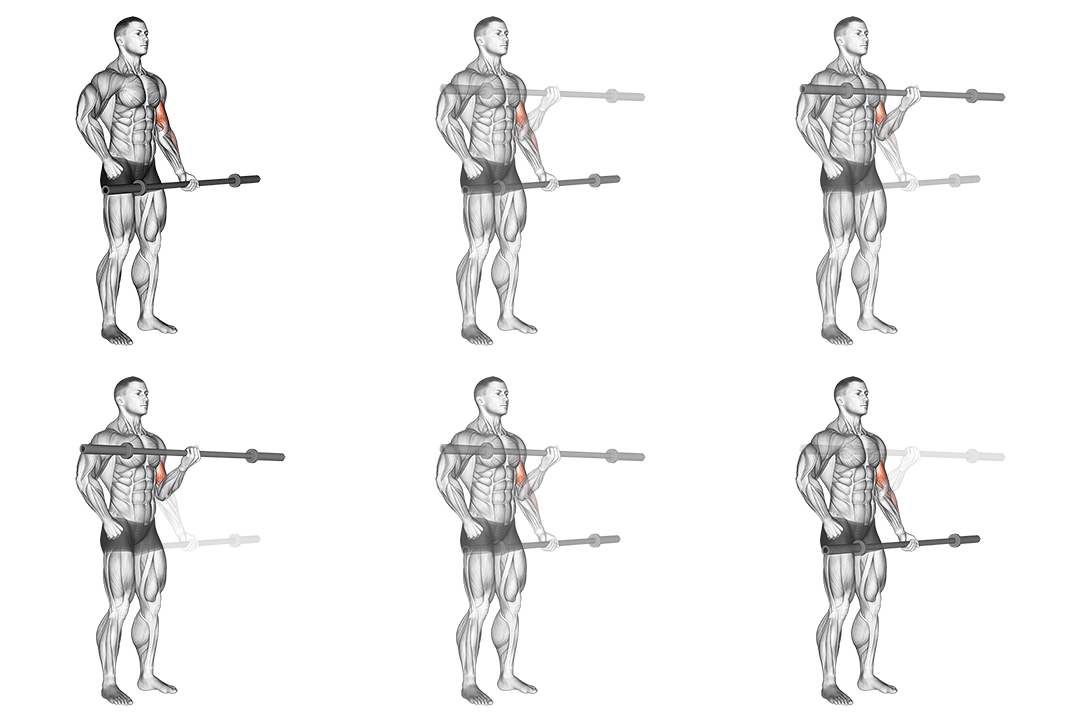
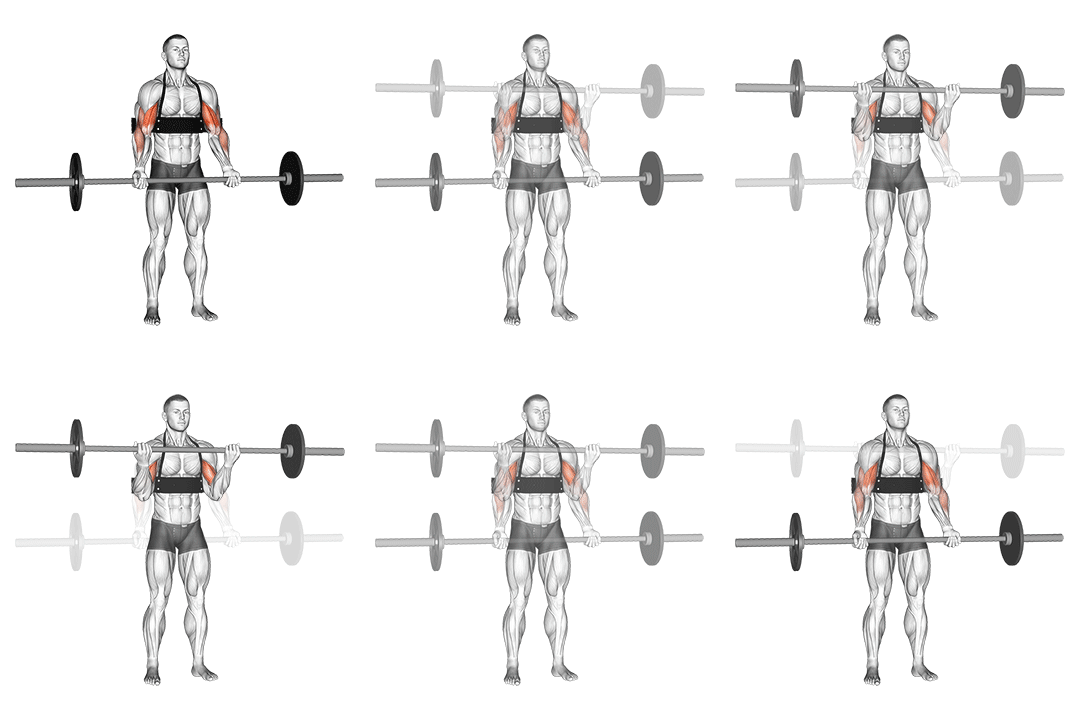
Barbell Drag Curl vs Barbell Preacher Curl

Compare target muscles, equipment, difficulty, movement type, and secondary muscles for Barbell Drag Curl and Barbell Preacher Curl.

Change comparison Share

Get comparison link

Select the link and use your device's Copy command.

Comparison overview

AI-generated
Barbell Drag Curl vs Barbell Preacher Curl — two classic isolation moves that both target the biceps but do so with different mechanics. If you want to pick the right curl for muscle growth, strength, or a home setup, this guide has your back. You’ll get a clear breakdown of primary and secondary muscle activation, equipment needs, difficulty and injury risk, plus practical cues, rep ranges (6–8 for strength, 8–12 for hypertrophy), and when to use each exercise in your program.

Exercise Comparison

Exercise A
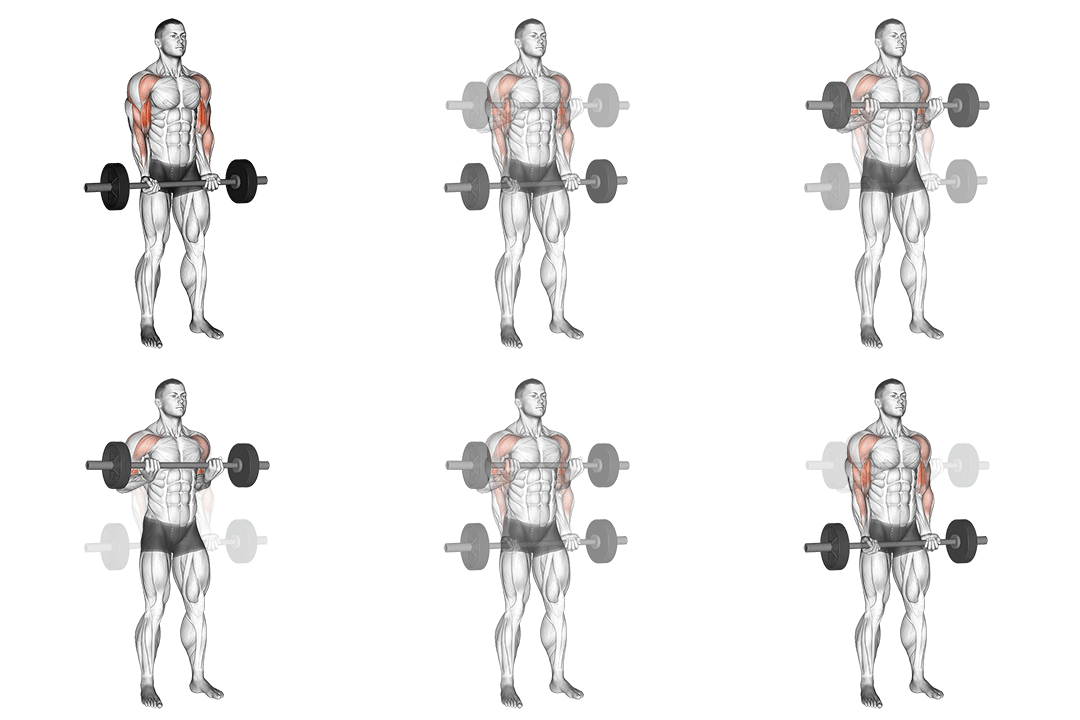
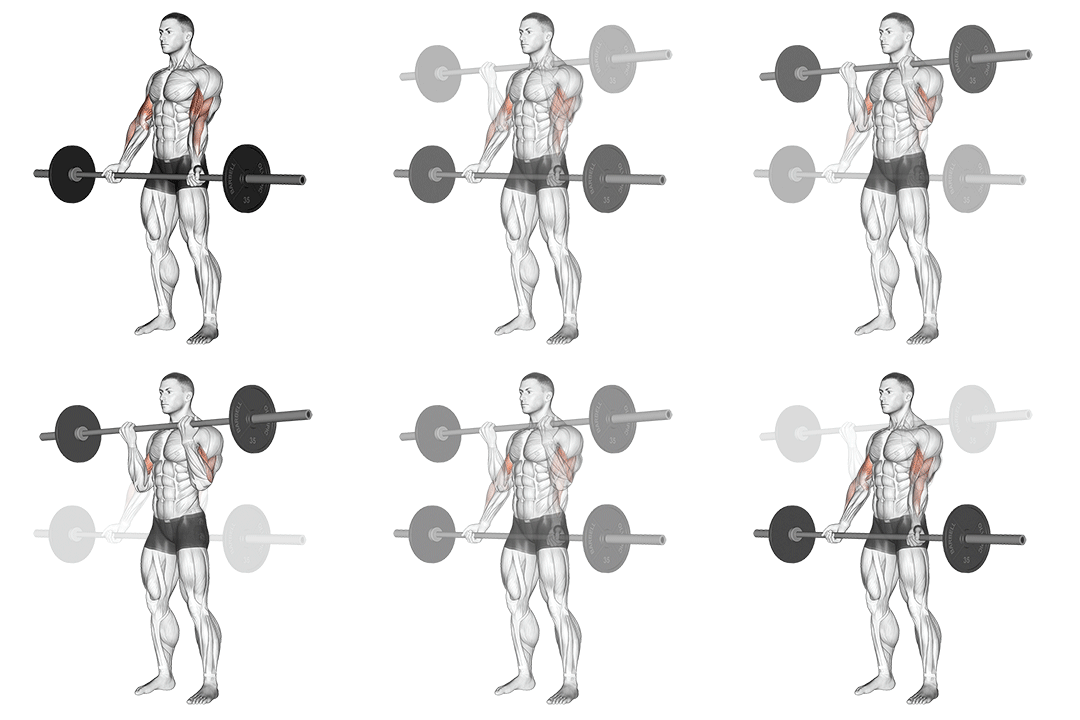
Barbell Drag Curl demonstration

Barbell Drag Curl

Target Biceps
Equipment Barbell
Body Part Upper-arms
Difficulty Intermediate
Movement Isolation
Secondary Muscles
Forearms
VS
Exercise B
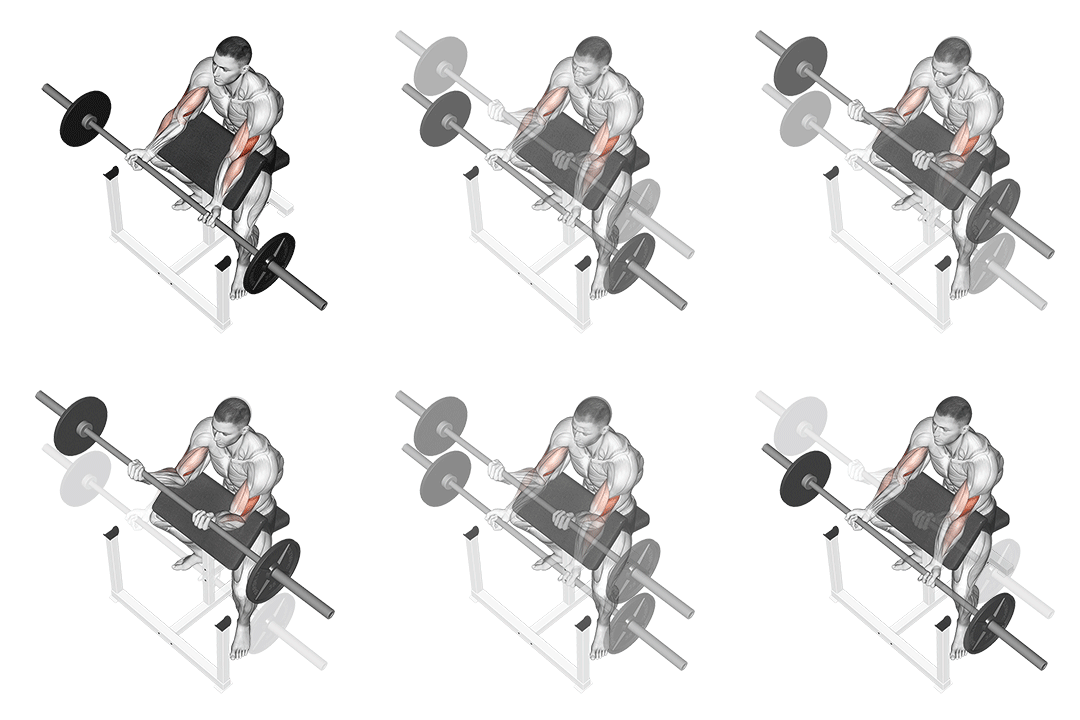
Barbell Preacher Curl demonstration

Barbell Preacher Curl

Target Biceps
Equipment Barbell
Body Part Upper-arms
Difficulty Beginner
Movement Isolation
Secondary Muscles
Forearms

Head-to-Head Comparison

Different values are marked. These are catalogue attributes, not performance scores.

Muscles used

Listed target and secondary muscles, shown on the body. Locations, not activation or strength scores.

  • Target
  • Secondary
  • Not highlighted

Barbell Drag Curl

Front
Barbell Drag Curl: front muscle locationsSolid: listed target. Striped: listed secondary. Grey: not highlighted. Locations, not activation or strength scores. See the muscle names below.
Back
Barbell Drag Curl: back muscle locationsSolid: listed target. Striped: listed secondary. Grey: not highlighted. Locations, not activation or strength scores. See the muscle names below.
Target
Biceps
Secondary
Forearms

Barbell Preacher Curl

Front
Barbell Preacher Curl: front muscle locationsSolid: listed target. Striped: listed secondary. Grey: not highlighted. Locations, not activation or strength scores. See the muscle names below.
Back
Barbell Preacher Curl: back muscle locationsSolid: listed target. Striped: listed secondary. Grey: not highlighted. Locations, not activation or strength scores. See the muscle names below.
Target
Biceps
Secondary
Forearms

Grey does not mean a muscle is unused. The diagrams show only the mapped catalogue labels.

Attribute Barbell Drag Curl Barbell Preacher Curl
Target Muscle
Biceps
Biceps
Body Part
Upper-arms
Upper-arms
Equipment
Barbell
Barbell
Difficulty Different
Intermediate
Beginner
Movement Type
Isolation
Isolation
Secondary Muscles
Forearms
Forearms

Visual Comparison

An illustrative 1–10 profile derived from catalog difficulty, equipment, and listed-muscle fields—not measured performance or muscle activation.

Key Differences

  • Difficulty levels differ: Barbell Drag Curl is intermediate, while Barbell Preacher Curl is beginner.
  • Both exercises target the Biceps using Barbell. The catalogue does not establish which exercise is better for an individual goal.

Muscle comparison

Shared target muscles

Both exercises target the biceps brachii as the prime mover and share concentric elbow flexion as the main action. They produce high mechanical tension on the biceps across similar 0–135° elbow ROM, so both stimulate hypertrophy when loaded in the 8–12 rep range. The overlap is strong: each recruits the biceps for peak contraction and eccentric control.

Secondary muscle differences

Barbell Drag Curl reduces shoulder flexion and anterior deltoid assistance by moving the elbows posteriorly, shifting more load onto the long head and brachialis. Barbell Preacher Curl places the shoulder in slight flexion on a 45° pad, shortening the long head and biasing the short head and brachialis while stabilizing the elbow—this increases peak short‑head contribution and forearm (brachioradialis) involvement on the top of the curl.

Muscle involvement analysis

During the drag curl the bar travels vertically along the torso with elbows pulled back, keeping the biceps closer to a stretched start position and increasing long‑head tension in early concentric range; peak activation occurs nearer to 30–60° of elbow flexion. The preacher curl holds the humerus fixed against the pad so activation peaks near full flexion (about 90–120° of elbow flexion on a 45° pad) with less scapular and shoulder contribution, producing consistent, isolated contraction through the top half of the lift.

Equipment and setup

Barbell Drag Curl: setup

Barbell Drag Curl requires a straight or EZ bar, plates, collars, and open floor space. No bench is needed; you can perform it standing or with a slight torso brace.

Barbell Preacher Curl: setup

Barbell Preacher Curl requires a barbell and a preacher (Scott) bench set at a 45° or 60° pad angle. Some gyms offer a cable preacher attachment, but the pad is essential for the fixed-arm position.

Access and practicality

Barbell Drag Curl — it only needs a barbell and plates, which makes it far more accessible for home gyms and limited-equipment settings. The preacher curl is gym-dependent due to the bench.

Learning and progression

Learning the movements

Barbell Preacher Curl is easier to learn because the pad stabilizes the upper arm and enforces a straight bar path, reducing technique variables. Barbell Drag Curl is intermediate: you must learn to retract the scapula and slide the elbows back while maintaining vertical bar travel.

Progression considerations

Drag curls offer more progression options—heavier loads, tempo changes, paused reps, and variations like single-arm drag or EZ-bar—so they scale well for strength. Preacher curls progress through strict loading, negative reps, and partials, which are excellent for controlled overload but may limit maximal loading compared to standing variants.

Limitations and precautions

Preacher curls carry lower risk of momentum-based shoulder strain because the pad limits cheating, but they can increase elbow stress if you fully lock out or use excessive weight. Drag curls have moderate risk if you fail to stabilize the scapula—poor form can lead to shoulder impingement or swinging that stresses the lower back.

Pros & Cons

Barbell Drag Curl

+ Pros

  • Strong long‑head bias by keeping elbows posterior, increasing stretch at start
  • Requires minimal equipment — only a barbell and plates
  • Allows heavier loading and natural bar path for strength work
  • Multiple progression options: tempo, pauses, single‑arm, EZ bar

Cons

  • Requires practice to keep elbows back and avoid torso cheat
  • Intermediate coordination needed to maintain correct bar path
  • Slightly higher shoulder stabilization demand if done incorrectly

Barbell Preacher Curl

+ Pros

  • Excellent isolation due to upper‑arm support; reduces cheating
  • Beginner‑friendly and easy to learn with clear biomechanics
  • Strong peak contraction and controlled eccentric loading
  • Lower demand on core and lower back compared with standing curls

Cons

  • Requires a preacher bench, limiting accessibility
  • Can place high compressive load on the elbow joint when overloaded
  • Biases the short head, offering less long‑head stretch at start

When Each Exercise Wins

1
For muscle hypertrophy: Barbell Preacher Curl

Preacher curls deliver strict isolation and consistent peak contractions in the 8–12 rep range, maximizing time under tension and eccentric control — both key drivers of hypertrophy. The fixed pad reduces momentum so you can maintain high mechanical tension across sets.

2
For strength gains: Barbell Drag Curl

Drag curls let you handle heavier loads and maintain a natural bar path while recruiting more long‑head and brachialis involvement, which translates to greater overload capacity for 4–8 rep strength work.

3
For beginners: Barbell Preacher Curl

The preacher bench stabilizes the arm and enforces strict form, simplifying the learning process and reducing compensatory movement, so beginners can safely build foundational strength and motor control.

4
For home workouts: Barbell Drag Curl

Drag curls require only a barbell and plates — no bench — making them the practical choice for limited equipment setups while still offering strong biceps stimulus.

Frequently Asked Questions

Can I do both Barbell Drag Curl and Barbell Preacher Curl in the same workout?

Yes — pairing them is effective. Start with the heavier, compound‑ish drag curls for 4–8 reps to target strength and long‑head loading, then finish with preacher curls for 8–12 controlled reps to pre‑exhaust the short head and maximize time under tension.

Which exercise is better for beginners?

Barbell Preacher Curl is better for beginners because the pad stabilizes the arm, reduces cheating, and teaches strict elbow flexion. Start light and focus on full range and slow eccentrics (2–3 seconds) to build control.

How do the muscle activation patterns differ?

Drag curls keep the humerus more neutral and the elbow posterior, increasing long‑head stretch and early‑range loading; preacher curls fix the humerus on a pad and bias the short head with peak activation near full flexion. These patterns change force vectors and length‑tension relationships across the ROM.

Can Barbell Preacher Curl replace Barbell Drag Curl?

Preacher curls can replace drag curls if your goal is strict isolation and hypertrophy of the short head, but they won’t fully replicate the long‑head stretch and heavier loading potential of drag curls. For complete biceps development, include both across training cycles.

Comparison Summary

Use the Barbell Preacher Curl when you want strict isolation, controlled eccentrics, and dependable peak contractions — ideal for hypertrophy blocks, final biceps work, and beginners who need technical simplicity. Choose the Barbell Drag Curl when you want heavier loading, a long‑head emphasis, and exercises that fit a minimal‑equipment program; it’s better for strength phases and long‑head development. Program both: alternate preacher curls during focused hypertrophy weeks (8–12 reps, 2–4 sets) and drag curls in strength or long‑head emphasis phases (4–8 or 6–10 reps, heavier loads), and use tempo cues (3–1–1 eccentric‑pause‑concentric) to manage tension and reduce injury risk.

Exercise instructions

Steps from the exercise catalogue. Read the full sequence before starting.

Barbell Drag Curl

  1. Stand with your feet shoulder-width apart and hold a barbell with an underhand grip, palms facing up.
  2. Let the barbell hang at arm's length in front of your thighs.
  3. Keeping your upper arms stationary, curl the barbell up towards your chest by contracting your biceps.
Read remaining steps for Barbell Drag Curl
  1. Pause for a moment at the top, then slowly lower the barbell back down to the starting position.
  2. Repeat for the desired number of repetitions.

Barbell Preacher Curl

  1. Sit on a preacher bench with your upper arms resting on the pad and your chest against the support.
  2. Grasp the barbell with an underhand grip, slightly wider than shoulder-width apart.
  3. Keeping your upper arms stationary, exhale and curl the barbell up towards your shoulders.
Read remaining steps for Barbell Preacher Curl
  1. Pause for a moment at the top, squeezing your biceps.
  2. Inhale and slowly lower the barbell back down to the starting position.
  3. Repeat for the desired number of repetitions.

Also Compare

Compare another pair

Choose two exercises to see their differences side by side.

Compare Exercises