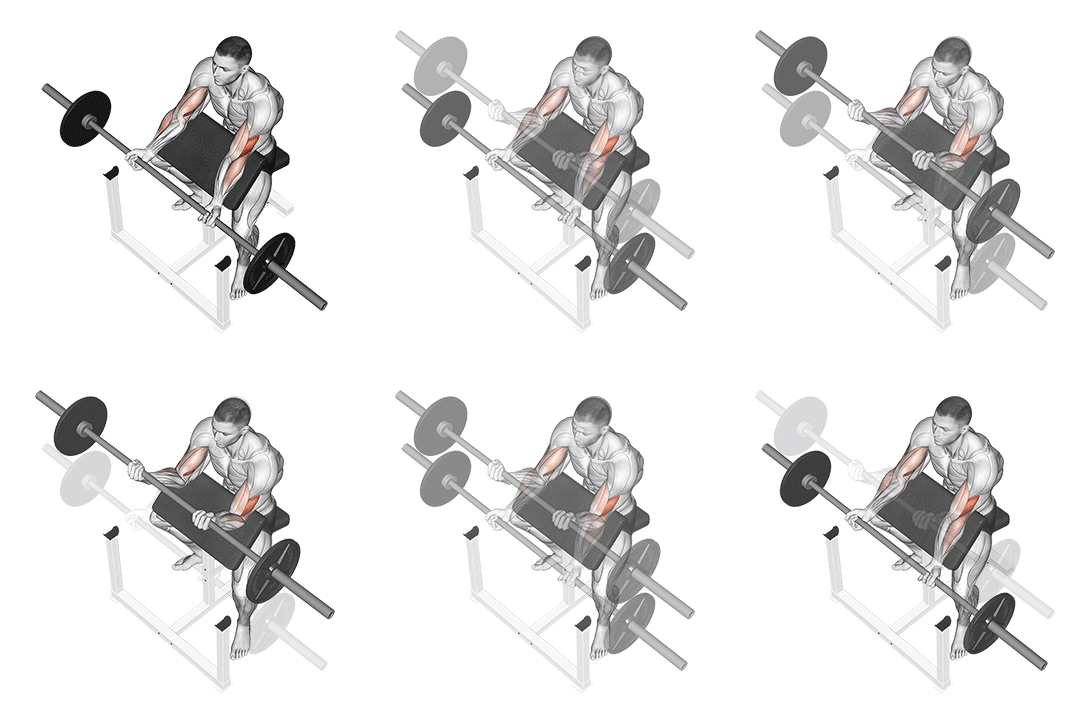
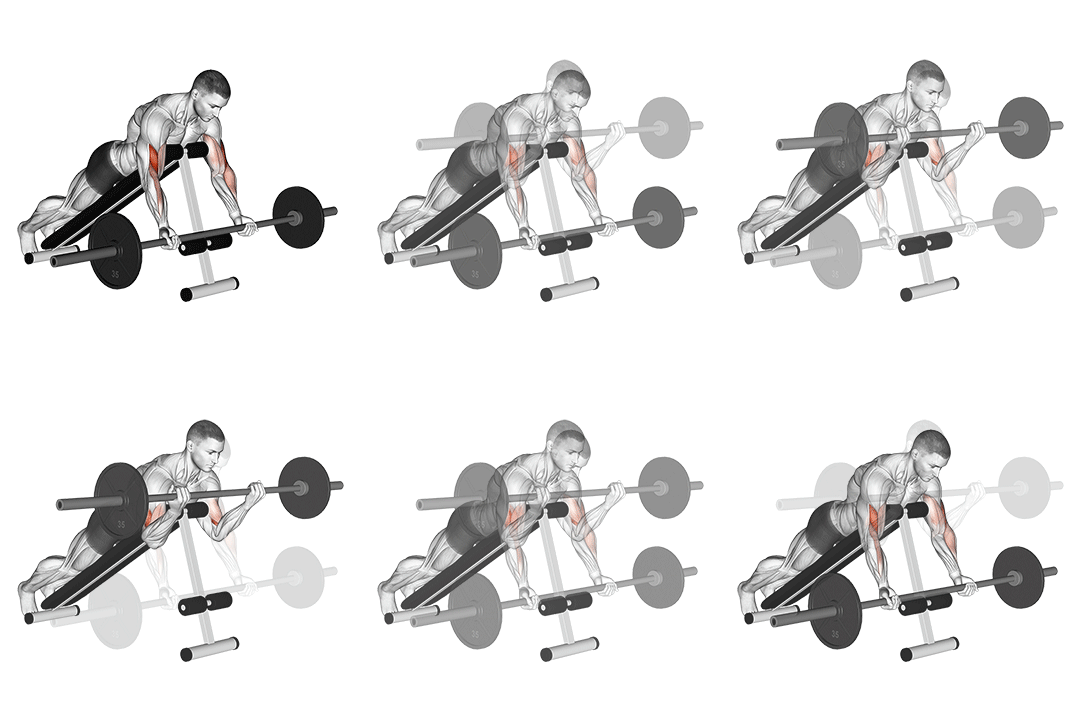
Barbell Alternate Biceps Curl vs Barbell Drag Curl

Compare target muscles, equipment, difficulty, movement type, and secondary muscles for Barbell Alternate Biceps Curl and Barbell Drag Curl.

Change comparison Share

Get comparison link

Select the link and use your device's Copy command.

Comparison overview

AI-generated
Barbell Alternate Biceps Curl vs Barbell Drag Curl — two isolation moves that target the biceps but use different joint paths and force vectors. You’ll get clear guidance on muscle activation, equipment needs, difficulty, technique cues, rep ranges, and when to pick each exercise. I’ll break down how each move loads the biceps long head, short head, and forearms, show you concrete setup and tempo cues, and give direct recommendations for hypertrophy, strength, beginners, and home workouts so you can choose the right curl for your program.

Exercise Comparison

Exercise A
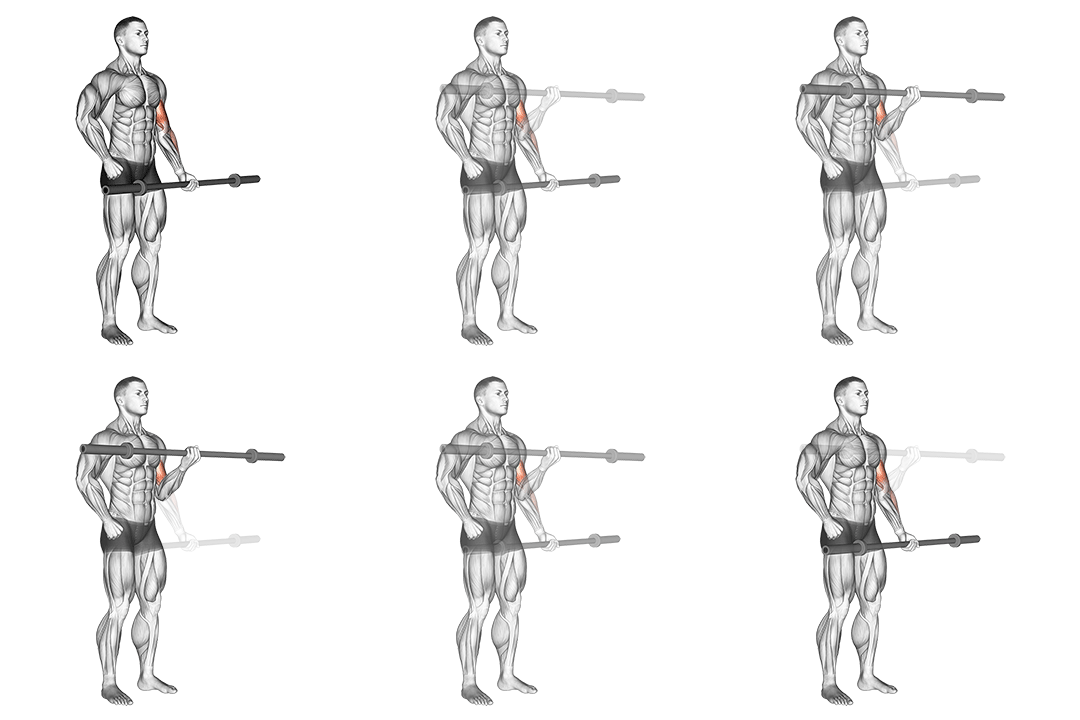
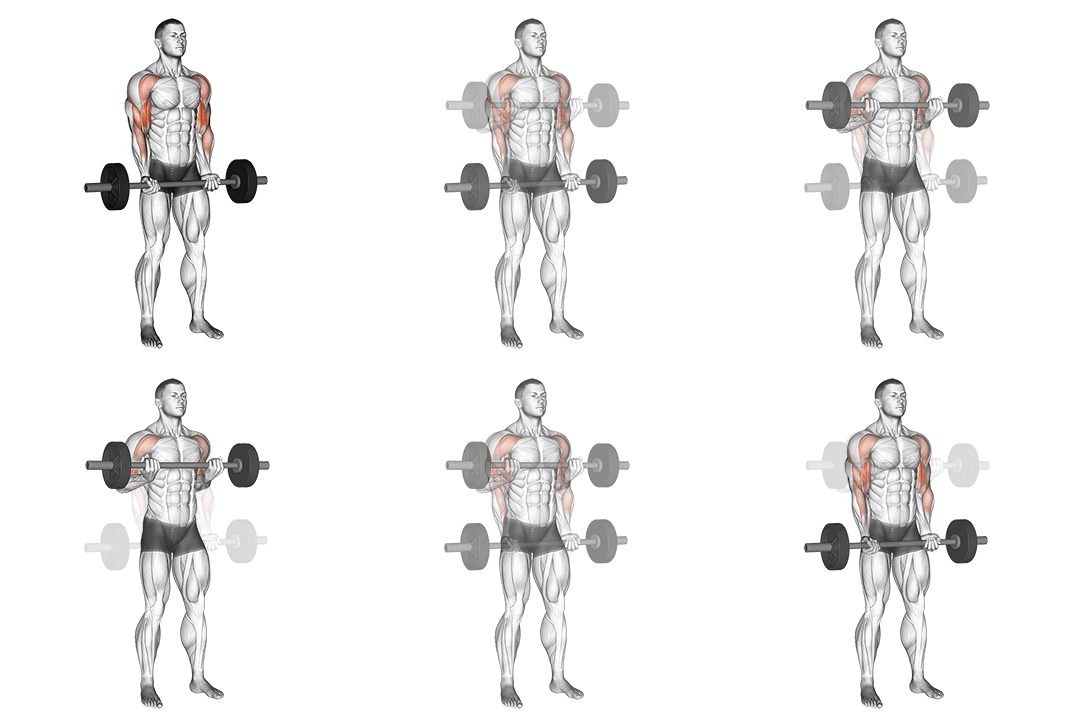
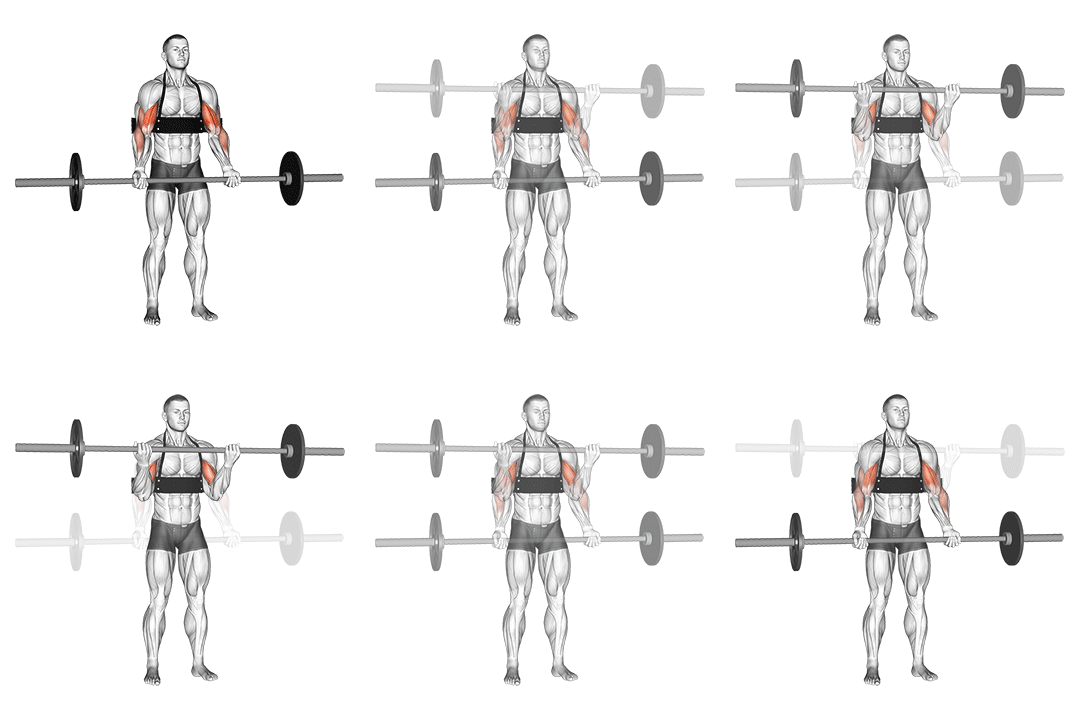
Barbell Alternate Biceps Curl demonstration

Barbell Alternate Biceps Curl

Target Biceps
Equipment Barbell
Body Part Upper-arms
Difficulty Beginner
Movement Isolation
Secondary Muscles
Forearms
VS
Exercise B
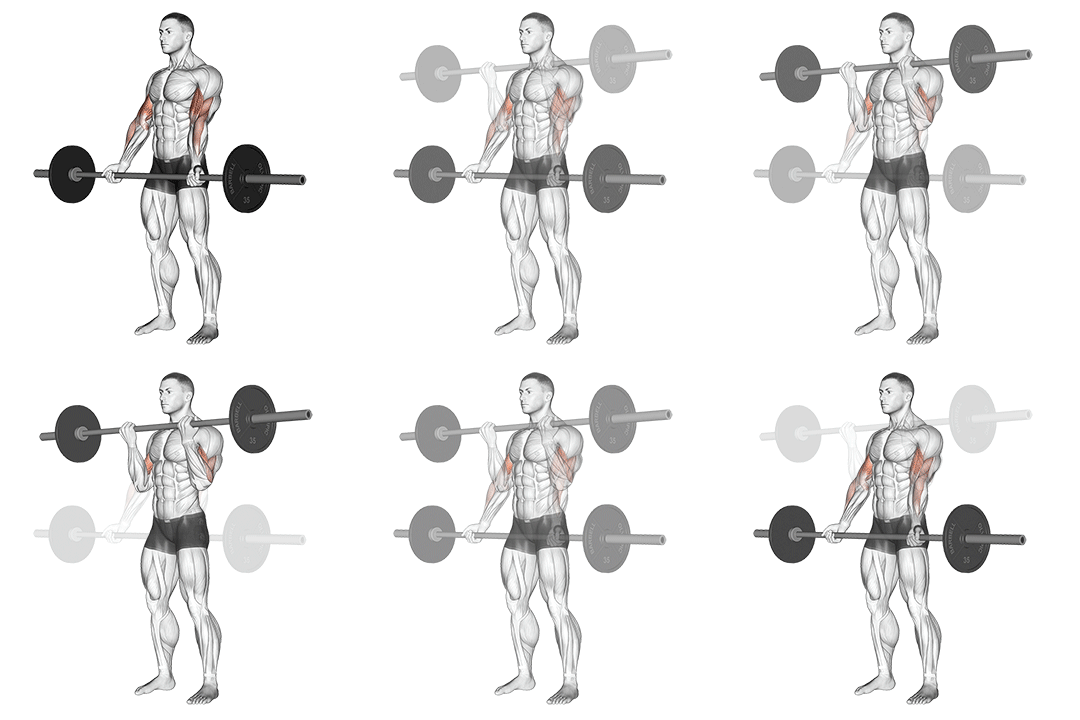
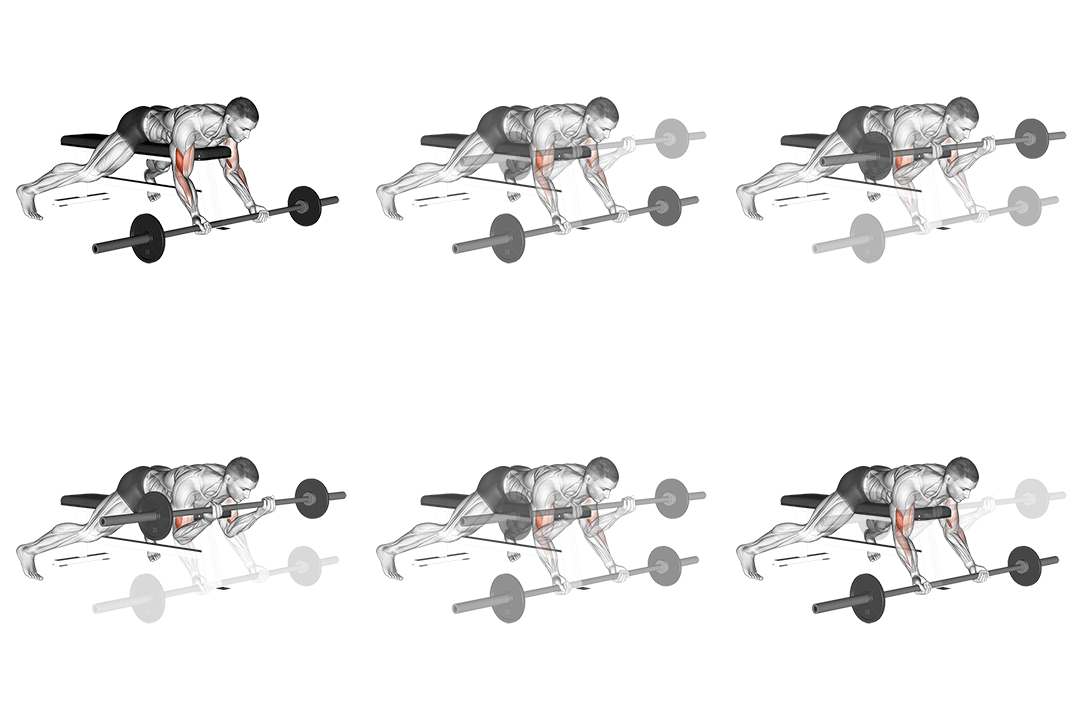
Barbell Drag Curl demonstration

Barbell Drag Curl

Target Biceps
Equipment Barbell
Body Part Upper-arms
Difficulty Intermediate
Movement Isolation
Secondary Muscles
Forearms

Head-to-Head Comparison

Different values are marked. These are catalogue attributes, not performance scores.

Muscles used

Listed target and secondary muscles, shown on the body. Locations, not activation or strength scores.

  • Target
  • Secondary
  • Not highlighted

Barbell Alternate Biceps Curl

Front
Barbell Alternate Biceps Curl: front muscle locationsSolid: listed target. Striped: listed secondary. Grey: not highlighted. Locations, not activation or strength scores. See the muscle names below.
Back
Barbell Alternate Biceps Curl: back muscle locationsSolid: listed target. Striped: listed secondary. Grey: not highlighted. Locations, not activation or strength scores. See the muscle names below.
Target
Biceps
Secondary
Forearms

Barbell Drag Curl

Front
Barbell Drag Curl: front muscle locationsSolid: listed target. Striped: listed secondary. Grey: not highlighted. Locations, not activation or strength scores. See the muscle names below.
Back
Barbell Drag Curl: back muscle locationsSolid: listed target. Striped: listed secondary. Grey: not highlighted. Locations, not activation or strength scores. See the muscle names below.
Target
Biceps
Secondary
Forearms

Grey does not mean a muscle is unused. The diagrams show only the mapped catalogue labels.

Attribute Barbell Alternate Biceps Curl Barbell Drag Curl
Target Muscle
Biceps
Biceps
Body Part
Upper-arms
Upper-arms
Equipment
Barbell
Barbell
Difficulty Different
Beginner
Intermediate
Movement Type
Isolation
Isolation
Secondary Muscles
Forearms
Forearms

Visual Comparison

An illustrative 1–10 profile derived from catalog difficulty, equipment, and listed-muscle fields—not measured performance or muscle activation.

Key Differences

  • Difficulty levels differ: Barbell Alternate Biceps Curl is beginner, while Barbell Drag Curl is intermediate.
  • Both exercises target the Biceps using Barbell. The catalogue does not establish which exercise is better for an individual goal.

Muscle comparison

Shared target muscles

Both exercises load the biceps brachii as the primary mover through elbow flexion and forearm supination. They both use roughly the same elbow range of motion (≈0° extension to ~120–130° flexion), so peak elbow torque occurs near 60–90° of flexion in both. Net biceps activation is similar during the concentric phase, but the movement path alters which biceps head and accessory muscles take more load.

Secondary muscle differences

Barbell Alternate Biceps Curl emphasizes forearm supination and peak peak contraction, increasing short-head and brachialis engagement. The drag curl pulls the bar along the torso with elbows moving posteriorly, increasing long-head tension and reducing shoulder flexion; this shifts some load away from the forearm extensors and into the biceps long head and upper arm posterior stabilizers.

Muscle involvement analysis

During an alternate curl you supinate the wrist through the concentric, which increases biceps contribution relative to brachialis by increasing its internal moment arm. During a drag curl the elbow tracks back ~10–20° behind the frontal plane and the biceps remains at a longer length across the shoulder joint, sustaining tension through the top range and modifying the length–tension relationship to favor long-head activation.

Equipment and setup

Barbell Alternate Biceps Curl: setup

Barbell Alternate Biceps Curl requires a straight or EZ bar, a rack or space to stand, and minimal additional equipment. You can start with an empty bar (20 kg/44 lb standard bar) or lighter technique bar for beginners.

Barbell Drag Curl: setup

Barbell Drag Curl also needs a barbell (straight or EZ works better for wrist comfort). You’ll want room to pull the bar close to your torso and a mirror or coach to monitor elbow tracking; using lighter loads to practice form is advised.

Access and practicality

Barbell Alternate Biceps Curl is more accessible. It’s simpler to learn, needs no special coaching to maintain the line of pull, and you can scale easily with light bars or even cables; drag curls require more coordination of elbow path and torso positioning.

Learning and progression

Learning the movements

Barbell Alternate Biceps Curl is easier to learn because the elbow stays at the side and the cue of supination is intuitive. Drag curls have a steeper learning curve since you must move the elbows posteriorly while keeping the torso upright and maintaining bar contact with the body.

Progression considerations

Drag curls offer slightly better progression potential for targeted long-head overload because the movement encourages higher time under tension at the top and allows you to handle heavier loads when performed correctly. Alternate curls scale well via increasing reps, tempo, or bar weight but can be limited by grip and wrist comfort.

Limitations and precautions

Relative injury risk is modest for both when performed correctly. Drag curls carry a slightly higher risk of elbow or shoulder irritation if you force the posterior elbow path or use excessive momentum. Alternate curls risk wrist strain if you over-supinate or use too much weight and swing.

Pros & Cons

Barbell Alternate Biceps Curl

+ Pros

  • Simple setup and easy to coach — elbow stays at side, clear supination cue
  • Strong peak contraction via forearm supination increasing biceps moment arm
  • Beginner-friendly — works well with light bars or cables
  • Versatile rep ranges: 8–12 for hypertrophy, 4–6 for strength, 12–20 for endurance

Cons

  • Can encourage swinging and cheating if load is too heavy
  • Less targeted long-head emphasis compared with drag curl
  • Wrist discomfort with straight bar at heavier loads

Barbell Drag Curl

+ Pros

  • Higher long-head emphasis by keeping the biceps at a longer length across the shoulder
  • Maintains tension at the top of the rep, improving time under tension for hypertrophy
  • Allows heavier loading without excessive shoulder flexion when performed correctly
  • Reduces wrist supination demand, often more comfortable for some lifters

Cons

  • Requires precise elbow tracking; learning curve is steeper
  • Potential for elbow or shoulder irritation if technique breaks down
  • Less intuitive tempo — easy to jerk the bar and lose muscle tension

When Each Exercise Wins

1
For muscle hypertrophy: Barbell Drag Curl

Drag curls keep the biceps under tension at the top and bias the long head, increasing time under tension and mechanical tension across a longer muscle length. Use 8–12 reps with a 2–0–3 tempo to exploit this stimulus.

2
For strength gains: Barbell Alternate Biceps Curl

Alternate curls let you focus on heavier concentric force and clear supination to maximize moment arm leverage; using 4–6 reps with controlled eccentrics helps build raw elbow-flexion strength safely.

3
For beginners: Barbell Alternate Biceps Curl

The movement is simpler: the elbow stays at the side and the primary cue is supinate-and-lift. That makes it easier to learn elbow control, proper tempo, and avoid compensatory torso lean.

4
For home workouts: Barbell Alternate Biceps Curl

It requires only a basic barbell and less coaching to perform safely in small spaces. You can easily scale with lighter bars or use bands to mimic the movement.

Frequently Asked Questions

Can I do both Barbell Alternate Biceps Curl and Barbell Drag Curl in the same workout?

Yes. Start with the heavier or more technical lift for your goal—if hypertrophy is the priority, do drag curls first for targeted long-head stimulus, then follow with alternate curls for peak contraction and metabolic fatigue.

Which exercise is better for beginners?

Barbell Alternate Biceps Curl is better for beginners because the movement pattern is simpler, the elbow stays stable, and it’s easier to learn supination and tempo before progressing to more complex elbow tracking.

How do the muscle activation patterns differ?

Alternate curls increase biceps activation through wrist supination, boosting short-head and brachialis contribution near peak contraction. Drag curls move the elbow posteriorly, keeping the biceps at a longer length and increasing long-head contribution and sustained top-range tension.

Can Barbell Drag Curl replace Barbell Alternate Biceps Curl?

Drag curls can replace alternate curls when your goal is long-head emphasis and increased time under tension, but they don’t teach supination-driven peak contraction as well. Use drag curls for targeted hypertrophy blocks and alternate curls when you need basic strength and technique building.

Comparison Summary

Both curls target the biceps, but choose based on your objective. Pick the Barbell Alternate Biceps Curl if you’re newer, working from home, or want a simple movement to build elbow-flexion strength and practice supination—use 8–12 reps for muscle growth or 4–6 for strength. Choose the Barbell Drag Curl when you want to bias the long head and increase top-range tension; perform 8–12 reps with slow eccentrics and focus on tracking the elbows back ~10–20° behind the frontal plane. Rotate both across training cycles to balance short- and long-head development and prevent adaptation.

Exercise instructions

Steps from the exercise catalogue. Read the full sequence before starting.

Barbell Alternate Biceps Curl

  1. Stand up straight with your feet shoulder-width apart and hold a barbell in each hand, palms facing forward.
  2. Keep your upper arms stationary and exhale as you curl the weights while contracting your biceps.
  3. Continue to raise the barbells until your biceps are fully contracted and the barbells are at shoulder level.
Read remaining steps for Barbell Alternate Biceps Curl
  1. Hold the contracted position for a brief pause as you squeeze your biceps.
  2. Inhale as you slowly begin to lower the barbells back to the starting position.
  3. Repeat for the desired number of repetitions, alternating arms.

Barbell Drag Curl

  1. Stand with your feet shoulder-width apart and hold a barbell with an underhand grip, palms facing up.
  2. Let the barbell hang at arm's length in front of your thighs.
  3. Keeping your upper arms stationary, curl the barbell up towards your chest by contracting your biceps.
Read remaining steps for Barbell Drag Curl
  1. Pause for a moment at the top, then slowly lower the barbell back down to the starting position.
  2. Repeat for the desired number of repetitions.

Also Compare

Compare another pair

Choose two exercises to see their differences side by side.

Compare Exercises