

Barbell Good Morning vs Barbell Straight Leg Deadlift
Compare target muscles, equipment, difficulty, movement type, and secondary muscles for Barbell Good Morning and Barbell Straight Leg Deadlift.
Get comparison link
Select the link and use your device's Copy command.
Comparison overview
AI-generatedExercise Comparison
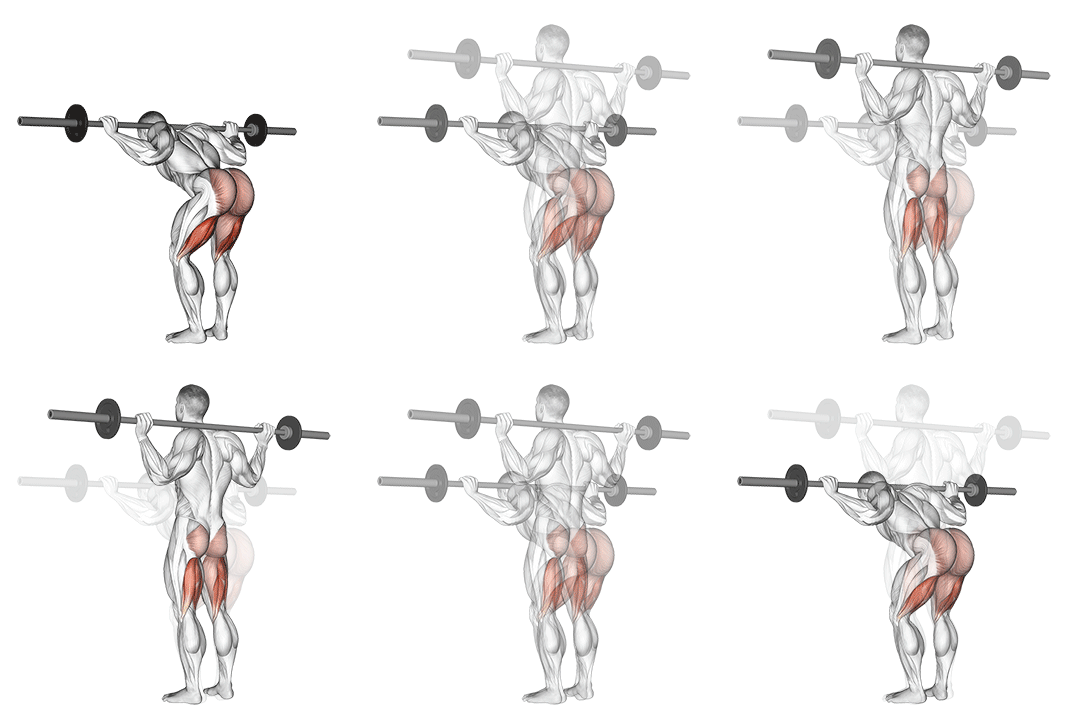
Barbell Good Morning
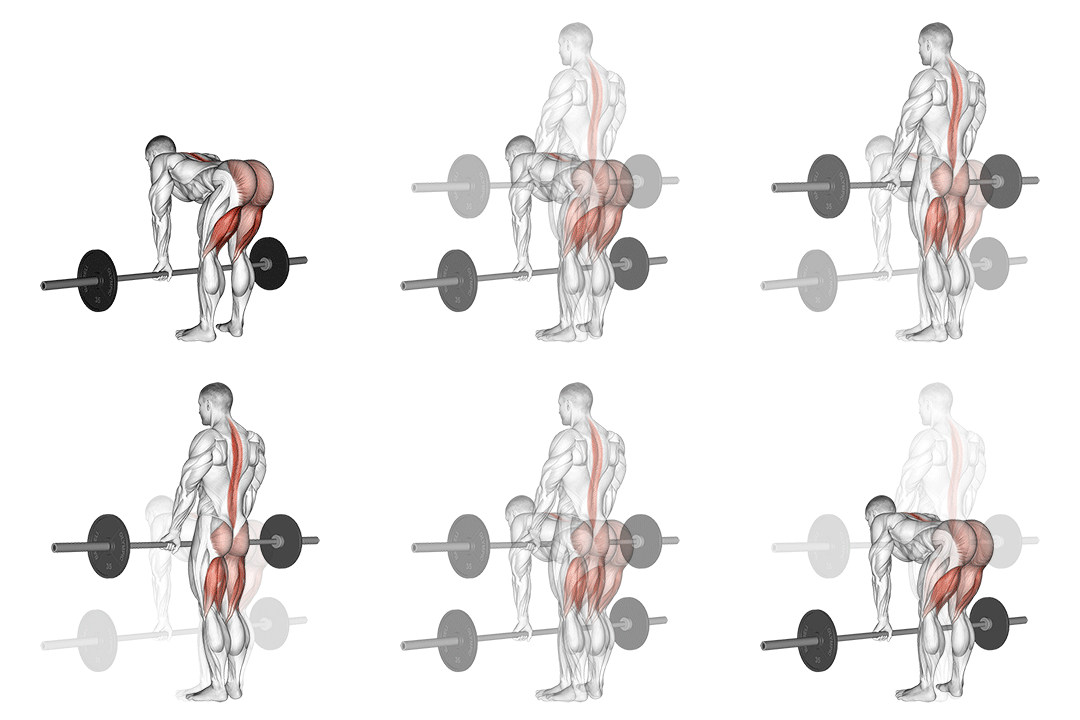
Barbell Straight Leg Deadlift
Head-to-Head Comparison
Different values are marked. These are catalogue attributes, not performance scores.
Muscles used
Listed target and secondary muscles, shown on the body. Locations, not activation or strength scores.
- Target
- Secondary
- Not highlighted
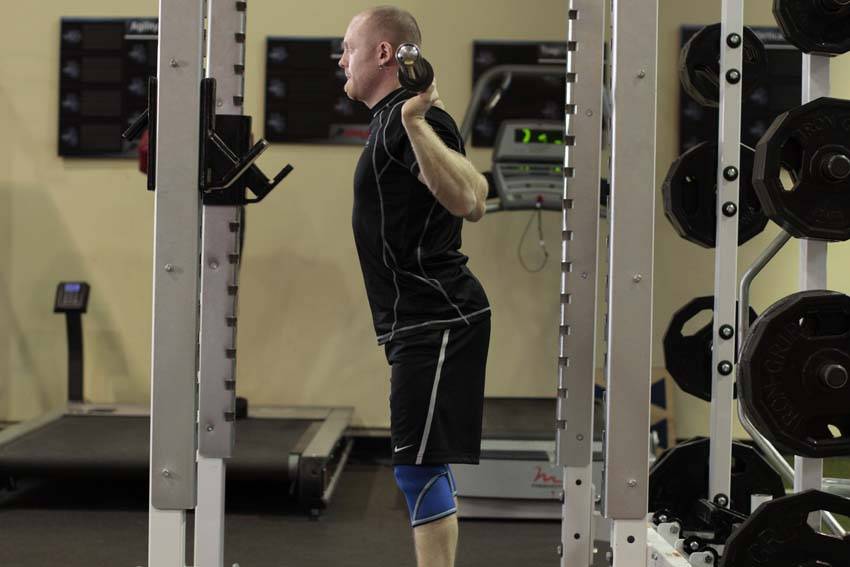
Barbell Good Morning
- Target
- Hamstrings
- Secondary
- Lower Back
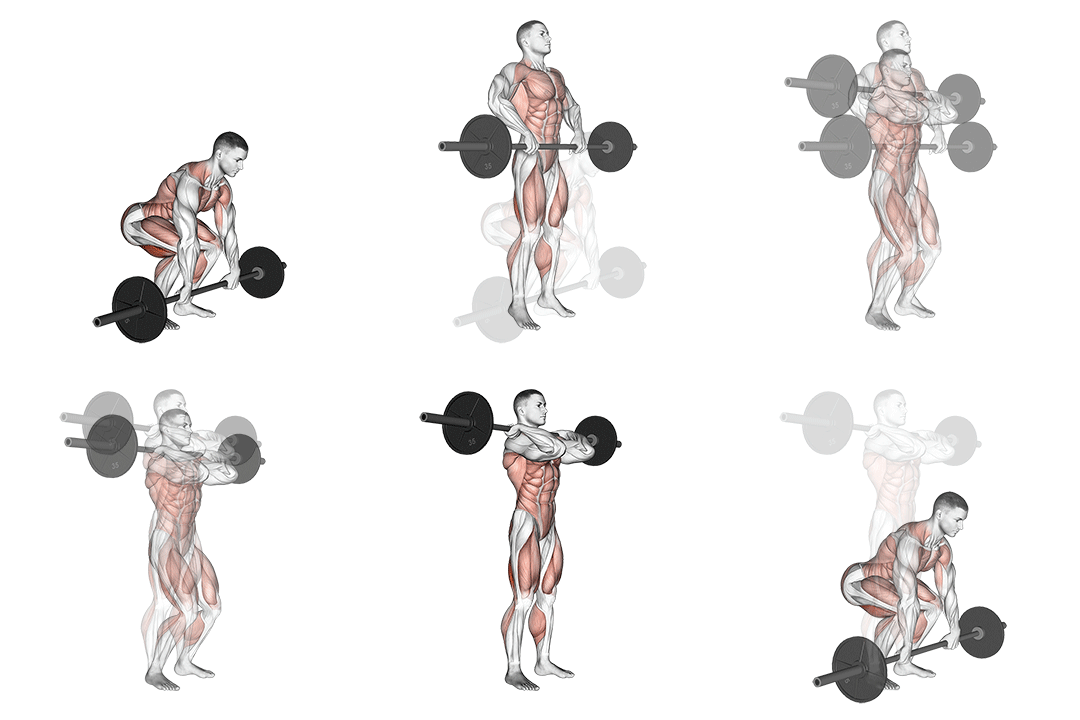
Barbell Straight Leg Deadlift
- Target
- Hamstrings
- Secondary
- Glutes, Lower Back
Grey does not mean a muscle is unused. The diagrams show only the mapped catalogue labels.
| Attribute | Barbell Good Morning | Barbell Straight Leg Deadlift |
|---|---|---|
| Target Muscle | Hamstrings |
Hamstrings |
| Body Part | Upper-legs |
Upper-legs |
| Equipment | Barbell |
Barbell |
| Difficulty Different | Advanced |
Intermediate |
| Movement Type | Compound |
Compound |
| Secondary Muscles Different | Lower Back |
Glutes, Lower Back |
Visual Comparison
An illustrative 1–10 profile derived from catalog difficulty, equipment, and listed-muscle fields—not measured performance or muscle activation.
Key Differences
- Difficulty levels differ: Barbell Good Morning is advanced, while Barbell Straight Leg Deadlift is intermediate.
- Both exercises target the Hamstrings using Barbell. The catalogue does not establish which exercise is better for an individual goal.
Muscle comparison
Shared target muscles
Secondary muscle differences
Muscle involvement analysis
Equipment and setup
Barbell Good Morning: setup
Barbell Straight Leg Deadlift: setup
Access and practicality
Learning and progression
Learning the movements
Progression considerations
Limitations and precautions
Pros & Cons
Barbell Good Morning
+ Pros
- Directly loads spinal erectors and proximal hamstrings for hinge strength
- Creates a long moment arm that strengthens the hip hinge in athletic positions
- Useful for improving posture and thoracic control under load
- Great accessory for increasing tolerance to lumbar extension torque
− Cons
- Higher lumbar compressive and shear forces if technique slips
- Advanced technique; harder to master than SLDL
- Less forgiving for heavy loading—small form errors increase injury risk
Barbell Straight Leg Deadlift
+ Pros
- Easier to learn and coach; cleaner deadlift path
- Stronger glute recruitment with similar hamstring stimulus
- Versatile rep ranges for hypertrophy (6–12) or strength (4–6)
- More progressive overload options and simpler equipment needs
− Cons
- Can overload hamstrings if knees are fully locked and mobility is limited
- Risk of lumbar rounding on fatigue or poor cueing
- Less direct spinal erector emphasis compared to good mornings
When Each Exercise Wins
The SLDL lets you load hamstrings and glutes with cleaner mechanics and broader rep ranges (6–12) for repeated tension. Its ease of progressive overload—add weight, tempo, or sets—makes it superior for overall posterior-chain muscle growth.
Good Mornings uniquely overload the spinal erectors and hip hinge torque, improving maximal trunk and hip extension strength. Use low reps (3–6) with strict form to build hinge-specific strength that transfers to heavier compound lifts.
SLDLs are simpler to teach: keep a neutral spine, slight knee bend (10–30°), bar close to legs, and hinge at the hips. That makes them safer and faster to progress for lifters new to posterior-chain training.
SLDLs require only a bar and plates and are easier to perform without a rack or spotter. They provide robust hamstring and glute stimulus with minimal setup, making them ideal for limited-equipment environments.
Frequently Asked Questions
Can I do both Barbell Good Morning and Barbell Straight Leg Deadlift in the same workout?
Which exercise is better for beginners?
How do the muscle activation patterns differ?
Can Barbell Straight Leg Deadlift replace Barbell Good Morning?
Comparison Summary
Exercise instructions
Steps from the exercise catalogue. Read the full sequence before starting.
Barbell Good Morning
- Start by standing with your feet shoulder-width apart and the barbell resting on your upper back.
- Keeping your back straight and your core engaged, hinge forward at the hips, pushing your buttocks back as if you were trying to touch the wall behind you with your glutes.
- Lower your torso until it is parallel to the ground, feeling a stretch in your hamstrings.
Read remaining steps for Barbell Good Morning
- Pause for a moment, then return to the starting position by squeezing your glutes and pushing your hips forward.
- Repeat for the desired number of repetitions.
Barbell Straight Leg Deadlift
- Stand with your feet shoulder-width apart and your toes pointing forward.
- Hold the barbell with an overhand grip, hands slightly wider than shoulder-width apart.
- Bend at your hips and lower the barbell towards the ground, keeping your back straight and your knees slightly bent.
Read remaining steps for Barbell Straight Leg Deadlift
- Lower the barbell until you feel a stretch in your hamstrings.
- Engage your hamstrings and glutes to lift the barbell back up to the starting position.
- Repeat for the desired number of repetitions.
Also Compare
More comparisons with Barbell Good Morning
More comparisons with Barbell Straight Leg Deadlift
Compare another pair
Choose two exercises to see their differences side by side.