

Barbell One Leg Squat vs Barbell Overhead Squat: Complete Comparison Guide
Barbell One Leg Squat vs Barbell Overhead Squat — two advanced, quad-focused compound lifts that stress your upper-legs but demand very different skills. You’ll get a side-by-side look at what each movement trains (primary and secondary muscles), how to perform them safely (key technique cues and joint angles), progression strategies (rep ranges and loading), and relative injury risk. Read on to decide which fits your goals—muscle growth, pure leg strength, balance, or mobility—and to get clear coaching cues you can use on your next leg day.
Exercise Comparison
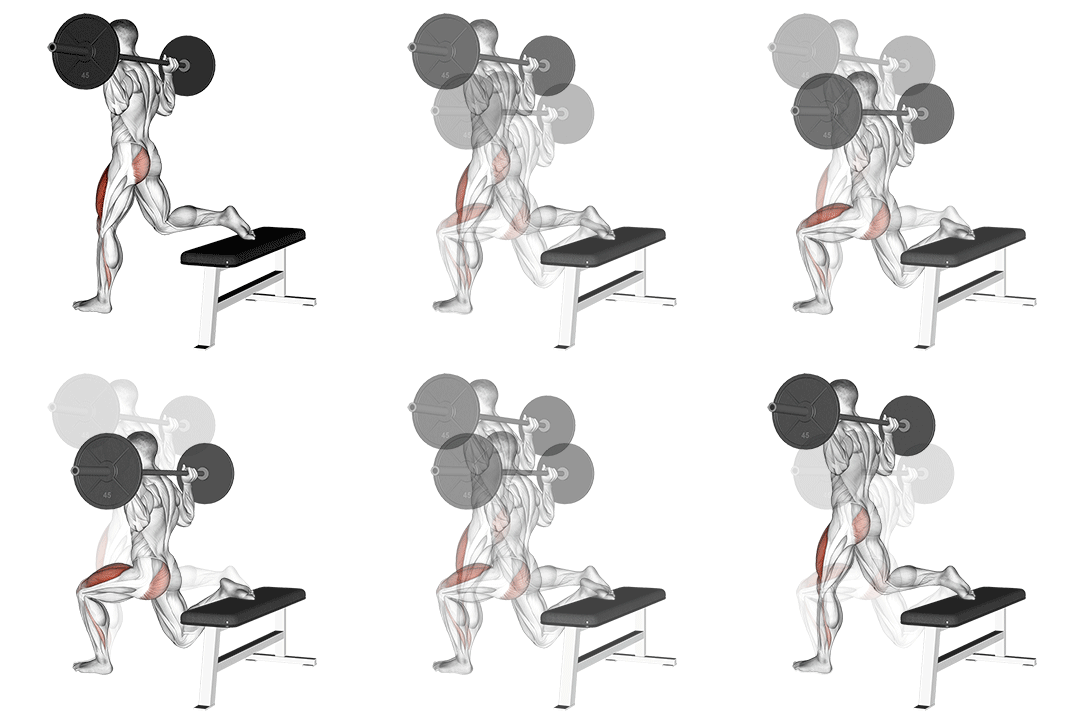
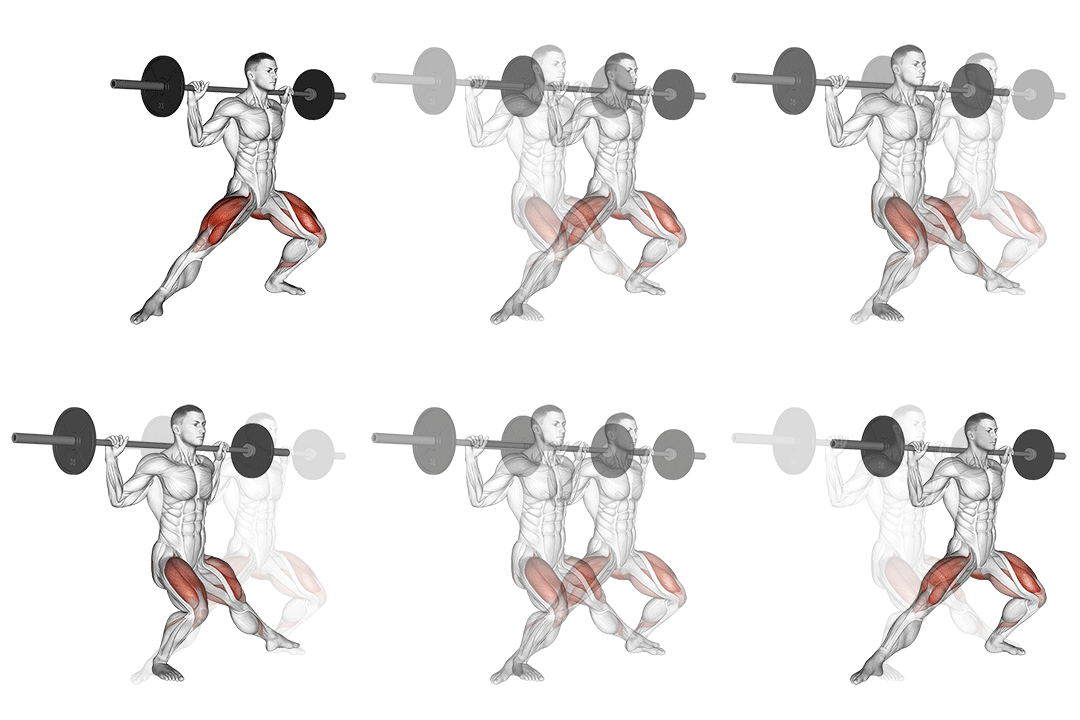
Barbell One Leg Squat
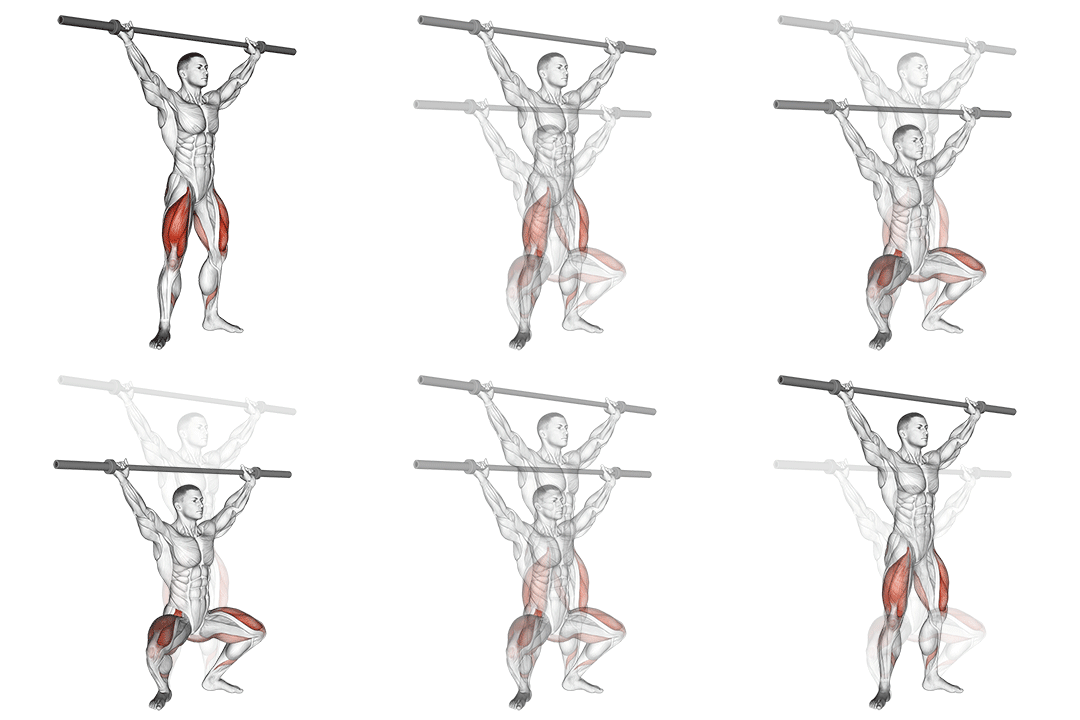
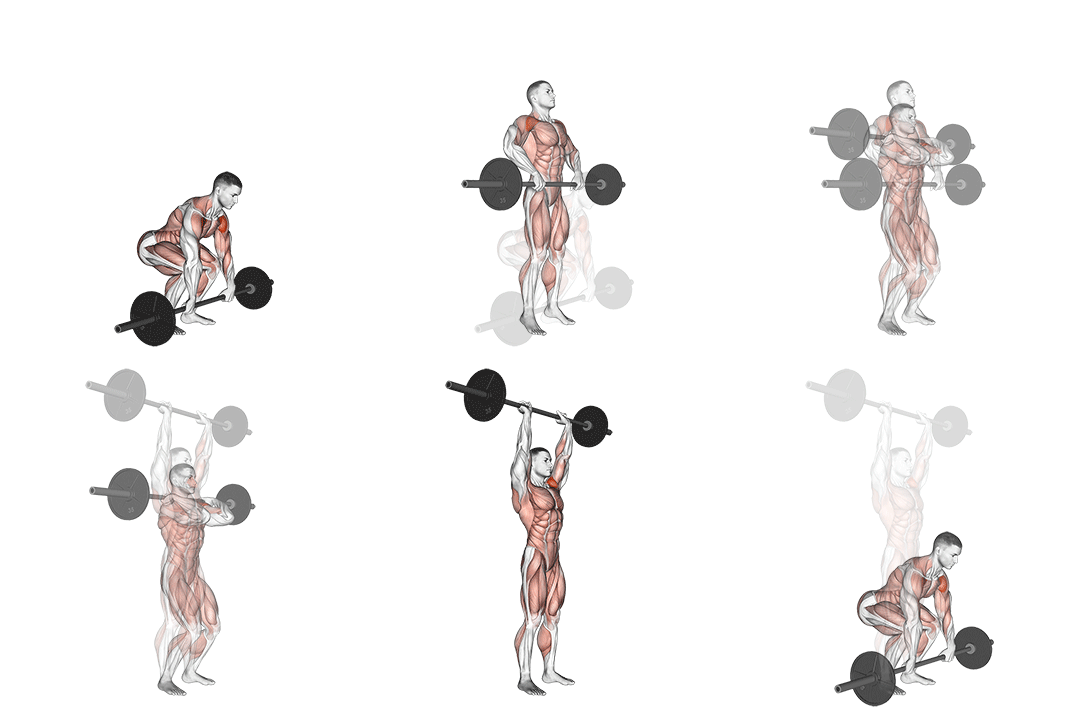
Barbell Overhead Squat
Head-to-Head Comparison
| Attribute | Barbell One Leg Squat | Barbell Overhead Squat |
|---|---|---|
| Target Muscle |
Quads
|
Quads
|
| Body Part |
Upper-legs
|
Upper-legs
|
| Equipment |
Barbell
|
Barbell
|
| Difficulty |
Advanced
|
Advanced
|
| Movement Type |
Compound
|
Compound
|
| Secondary Muscles |
3
|
4
|
Secondary Muscles Activated
Barbell One Leg Squat
Barbell Overhead Squat
Visual Comparison
Overview
Barbell One Leg Squat vs Barbell Overhead Squat — two advanced, quad-focused compound lifts that stress your upper-legs but demand very different skills. You’ll get a side-by-side look at what each movement trains (primary and secondary muscles), how to perform them safely (key technique cues and joint angles), progression strategies (rep ranges and loading), and relative injury risk. Read on to decide which fits your goals—muscle growth, pure leg strength, balance, or mobility—and to get clear coaching cues you can use on your next leg day.
Key Differences
- Both exercises target the Quads using Barbell. The main differences are in their movement patterns and muscle activation angles.
Pros & Cons
Barbell One Leg Squat
+ Pros
- Strong unilateral quad overload for balanced development
- Easy to scale with assistance or reduced range of motion
- High carryover to single-leg strength and athleticism
- Allows heavier relative loading of each leg for hypertrophy (4–8+ reps)
− Cons
- Requires excellent balance and ankle stability
- Hard to load symmetrically without a spotter or safety supports
- Can overload the knee if technique (knee tracking, toe alignment) is poor
Barbell Overhead Squat
+ Pros
- Develops quad strength while training core and shoulder stability
- Improves thoracic mobility and postural control under load
- Teaches full-body coordination and bar path control
- Useful for Olympic weightlifting mobility and overhead stability
− Cons
- Requires high shoulder and thoracic mobility and wrist tolerance
- Difficult to progress with heavy loads—technique limits weight
- Higher technical skill demands increase practice time
When Each Exercise Wins
Unilateral loading lets you overload each quad more directly and correct left-right imbalances. Use 6–12 reps per leg with controlled tempo and progressive loading to maximize quad hypertrophy.
You can apply heavier absolute and relative unilateral loads and manipulate sets (3–6 heavy reps) to build maximal leg strength; the shorter moment arm at the hip and direct knee extension torque favor force production.
It scales more easily with regressions (box pistols, TRX-assisted) and doesn’t require the shoulder/thoracic mobility and bar control that make the overhead squat unsafe for most novices.
Requires less specialized space and can be performed with dumbbells or a light barbell and a box for progressions; the overhead squat needs more room and mobility to perform safely.
Frequently Asked Questions
Can I do both Barbell One Leg Squat and Barbell Overhead Squat in the same workout?
Yes—you can pair them if you manage fatigue. Perform the technical, mobility-heavy overhead squats early in the session with lighter loads and practice sets, then use heavier one-leg squats for strength/hypertrophy once technique or shoulder fatigue won’t compromise safety.
Which exercise is better for beginners?
Barbell One Leg Squat is more beginner-friendly when scaled (assisted pistols, box-supported) because it doesn’t demand the same shoulder and thoracic mobility as the overhead squat. Overhead squats require substantial prep work—mobility drills and progressive pressing—before loading safely.
How do the muscle activation patterns differ?
One-leg squats create larger unilateral knee-extension moments, increasing quad and hip-stabilizer activation to control frontal-plane torque. Overhead squats force greater anti-flexion torque in the trunk and sustained scapular/shoulder activation while keeping the quads working through a more bilateral, upright control pattern.
Can Barbell Overhead Squat replace Barbell One Leg Squat?
No—if your priority is unilateral quad size and pure single-leg strength, the overhead squat won’t replicate the same stimulus. Use the overhead squat for mobility, core, and shoulder training, and keep one-leg squats for direct unilateral leg overload.
Expert Verdict
Choose the Barbell One Leg Squat when your goal is targeted quad hypertrophy, unilateral strength, or improving single-leg control. It’s easier to overload progressively (4–8 heavy reps for strength, 6–12 for size) and to regress safely with assistance. Pick the Barbell Overhead Squat when you need full-body coordination, thoracic mobility, and core/shoulder stability—it’s invaluable for athletes and lifters focused on Olympic-style mobility and posture under load, but progress will be slower and technique-limited. Use both in a program if you need single-leg strength plus overhead stability, rotating them across training blocks.
Also Compare
More comparisons with Barbell One Leg Squat
More comparisons with Barbell Overhead Squat
Compare More Exercises
Use our free comparison tool to analyze any two exercises head-to-head.
Compare Exercises