

Barbell Overhead Squat vs Barbell Side Split Squat: Complete Comparison Guide
Barbell Overhead Squat vs Barbell Side Split Squat will help you choose the right quad-building move for your goals. Read on and I’ll break down how each exercise loads the quads, which secondary muscles get worked, what equipment and mobility you need, and practical technique cues so you can perform each safely. You’ll get clear recommendations for hypertrophy, strength, beginners, and home setups, plus rep ranges and progression options so you can apply the right choice to your program.
Exercise Comparison
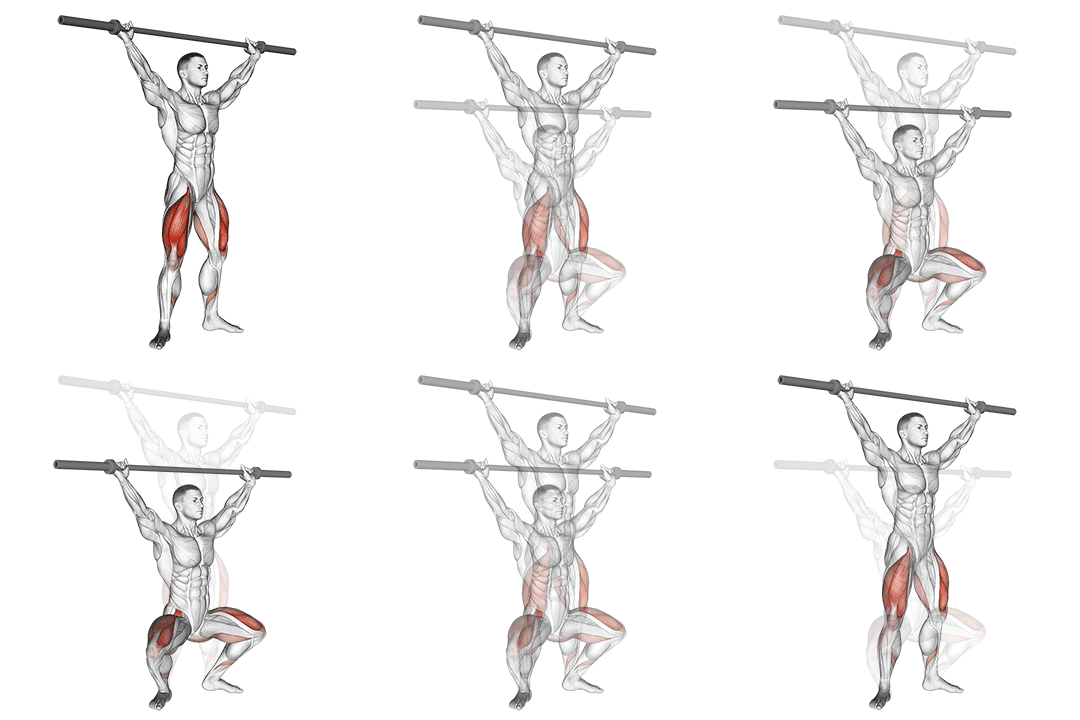
Barbell Overhead Squat
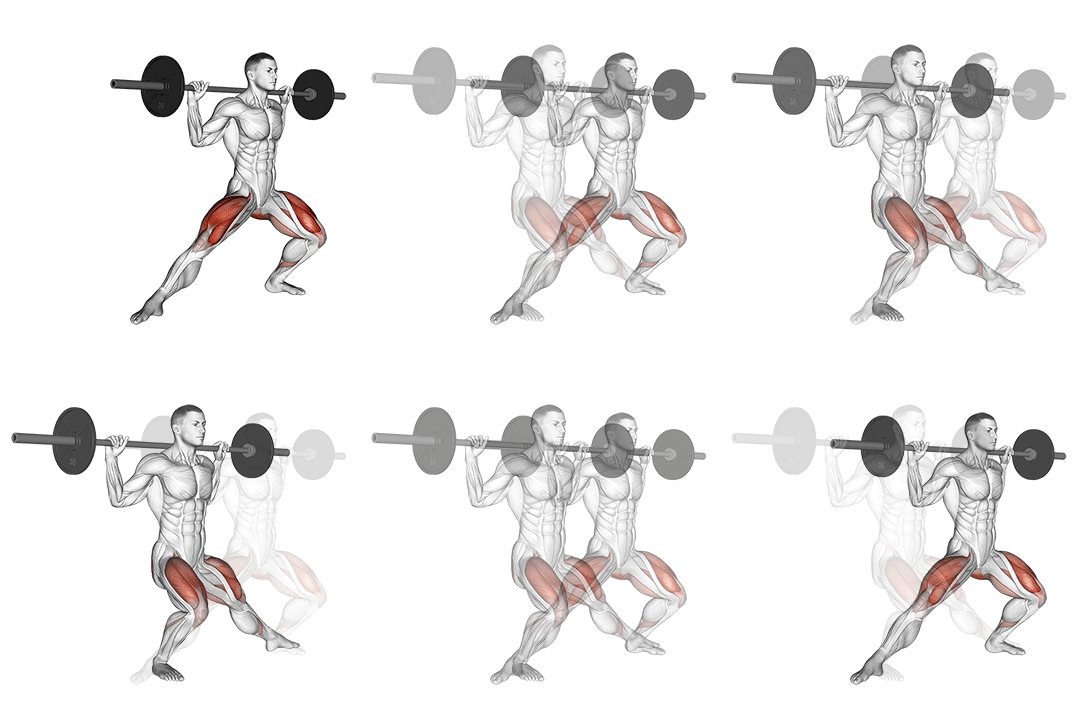
Barbell Side Split Squat
Head-to-Head Comparison
| Attribute | Barbell Overhead Squat | Barbell Side Split Squat |
|---|---|---|
| Target Muscle |
Quads
|
Quads
|
| Body Part |
Upper-legs
|
Upper-legs
|
| Equipment |
Barbell
|
Barbell
|
| Difficulty |
Advanced
|
Intermediate
|
| Movement Type |
Compound
|
Compound
|
| Secondary Muscles |
4
|
3
|
Secondary Muscles Activated
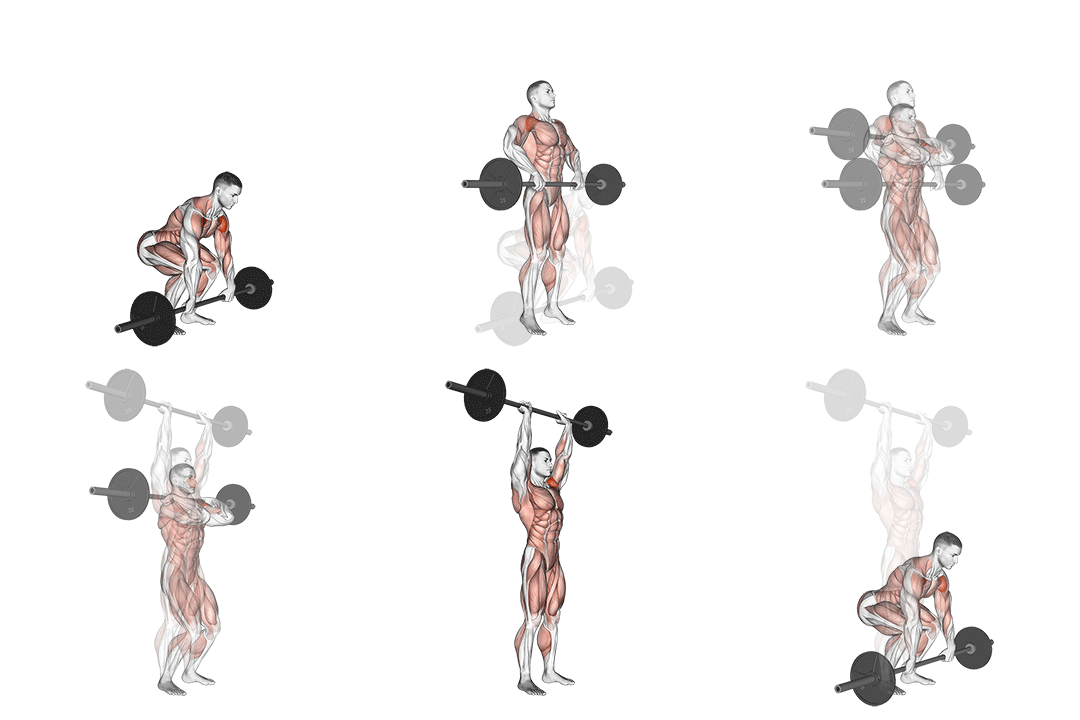
Barbell Overhead Squat
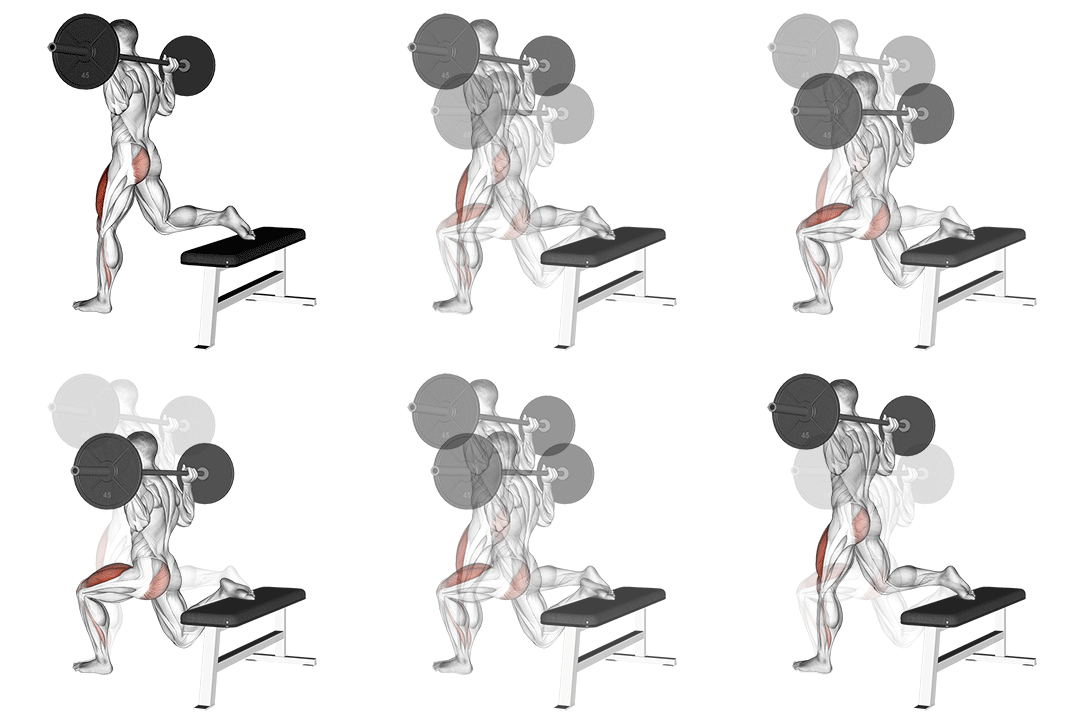
Barbell Side Split Squat
Visual Comparison
Overview
Barbell Overhead Squat vs Barbell Side Split Squat will help you choose the right quad-building move for your goals. Read on and I’ll break down how each exercise loads the quads, which secondary muscles get worked, what equipment and mobility you need, and practical technique cues so you can perform each safely. You’ll get clear recommendations for hypertrophy, strength, beginners, and home setups, plus rep ranges and progression options so you can apply the right choice to your program.
Key Differences
- Difficulty levels differ: Barbell Overhead Squat is advanced, while Barbell Side Split Squat is intermediate.
- Both exercises target the Quads using Barbell. The main differences are in their movement patterns and muscle activation angles.
Pros & Cons
Barbell Overhead Squat
+ Pros
- Builds full-body stability—strong anti-extension and scapular control under load
- Develops thoracic mobility and overhead shoulder strength
- Loads quads while also engaging glutes, hamstrings and core isometrically
- Improves coordination and dynamic balance through a deep, multi-joint pattern
− Cons
- Requires high shoulder and thoracic mobility plus overhead clearance
- Harder to load heavily for pure quad hypertrophy due to stability limits
- Higher technical demand increases injury risk if mobility is limited
Barbell Side Split Squat
+ Pros
- Easier to load progressively for quad hypertrophy and strength
- Lower technical and mobility demands—quicker to learn
- Strong unilateral stimulus reduces bilateral compensation and balances legs
- Can be scaled with dumbbells for home use and varied foot positions
− Cons
- Less demand on upper back and core stability compared to overhead squat
- Requires good frontal-plane control; knee valgus is a common fault
- May place more stress on adductors and ipsilateral hip if stance is extreme
When Each Exercise Wins
The side split squat allows heavier, unilateral loading and longer time under tension in the quads (sets of 6–12 reps) and limits stabilizer fatigue that would cap load in overhead positions. Its vertical torso and direct knee torque place larger compressive load on the quadriceps for muscle growth.
You can progressively overload the working leg more safely in 3–6 rep strength ranges and reduce technical leakage. While the overhead squat trains full-body strength and stability, the side split squat produces greater absolute knee extensor torque and allows higher external loads for leg strength.
It has a simpler motor pattern, less mobility prerequisite, and clear positional cues (knees track toes, torso upright, weight through midfoot) so novices can load and progress quickly without complex overhead requirements.
It can be done with dumbbells if no barbell is available, needs no overhead clearance, and adapts to limited space, making it the practical choice for home strength and hypertrophy work.
Frequently Asked Questions
Can I do both Barbell Overhead Squat and Barbell Side Split Squat in the same workout?
Yes. Use the side split squat as the primary heavy quad exercise (3–5 sets of 6–12 reps) and follow or precede with lighter overhead squat work (2–4 sets of 3–6 reps or technical sets) to train stability without fatiguing the prime movers excessively.
Which exercise is better for beginners?
Barbell Side Split Squat is better for beginners because it has fewer mobility and coordination demands. Start with bodyweight or light loads, focus on knee tracking and a vertical torso, then progress load once form is consistent.
How do the muscle activation patterns differ?
Overhead squats distribute activation across quads, glutes, hamstrings, lats and core due to the long overhead lever, increasing isometric demand. Side split squats concentrate activation on the working leg’s quads and hip stabilizers with higher unilateral knee extensor torque and frontal-plane co-contraction.
Can Barbell Side Split Squat replace Barbell Overhead Squat?
Yes for pure quad strength and hypertrophy—side split squats are a better direct substitute. No if your goal is overhead stability, thoracic mobility, or full-body coordination; the overhead squat trains those qualities uniquely.
Expert Verdict
Use the Barbell Side Split Squat when your primary goal is quad hypertrophy or leg strength because it lets you load the knee extensors more directly and progress with heavier unilateral sets (6–12 reps for growth, 3–6 for strength). Choose the Barbell Overhead Squat when you need full-body stability, thoracic mobility, and overhead control—it’s an advanced tool to build core anti-extension, scapular stability, and dynamic balance. Programming tip: pair 2–4 sets of side split squats as your main quad movement and add overhead squats as a technical stability drill or periodic test of mobility and control (3–5 reps, lighter loads).
Also Compare
More comparisons with Barbell Overhead Squat
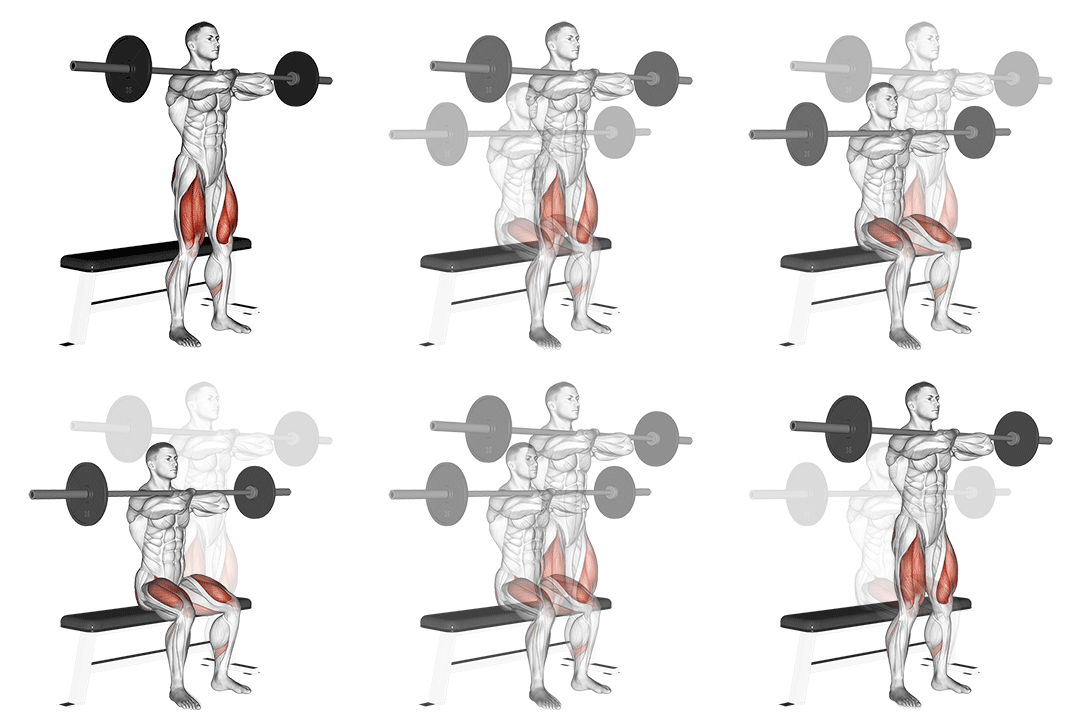
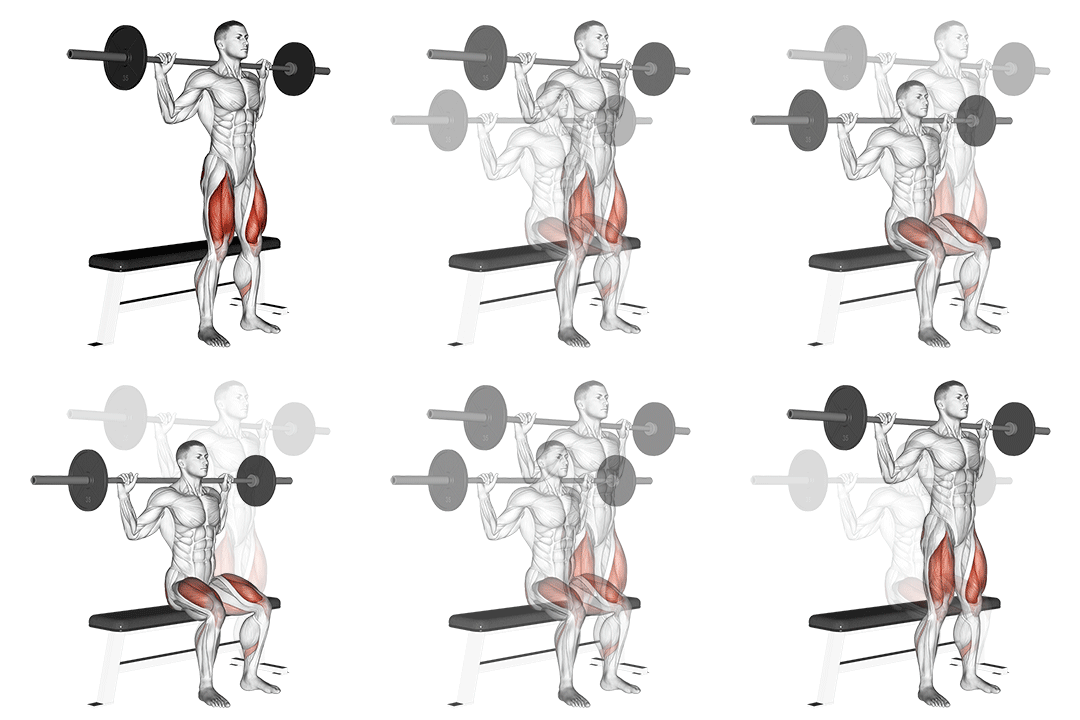
More comparisons with Barbell Side Split Squat
Compare More Exercises
Use our free comparison tool to analyze any two exercises head-to-head.
Compare Exercises