

Barbell Reverse Grip Skullcrusher vs Jm Press
Compare target muscles, equipment, difficulty, movement type, and secondary muscles for Barbell Reverse Grip Skullcrusher and Jm Press.
Get comparison link
Select the link and use your device's Copy command.
Comparison overview
AI-generatedExercise Comparison
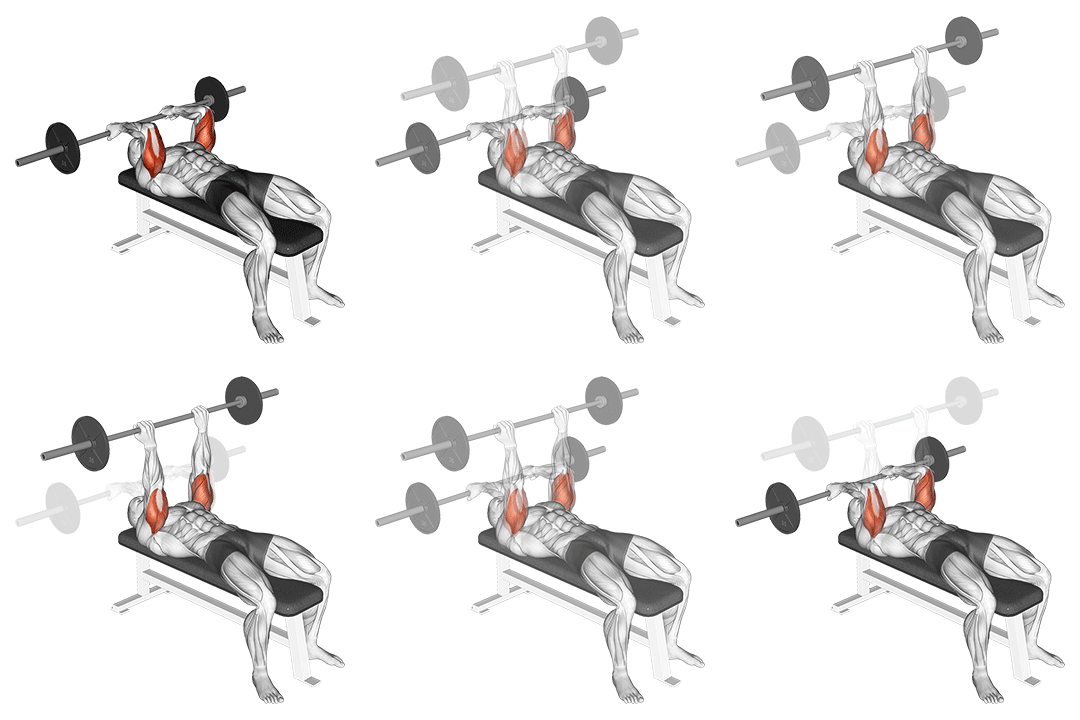
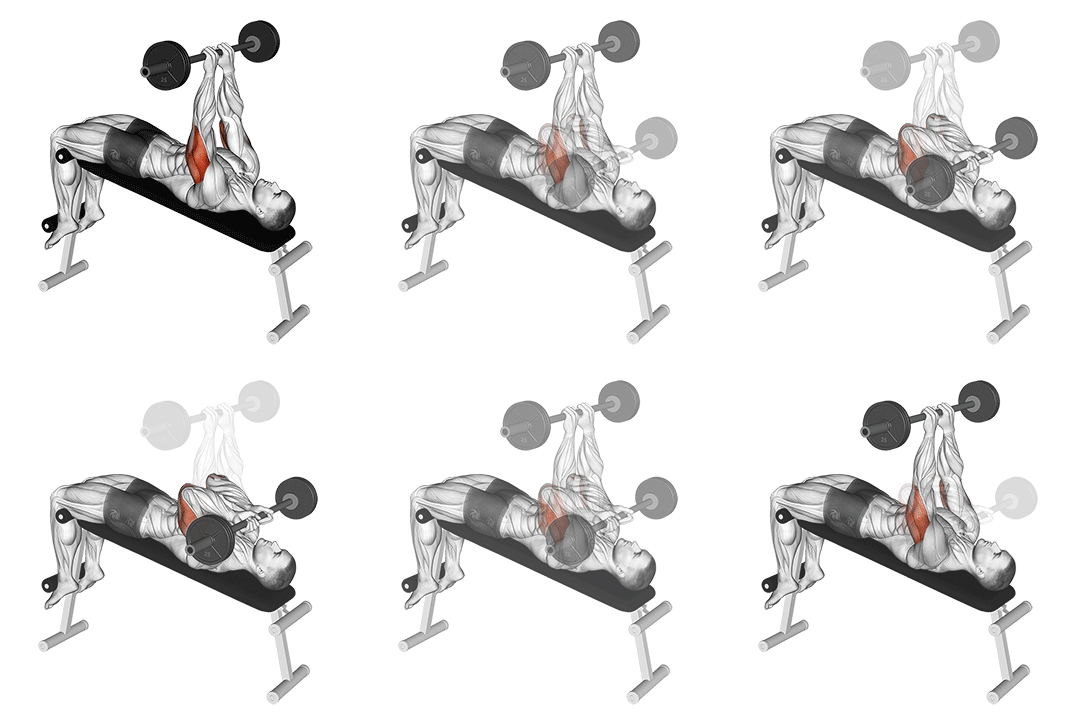
Barbell Reverse Grip Skullcrusher
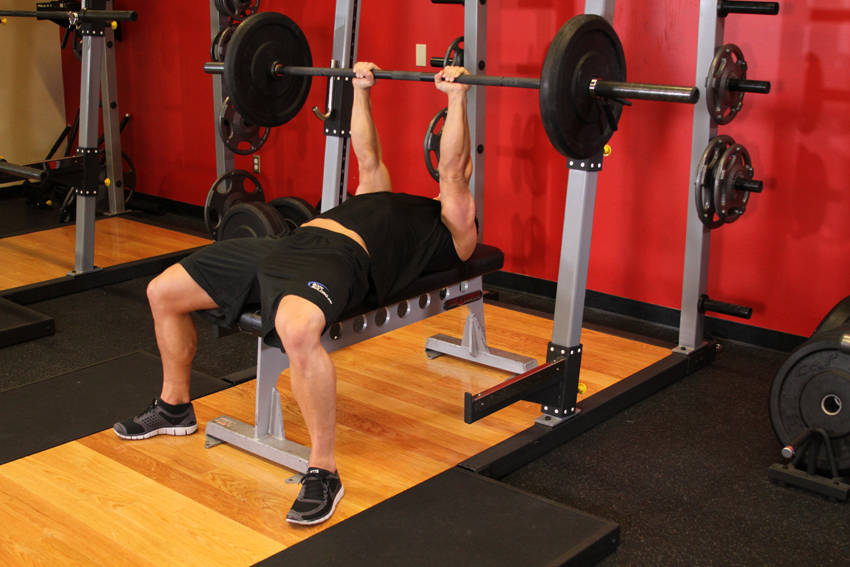
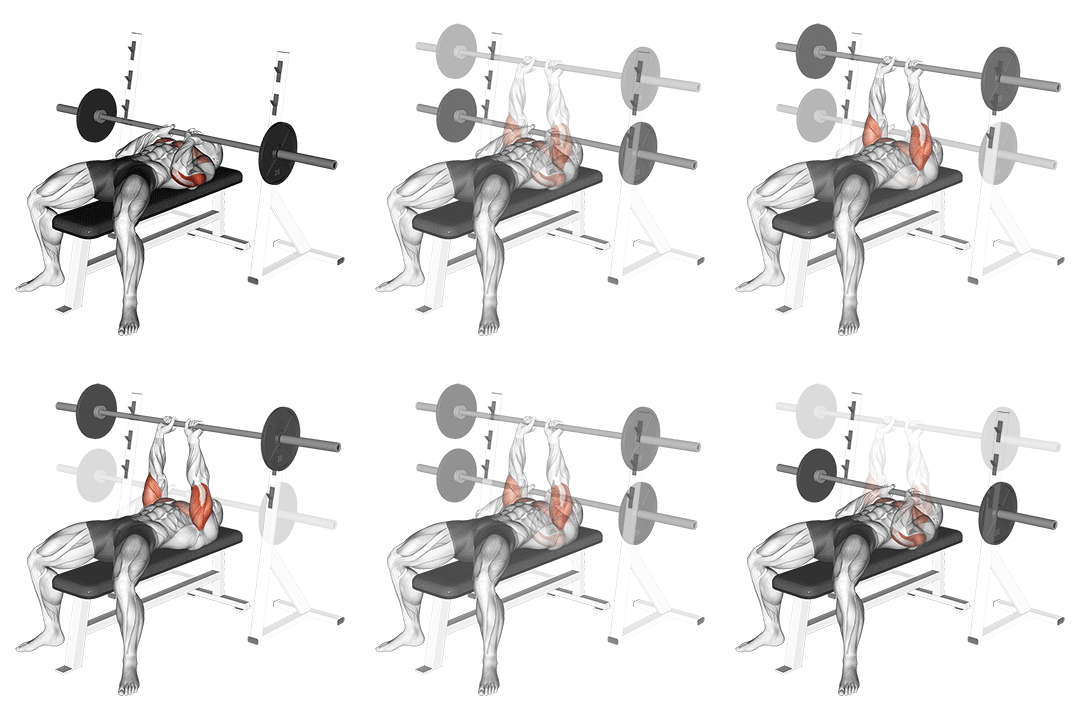
Jm Press
Head-to-Head Comparison
Different values are marked. These are catalogue attributes, not performance scores.
Muscles used
Listed target and secondary muscles, shown on the body. Locations, not activation or strength scores.
- Target
- Secondary
- Not highlighted
Barbell Reverse Grip Skullcrusher
- Target
- Triceps
- Secondary
- Forearms
Jm Press
- Target
- Triceps
- Secondary
- Chest, Shoulders
Not shown on diagram: Shoulders. These labels do not identify a precise region on this map.
Grey does not mean a muscle is unused. The diagrams show only the mapped catalogue labels.
| Attribute | Barbell Reverse Grip Skullcrusher | Jm Press |
|---|---|---|
| Target Muscle | Triceps |
Triceps |
| Body Part | Upper-arms |
Upper-arms |
| Equipment | Barbell |
Barbell |
| Difficulty Different | Intermediate |
Advanced |
| Movement Type Different | Isolation |
Compound |
| Secondary Muscles Different | Forearms |
Chest, Shoulders |
Visual Comparison
An illustrative 1–10 profile derived from catalog difficulty, equipment, and listed-muscle fields—not measured performance or muscle activation.
Key Differences
- Barbell Reverse Grip Skullcrusher is an isolation exercise, while Jm Press is a compound movement.
- Difficulty levels differ: Barbell Reverse Grip Skullcrusher is intermediate, while Jm Press is advanced.
- Both exercises target the Triceps using Barbell. The catalogue does not establish which exercise is better for an individual goal.
Muscle comparison
Shared target muscles
Secondary muscle differences
Muscle involvement analysis
Equipment and setup
Barbell Reverse Grip Skullcrusher: setup
Jm Press: setup
Access and practicality
Learning and progression
Learning the movements
Progression considerations
Limitations and precautions
Pros & Cons
Barbell Reverse Grip Skullcrusher
+ Pros
- Direct triceps isolation for focused muscle growth
- Lower systemic fatigue — ideal for high-volume triceps work (8–12 reps)
- Requires minimal coaching once basic hinge mechanics are reliable
- Reverse grip increases forearm/stabilizer engagement and can reduce wrist extension stress
− Cons
- High localized elbow and tendon stress under heavy loads
- Limited load capacity compared with compound presses
- Form breakdown (elbow flare/prolonged extension) quickly increases injury risk
Jm Press
+ Pros
- Compound pattern allows heavier loads and more strength transfer
- Recruits chest and anterior deltoid to share load, reducing pure elbow strain
- Great for bridging bench-press strength and triceps overload
- Efficient for combining strength and size work in fewer exercises
− Cons
- More complex technique — timing of press and elbow hinge must be precise
- Higher shoulder stress if bar path or elbow tuck is incorrect
- Less pure triceps isolation; harder to target specific triceps heads
When Each Exercise Wins
Skullcrushers place continuous, isolated tension on the triceps across a large length change, making them ideal for 8–12 rep hypertrophy blocks and focused volume. Use progressive overload with strict form to minimize elbow tendon load.
The JM press lets you use heavier loads by recruiting pecs and delts alongside the triceps, boosting overall pressing strength and transfer to bench variations. Work in lower rep ranges (4–6) to build maximal force.
The skullcrusher’s single-joint pattern is easier to learn and coach: keep the upper arms steady and hinge at the elbows. Beginners can safely progress with lighter loads and higher reps while mastering elbow mechanics.
You only need a barbell and bench to perform skullcrushers with effective volume. JM press is doable at home, but heavier loading safely requires a spotter or rack setup for re-racking.
Frequently Asked Questions
Can I do both Barbell Reverse Grip Skullcrusher and JM Press in the same workout?
Which exercise is better for beginners?
How do the muscle activation patterns differ?
Can JM Press replace Barbell Reverse Grip Skullcrusher?
Comparison Summary
Exercise instructions
Steps from the exercise catalogue. Read the full sequence before starting.
Barbell Reverse Grip Skullcrusher
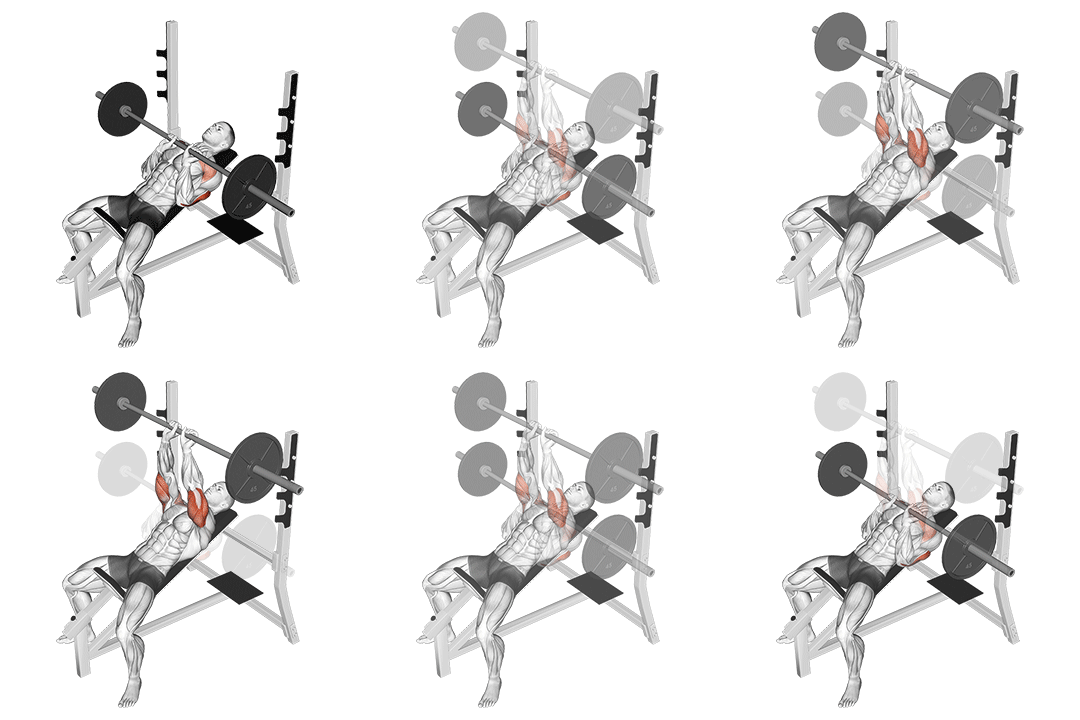
- Lie flat on a bench with your feet flat on the ground and your head at the end of the bench.
- Hold the barbell with a reverse grip, palms facing towards your face, and your hands shoulder-width apart.
- Extend your arms straight up over your chest, keeping your elbows in and your wrists straight.
Read remaining steps for Barbell Reverse Grip Skullcrusher
- Slowly lower the barbell towards your forehead by bending your elbows, keeping your upper arms stationary.
- Pause for a moment at the bottom, then extend your arms back up to the starting position.
- Repeat for the desired number of repetitions.
Jm Press
- Start the exercise the same way you would a close grip bench press. You will lie on a flat bench while holding a barbell at arms length (fully extended) with the elbows in. However, instead of having the arms perpendicular to the torso, make sure the bar is set in a direct line above the upper chest. This will be your starting position.
- Now beginning from a fully extended position lower the bar down as if performing a lying triceps extension. Inhale as you perform this movement. When you reach the half way point, let the bar roll back about one inch by moving the upper arms towards your legs until they are perpendicular to the torso. Tip: Keep the bend at the elbows constant as you bring the upper arms forward.
- As you exhale, press the bar back up by using the triceps to perform a close grip bench press.
Read remaining steps for Jm Press
- Now go back to the starting position and start over.
- Repeat for the recommended amount of repetitions.
Also Compare

Compare another pair
Choose two exercises to see their differences side by side.