

Barbell Straight Leg Deadlift vs Clean Deadlift: Complete Comparison Guide
Barbell Straight Leg Deadlift vs Clean Deadlift — two barbell pulls that both hammer the hamstrings but do it in very different ways. You’ll get clear, practical guidance on primary muscle activation, secondary recruitment, equipment needs, technique cues, rep ranges, and programming. I’ll show when to choose the straight-leg option for stretch and hamstring isolation and when the clean-style pull is the smarter pick for full-body strength and power. Read on and you’ll leave with specific cues (hip hinge, knee angle, bar path), rep ranges, and a clear winner for common goals.
Exercise Comparison
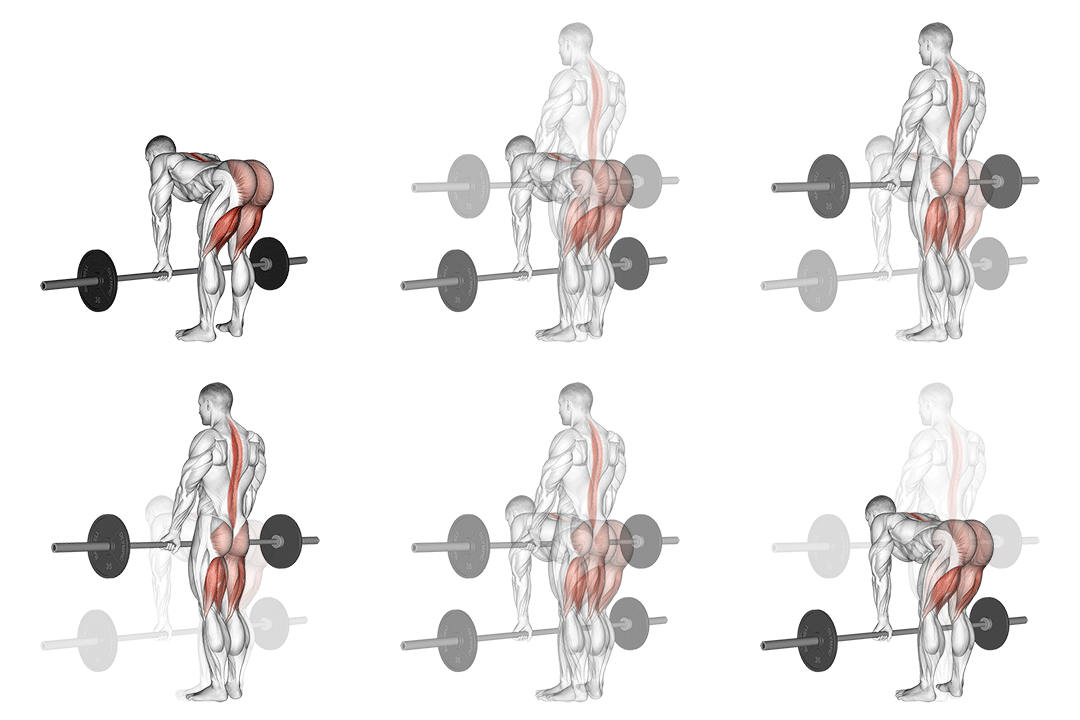
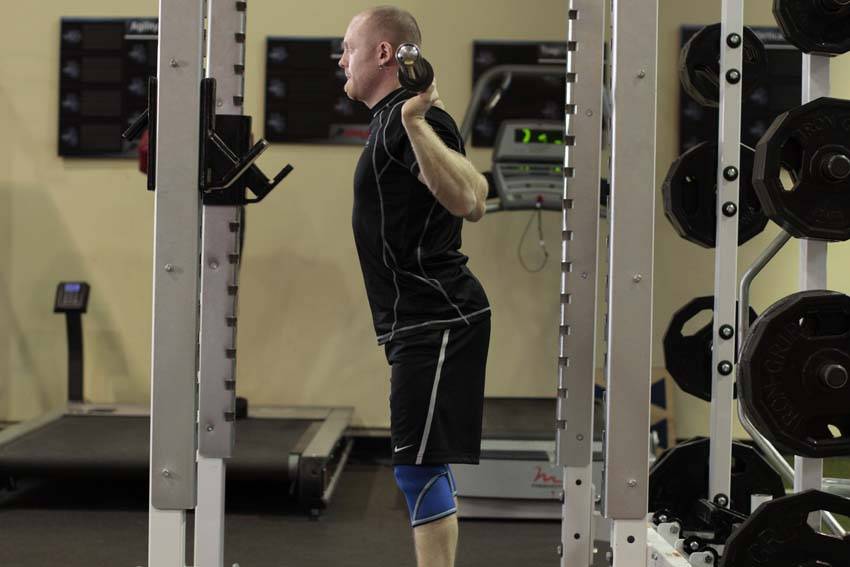
Barbell Straight Leg Deadlift
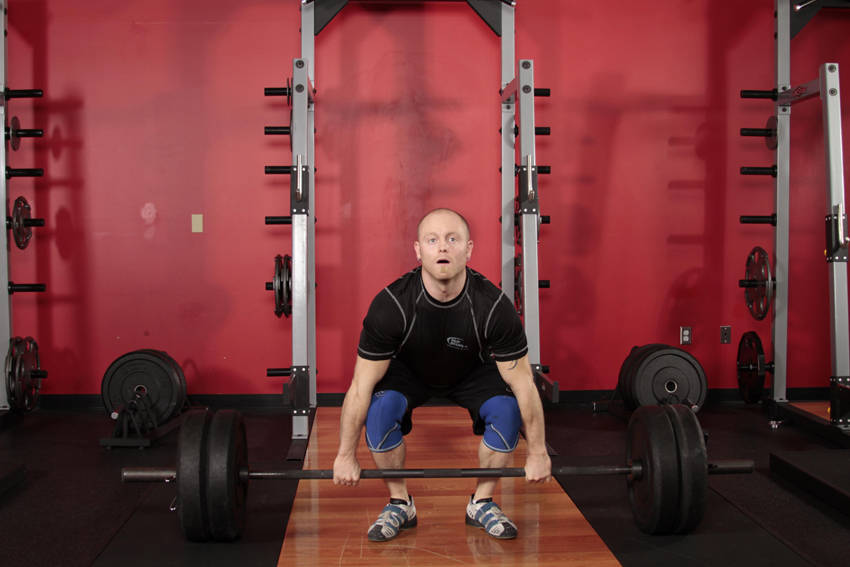
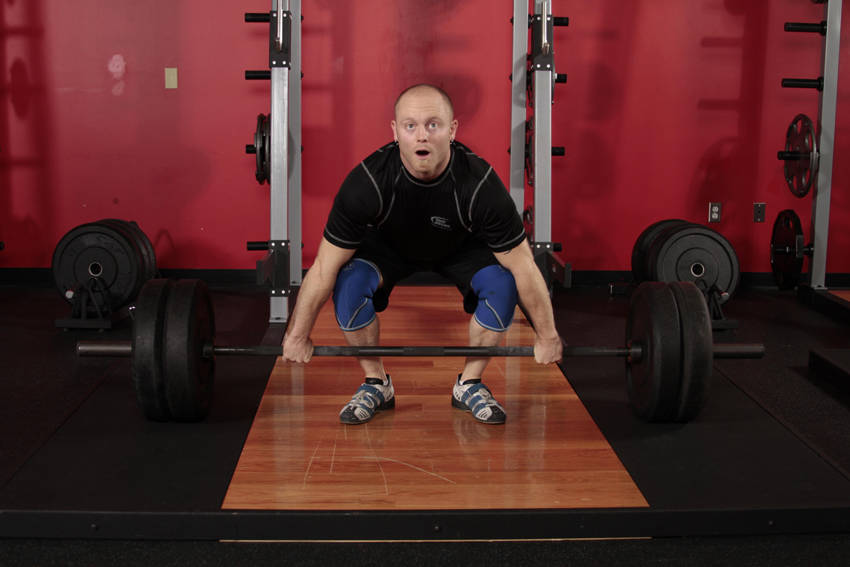
Clean Deadlift
Head-to-Head Comparison
| Attribute | Barbell Straight Leg Deadlift | Clean Deadlift |
|---|---|---|
| Target Muscle |
Hamstrings
|
Hamstrings
|
| Body Part |
Upper-legs
|
Upper-legs
|
| Equipment |
Barbell
|
Barbell
|
| Difficulty |
Intermediate
|
Intermediate
|
| Movement Type |
Compound
|
Compound
|
| Secondary Muscles |
2
|
6
|
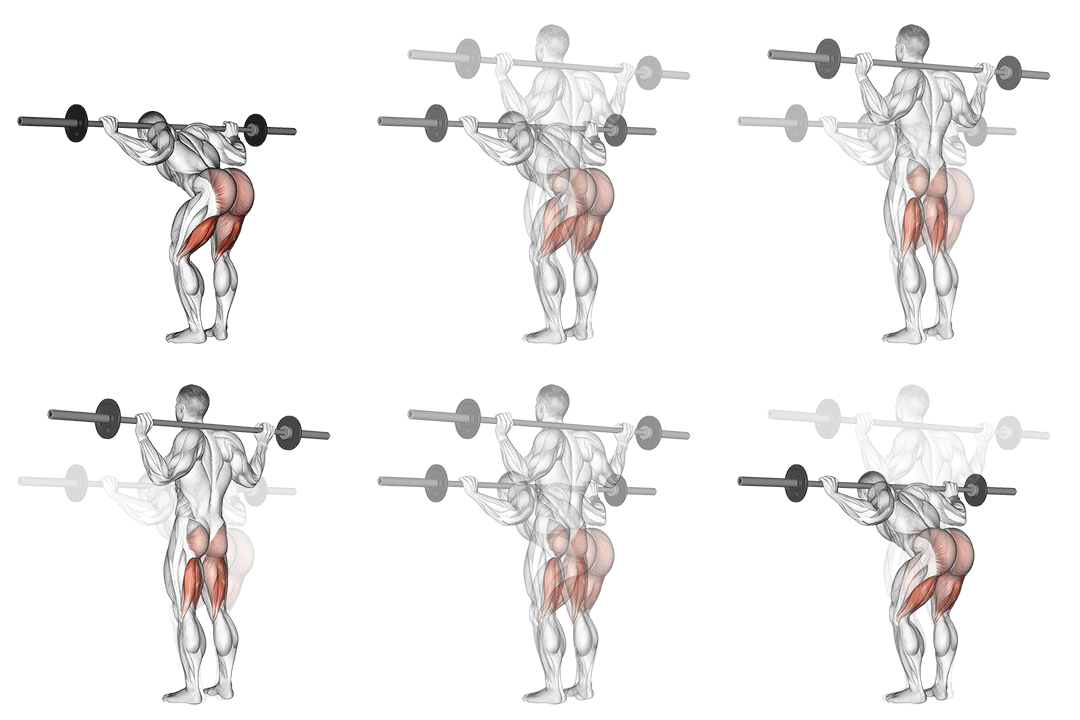
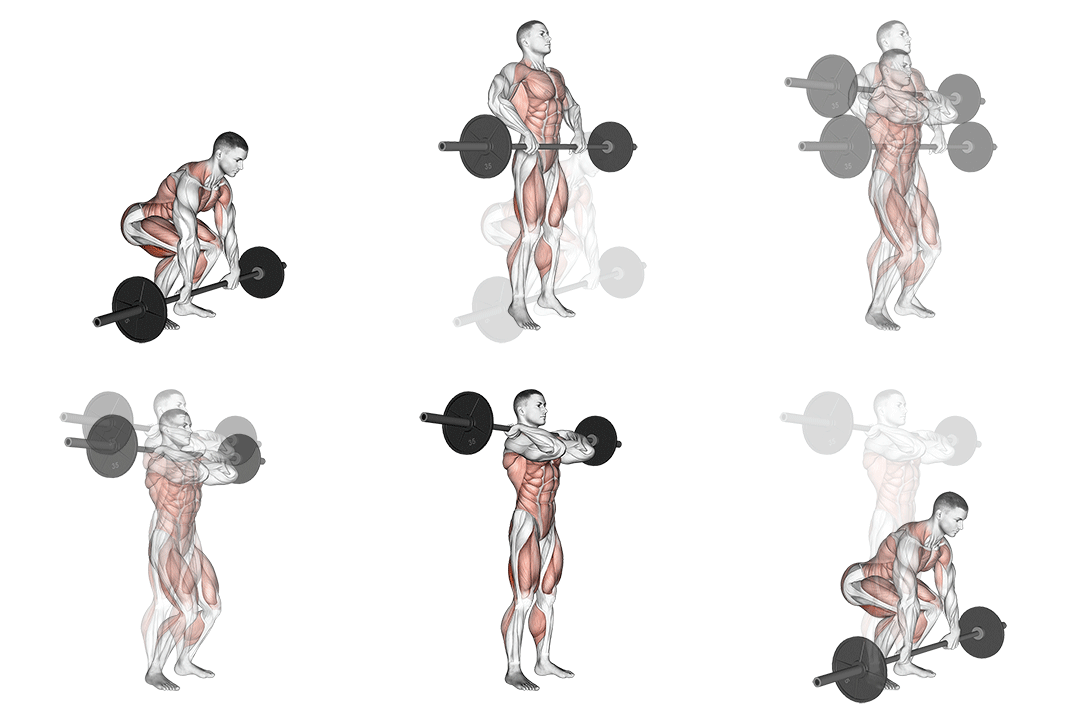
Secondary Muscles Activated
Barbell Straight Leg Deadlift
Clean Deadlift
Visual Comparison
Overview
Barbell Straight Leg Deadlift vs Clean Deadlift — two barbell pulls that both hammer the hamstrings but do it in very different ways. You’ll get clear, practical guidance on primary muscle activation, secondary recruitment, equipment needs, technique cues, rep ranges, and programming. I’ll show when to choose the straight-leg option for stretch and hamstring isolation and when the clean-style pull is the smarter pick for full-body strength and power. Read on and you’ll leave with specific cues (hip hinge, knee angle, bar path), rep ranges, and a clear winner for common goals.
Key Differences
- Both exercises target the Hamstrings using Barbell. The main differences are in their movement patterns and muscle activation angles.
Pros & Cons
Barbell Straight Leg Deadlift
+ Pros
- Direct hamstring bias via long eccentric stretch and minimal knee flexion
- Simple hip-hinge pattern—fast to learn and coach
- Requires minimal equipment and space
- Great for 8–15 rep hypertrophy work and targeting posterior chain length-tension
− Cons
- Limited quadriceps and trap development compared with clean-style pulls
- Potential lower-back stress if lumbar flexion occurs during lowering
- Less direct carryover to explosive power and Olympic lifts
Clean Deadlift
+ Pros
- Builds whole-body pulling strength—quads, glutes, hamstrings, traps, and back
- Higher ceiling for heavy loads and power transfer (useful for cleans and athletic training)
- Improves grip and upper-back strength through heavier and more technical pulls
- Versatile: trains the first pull mechanics used in Olympic lifts
− Cons
- More technical; requires precise timing of hip and knee extension
- Needs more space and ideally bumper plates/platform for explosive progression
- Higher chance of form breakdown under maximal loads, increasing injury risk
When Each Exercise Wins
SLDL increases hamstring time under tension and stretches the hamstrings more at the bottom, making it superior for targeted hypertrophy in the 8–15 rep range. Its consistent hip-hinge bias overloads the posterior chain without excessive quad contribution.
The Clean Deadlift allows heavier loading and recruits the quads, traps, and entire posterior chain, yielding better transfer to maximal pulling strength and overall barbell strength development.
SLDL has a simpler movement pattern to teach (hip hinge, neutral spine, bar path) and fewer technical cues, so beginners can safely build posterior-chain strength before advancing to cleaner mechanics.
SLDL requires only a barbell and modest space, no platform or bumper plates, making it far more practical for home setups while still providing effective hamstring loading.
Frequently Asked Questions
Can I do both Barbell Straight Leg Deadlift and Clean Deadlift in the same workout?
Yes—you can pair them if programming smartly. Do the more technical, heavy clean-style pulls early for strength/power (3–6 reps), then follow with SLDLs as an accessory for hamstring hypertrophy (8–12 reps) to avoid fatigue-driven technique breakdown.
Which exercise is better for beginners?
Barbell Straight Leg Deadlift is better for beginners because it isolates the hip-hinge pattern with fewer timing cues. Teach neutral spine, bar close to shins, and hip drive first before introducing the coordinated knee-hip timing of the clean-style pull.
How do the muscle activation patterns differ?
SLDL emphasizes hamstring eccentric stretch and hip-dominant extension, giving peak activation at deep hip flexion. Clean Deadlift uses simultaneous knee and hip extension, shifting activation from quads in the initial drive to the posterior chain as the bar passes the knees.
Can Clean Deadlift replace Barbell Straight Leg Deadlift?
Not entirely—Clean Deadlift can build overall strength and recruit hamstrings, but it won't reproduce the long eccentric stretch and isolation SLDL provides for hamstring hypertrophy. Use the clean-style pull for strength/power and SLDL for targeted hamstring development.
Expert Verdict
Use the Barbell Straight Leg Deadlift when your priority is hamstring hypertrophy, posterior-chain isolation, or limited equipment. Cue a slight knee bend (5–15°), hinge from the hips, keep the bar close to the legs, and stop when you feel a firm hamstring stretch—ideal rep ranges are 8–15 and sets of 3–4. Choose the Clean Deadlift when you want maximal pulling strength, quad involvement, and transfer to Olympic lifting; set up with a mid-shin bar, drive through the legs while keeping a flat back, and progress with heavier loads and lower reps (3–6). Both lifts have a place: SLDL for targeted posterior-chain development and SLDL-friendly programming, Clean Deadlift for total-body strength and power.
Also Compare
More comparisons with Barbell Straight Leg Deadlift
Compare More Exercises
Use our free comparison tool to analyze any two exercises head-to-head.
Compare Exercises