

Barbell Straight Leg Deadlift vs Sumo Deadlift: Complete Comparison Guide
Barbell Straight Leg Deadlift vs Sumo Deadlift — you’re choosing between two deadlift styles that both hit the hamstrings but load the body very differently. In this guide you’ll learn how each move stresses the posterior chain, which muscles secondarily take over, how biomechanics like lever arms and torso angle change force production, and which exercise to pick for muscle growth, strength, or technical simplicity. I’ll give actionable setup and technique cues, rep-range recommendations, and clear scenarios to help you pick the right lift for your goals.
Exercise Comparison
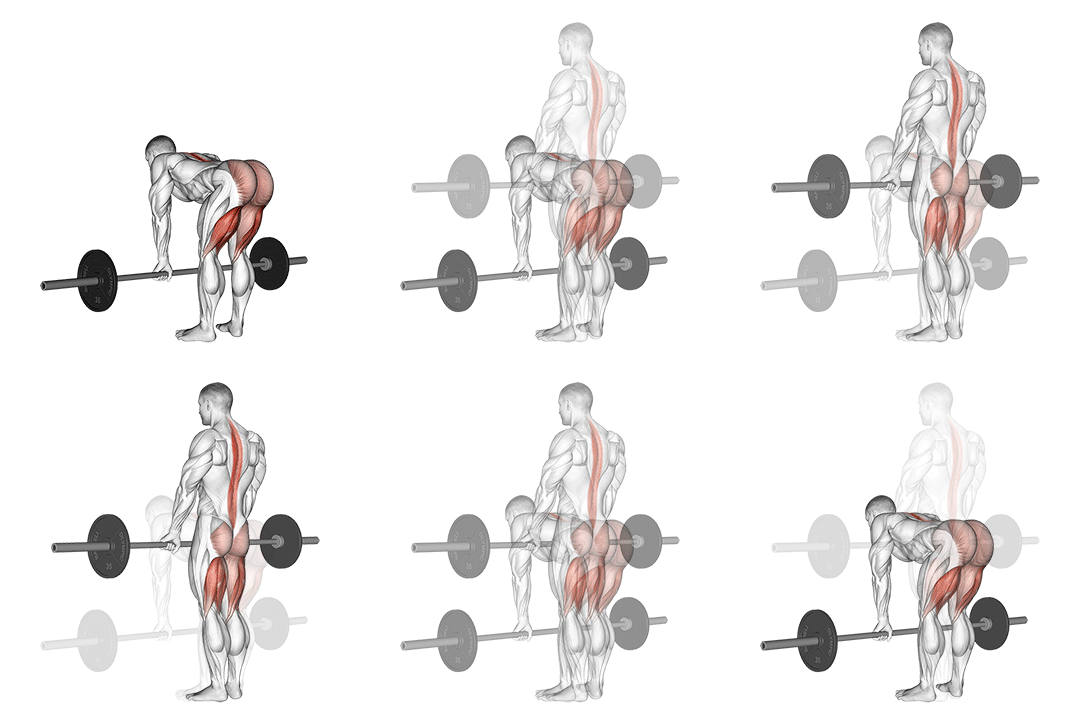
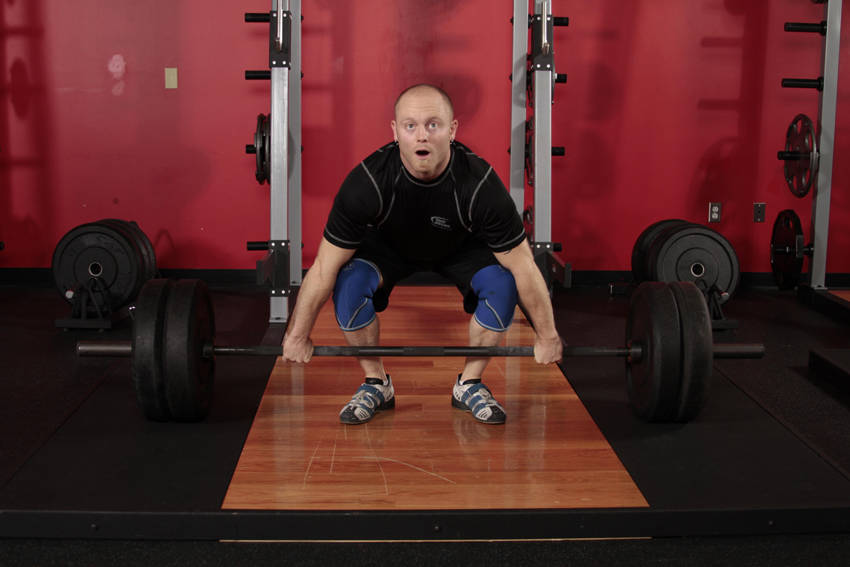
Barbell Straight Leg Deadlift
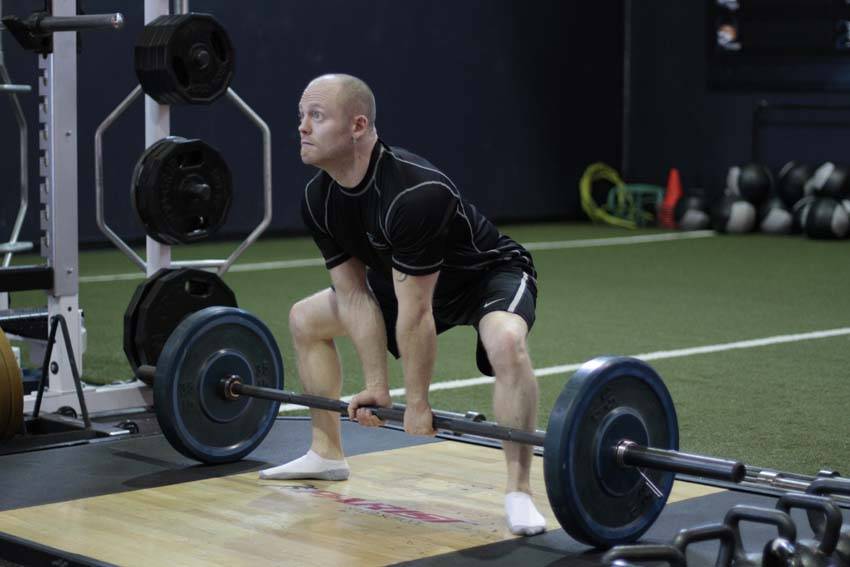
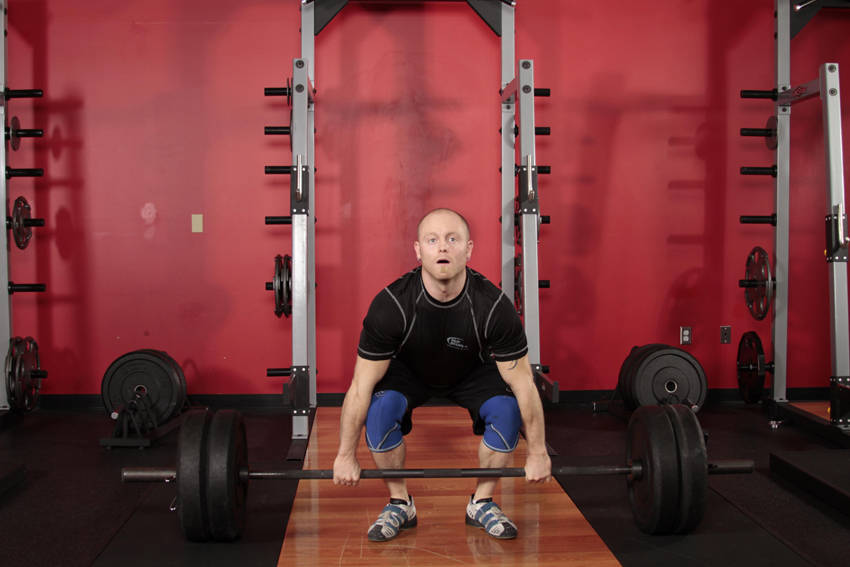
Sumo Deadlift
Head-to-Head Comparison
| Attribute | Barbell Straight Leg Deadlift | Sumo Deadlift |
|---|---|---|
| Target Muscle |
Hamstrings
|
Hamstrings
|
| Body Part |
Upper-legs
|
Upper-legs
|
| Equipment |
Barbell
|
Barbell
|
| Difficulty |
Intermediate
|
Advanced
|
| Movement Type |
Compound
|
Compound
|
| Secondary Muscles |
2
|
7
|
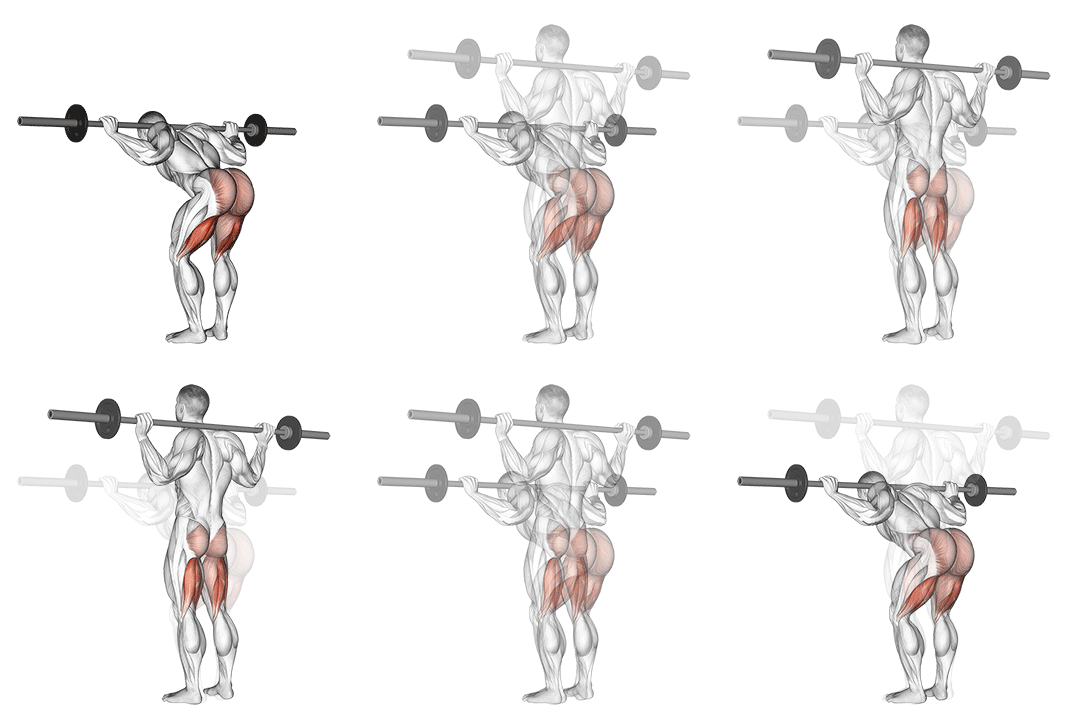
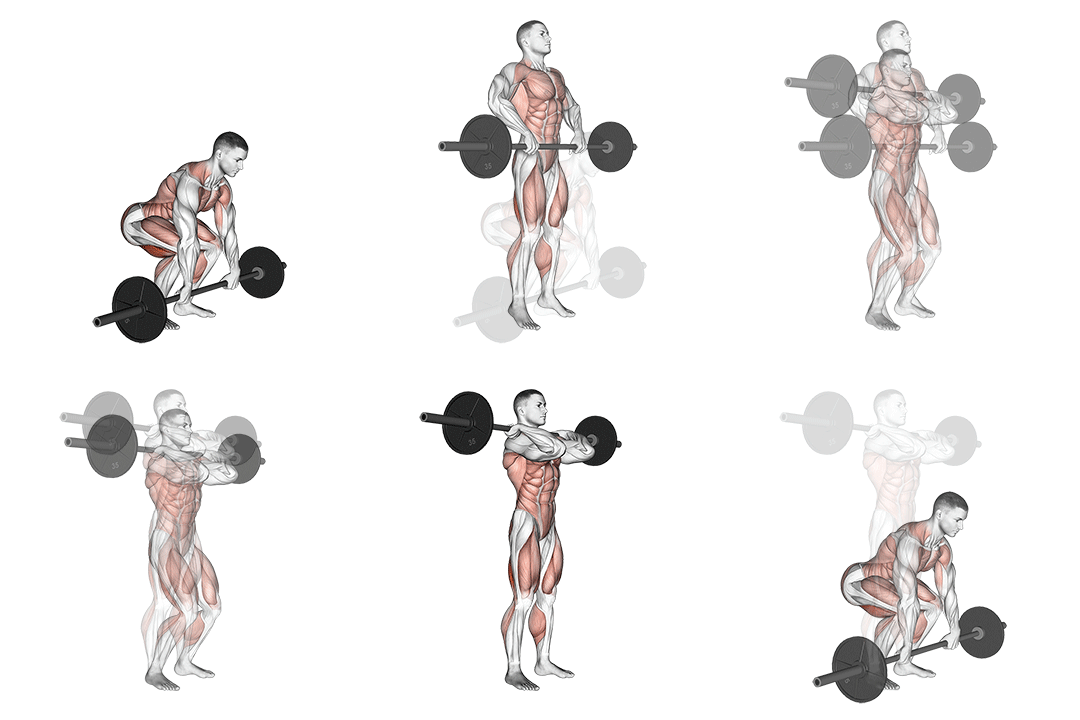
Secondary Muscles Activated
Barbell Straight Leg Deadlift
Sumo Deadlift
Visual Comparison
Overview
Barbell Straight Leg Deadlift vs Sumo Deadlift — you’re choosing between two deadlift styles that both hit the hamstrings but load the body very differently. In this guide you’ll learn how each move stresses the posterior chain, which muscles secondarily take over, how biomechanics like lever arms and torso angle change force production, and which exercise to pick for muscle growth, strength, or technical simplicity. I’ll give actionable setup and technique cues, rep-range recommendations, and clear scenarios to help you pick the right lift for your goals.
Key Differences
- Difficulty levels differ: Barbell Straight Leg Deadlift is intermediate, while Sumo Deadlift is advanced.
- Both exercises target the Hamstrings using Barbell. The main differences are in their movement patterns and muscle activation angles.
Pros & Cons
Barbell Straight Leg Deadlift
+ Pros
- High hamstring and glute stretch stimulus for hypertrophy
- Simple setup—neutral stance and clear hip-hinge pattern
- Great for tempo-driven eccentric overload (2–4 second eccentrics)
- Minimal need for extreme hip mobility
− Cons
- Higher lumbar shear if you round the torso under load
- Depends on hamstring flexibility—limited ROM if tight
- Not ideal for maximizing 1RM strength due to long ROM
Sumo Deadlift
+ Pros
- Superior for maximal strength due to shorter ROM and leverage
- Loads quads, adductors, glutes, and traps—excellent full-body demand
- More vertical torso reduces lumbar shear when braced properly
- Often allows heavier loads for neural adaptation and strength cycles
− Cons
- Requires better hip abduction and external rotation mobility
- Technique setup is more complex and takes practice
- Narrow bar path margin for error—risk of knee valgus or adductor strain if misaligned
When Each Exercise Wins
The straight-leg deadlift places hamstrings in a lengthened, eccentric-biased position ideal for muscle growth. Use 6–12 reps with controlled 2–4 second eccentrics to maximize stretch-mediated hypertrophy.
Sumo allows heavier loads due to reduced ROM and better leverage, making it superior for 1–5 rep strength cycles and neural adaptation. Plan low-rep sets (1–5) with longer rests to build maximal force.
Its simpler hip-hinge pattern and narrower stance are easier to teach and monitor. Start with light loads, practice bracing and hamstring mobility, then add tempo and volume.
You only need a barbell and less floor space than sumo’s wide stance. It also scales well with lighter weights and tempo variations for muscle growth without heavy 1RM training.
Frequently Asked Questions
Can I do both Barbell Straight Leg Deadlift and Sumo Deadlift in the same workout?
Yes—you can combine them if structured correctly. Use one as your main heavy lift (sumo for low-rep strength or straight-leg for hypertrophy) and the other as a lighter accessory (3–5 sets of 6–12 reps or tempo-focused sets) with adequate rest.
Which exercise is better for beginners?
Barbell Straight Leg Deadlift is better to start with because it teaches a clear hip hinge and easier setup. Practice light loads, bracing, and tempo before attempting sumo’s wider stance and more complex positioning.
How do the muscle activation patterns differ?
Straight-leg deadlifts produce higher eccentric hamstring and glute tension due to longer ROM and greater hip flexion, while sumo shifts force vectors to increase quad and adductor contribution and shorten hamstring ROM, changing moment arms and compressive vs shear spinal loading.
Can Sumo Deadlift replace Barbell Straight Leg Deadlift?
Sumo can replace straight-leg for strength cycles, but it won’t replicate the same hamstring stretch stimulus important for hypertrophy. If your goal is posterior-chain size, keep straight-leg variations in your program as an accessory.
Expert Verdict
Choose the Barbell Straight Leg Deadlift when your priority is hamstring-focused hypertrophy, eccentric control, and a simpler setup—aim for 6–12 reps, deliberate eccentrics, and strict neutral spine. Pick the Sumo Deadlift when raw strength and heavier loads matter; its shorter ROM and more vertical torso let you progress heavier for 1–5 rep strength phases while recruiting quads, adductors, and traps. If you’re a beginner or training at home, start with straight-leg variations and build mobility; advanced lifters chasing strength should program sumo as a primary pull or heavy variation alongside accessory posterior-chain work.
Also Compare
More comparisons with Barbell Straight Leg Deadlift
Compare More Exercises
Use our free comparison tool to analyze any two exercises head-to-head.
Compare Exercises