

Basic Toe Touch (male) vs Bodyweight Drop Jump Squat: Complete Comparison Guide
Basic Toe Touch (male) vs Bodyweight Drop Jump Squat is a direct look at two bodyweight moves that both target the glutes but use very different mechanics. If you want clear guidance on which to pick, this comparison breaks down muscle activation, movement patterns, equipment need, risk, and programming. I’ll show technique cues, rep ranges (8–15 for isolation work, 3–6 explosive reps for plyometrics), when to prioritize each exercise, and how biomechanics like length–tension and the stretch–shortening cycle change the outcome.
Exercise Comparison
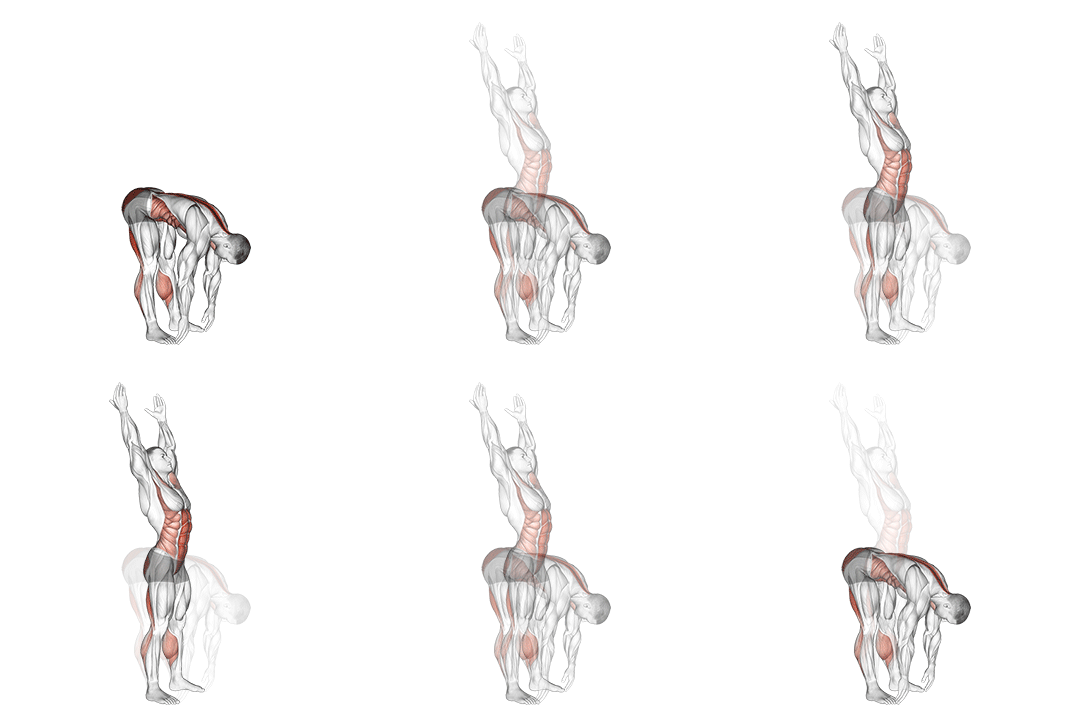
Basic Toe Touch (male)
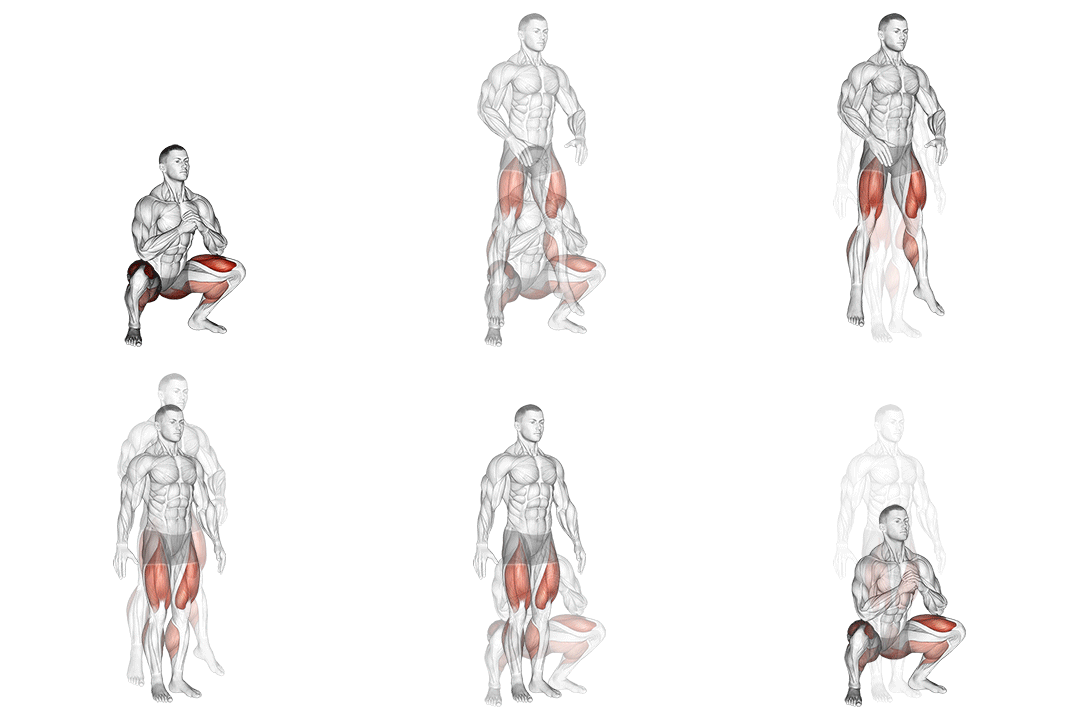
Bodyweight Drop Jump Squat
Head-to-Head Comparison
| Attribute | Basic Toe Touch (male) | Bodyweight Drop Jump Squat |
|---|---|---|
| Target Muscle |
Glutes
|
Glutes
|
| Body Part |
Upper-legs
|
Upper-legs
|
| Equipment |
Body-weight
|
Body-weight
|
| Difficulty |
Beginner
|
Intermediate
|
| Movement Type |
Isolation
|
Compound
|
| Secondary Muscles |
2
|
3
|
Secondary Muscles Activated
Basic Toe Touch (male)
Bodyweight Drop Jump Squat
Visual Comparison
Overview
Basic Toe Touch (male) vs Bodyweight Drop Jump Squat is a direct look at two bodyweight moves that both target the glutes but use very different mechanics. If you want clear guidance on which to pick, this comparison breaks down muscle activation, movement patterns, equipment need, risk, and programming. I’ll show technique cues, rep ranges (8–15 for isolation work, 3–6 explosive reps for plyometrics), when to prioritize each exercise, and how biomechanics like length–tension and the stretch–shortening cycle change the outcome.
Key Differences
- Basic Toe Touch (male) is an isolation exercise, while Bodyweight Drop Jump Squat is a compound movement.
- Difficulty levels differ: Basic Toe Touch (male) is beginner, while Bodyweight Drop Jump Squat is intermediate.
- Both exercises target the Glutes using Body-weight. The main differences are in their movement patterns and muscle activation angles.
Pros & Cons
Basic Toe Touch (male)
+ Pros
- Direct glute isolation with strong peak contraction
- Low impact and safe for limited space
- Simple technique suitable for beginners
- Easy to control tempo for time under tension
− Cons
- Limited overload options without added resistance
- Less carryover to explosive power or sprinting
- Lower overall caloric and systemic demand
Bodyweight Drop Jump Squat
+ Pros
- Builds explosive power via the stretch–shortening cycle
- Greater total-limb recruitment, including quads and hamstrings
- Easily scalable for power training (box height, sets of 3–6)
- Improves reactive strength and athleticism
− Cons
- Higher impact increases injury risk if technique is poor
- Requires more space and a stable platform
- Steeper learning curve and not ideal for absolute beginners
When Each Exercise Wins
For targeted glute hypertrophy, the isolation and ability to control tempo make the Basic Toe Touch superior. Use 3–4 sets of 8–15 reps with 2–4 second eccentrics to maximize time under tension and length–tension benefits.
To improve explosive lower-body strength and rate of force development, the Drop Jump Squat wins due to high motor-unit recruitment and the stretch–shortening cycle. Program short sets (3–6 reps) and 2–3 minutes rest to prioritize power adaptations.
Beginners benefit from the lower risk and simpler hip-hinge mechanics of the Toe Touch, which builds glute control before adding high-impact drills. Start with mastery of form and progress tempo before introducing plyometrics.
Because it needs no box or large landing area, the Toe Touch is the clear home-workout winner. It’s easier to scale with tempo and unilateral variations in small spaces.
Frequently Asked Questions
Can I do both Basic Toe Touch (male) and Bodyweight Drop Jump Squat in the same workout?
Yes—pair them strategically: perform Basic Toe Touch sets first to pre-exhaust glutes if your aim is hypertrophy, or do Drop Jump Squats first to train pure power. Keep plyometrics separate from high-volume fatigue work; for example, 3–6 plyo reps before 3 sets of 8–12 isolation reps.
Which exercise is better for beginners?
Basic Toe Touch (male) is better for beginners due to lower impact and simpler mechanics. Master hip-hinge, spinal neutrality, and glute contraction before introducing drop jumps and reactive landings.
How do the muscle activation patterns differ?
The Toe Touch emphasizes slow concentric contraction and sustained glute activation at longer muscle lengths, exploiting length–tension. The Drop Jump Squat relies on a rapid eccentric phase and elastic recoil (stretch–shortening cycle), increasing fast-twitch recruitment and transient force output.
Can Bodyweight Drop Jump Squat replace Basic Toe Touch (male)?
Not completely—Drop Jump Squats improve power and global lower-body strength but don’t match the targeted time under tension and isolation that the Toe Touch provides for glute hypertrophy. Use them together across training phases for complementary benefits.
Expert Verdict
Use the Basic Toe Touch (male) when your goal is focused glute development, rehabilitation, or low-impact training—prioritize 3–4 sets of 8–15 reps with controlled eccentrics to exploit length–tension. Choose the Bodyweight Drop Jump Squat when you need power, athletic transfer, or to train explosive hip extension—perform 3–6 explosive reps with full recovery and safe landings. For balanced programming, alternate phases: 4–8 weeks of Toe Touch work for hypertrophy and motor control, then 2–6 weeks of Drop Jump Squat to convert strength into power, ensuring technique and load are adjusted progressively.
Also Compare
More comparisons with Basic Toe Touch (male)
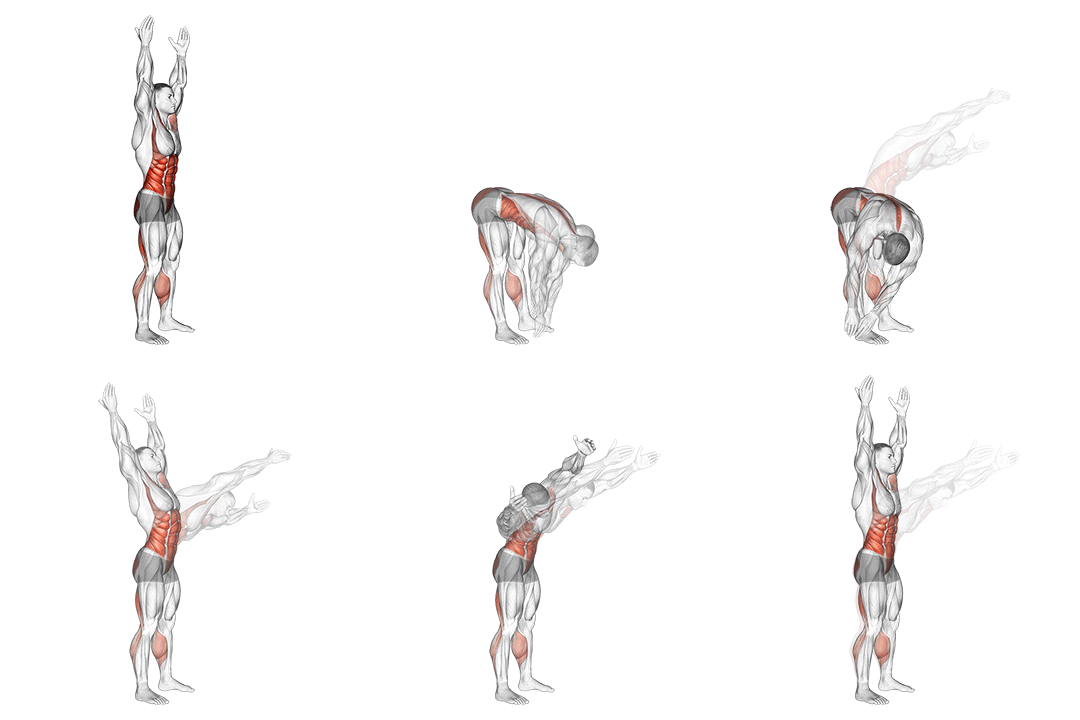
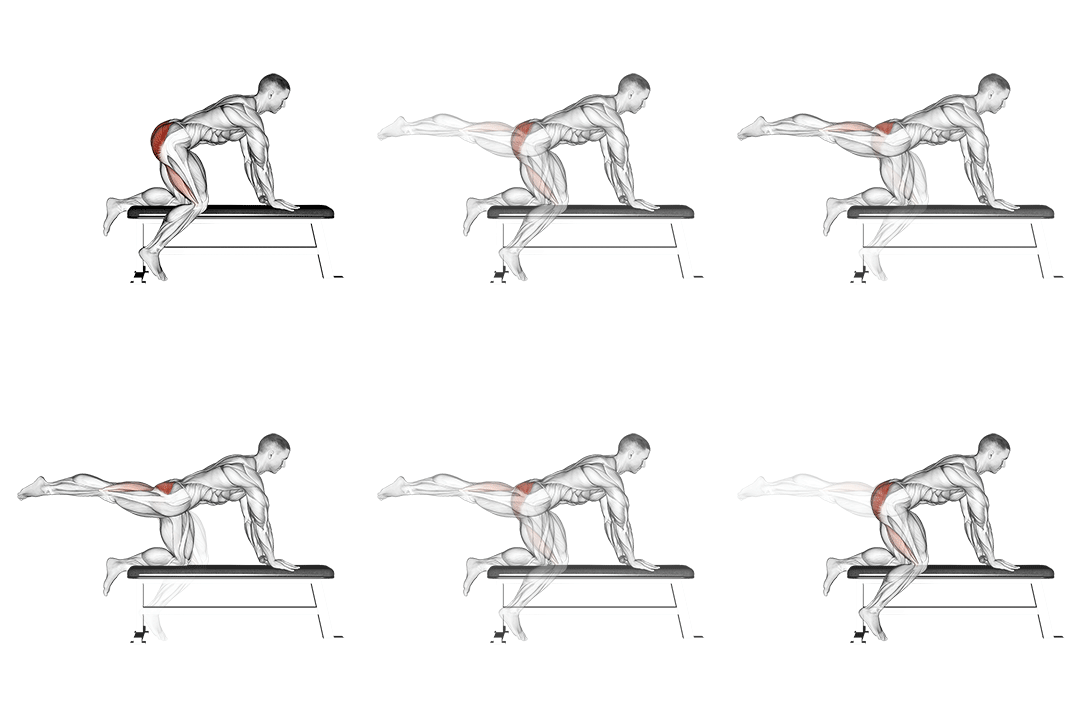
More comparisons with Bodyweight Drop Jump Squat
Compare More Exercises
Use our free comparison tool to analyze any two exercises head-to-head.
Compare Exercises