

Bench Hip Extension vs Bodyweight Drop Jump Squat: Complete Comparison Guide
Bench Hip Extension vs Bodyweight Drop Jump Squat — you’re comparing two glute-focused moves that train very different qualities. You’ll get clear, practical guidance on how each exercise loads the glutes, how they recruit quads and hamstrings, the equipment and space you need, and specific technique cues to perform them safely. Read on to decide which to use for hypertrophy, strength, power, or a simple home routine, with rep ranges, box heights, and key biomechanics explained so you can apply the right choice to your program.
Exercise Comparison
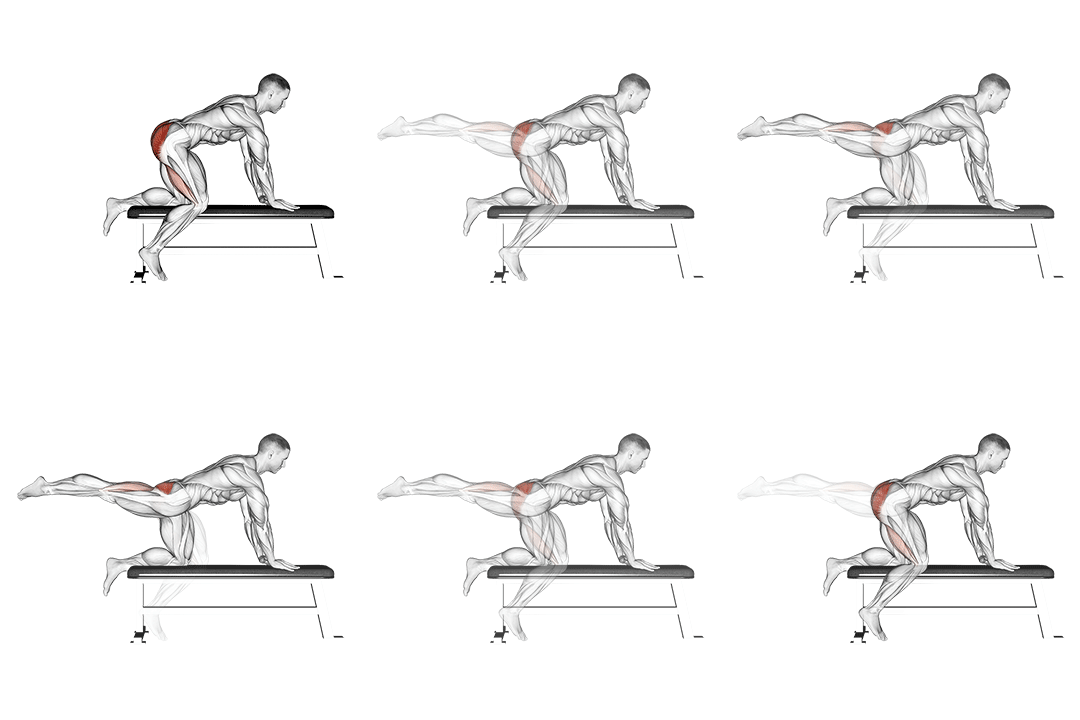
Bench Hip Extension
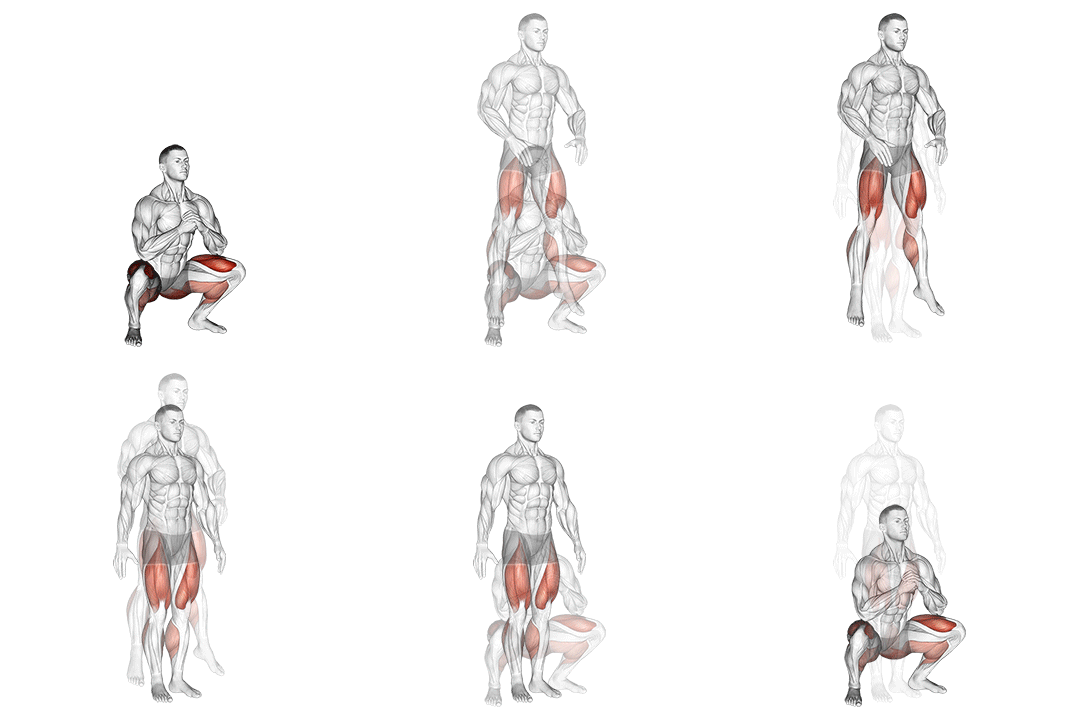
Bodyweight Drop Jump Squat
Head-to-Head Comparison
| Attribute | Bench Hip Extension | Bodyweight Drop Jump Squat |
|---|---|---|
| Target Muscle |
Glutes
|
Glutes
|
| Body Part |
Upper-legs
|
Upper-legs
|
| Equipment |
Body-weight
|
Body-weight
|
| Difficulty |
Beginner
|
Intermediate
|
| Movement Type |
Compound
|
Compound
|
| Secondary Muscles |
1
|
3
|
Secondary Muscles Activated
Bench Hip Extension
Bodyweight Drop Jump Squat
Visual Comparison
Overview
Bench Hip Extension vs Bodyweight Drop Jump Squat — you’re comparing two glute-focused moves that train very different qualities. You’ll get clear, practical guidance on how each exercise loads the glutes, how they recruit quads and hamstrings, the equipment and space you need, and specific technique cues to perform them safely. Read on to decide which to use for hypertrophy, strength, power, or a simple home routine, with rep ranges, box heights, and key biomechanics explained so you can apply the right choice to your program.
Key Differences
- Difficulty levels differ: Bench Hip Extension is beginner, while Bodyweight Drop Jump Squat is intermediate.
- Both exercises target the Glutes using Body-weight. The main differences are in their movement patterns and muscle activation angles.
Pros & Cons
Bench Hip Extension
+ Pros
- Direct glute isolation with long time under tension — good for hypertrophy
- Low-impact and beginner-friendly; easier to coach and learn
- Minimal equipment: bench or couch and bodyweight
- Easily progressed by adding weight, single-leg work, or tempo changes
− Cons
- Limited plyometric or power carryover compared with jump work
- Requires a bench or elevated surface (though a couch or step works)
- Can encourage lumbar hyperextension if you over-drive the hips at the top
Bodyweight Drop Jump Squat
+ Pros
- Excellent for developing rate-of-force-development and reactive power
- High multi-joint demand — trains hip, knee, and ankle coordination
- Builds athletic qualities: short ground contact and elastic force production
- No external load needed to create high training stimulus
− Cons
- Higher technical demand and greater impact on joints
- Less direct, sustained glute hypertrophy stimulus than hip-thrust style moves
- Requires safe landing surface and adequate space/box height
When Each Exercise Wins
Bench Hip Extension keeps the glutes under tension through a controlled range and is easy to progressive overload (add bands/weight or slow tempo). Aim for 8–20 reps, 3–4 sets, and pause at top for stronger mechanical tension.
For raw hip-extension strength the bench variation allows longer, continuous force production and easier overload. Even though bodyweight, you can add load later to increase maximal force capacity at the hip joint.
A simpler movement pattern, low-impact loading, and clear cueing (drive through heels, squeeze glutes) make the bench exercise a safer starting point that teaches hip extension mechanics.
Most homes have a couch or bench substitute, and you avoid the space and equipment needs of a plyo box. The bench move is scalable and less risky on non-ideal surfaces.
Frequently Asked Questions
Can I do both Bench Hip Extension and Bodyweight Drop Jump Squat in the same workout?
Yes — sequencing matters: do strength-focused Bench Hip Extensions first (3–4 sets) to build force capacity, then add drop jump sets later to train rate-of-force and reactive power. Leave 48–72 hours before repeating intense plyometrics to allow tendon recovery.
Which exercise is better for beginners?
Bench Hip Extension is better for beginners because it teaches hip extension with low impact and simple cues (upper back on bench, drive through heels, squeeze glutes). Start there to build strength and motor control before adding plyometrics.
How do the muscle activation patterns differ?
Bench Hip Extension produces sustained concentric hip extension with high glute and hamstring recruitment at end-range, emphasizing length-tension. Drop Jump Squat relies on an eccentric pre-stretch and fast concentric output, so glutes fire reflexively alongside large quad and calf contributions during landing and takeoff.
Can Bodyweight Drop Jump Squat replace Bench Hip Extension?
Not if your goal is targeted glute hypertrophy or progressive overload — drop jumps are more for power and reactive training. You can use them complementarily, but don’t expect the same sustained glute tension or easy loading progression from plyometrics alone.
Expert Verdict
Use Bench Hip Extension when your goal is targeted glute development, safe progressive overload, or a low-impact option for beginners and home training. It emphasizes end-range hip extension, recruits hamstrings as synergists, and lets you control tempo and tension (8–20 reps, 3–4 sets). Choose Bodyweight Drop Jump Squat when you need power, rate-of-force-development, and athletic transfer — use low reps (3–8) and a 30–60 cm box, focusing on fast ground contact (<250–300 ms) and soft, tall land-to-explode technique. Both have a place: prioritize bench work for hypertrophy and strength foundations, add drop jumps for power and reactive training once your landing mechanics and base strength are solid.
Also Compare
More comparisons with Bench Hip Extension
More comparisons with Bodyweight Drop Jump Squat
Compare More Exercises
Use our free comparison tool to analyze any two exercises head-to-head.
Compare Exercises