

Bench Hip Extension vs Forward Lunge (male): Complete Comparison Guide
Bench Hip Extension vs Forward Lunge (male). {Exercise1} vs {Exercise2} — if you want clearer choices for glute development and leg strength, this guide has your back. You’ll get a side-by-side look at primary and secondary muscle activation, equipment needs, learning curve, and specific technique cues. I’ll compare biomechanics — hip vs knee-dominant force vectors, length-tension considerations, and recommended rep ranges — then give practical pick-for-purpose advice so you can choose the exercise that matches your goal and training environment.
Exercise Comparison
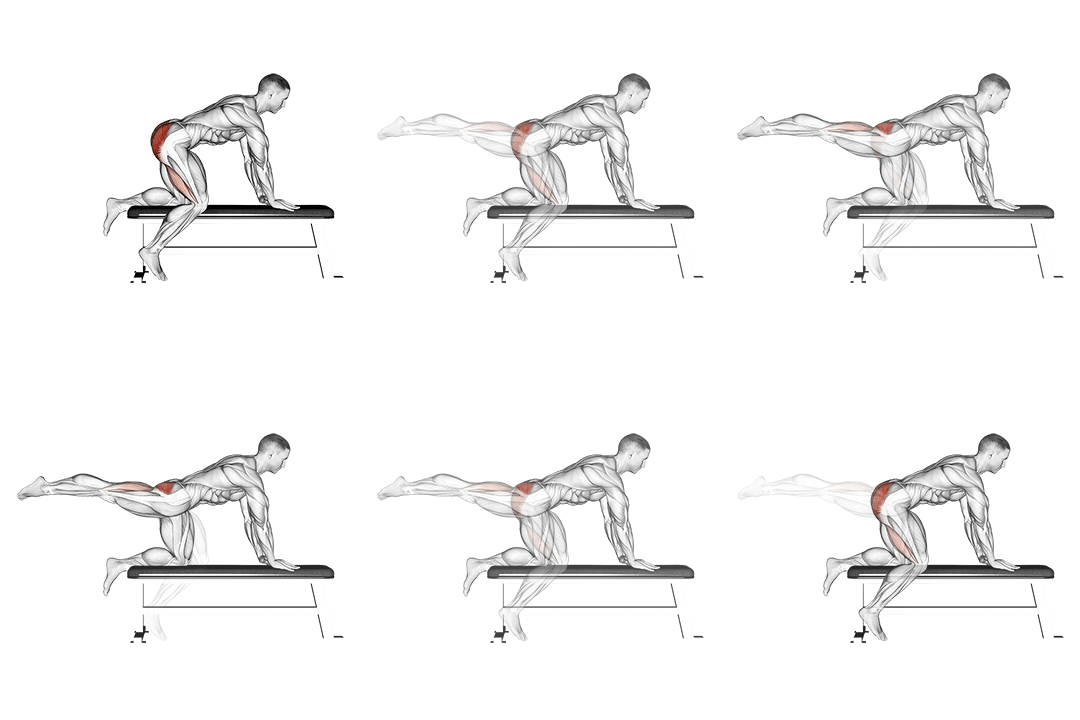
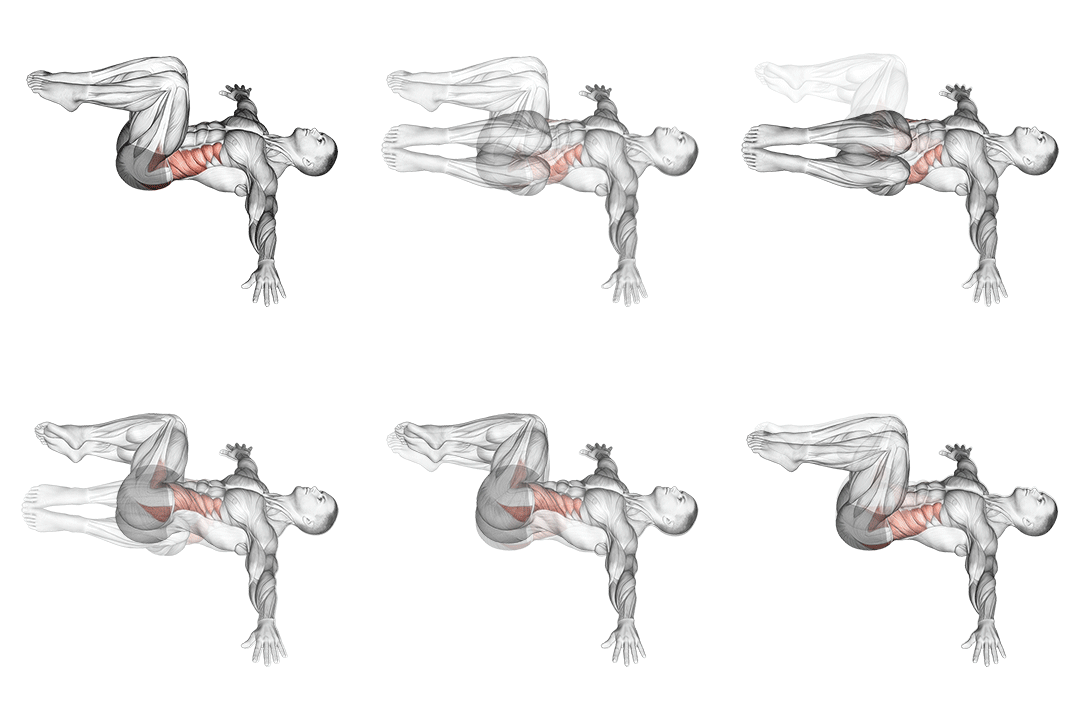
Bench Hip Extension
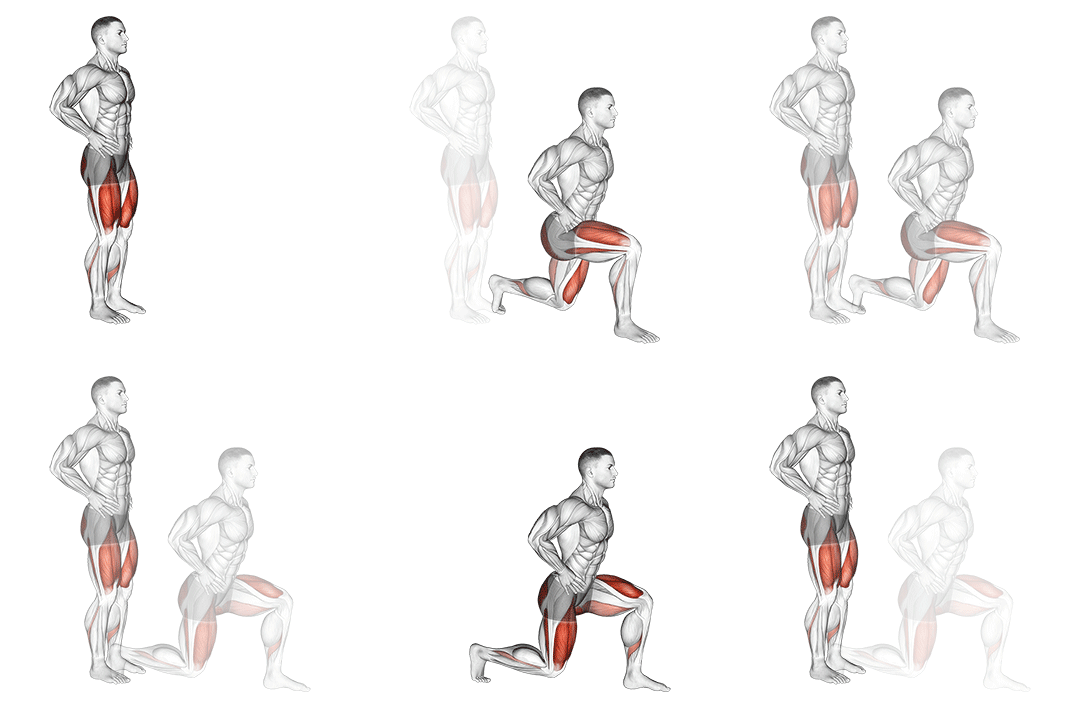
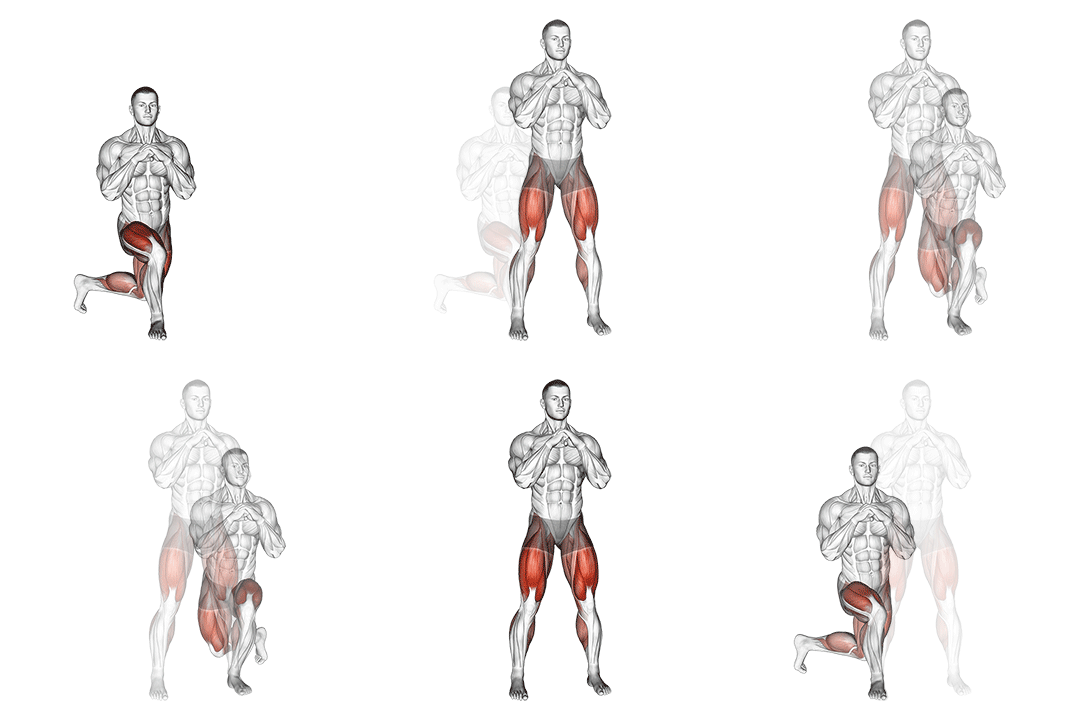
Forward Lunge (male)
Head-to-Head Comparison
| Attribute | Bench Hip Extension | Forward Lunge (male) |
|---|---|---|
| Target Muscle |
Glutes
|
Glutes
|
| Body Part |
Upper-legs
|
Upper-legs
|
| Equipment |
Body-weight
|
Body-weight
|
| Difficulty |
Beginner
|
Beginner
|
| Movement Type |
Compound
|
Compound
|
| Secondary Muscles |
1
|
3
|
Secondary Muscles Activated
Bench Hip Extension
Forward Lunge (male)
Visual Comparison
Overview
Bench Hip Extension vs Forward Lunge (male). {Exercise1} vs {Exercise2} — if you want clearer choices for glute development and leg strength, this guide has your back. You’ll get a side-by-side look at primary and secondary muscle activation, equipment needs, learning curve, and specific technique cues. I’ll compare biomechanics — hip vs knee-dominant force vectors, length-tension considerations, and recommended rep ranges — then give practical pick-for-purpose advice so you can choose the exercise that matches your goal and training environment.
Key Differences
- Both exercises target the Glutes using Body-weight. The main differences are in their movement patterns and muscle activation angles.
Pros & Cons
Bench Hip Extension
+ Pros
- High glute-targeting during terminal hip extension; excellent for muscle growth of the glute max
- Low spinal compressive load because torso is supported
- Beginner-friendly motor pattern with immediate hip-drive feedback (push the heel)
- Easy to isolate glutes with pauses and short holds at full extension
− Cons
- Requires a bench or elevated surface to perform
- Less effective at loading for maximal unilateral leg strength compared with lunges or squats
- Limited involvement of quadriceps and calves compared to multi-joint standing patterns
Forward Lunge (male)
+ Pros
- No equipment needed and highly accessible for home workouts
- Loads quads, glutes, hamstrings, and calves for balanced lower-leg development
- Great for unilateral strength, balance, and functional transfer to walking/running
- Easy to scale by adding weight, increasing range, or changing tempo
− Cons
- Requires good knee tracking and balance; form breakdown increases injury risk
- Can bias the quads, reducing isolated glute stimulus unless cues are applied
- Harder to overload glutes in full hip extension without adding complex variations
When Each Exercise Wins
Bench Hip Extension emphasizes terminal hip extension and creates strong glute max tension at end range, useful for hypertrophy when paired with 8–15 rep sets and 2–4 second eccentric control. Use single-leg bench hip extensions or added resistance to increase time under tension for targeted muscle growth.
Forward Lunges load the quadriceps and glutes through a larger torque at both the knee and hip, and they scale well with heavy loads (dumbbells, barbells) for true strength development. Unilateral loading also fixes bilateral strength imbalances and improves force transfer to real-world movements.
The supported position reduces balance demands and isolates hip extension, letting beginners feel glute contraction and learn proper heel drive without complex coordination. Start with 2–3 sets of 10–15 reps focusing on full hip extension and neutral spine.
Forward Lunges need no bench and are adaptable to tiny spaces; you can progress them by changing step length, tempo, or adding household weights. They give a full lower-leg stimulus with zero equipment.
Frequently Asked Questions
Can I do both Bench Hip Extension and Forward Lunge (male) in the same workout?
Yes. Pair Bench Hip Extensions as a glute-focused accessory (3 sets of 10–15) after compound lunges or squats to pre-exhaust or add volume. Use lunges earlier in the session when you need higher neural drive for heavy or loaded unilateral work.
Which exercise is better for beginners?
Bench Hip Extension is better for most beginners because the bench supports the torso and simplifies the hip-extension cue. It lets you learn to activate the glutes without the balance and knee-tracking demands of lunges.
How do the muscle activation patterns differ?
Bench Hip Extension creates a hip-dominant activation with glute max peaking at terminal extension and hamstrings acting as synergists. Forward Lunge produces stronger quadriceps activation around 70–100° of knee flexion, with glutes contributing more during the concentric hip drive out of the bottom.
Can Forward Lunge (male) replace Bench Hip Extension?
Forward Lunge can partially replace bench hip extensions for overall leg development, but it won’t match isolated glute tension at terminal extension. If your goal is pure glute hypertrophy, keep bench hip extensions or single-leg hip thrusts in the program alongside lunges.
Expert Verdict
Use Bench Hip Extension when your primary goal is direct glute development or when you need a low-back-friendly, supported hip-dominant movement. Aim for 3–4 sets of 8–15 reps, push through the heel, and pause 1–2 seconds at full extension to exploit length-tension and increase time under tension. Choose Forward Lunge (male) when you want functional unilateral strength, quad development, and scalable loading — perform 3–4 sets of 6–12 reps per leg with a step that allows ~90° front-knee flexion and an upright torso. Both belong in a balanced program: rotate them across phases to prioritize isolation or strength and to address stability and symmetry.
Also Compare
More comparisons with Bench Hip Extension
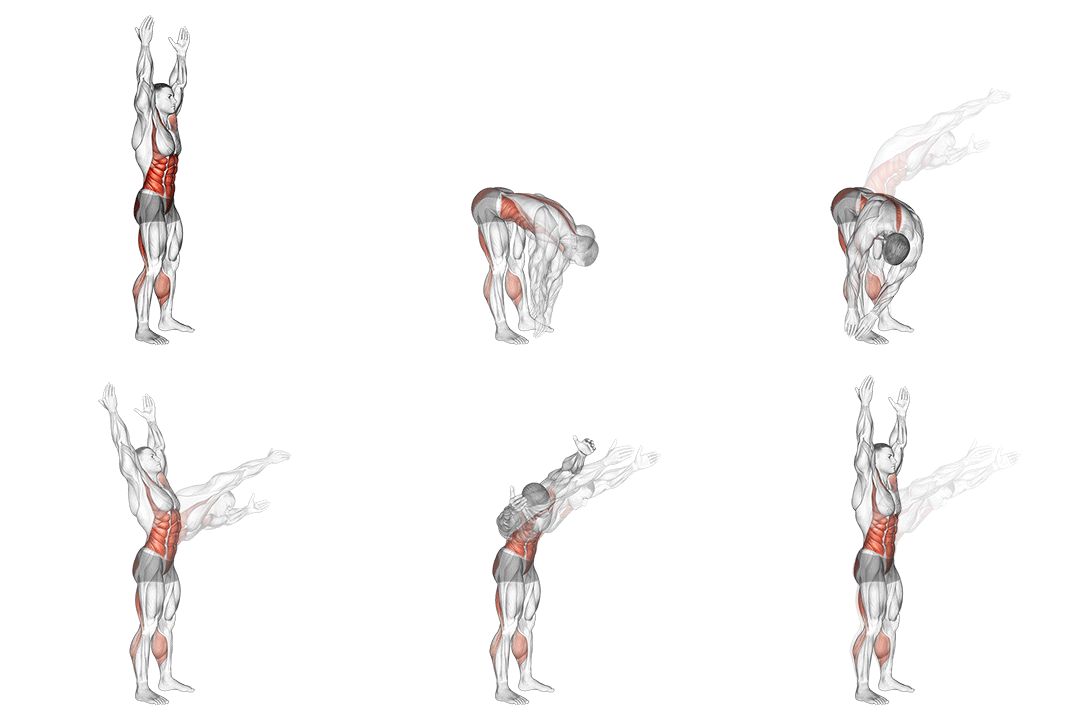
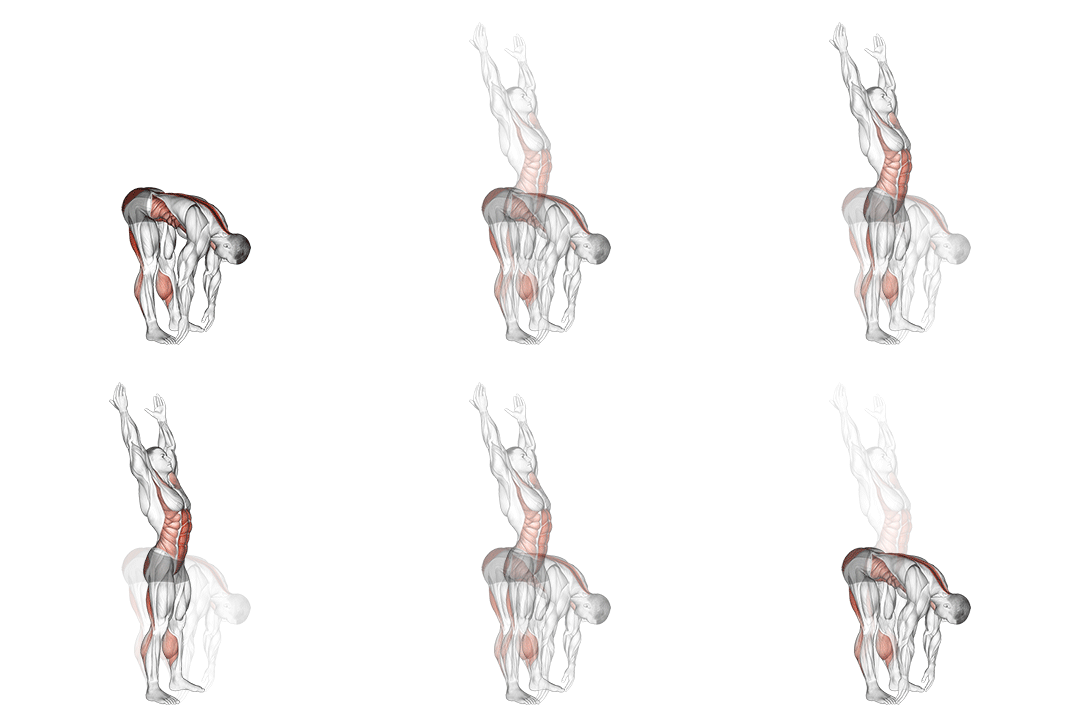
More comparisons with Forward Lunge (male)
Compare More Exercises
Use our free comparison tool to analyze any two exercises head-to-head.
Compare Exercises