

Bench Jump vs Jump Rope: Complete Comparison Guide
Bench Jump vs Jump Rope is a practical matchup when you want powerful legs or efficient cardio. If you train for explosive quad strength, vertical power, or athletic performance you’ll want to compare the two movements. In this guide you'll get clear comparisons of primary and secondary muscle activation, equipment needs, learning curves, injury risk, and recommended progressions. I’ll explain the biomechanics—hip and knee angles, ground reaction force vectors, and muscle length-tension—and give straightforward programming tips so you can pick the right drill for your goals.
Exercise Comparison

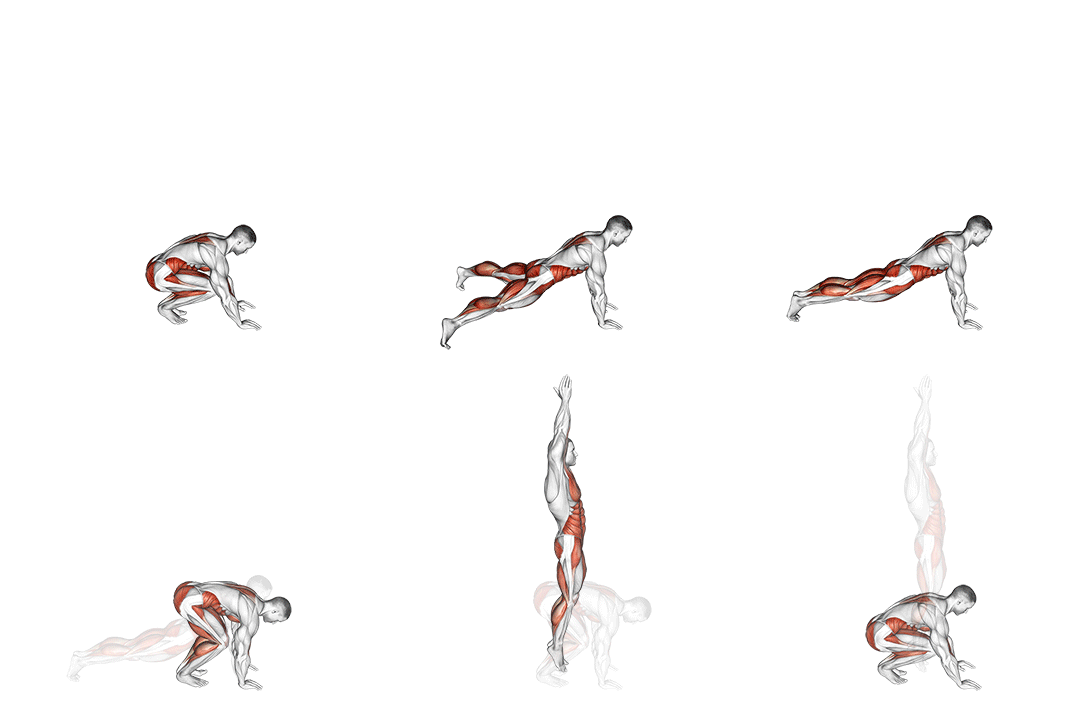
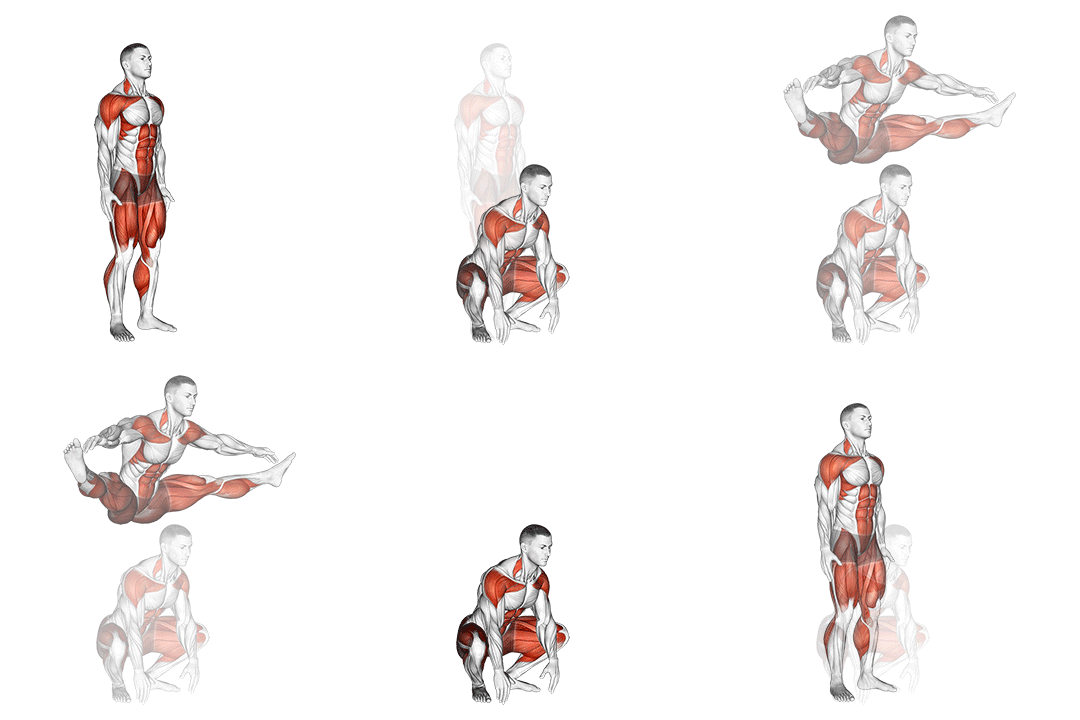
Bench Jump
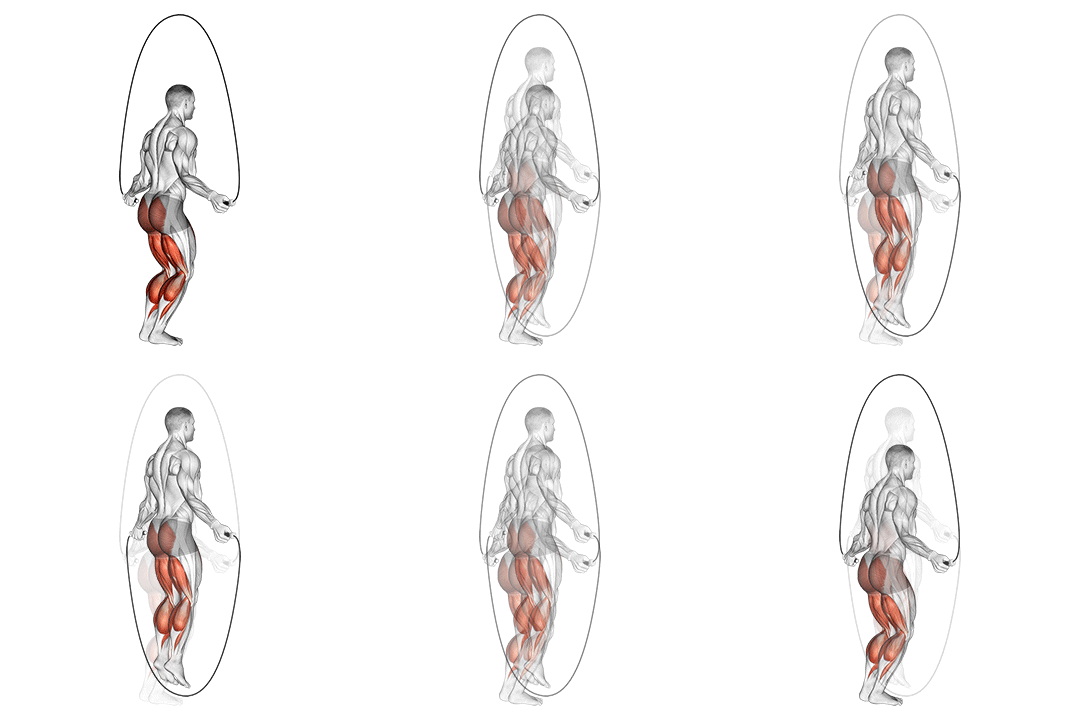
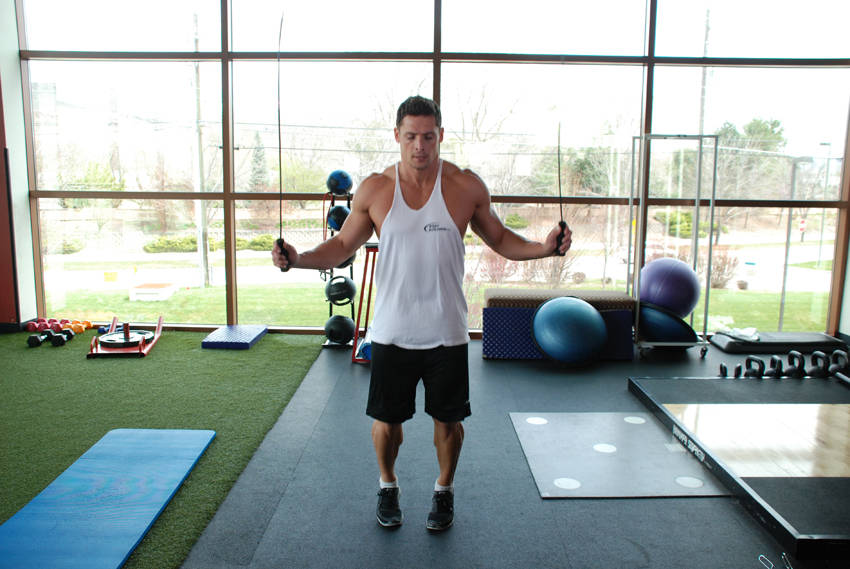
Jump Rope
Head-to-Head Comparison
| Attribute | Bench Jump | Jump Rope |
|---|---|---|
| Target Muscle |
Quads
|
Cardiovascular
|
| Body Part |
Upper-legs
|
Cardio
|
| Equipment |
Body-weight
|
Rope
|
| Difficulty |
Intermediate
|
Intermediate
|
| Movement Type |
Compound
|
Compound
|
| Secondary Muscles |
3
|
4
|
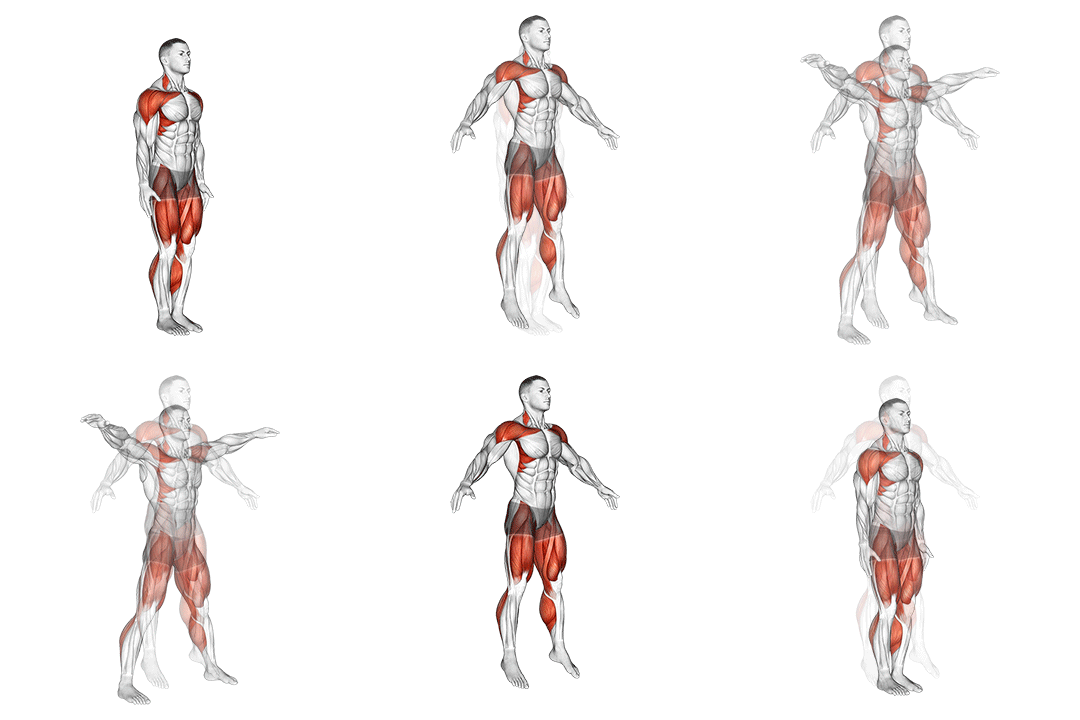
Secondary Muscles Activated
Bench Jump
Jump Rope
Visual Comparison
Overview
Bench Jump vs Jump Rope is a practical matchup when you want powerful legs or efficient cardio. If you train for explosive quad strength, vertical power, or athletic performance you’ll want to compare the two movements. In this guide you'll get clear comparisons of primary and secondary muscle activation, equipment needs, learning curves, injury risk, and recommended progressions. I’ll explain the biomechanics—hip and knee angles, ground reaction force vectors, and muscle length-tension—and give straightforward programming tips so you can pick the right drill for your goals.
Key Differences
- Bench Jump primarily targets the Quads, while Jump Rope focuses on the Cardiovascular.
- Equipment differs: Bench Jump uses Body-weight, while Jump Rope requires Rope.
Pros & Cons
Bench Jump
+ Pros
- Maximizes quad and hip extensor force production for power
- Short sets (3–6 reps) deliver high neural stimulus for strength
- Direct transfer to athletic tasks like sprinting and vertical jump
- Easy to measure progress by increasing box height or load
− Cons
- Higher acute impact forces increase landing injury risk
- Requires sturdy platform and safe landing area
- Technical demands (90° knee flexion, neutral spine) can limit beginners
Jump Rope
+ Pros
- Extremely portable and low-cost equipment
- Excellent for cardiovascular conditioning and calorie burn
- Low single-impact force per rep—good for high-volume work
- Versatile progressions (intervals, speed, double-unders)
− Cons
- Less direct stimulus for maximal quad concentric force
- Can cause repetitive strain in calves/Achilles with too much volume
- Requires coordination and space for safe rope swing
When Each Exercise Wins
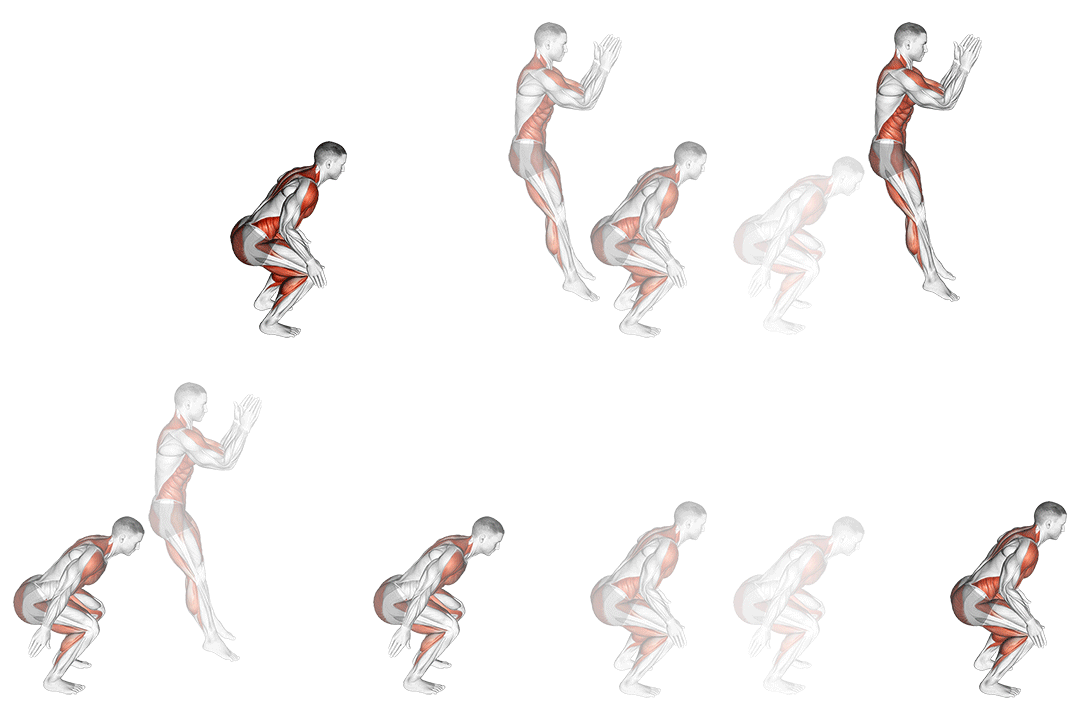
Bench Jumps create higher peak muscle tensions in the quads and glutes through explosive concentric actions and high ground reaction forces, which better stimulate type II motor units when programmed with short sets (4–8 reps) and adequate loading or eccentric control.
Bench Jumps impose greater maximal knee and hip extension torque per rep, making them superior for improving rate of force development and vertical power when used with 3–6 rep sets and progressive overload.
Jump Rope allows beginners to build timing, calf endurance, and cardiovascular base with low technical demand for basic single-unders; start with 30–60 second intervals and progress duration before attempting complex plyometrics.
Jump Rope requires minimal space and low-cost equipment and produces high conditioning benefit; it fits small apartments and travel routines better than a safe box setup for Bench Jumps.
Frequently Asked Questions
Can I do both Bench Jump and Jump Rope in the same workout?
Yes. Pair Bench Jumps as a power primer (3–5 sets of 3–6 reps) followed by Jump Rope intervals (30–90 seconds) to maintain conditioning while preserving explosive output. Put plyometrics early in the session when fatigue is low to protect landing mechanics.
Which exercise is better for beginners?
Jump Rope is better for absolute beginners because single-unders teach rhythm and impose lower technical shock per rep. Progress to bench jumps only after you demonstrate stable landing technique, knee alignment, and adequate ankle dorsiflexion.
How do the muscle activation patterns differ?
Bench Jumps produce brief, high-amplitude activation of quads and glutes during concentric extension following a countermovement, exploiting stretch-shortening cycles. Jump Rope produces frequent, low-amplitude plantarflexion-driven activations emphasizing calf and tendon elastic recoil with lower knee extensor torque per rep.
Can Jump Rope replace Bench Jump?
Not fully. Jump Rope can substitute for conditioning and calf-dominant power endurance, but it does not match the high peak knee and hip extension torques of Bench Jumps needed for maximal power or hypertrophy in the quads. Use both if you need balanced power and cardio development.
Expert Verdict
Use Bench Jumps when your priority is single-rep force, explosive quad and hip extensor development, or direct transfer to sprinting and jumping sports. Program them as short, high-effort sets (3–6 reps, 3–5 sets) with attention to landing mechanics (hips back, knees tracking toes, absorb at ~30–40% flexion range on landing). Choose Jump Rope when you need portable conditioning, calf-endurance work, or higher-volume metabolic sessions—start with 1–3 minute intervals or 100–300 jumps and progress speed or complexity. Both can complement each other: pair short bench-jump power sets with jump-rope conditioning circuits for balanced performance and aerobic capacity.
Also Compare
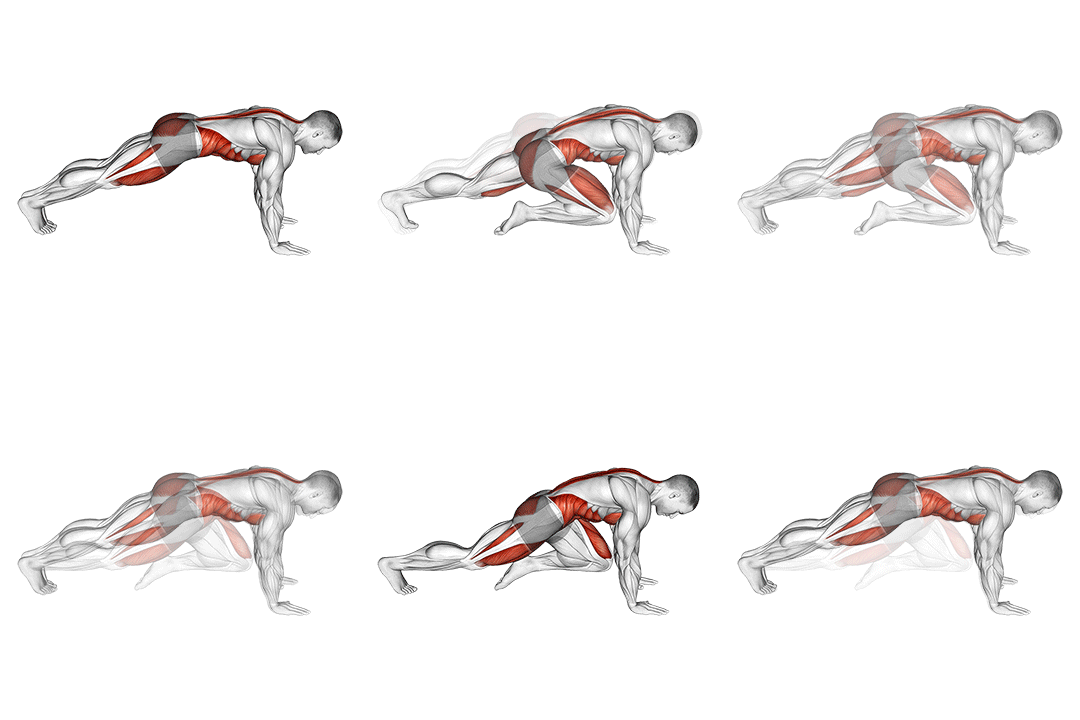
More comparisons with Bench Jump


Compare More Exercises
Use our free comparison tool to analyze any two exercises head-to-head.
Compare Exercises