

Bench Jump vs Lying (side) Quads Stretch: Complete Comparison Guide
Bench Jump vs Lying (side) Quads Stretch are two very different ways to target the quads, and you should pick one based on whether you want power, strength, or mobility. {Exercise1} vs {Exercise2} shows that one is a dynamic, compound plyometric and the other is a passive, isolation stretch. You’ll learn how each loads the quadriceps, what secondary muscles are involved, the technique cues that protect your knees and hips, and clear programming advice—rep ranges, holds, and progression paths—so you can choose the right move for your training plan.
Exercise Comparison

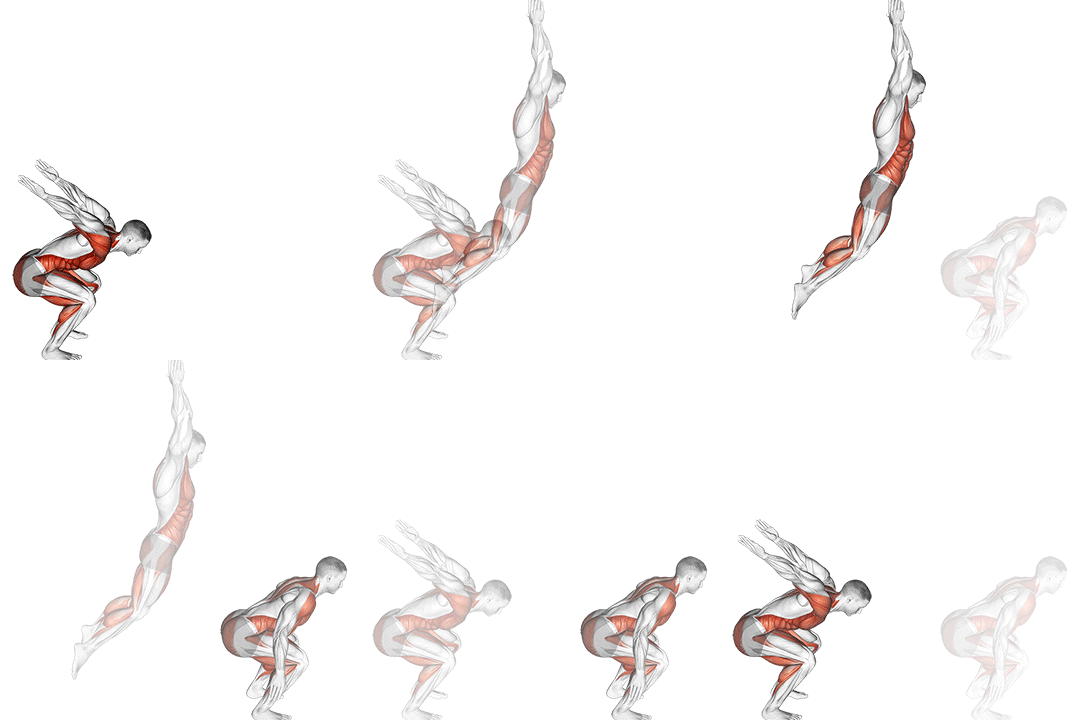
Bench Jump
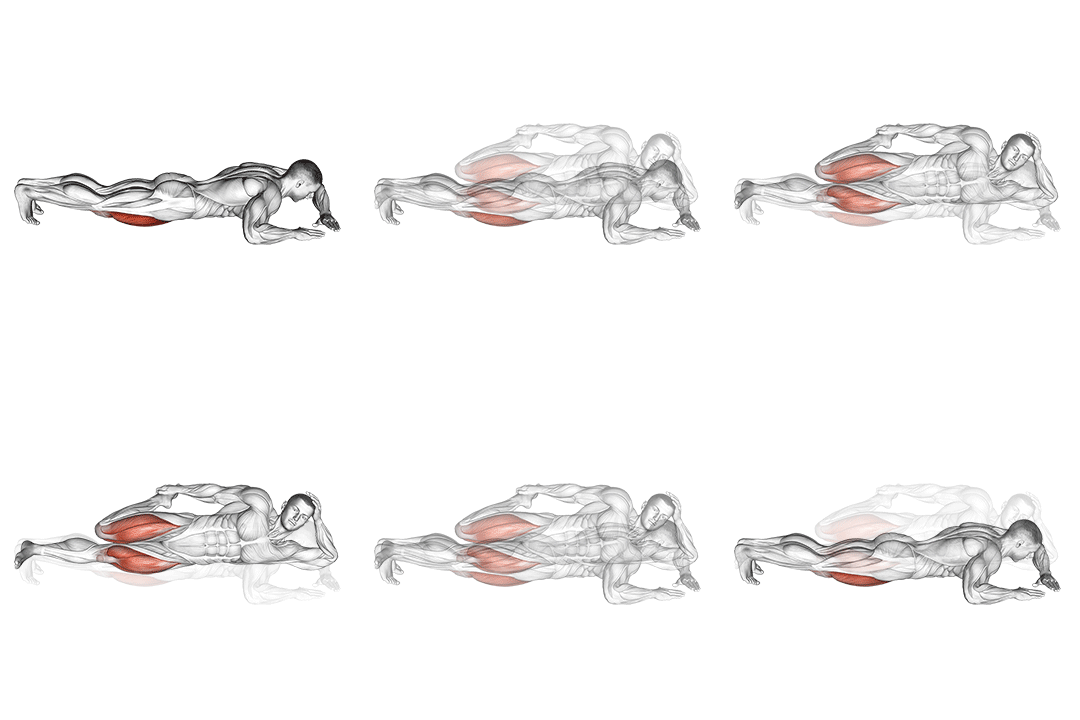
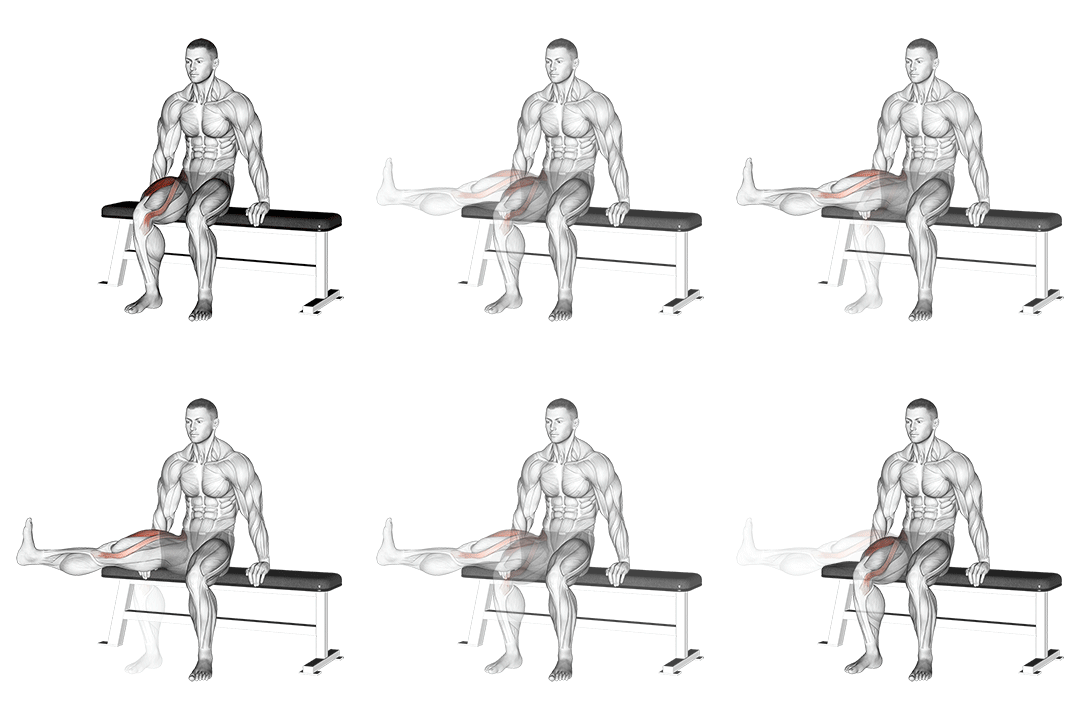
Lying (side) Quads Stretch
Head-to-Head Comparison
| Attribute | Bench Jump | Lying (side) Quads Stretch |
|---|---|---|
| Target Muscle |
Quads
|
Quads
|
| Body Part |
Upper-legs
|
Upper-legs
|
| Equipment |
Body-weight
|
Body-weight
|
| Difficulty |
Intermediate
|
Beginner
|
| Movement Type |
Compound
|
Isolation
|
| Secondary Muscles |
3
|
1
|
Secondary Muscles Activated
Bench Jump
Lying (side) Quads Stretch
Visual Comparison
Overview
Bench Jump vs Lying (side) Quads Stretch are two very different ways to target the quads, and you should pick one based on whether you want power, strength, or mobility. {Exercise1} vs {Exercise2} shows that one is a dynamic, compound plyometric and the other is a passive, isolation stretch. You’ll learn how each loads the quadriceps, what secondary muscles are involved, the technique cues that protect your knees and hips, and clear programming advice—rep ranges, holds, and progression paths—so you can choose the right move for your training plan.
Key Differences
- Bench Jump is a compound movement, while Lying (side) Quads Stretch is an isolation exercise.
- Difficulty levels differ: Bench Jump is intermediate, while Lying (side) Quads Stretch is beginner.
- Both exercises target the Quads using Body-weight. The main differences are in their movement patterns and muscle activation angles.
Pros & Cons
Bench Jump
+ Pros
- High quad activation under concentric and eccentric loading for power development
- Engages calves, glutes, and core for athletic carryover
- Scalable intensity by box height, reps, and added load
- Short sets produce metabolic and neural stimulus (3–6 reps explosive)
− Cons
- Higher impact increases injury risk if technique is poor
- Requires a stable elevated surface and space
- Less effective for increasing passive range of motion or flexibility
Lying (side) Quads Stretch
+ Pros
- Improves rectus femoris length and knee flexion range of motion
- Very low impact and easy to integrate for warm-up or recovery
- No equipment required—highly accessible
- Reduces quad tightness that can limit squat depth and knee tracking
− Cons
- Minimal concentric muscle strengthening stimulus
- Limited progression options for strength or power
- May aggravate anterior knee symptoms if performed with joint swelling
When Each Exercise Wins
Bench Jumps produce higher eccentric–concentric loading and fast muscle fiber recruitment that can contribute to hypertrophy when paired with additional resistance and volume. The explosive repeated contractions create mechanical tension and metabolic stress when programmed (e.g., 3–5 sets of 6–12 reps or integrating loaded jump variations).
Bench Jumps develop lower-body force production and rate of force development through high velocity contractions and heavy eccentric braking—transferable to heavier strength work when combined with progressive overload and technical coaching.
Lying stretch has a low skill threshold, minimal impact, and improves mobility that helps beginners achieve safer squat depth and knee mechanics before introducing plyometrics like bench jumps.
Because it needs no equipment and reduces injury risk in confined spaces, the lying stretch is the safer, more practical home option; Bench Jump is possible at home only with a safe platform and adequate ceiling/landing area.
Frequently Asked Questions
Can I do both Bench Jump and Lying (side) Quads Stretch in the same workout?
Yes. Do the Lying (side) Quads Stretch as part of your warm-up or mobility routine (30–60s holds) to improve knee flexion and hip position, then perform Bench Jumps later when you’re warm and neurologically ready. Keep mobility before and power work after to preserve explosive performance.
Which exercise is better for beginners?
Lying (side) Quads Stretch is better for beginners because it improves quad length and knee range of motion with minimal risk. Beginners should master mobility and basic squat mechanics before adding the impact and coordination demands of Bench Jumps.
How do the muscle activation patterns differ?
Bench Jumps cause high phasic EMG activation with rapid concentric bursts and significant eccentric braking in the quads and glutes; activation peaks in mid-range knee angles. The Lying (side) Quads Stretch yields low EMG and high passive tension, lengthening the rectus femoris and increasing passive force through the muscle’s length–tension curve.
Can Lying (side) Quads Stretch replace Bench Jump?
No—if your goal is power or strength, the passive stretch won’t replace the concentric and eccentric loading of jumps. Use the stretch to improve mobility and reduce risk, but keep plyometrics like Bench Jumps or loaded squats for strength and power development.
Expert Verdict
Use Bench Jumps when you want quad power, improved rate of force development, and a compound stimulus that also challenges calves, glutes, and core. Program them as short explosive sets—3–5 sets of 3–8 reps or plyo blocks—with emphasis on soft, hip-dominant landings and progressive box height. Use Lying (side) Quads Stretch when your goal is mobility, recovery, or to reduce anterior knee tightness; hold 30–60 seconds for 2–4 sets and focus on posterior pelvic tilt to isolate rectus femoris. If you train for athletic performance, combine both: mobility work before sessions and bench jumps during power-focused blocks.
Also Compare
More comparisons with Bench Jump
More comparisons with Lying (side) Quads Stretch
Compare More Exercises
Use our free comparison tool to analyze any two exercises head-to-head.
Compare Exercises