

Bodyweight Drop Jump Squat vs Curtsey Squat: Complete Comparison Guide
Bodyweight Drop Jump Squat vs Curtsey Squat — choose the movement that matches your goals. You’ll get a clear, practical comparison of muscle activation, movement mechanics, equipment needs, difficulty, and programming. I’ll show specific technique cues, rep ranges, and progressions so you can use these exercises for power, hypertrophy, or rehab. Read on to see which exercise fits your training plan, plus when to pair them in a single session and how to adjust sets, reps, and rest for safe, measurable progress.
Exercise Comparison
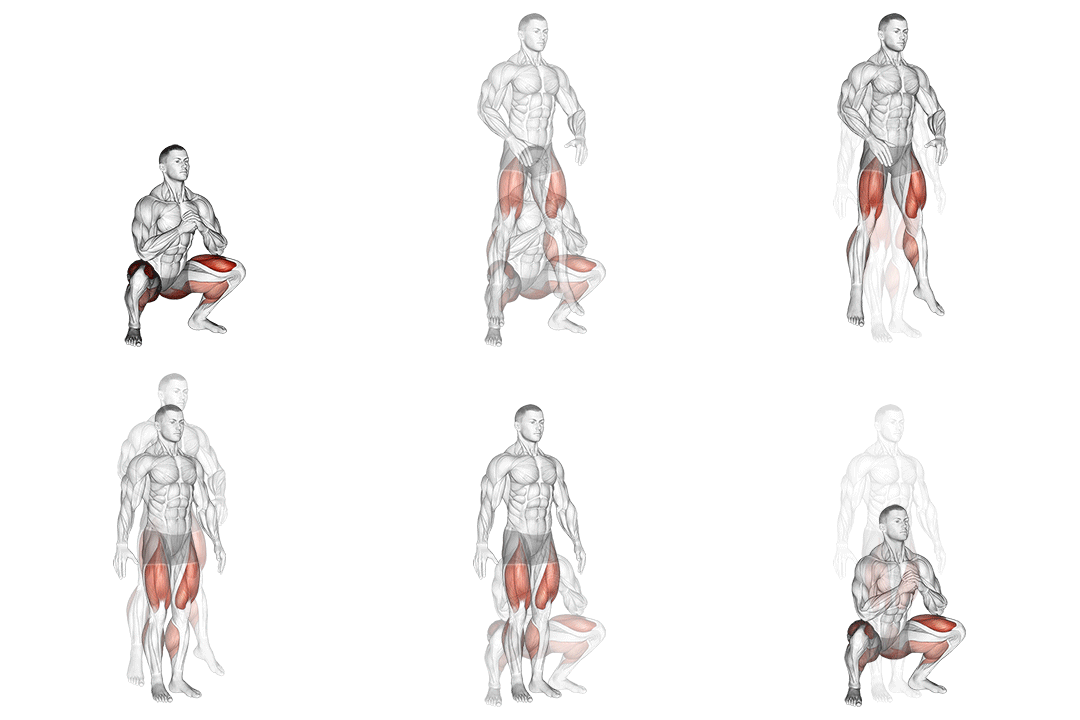
Bodyweight Drop Jump Squat
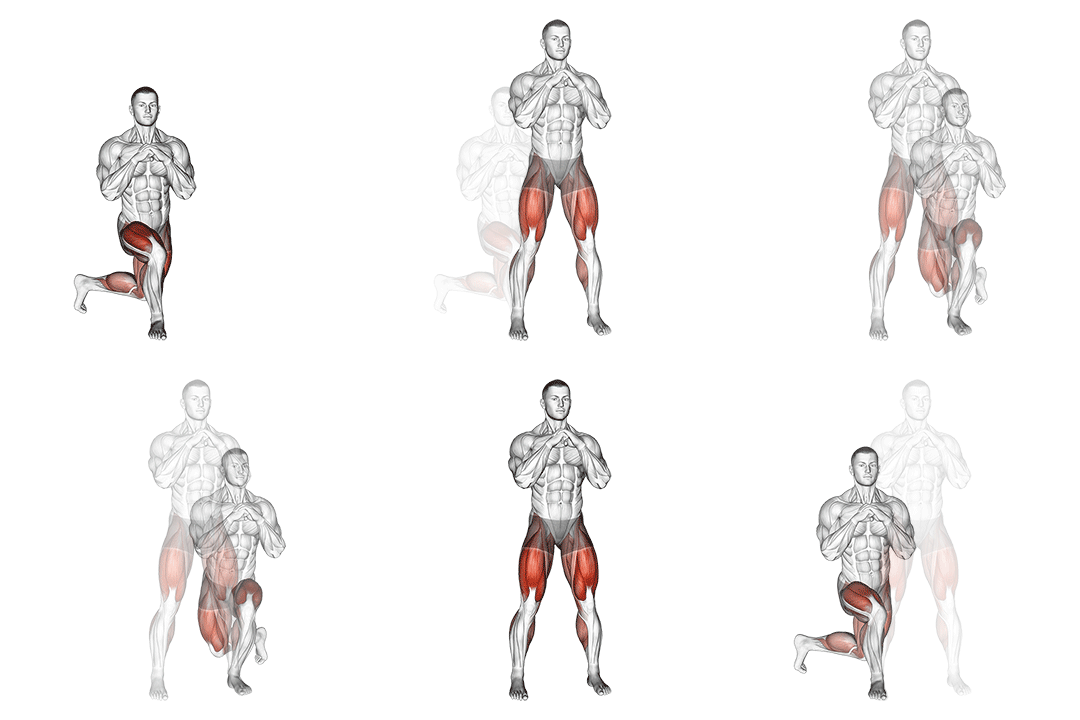
Curtsey Squat
Head-to-Head Comparison
| Attribute | Bodyweight Drop Jump Squat | Curtsey Squat |
|---|---|---|
| Target Muscle |
Glutes
|
Glutes
|
| Body Part |
Upper-legs
|
Upper-legs
|
| Equipment |
Body-weight
|
Body-weight
|
| Difficulty |
Intermediate
|
Beginner
|
| Movement Type |
Compound
|
Compound
|
| Secondary Muscles |
3
|
3
|
Secondary Muscles Activated
Bodyweight Drop Jump Squat
Curtsey Squat
Visual Comparison
Overview
Bodyweight Drop Jump Squat vs Curtsey Squat — choose the movement that matches your goals. You’ll get a clear, practical comparison of muscle activation, movement mechanics, equipment needs, difficulty, and programming. I’ll show specific technique cues, rep ranges, and progressions so you can use these exercises for power, hypertrophy, or rehab. Read on to see which exercise fits your training plan, plus when to pair them in a single session and how to adjust sets, reps, and rest for safe, measurable progress.
Key Differences
- Difficulty levels differ: Bodyweight Drop Jump Squat is intermediate, while Curtsey Squat is beginner.
- Both exercises target the Glutes using Body-weight. The main differences are in their movement patterns and muscle activation angles.
Pros & Cons
Bodyweight Drop Jump Squat
+ Pros
- High rate-of-force development—great for power and explosive athleticism
- Excellent posterior chain recruitment during rapid hip extension
- Low equipment need—just a small drop and clear landing zone
- Easy to program for explosive intervals (3–6 reps, 3–5 sets)
− Cons
- Higher impact and technical demand—needs sound landing mechanics
- Less time under tension for hypertrophy compared with slow eccentrics
- Limited for pure unilateral strength or lateral stability work
Curtsey Squat
+ Pros
- Strong unilateral glute and gluteus medius activation for shape and stability
- Low-impact and beginner-friendly with clear tempo cues (2–3 s eccentric)
- Very accessible—no equipment and easy to regress or load progressively
- Improves hip adduction/abduction control and frontal-plane strength
− Cons
- Less stimulus for explosive power or high-rate force production
- Smaller maximal overload unless external load is added
- Can expose knee valgus if you lose hip stability on the trailing leg
When Each Exercise Wins
Curtsey squats produce longer eccentric time under tension and loadable unilateral stimulus (8–15 reps per side, 3–4 sets), which better drives hypertrophy of the glute medius and maximus compared with short-duration plyometrics.
For developing explosive strength and rate of force development, drop jumps improve neural drive and power output; perform 3–6 explosive reps with 90–120 s rest to tax fast motor units and vertical force production.
Curtsey squats are lower impact, slower to learn, and easier to control joint positions (step 30–45° back), making them safer for novice trainees building unilateral strength and hip stability.
Curtsey squats need zero equipment and minimal space, whereas drop jumps require a safe drop height and landing surface—making curtseys the practical home choice for most people.
Frequently Asked Questions
Can I do both Bodyweight Drop Jump Squat and Curtsey Squat in the same workout?
Yes. Use curtsey squats earlier to build unilateral strength and pre‑exhaust the glutes (3–4 sets of 8–12 per side), then perform drop jump squats later or in a separate block for power (3–5 sets of 3–6 explosive reps) with full recovery.
Which exercise is better for beginners?
Curtsey Squat is better for beginners because it’s low impact, slower to learn, and emphasizes control. Start with bodyweight movements and 2–3 second eccentrics, then add load as your balance and hip control improve.
How do the muscle activation patterns differ?
Drop jump squats rely on a fast stretch‑shortening cycle and emphasize rapid gluteus maximus and quadriceps firing for vertical power. Curtsey squats create longer eccentrics that activate gluteus medius/maximum for stability and adductor interplay due to the diagonal loading vector.
Can Curtsey Squat replace Bodyweight Drop Jump Squat?
Curtsey squats can replace drop jumps if your goal is hypertrophy or stability, but they won’t replicate the reactive power and rate of force development you get from drop jumps. Choose curtseys for low-impact progress and drop jumps for explosive training.
Expert Verdict
Use Bodyweight Drop Jump Squats when your priority is power, athleticism, and improving rate of force development—program them for low reps (3–6) and controlled drop heights (20–40 cm) after warm‑up if you can land safely. Choose Curtsey Squats for unilateral hypertrophy, hip stability, and rehab-style work; perform 8–15 reps per side with 2–3 second eccentrics and add load progressively. If you need one movement for general strength and accessibility pick curtseys; if you want to develop explosive capacity and reactive strength, pick drop jumps. You can combine both in a session—curtseys for buildup and drop jumps for power—once technique is solid.
Also Compare
More comparisons with Bodyweight Drop Jump Squat
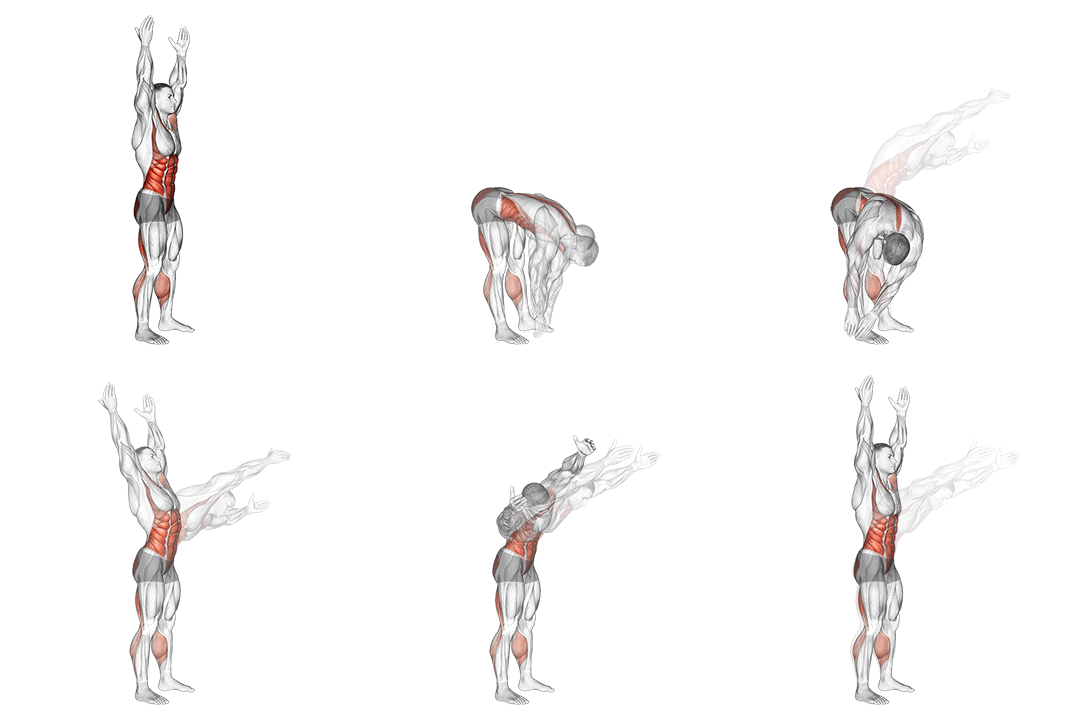
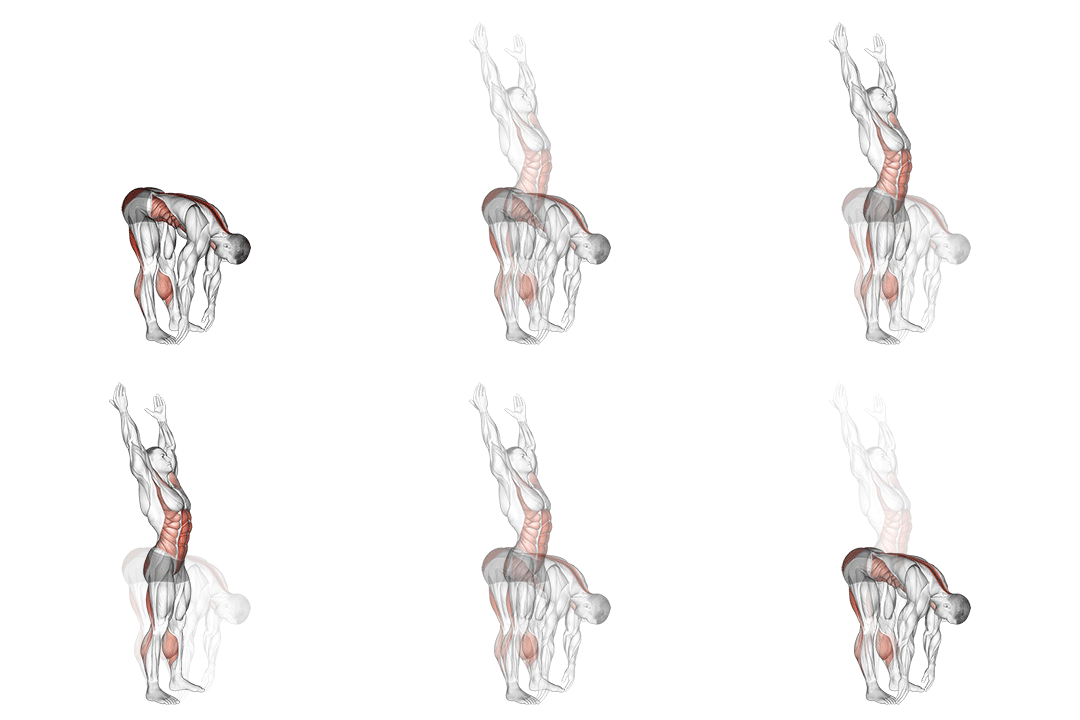
Compare More Exercises
Use our free comparison tool to analyze any two exercises head-to-head.
Compare Exercises