

Cable Curl vs Cable Drag Curl
Compare target muscles, equipment, difficulty, movement type, and secondary muscles for Cable Curl and Cable Drag Curl.
Get comparison link
Select the link and use your device's Copy command.
Comparison overview
AI-generatedExercise Comparison
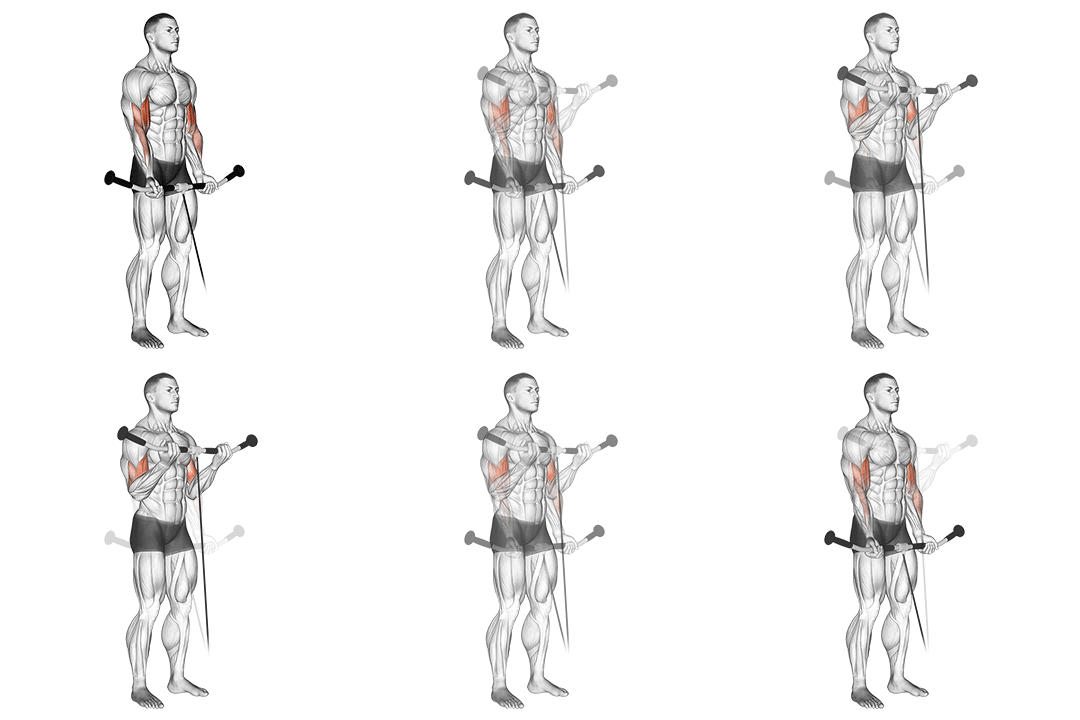
Cable Curl
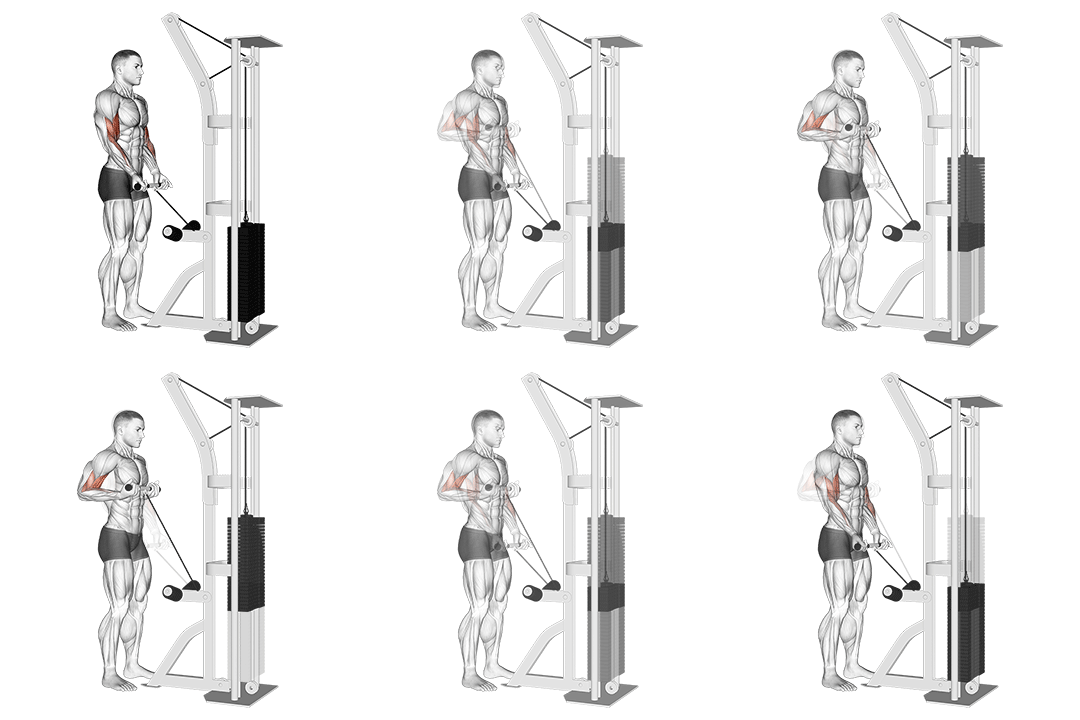
Cable Drag Curl
Head-to-Head Comparison
Different values are marked. These are catalogue attributes, not performance scores.
Muscles used
Listed target and secondary muscles, shown on the body. Locations, not activation or strength scores.
- Target
- Secondary
- Not highlighted
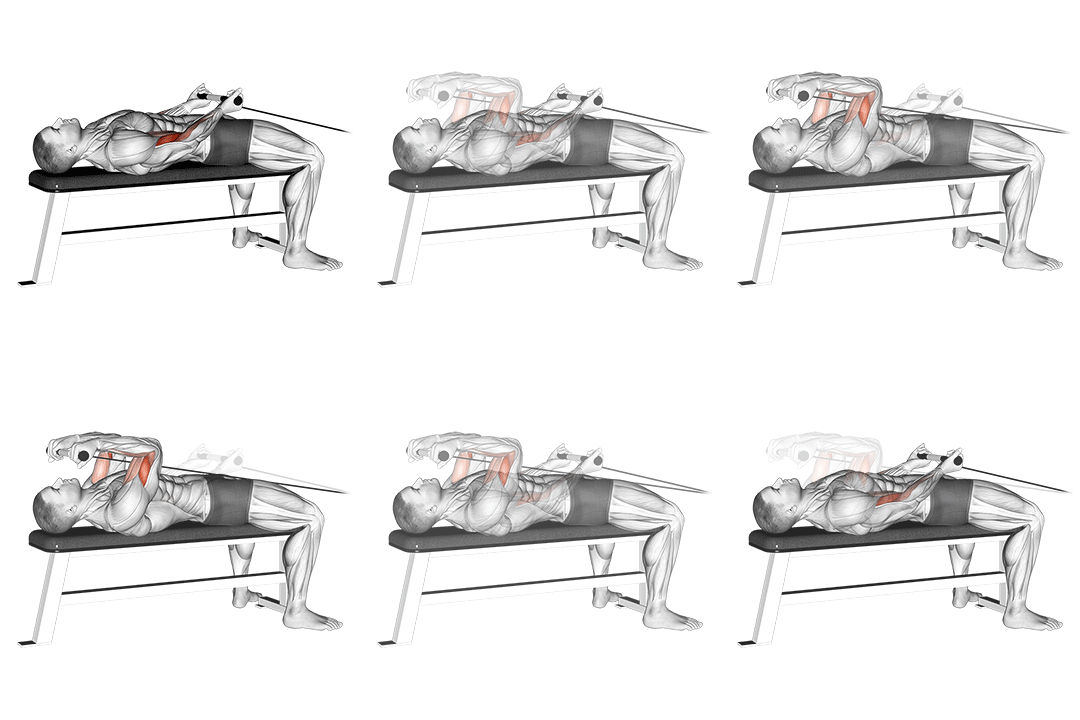
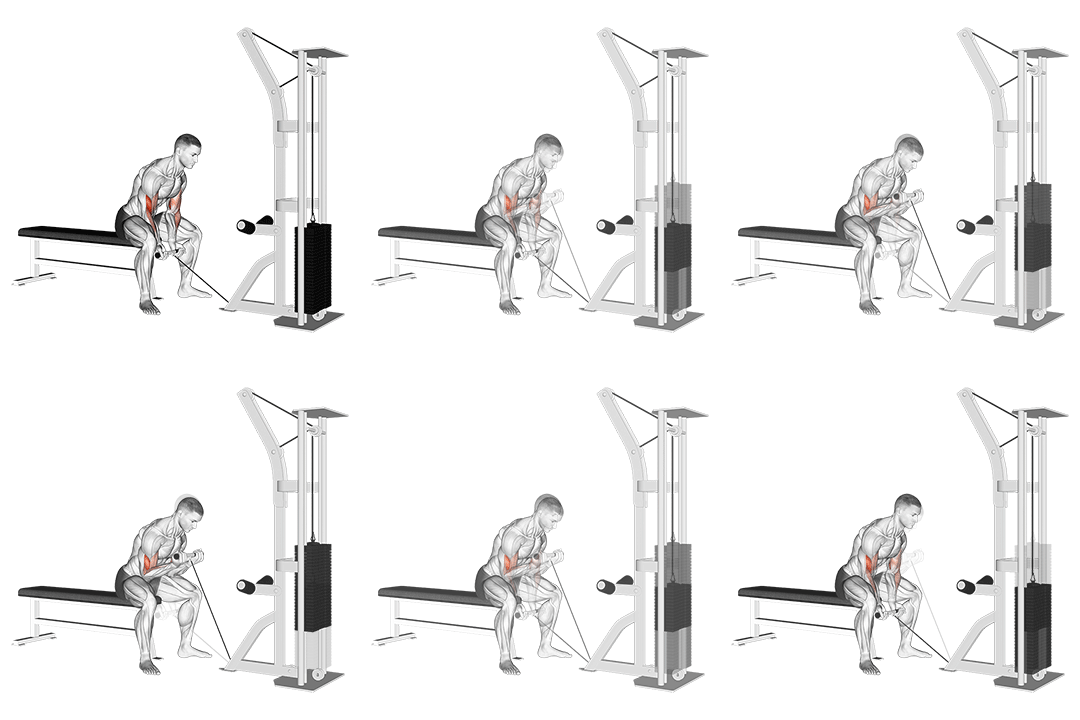
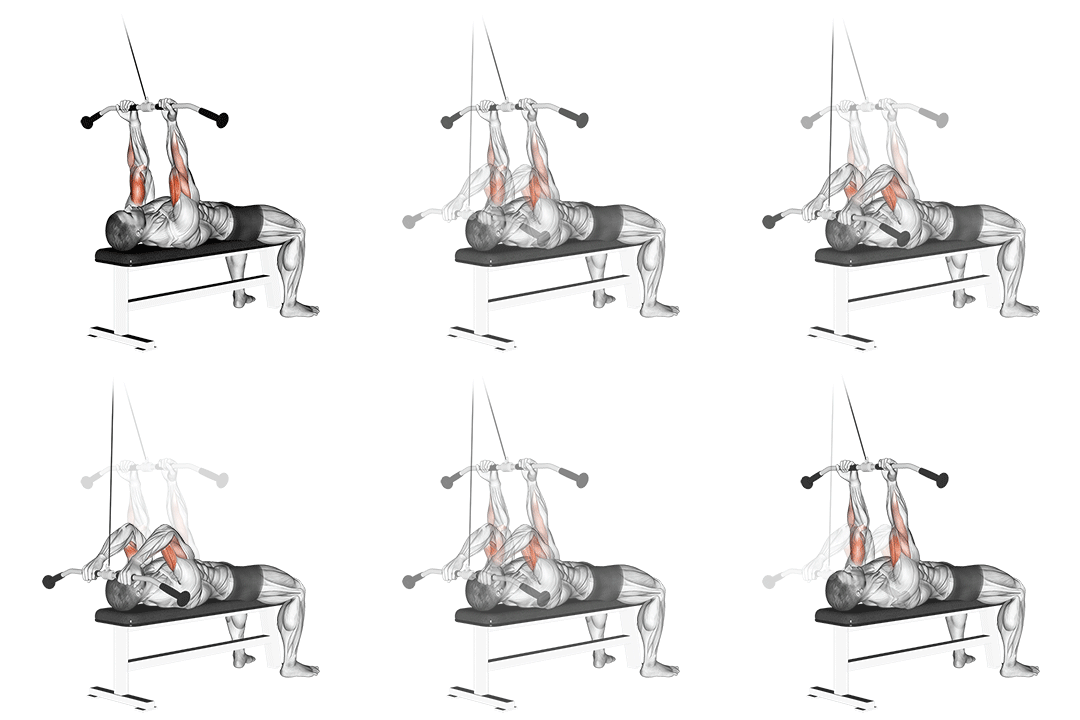
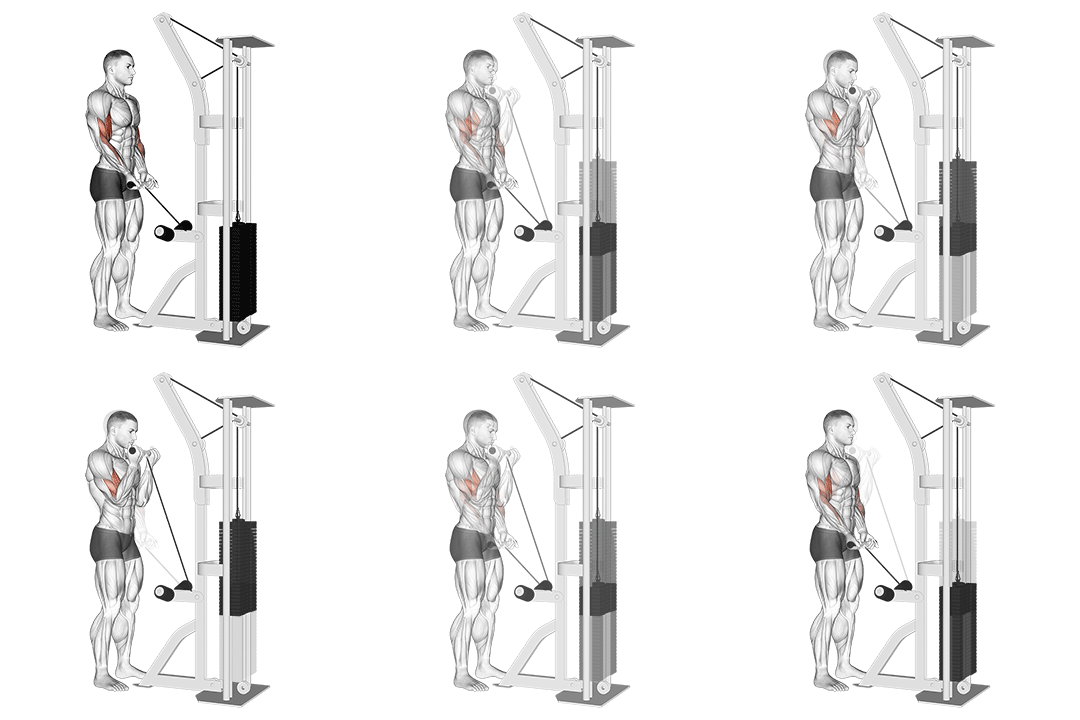
Cable Curl
- Target
- Biceps
- Secondary
- Forearms
Cable Drag Curl
- Target
- Biceps
- Secondary
- Forearms
Grey does not mean a muscle is unused. The diagrams show only the mapped catalogue labels.
| Attribute | Cable Curl | Cable Drag Curl |
|---|---|---|
| Target Muscle | Biceps |
Biceps |
| Body Part | Upper-arms |
Upper-arms |
| Equipment | Cable |
Cable |
| Difficulty Different | Beginner |
Intermediate |
| Movement Type | Isolation |
Isolation |
| Secondary Muscles | Forearms |
Forearms |
Visual Comparison
An illustrative 1–10 profile derived from catalog difficulty, equipment, and listed-muscle fields—not measured performance or muscle activation.
Key Differences
- Difficulty levels differ: Cable Curl is beginner, while Cable Drag Curl is intermediate.
- Both exercises target the Biceps using Cable. The catalogue does not establish which exercise is better for an individual goal.
Muscle comparison
Shared target muscles
Secondary muscle differences
Muscle involvement analysis
Equipment and setup
Cable Curl: setup
Cable Drag Curl: setup
Access and practicality
Learning and progression
Learning the movements
Progression considerations
Limitations and precautions
Pros & Cons
Cable Curl
+ Pros
- Simple setup and easy to learn: ideal for beginners and strict isolation.
- Provides nearly constant tension through the range with a predictable force vector.
- Highly adaptable: use bars, ropes, or single handles and convert to band variations.
- Easily loaded for progressive overload; works well for heavy 6–10 rep sets and 8–12 hypertrophy ranges.
− Cons
- Can allow excessive swinging or cheating if not braced properly.
- Less emphasis on long-head stretch compared with drag variations.
- Standard form can feel less novel for intermediate trainees seeking new stimuli.
Cable Drag Curl
+ Pros
- Places biceps under a larger stretch at the start, biasing the long head for fuller peak contraction.
- Encourages elbows to move posteriorly, reducing shoulder flexor assistance and isolating elbow flexion.
- Feels more tension at the top of the lift for many lifters—useful for sculpting the biceps peak.
- Great for finisher sets and for varying the movement plane without new equipment.
− Cons
- Harder to master technique; can easily recruit shoulders or traps if rushed.
- Less straightforward to load maximally; best with moderate weight and strict tempo.
- Requires more focused coaching or practice to get the elbow path correct.
When Each Exercise Wins
Cable Drag Curl biases the long head by creating greater shoulder extension at the start and a stronger peak contraction at the top. Use 8–12 reps, 2–3 second eccentrics, and slow 1-second isometric holds at the peak to maximize time under tension.
Cable Curl is easier to load progressively and maintain strict mechanics, making it better for heavier 4–8 rep work and linear progression. Keep elbows anchored, use a 3-0-1 tempo, and increase weight in 2.5–5 lb increments.
Cable Curl has a shorter learning curve and lower compensation risk. The fixed path and simple elbow position let beginners grok elbow flexion and build a stable strength base.
Cable Curl translates well to resistance bands or single-dumbbell curls, while Cable Drag Curl needs a cable setup or a precise bar path that’s harder to replicate at home.
Frequently Asked Questions
Can I do both Cable Curl and Cable Drag Curl in the same workout?
Which exercise is better for beginners?
How do the muscle activation patterns differ?
Can Cable Drag Curl replace Cable Curl?
Comparison Summary
Exercise instructions
Steps from the exercise catalogue. Read the full sequence before starting.
Cable Curl
- Stand facing the cable machine with your feet shoulder-width apart.
- Grasp the cable attachment with an underhand grip, palms facing up.
- Keep your elbows close to your sides and your upper arms stationary.
Read remaining steps for Cable Curl
- Exhale and curl the cable attachment towards your shoulders, contracting your biceps.
- Pause for a moment at the top of the movement, squeezing your biceps.
- Inhale and slowly lower the cable attachment back to the starting position.
- Repeat for the desired number of repetitions.
Cable Drag Curl
- Stand facing a cable machine with your feet shoulder-width apart.
- Grasp the cable attachment with an underhand grip, palms facing up, and arms fully extended.
- Keeping your upper arms stationary, exhale and curl the cable attachment towards your shoulders by contracting your biceps.
Read remaining steps for Cable Drag Curl
- Pause for a moment at the top of the movement, squeezing your biceps.
- Inhale and slowly lower the cable attachment back to the starting position, fully extending your arms.
- Repeat for the desired number of repetitions.
Also Compare
More comparisons with Cable Curl
Compare another pair
Choose two exercises to see their differences side by side.