Cable Drag Curl vs Cable Hammer Curl (With Rope)

Compare target muscles, equipment, difficulty, movement type, and secondary muscles for Cable Drag Curl and Cable Hammer Curl (With Rope).

Change comparison Share

Get comparison link

Select the link and use your device's Copy command.

Comparison overview

AI-generated
Cable Drag Curl vs Cable Hammer Curl (with Rope) — which one should you pick for bigger, stronger arms? You’ll get a practical, science-backed comparison that covers muscle activation, biomechanics, technique cues, equipment needs, and when to use each variation in your program. Read on and I’ll show you exact rep ranges, movement angles, and coaching cues so you can pick the right curl for hypertrophy, strength, or steady progress.

Exercise Comparison

Exercise A
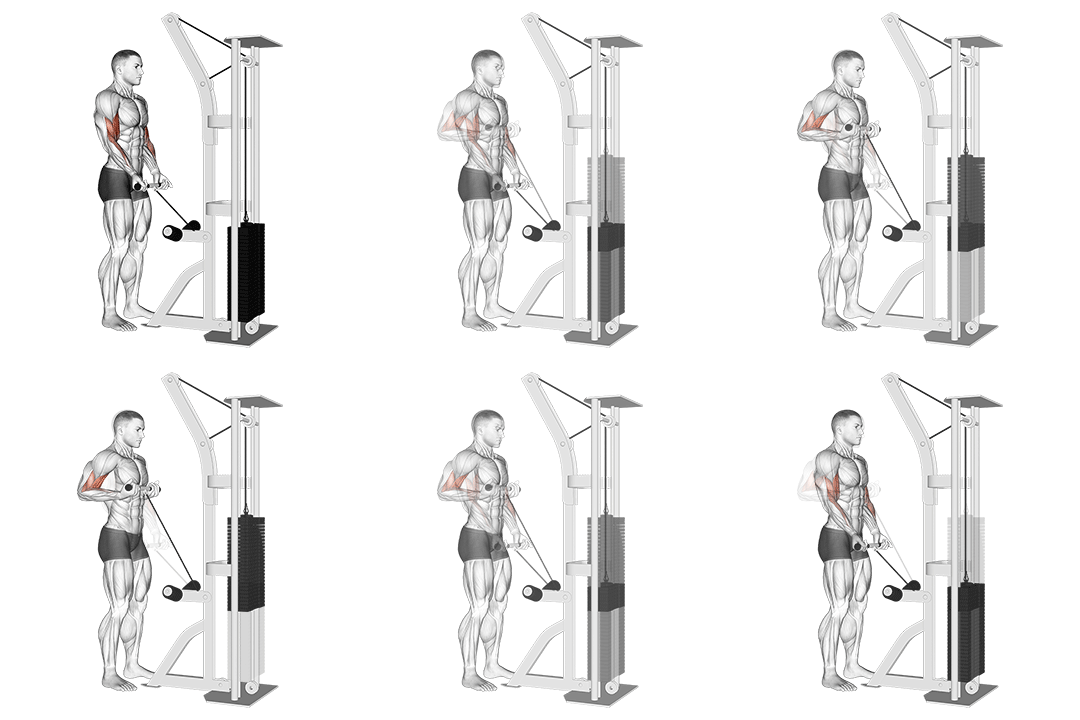
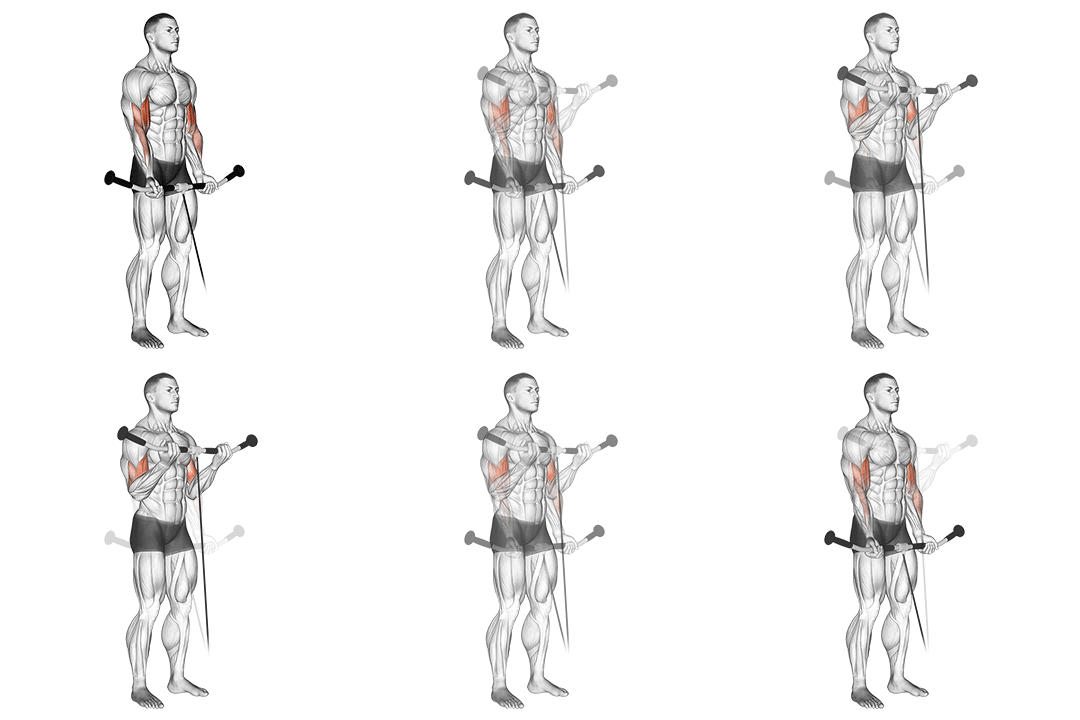
Cable Drag Curl demonstration

Cable Drag Curl

Target Biceps
Equipment Cable
Body Part Upper-arms
Difficulty Intermediate
Movement Isolation
Secondary Muscles
Forearms
VS
Exercise B
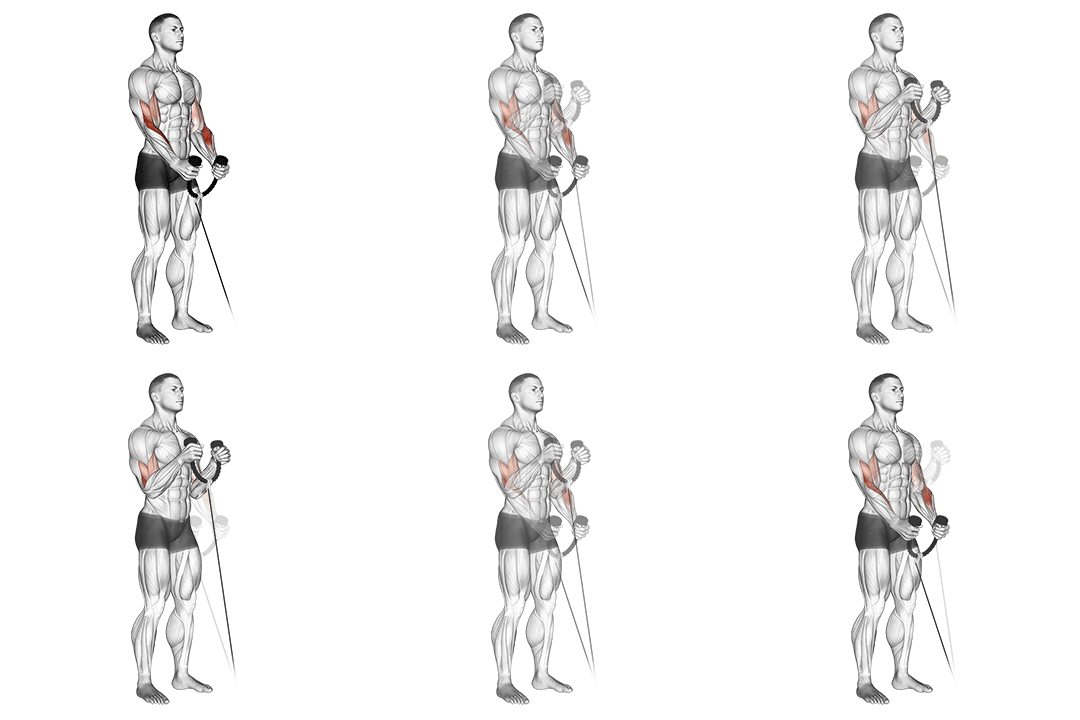
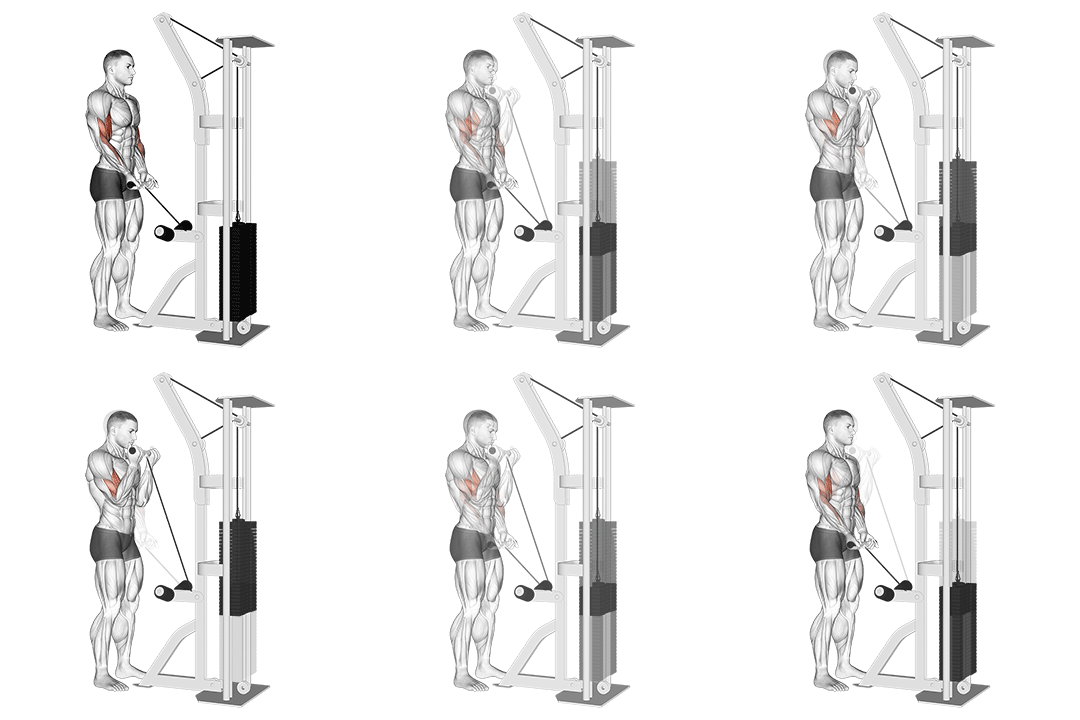
Cable Hammer Curl (With Rope) demonstration

Cable Hammer Curl (With Rope)

Target Biceps
Equipment Cable
Body Part Upper-arms
Difficulty Beginner
Movement Isolation
Secondary Muscles
Forearms

Head-to-Head Comparison

Different values are marked. These are catalogue attributes, not performance scores.

Muscles used

Listed target and secondary muscles, shown on the body. Locations, not activation or strength scores.

  • Target
  • Secondary
  • Not highlighted

Cable Drag Curl

Front
Cable Drag Curl: front muscle locationsSolid: listed target. Striped: listed secondary. Grey: not highlighted. Locations, not activation or strength scores. See the muscle names below.
Back
Cable Drag Curl: back muscle locationsSolid: listed target. Striped: listed secondary. Grey: not highlighted. Locations, not activation or strength scores. See the muscle names below.
Target
Biceps
Secondary
Forearms

Cable Hammer Curl (With Rope)

Front
Cable Hammer Curl (With Rope): front muscle locationsSolid: listed target. Striped: listed secondary. Grey: not highlighted. Locations, not activation or strength scores. See the muscle names below.
Back
Cable Hammer Curl (With Rope): back muscle locationsSolid: listed target. Striped: listed secondary. Grey: not highlighted. Locations, not activation or strength scores. See the muscle names below.
Target
Biceps
Secondary
Forearms

Grey does not mean a muscle is unused. The diagrams show only the mapped catalogue labels.

Attribute Cable Drag Curl Cable Hammer Curl (With Rope)
Target Muscle
Biceps
Biceps
Body Part
Upper-arms
Upper-arms
Equipment
Cable
Cable
Difficulty Different
Intermediate
Beginner
Movement Type
Isolation
Isolation
Secondary Muscles
Forearms
Forearms

Visual Comparison

An illustrative 1–10 profile derived from catalog difficulty, equipment, and listed-muscle fields—not measured performance or muscle activation.

Key Differences

  • Difficulty levels differ: Cable Drag Curl is intermediate, while Cable Hammer Curl (With Rope) is beginner.
  • Both exercises target the Biceps using Cable. The catalogue does not establish which exercise is better for an individual goal.

Muscle comparison

Shared target muscles

Both exercises load the biceps brachii through elbow flexion and contribute to upper-arm hypertrophy. The drag curl emphasizes a higher long-head stimulus by keeping the elbows back and moving the load along the torso, increasing biceps length-tension demand at the start of the concentric. The cable hammer curl (neutral grip) reduces forearm supination, shifting some demand away from the biceps short head and toward the brachialis and brachioradialis while still loading the biceps.

Secondary muscle differences

Cable Hammer Curl (with Rope) recruits the brachialis and brachioradialis ~10-20% more than fully supinated curls because the neutral hand position preserves elbow-flexor moment arm while minimizing supination torque. Drag curls show slightly higher anterior deltoid stabilization and greater long-head tension because the humerus stays more posterior during the lift, but forearm supinators are less involved than in a fully supinated curl.

Muscle involvement analysis

Drag curls change the force vector so peak torque occurs closer to 70°–110° of elbow flexion with a longer initial biceps length, increasing time under tension on the long head. Hammer curls create a more consistent vertical force vector; peak elbow-flexor torque still centers near ~90° but with greater brachialis activation across the ROM due to the neutral grip and reduced supination component.

Equipment and setup

Cable Drag Curl: setup

Cable Drag Curl needs a low cable attachment and either a straight bar or dual D‑handles that allow the bar path to stay close to the torso. A cable column with a straight bar or small cam handle works best.

Cable Hammer Curl (With Rope): setup

Cable Hammer Curl (with Rope) requires a low cable and a rope attachment. The rope allows neutral-grip ends to be pulled to the shoulders and gives independent hand path control.

Access and practicality

Cable Hammer Curl (with Rope) — most commercial gyms and home garage setups have a rope or you can substitute with a pair of dumbbells or resistance bands for neutral-grip hammer curls, making it easier to replicate without specialized bars.

Learning and progression

Learning the movements

Cable Hammer Curl (with Rope) is easier to learn: neutral grip aligns the wrist naturally, and the movement is a straightforward elbow flexion pattern with less tendency to recruit the shoulders. Drag Curl is intermediate because it requires cueing to keep elbows back, a non-standard bar path, and avoiding shoulder elevation.

Progression considerations

Drag Curl offers strong progression for targeted biceps long-head hypertrophy via load, tempo (2–3 s eccentrics), and partial-rep density; expect 6–12 rep sets for hypertrophy. Cable Hammer Curl scales well for heavier loading and general elbow-flexor strength (4–8+ reps) and can be progressed by adding load or manipulating tempo.

Limitations and precautions

Relative injury risk is slightly higher with Drag Curl if you let the shoulders creep forward or use excessive weight, which can stress the anterior shoulder and elbow. Hammer curls carry lower risk when performed with controlled reps and neutral wrist alignment.

Pros & Cons

Cable Drag Curl

+ Pros

  • Greater long-head biceps stretch and length-tension loading when elbows move back
  • Excellent for peak-time-under-tension hypertrophy work (6–12 reps)
  • Stable cable tension through the ROM allows constant tension at ~70°–110° elbow flexion
  • Easy to emphasize mind‑muscle connection with narrow bar path along torso

− Cons

  • Requires precise elbow positioning—can recruit shoulders if form breaks down
  • Less emphasis on brachialis/forearm thickness compared with neutral-grip variations
  • Can be awkward with some cable setups or unsuitable for very heavy single-rep strength work

Cable Hammer Curl (With Rope)

+ Pros

  • Neutral grip boosts brachialis and brachioradialis activation for thicker upper-arms
  • Beginner-friendly wrist alignment and natural pulling path
  • Simple to load heavier and pair with other arm work for strength blocks
  • Easy to substitute with dumbbells or bands for home workouts

− Cons

  • Slightly less biceps long-head stretch than drag curl, reducing direct long-head bias
  • Rope can allow cheating if elbows drift forward—requires elbow bracing
  • Less isolated peak supination work, so short-head development may be reduced

When Each Exercise Wins

1
For muscle hypertrophy: Cable Drag Curl

Drag curls place the biceps in a longer starting position and concentrate tension along a controlled torso path, increasing time‑under‑tension on the long head. Use 6–12 reps, 2–3 second eccentrics, and keep elbows tucked back to maximize biceps stimulus.

2
For strength gains: Cable Hammer Curl (with Rope)

Neutral grip hammer curls recruit brachialis and brachioradialis more and let you handle heavier loads safely, which transfers to stronger elbow flexion. Aim for 4–8 reps with slower eccentrics to build raw strength.

3
For beginners: Cable Hammer Curl (with Rope)

The neutral wrist position is intuitive and lowers technical demand, making it easier to learn proper elbow-driven flexion. It’s forgiving for tempo and load while still building forearm and biceps mass.

4
For home workouts: Cable Hammer Curl (with Rope)

You can replicate the movement with dumbbells or resistance bands (neutral grip), while drag curls need a cable column and a bar path close to the torso. Hammer-style substitutions keep form and muscle focus simple at home.

Frequently Asked Questions

Can I do both Cable Drag Curl and Cable Hammer Curl (with Rope) in the same workout?

Yes. Pair them by prioritizing the exercise that matches your goal first—do drag curls early in the session for biceps emphasis (6–12 reps), then hammer curls later for brachialis/forearm volume (8–15 reps). Keep total sets reasonable (8–16 per muscle) to avoid overtraining.

Which exercise is better for beginners?

Cable Hammer Curl (with Rope) is better for beginners due to its neutral wrist alignment and straightforward elbow-flexion pattern. It reduces technical breakdown and lets you build strength before adding the coordination demanded by drag curls.

How do the muscle activation patterns differ?

Drag curls bias the biceps long head by increasing initial muscle length and keeping the humerus posterior, raising long‑head time‑under‑tension around 70°–110° elbow flexion. Hammer curls shift more load to the brachialis/brachioradialis because the neutral grip reduces supination torque and changes the force vector.

Can Cable Hammer Curl (with Rope) replace Cable Drag Curl?

It can replace drag curls if your goal is general upper-arm thickness and strength, since hammer curls build brachialis and forearms effectively. If you specifically want long‑head biceps shape and peak time‑under‑tension, keep drag curls in rotation.

Comparison Summary

Use Cable Drag Curls when your priority is targeted biceps long-head hypertrophy and you can control elbow position—they shine in 6–12 rep ranges with deliberate eccentrics and a bar path kept close to the torso. Choose Cable Hammer Curls (with Rope) when you want beginner-friendly technique, thicker forearm and brachialis development, or heavier loading for strength—work in 4–8 reps for strength or 8–15 for mass. Ideally, rotate both into blocks: focus several weeks on drag curls for peak biceps shape, then a block emphasizing hammer curls to build elbow-flexor strength and forearm thickness.

Exercise instructions

Steps from the exercise catalogue. Read the full sequence before starting.

Cable Drag Curl

  1. Stand facing a cable machine with your feet shoulder-width apart.
  2. Grasp the cable attachment with an underhand grip, palms facing up, and arms fully extended.
  3. Keeping your upper arms stationary, exhale and curl the cable attachment towards your shoulders by contracting your biceps.
Read remaining steps for Cable Drag Curl
  1. Pause for a moment at the top of the movement, squeezing your biceps.
  2. Inhale and slowly lower the cable attachment back to the starting position, fully extending your arms.
  3. Repeat for the desired number of repetitions.

Cable Hammer Curl (With Rope)

  1. Stand upright with your feet shoulder-width apart and a slight bend in your knees.
  2. Hold the cable rope attachment with an underhand grip, palms facing each other, and your arms fully extended.
  3. Keeping your upper arms stationary, exhale and curl the weights while contracting your biceps.
Read remaining steps for Cable Hammer Curl (With Rope)
  1. Continue to raise the cable rope attachment until your biceps are fully contracted and the rope is at shoulder level.
  2. Hold the contracted position for a brief pause as you squeeze your biceps.
  3. Inhale and slowly begin to lower the cable rope attachment back to the starting position.
  4. Repeat for the desired number of repetitions.

Also Compare

Compare another pair

Choose two exercises to see their differences side by side.

Compare Exercises