

Cable Reverse-grip Straight Back Seated High Row vs Cable Straight Back Seated Row
Compare target muscles, equipment, difficulty, movement type, and secondary muscles for Cable Reverse-grip Straight Back Seated High Row and Cable Straight Back Seated Row.
Get comparison link
Select the link and use your device's Copy command.
Comparison overview
AI-generatedExercise Comparison
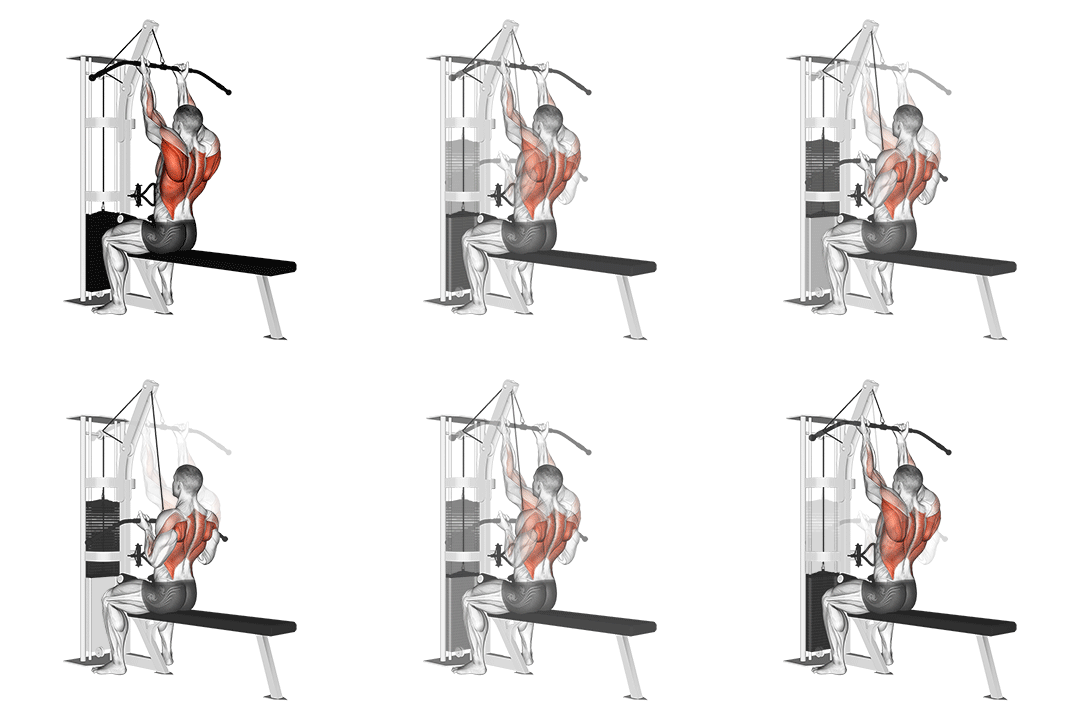
Cable Reverse-grip Straight Back Seated High Row
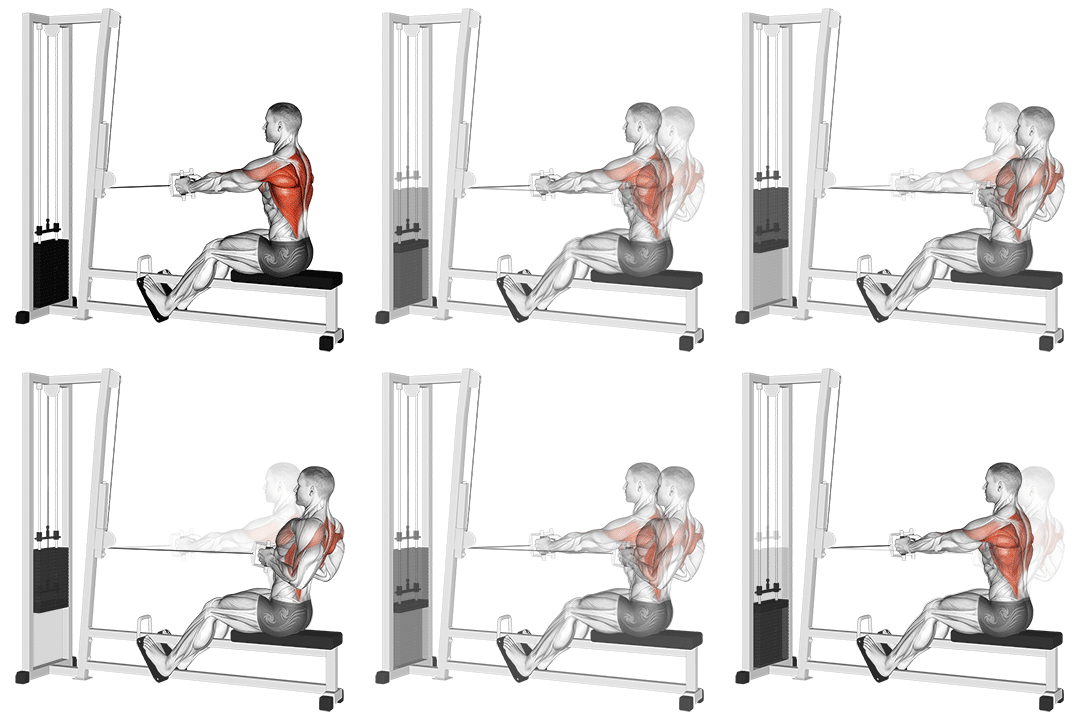
Cable Straight Back Seated Row
Head-to-Head Comparison
Different values are marked. These are catalogue attributes, not performance scores.
Muscles used
Listed target and secondary muscles, shown on the body. Locations, not activation or strength scores.
- Target
- Secondary
- Not highlighted
Cable Reverse-grip Straight Back Seated High Row
- Target
- Upper-back
- Secondary
- Biceps, Forearms
Not shown on diagram: Upper-back. These labels do not identify a precise region on this map.
Cable Straight Back Seated Row
- Target
- Upper-back
- Secondary
- Biceps, Forearms, Shoulders
Not shown on diagram: Upper-back, Shoulders. These labels do not identify a precise region on this map.
Grey does not mean a muscle is unused. The diagrams show only the mapped catalogue labels.
| Attribute | Cable Reverse-grip Straight Back Seated High Row | Cable Straight Back Seated Row |
|---|---|---|
| Target Muscle | Upper-back |
Upper-back |
| Body Part | Back |
Back |
| Equipment | Cable |
Cable |
| Difficulty | Intermediate |
Intermediate |
| Movement Type | Compound |
Compound |
| Secondary Muscles Different | Biceps, Forearms |
Biceps, Forearms, Shoulders |
Visual Comparison
An illustrative 1–10 profile derived from catalog difficulty, equipment, and listed-muscle fields—not measured performance or muscle activation.
Key Differences
- Both exercises target the Upper-back using Cable. The catalogue does not establish which exercise is better for an individual goal.
Muscle comparison
Shared target muscles
Secondary muscle differences
Muscle involvement analysis
Equipment and setup
Cable Reverse-grip Straight Back Seated High Row: setup
Cable Straight Back Seated Row: setup
Access and practicality
Learning and progression
Learning the movements
Progression considerations
Limitations and precautions
Pros & Cons
Cable Reverse-grip Straight Back Seated High Row
+ Pros
- Strong biceps and forearm engagement from the supinated grip, useful for arm development.
- Diagonal pull vector (~30–60° down) biases upper-lat and lower-trap fibers for targeted upper-back shaping.
- Good for emphasizing scapular depression control and upper-trap activation.
- Easier to replicate with resistance bands anchored high for home variations.
− Cons
- Less loading capacity compared to horizontal seated rows due to higher biceps involvement.
- Requires high-pulley setup that’s not always available in small gyms or home gyms.
- Higher technical demand on scapular timing and elbow path—can stress biceps tendon if form breaks down.
Cable Straight Back Seated Row
+ Pros
- Broad upper-back recruitment (mid-traps, rhomboids, posterior delts, lats) with high loading potential.
- Simple setup and intuitive mechanics make it beginner-friendly.
- Multiple grip and tempo variations allow clear strength and hypertrophy progressions.
- Lower acute elbow/biceps stress due to neutral grip and horizontal pull.
− Cons
- Can under-emphasize upper-trap vertical control compared with higher-angle pulls.
- If performed with rounded thoracic posture, risk of lower-back and shoulder issues increases.
- Some gym setups lack an ideal footplate or bench position, leading to compromised form.
When Each Exercise Wins
The seated row produces a horizontal force vector that recruits mid-traps, rhomboids, posterior delts, and lats simultaneously and allows higher absolute loads. Use 6–12 reps, 2–3 second eccentric tempos, and pause 1 second at peak contraction to maximize time under tension.
Seated rows allow heavier loading and cleaner progression (3–6 rep strength blocks, 80–90% 1RM equivalent), making them superior for raw pulling strength and building back thickness under load.
Its simple horizontal pull, easy seat/footplate setup, and clear chest-up cue make it quicker to learn safe scapular retraction and elbow drive. Start with light weight and a 6–12 rep range to build motor control.
The reverse-grip high row adapts well to bands anchored high or a single-pulley setup, letting you mimic the diagonal pull without a full seated-row station. Use 8–15 reps and slow eccentrics to compensate for lighter resistance.
Frequently Asked Questions
Can I do both Cable Reverse-grip Straight Back Seated High Row and Cable Straight Back Seated Row in the same workout?
Which exercise is better for beginners?
How do the muscle activation patterns differ?
Can Cable Straight Back Seated Row replace Cable Reverse-grip Straight Back Seated High Row?
Comparison Summary
Exercise instructions
Steps from the exercise catalogue. Read the full sequence before starting.
Cable Reverse-grip Straight Back Seated High Row
- Sit on the seat facing the cable machine with your feet flat on the floor.
- Grasp the cable attachment with an underhand grip, palms facing up, and your hands shoulder-width apart.
- Keep your back straight and lean slightly forward from your hips.
Read remaining steps for Cable Reverse-grip Straight Back Seated High Row
- Pull the cable towards your torso by retracting your shoulder blades and squeezing your back muscles.
- Pause for a moment at the peak of the contraction, then slowly release the cable back to the starting position.
- Repeat for the desired number of repetitions.
Cable Straight Back Seated Row
- Sit on the cable row machine with your feet flat on the footrests and your knees slightly bent.
- Grasp the cable handles with an overhand grip, palms facing down.
- Keep your back straight and lean slightly forward from the hips.
Read remaining steps for Cable Straight Back Seated Row
- Pull the cable handles towards your body, squeezing your shoulder blades together.
- Pause for a moment at the peak of the movement, then slowly release the handles back to the starting position.
- Repeat for the desired number of repetitions.
Also Compare
More comparisons with Cable Straight Back Seated Row
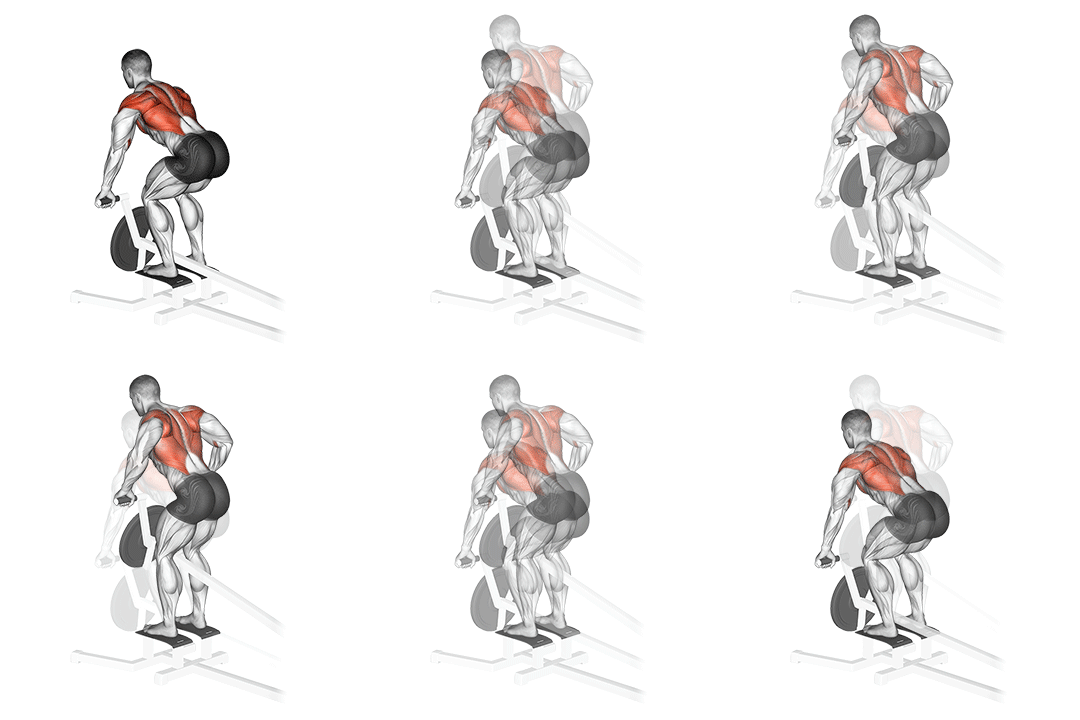
Compare another pair
Choose two exercises to see their differences side by side.