

Cable Straight Back Seated Row vs Lever T Bar Row
Compare target muscles, equipment, difficulty, movement type, and secondary muscles for Cable Straight Back Seated Row and Lever T Bar Row.
Get comparison link
Select the link and use your device's Copy command.
Comparison overview
AI-generatedExercise Comparison
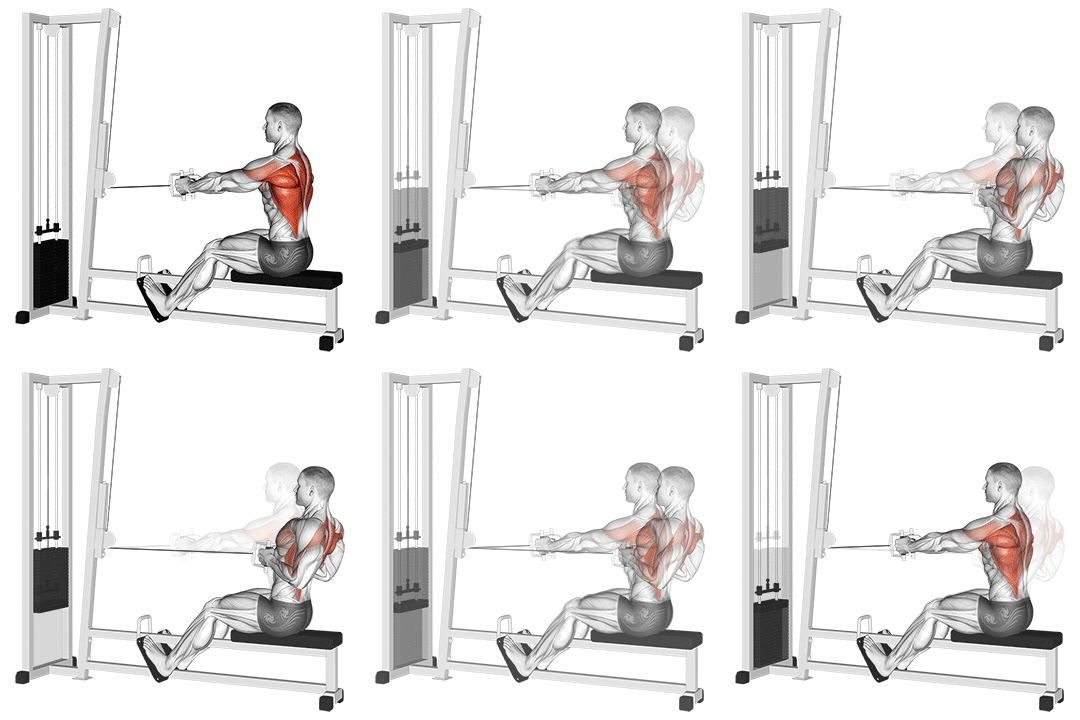
Cable Straight Back Seated Row
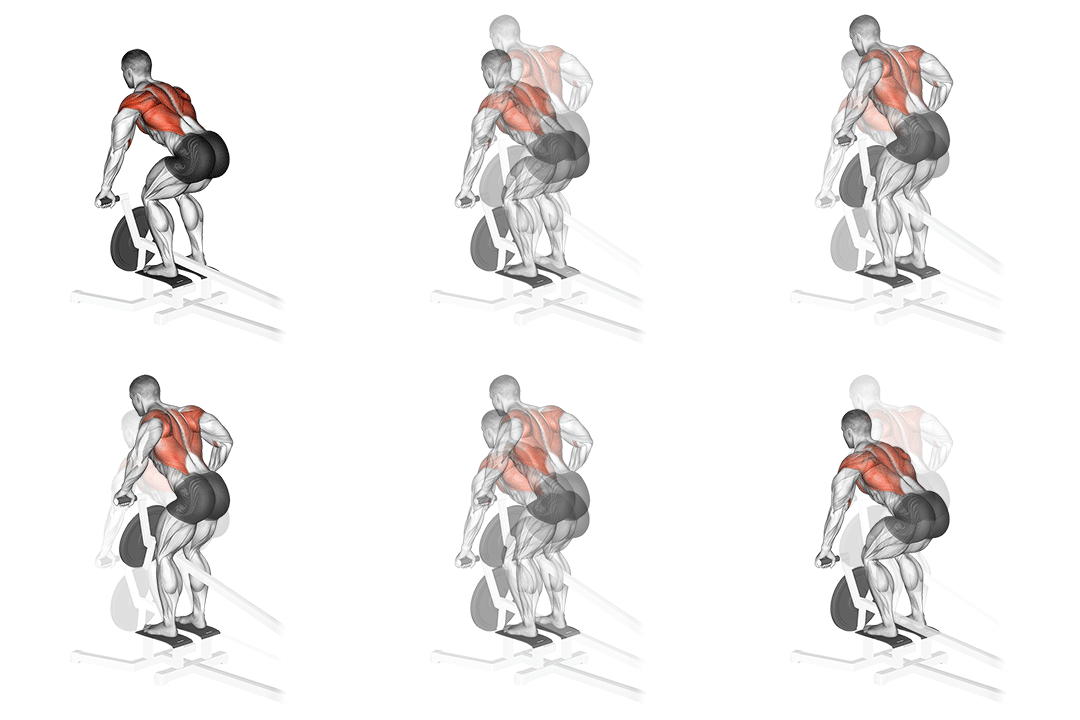
Lever T Bar Row
Head-to-Head Comparison
Different values are marked. These are catalogue attributes, not performance scores.
Muscles used
Listed target and secondary muscles, shown on the body. Locations, not activation or strength scores.
- Target
- Secondary
- Not highlighted
Cable Straight Back Seated Row
- Target
- Upper-back
- Secondary
- Biceps, Forearms, Shoulders
Not shown on diagram: Upper-back, Shoulders. These labels do not identify a precise region on this map.
Lever T Bar Row
- Target
- Upper-back
- Secondary
- Biceps, Forearms
Not shown on diagram: Upper-back. These labels do not identify a precise region on this map.
Grey does not mean a muscle is unused. The diagrams show only the mapped catalogue labels.
| Attribute | Cable Straight Back Seated Row | Lever T Bar Row |
|---|---|---|
| Target Muscle | Upper-back |
Upper-back |
| Body Part | Back |
Back |
| Equipment Different | Cable |
Lever |
| Difficulty | Intermediate |
Intermediate |
| Movement Type | Compound |
Compound |
| Secondary Muscles Different | Biceps, Forearms, Shoulders |
Biceps, Forearms |
Visual Comparison
An illustrative 1–10 profile derived from catalog difficulty, equipment, and listed-muscle fields—not measured performance or muscle activation.
Key Differences
- Equipment differs: Cable Straight Back Seated Row uses Cable, while Lever T Bar Row requires Lever.
Muscle comparison
Shared target muscles
Secondary muscle differences
Muscle involvement analysis
Equipment and setup
Cable Straight Back Seated Row: setup
Lever T Bar Row: setup
Access and practicality
Learning and progression
Learning the movements
Progression considerations
Limitations and precautions
Pros & Cons
Cable Straight Back Seated Row
+ Pros
- Constant tension through full range improves time under tension for hypertrophy
- Cable path is easy to control — reduces lumbar shear and simplifies technique
- Multiple grip options (V, neutral, wide) change emphasis and muscle activation
- Easy to micro-load and use for high-rep metabolic work or strict sets (8–15 reps)
− Cons
- Limited peak-load potential compared with lever or free-weight rows
- Less carryover to raw pulling strength and heavy load tolerance
- Can underload lower lats unless you adjust torso angle or grip
Lever T Bar Row
+ Pros
- Allows higher absolute loads and stronger mechanical tension on the upper back
- Fixed bar path and leverage create a powerful mid-range load for strength
- Chest-supported versions reduce lumbar stress while permitting heavy sets
- Straight-line load often transfers well to heavy compound pulling strength
− Cons
- Less common equipment; some gyms lack a dedicated T-bar or landmine setup
- Greater technical demand on torso angle and hip position if not chest-supported
- Can increase lumbar shear if performed with poor bracing or excessive torso flexion
When Each Exercise Wins
Cable rows keep continuous tension and allow fine-grain loading and multiple grip angles, making them ideal for controlled 8–15 rep sets and longer time under tension that drives muscle growth.
T-bar rows let you safely load heavier and produce higher peak force at favorable joint angles, which better drives increases in maximal back strength and the ability to handle heavy compound lifts.
The guided cable path and simpler posture cues reduce injury risk and make it easier to learn scapular retraction, elbow path, and tempo before progressing to heavier or more technical row variations.
If you have a landmine or a T-bar attachment and plates, the T-bar gives better load per square foot and scales well with limited space; cable stations are less common in home gyms.
Frequently Asked Questions
Can I do both Cable Straight Back Seated Row and Lever T Bar Row in the same workout?
Which exercise is better for beginners?
How do the muscle activation patterns differ?
Can Lever T Bar Row replace Cable Straight Back Seated Row?
Comparison Summary
Exercise instructions
Steps from the exercise catalogue. Read the full sequence before starting.
Cable Straight Back Seated Row
- Sit on the cable row machine with your feet flat on the footrests and your knees slightly bent.
- Grasp the cable handles with an overhand grip, palms facing down.
- Keep your back straight and lean slightly forward from the hips.
Read remaining steps for Cable Straight Back Seated Row
- Pull the cable handles towards your body, squeezing your shoulder blades together.
- Pause for a moment at the peak of the movement, then slowly release the handles back to the starting position.
- Repeat for the desired number of repetitions.
Lever T Bar Row
- Adjust the seat height and footplate position to ensure proper alignment.
- Sit on the machine with your chest against the pad and your feet flat on the footplate.
- Grasp the handles with an overhand grip, slightly wider than shoulder-width apart.
Read remaining steps for Lever T Bar Row
- Keep your back straight and engage your core.
- Pull the handles towards your torso, squeezing your shoulder blades together.
- Pause for a moment at the peak contraction, then slowly release the handles back to the starting position.
- Repeat for the desired number of repetitions.
Also Compare
More comparisons with Cable Straight Back Seated Row
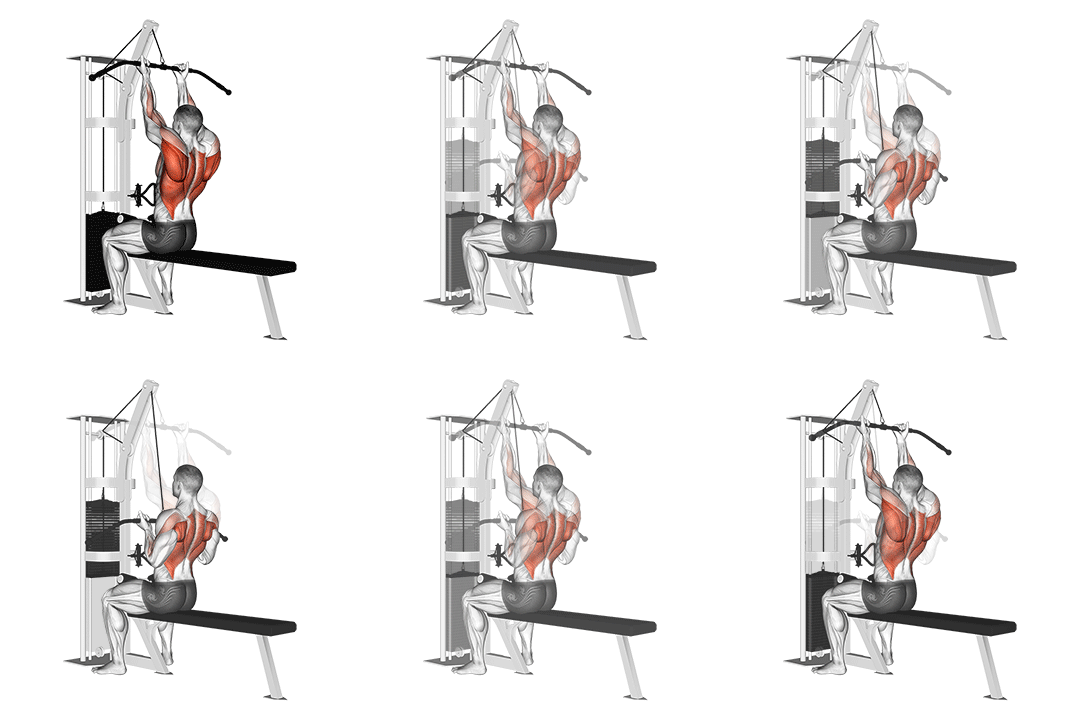
More comparisons with Lever T Bar Row
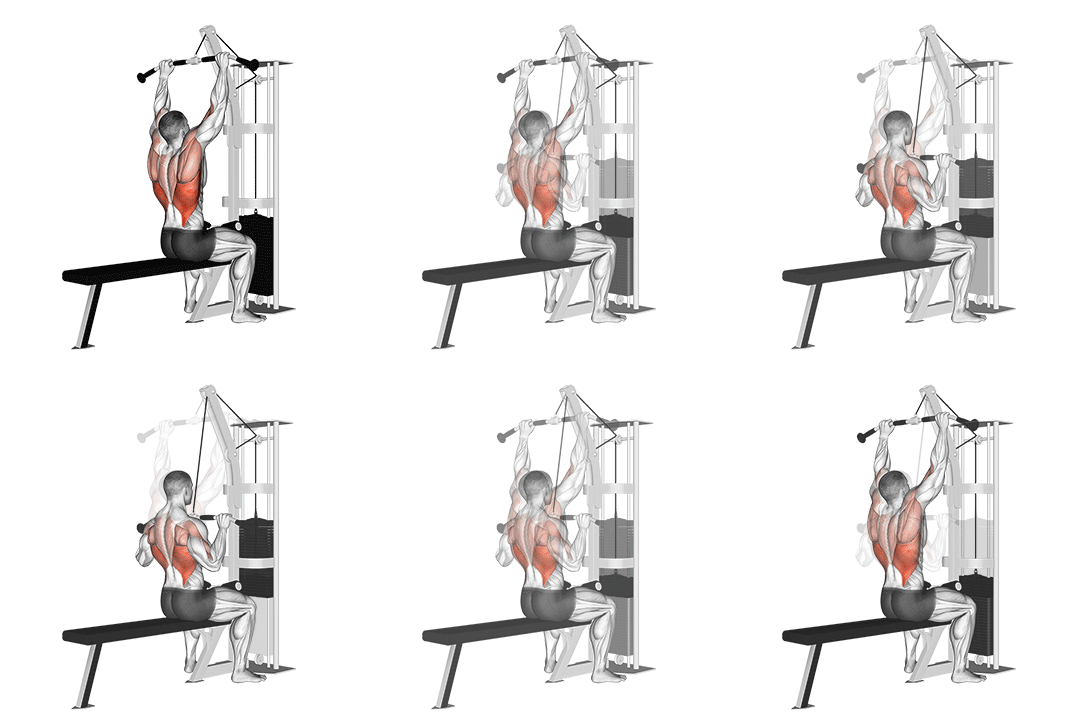
Compare another pair
Choose two exercises to see their differences side by side.