Cable Rope Hammer Preacher Curl vs Dumbbell Seated Preacher Curl

Compare target muscles, equipment, difficulty, movement type, and secondary muscles for Cable Rope Hammer Preacher Curl and Dumbbell Seated Preacher Curl.

Change comparison Share

Get comparison link

Select the link and use your device's Copy command.

Comparison overview

AI-generated
Cable Rope Hammer Preacher Curl vs Dumbbell Seated Preacher Curl — which one should you pick for bigger, stronger biceps? You’ll get a side-by-side look at muscle targeting, biomechanics, equipment needs, and programming tips. I’ll show technique cues (elbow placement, grip, bench angle), explain how force vectors change tension through the range, and give rep ranges and progressions for hypertrophy and strength. Read on to decide which fits your gym access and goals, and leave with concrete cues to use on your next arm day.

Exercise Comparison

Exercise A
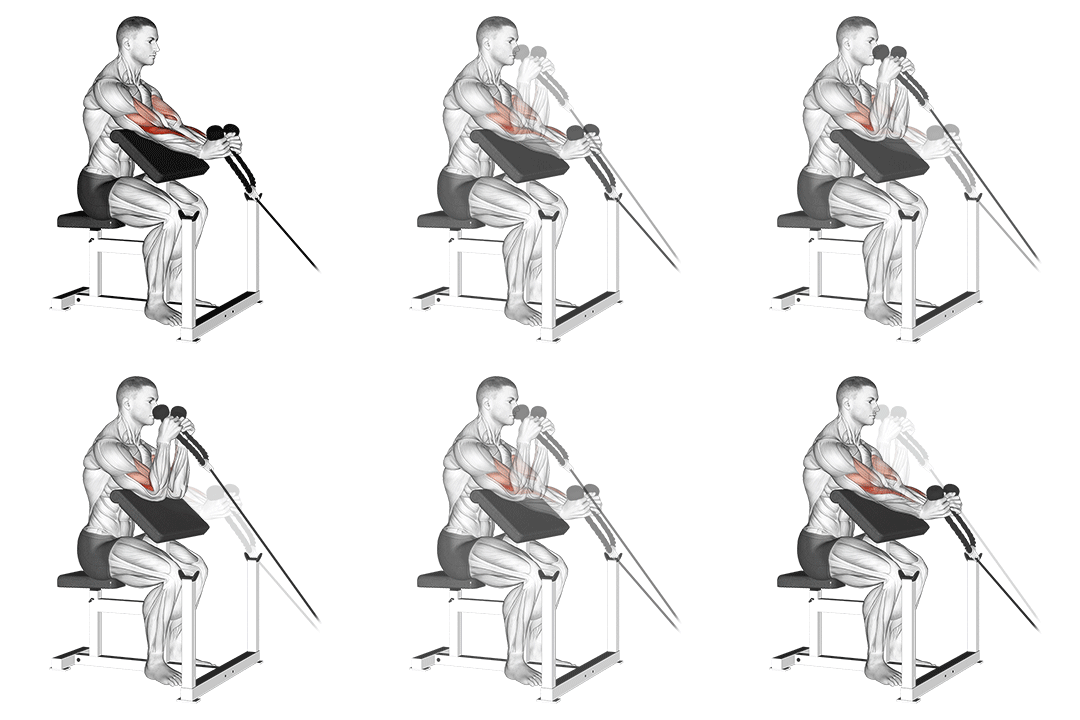
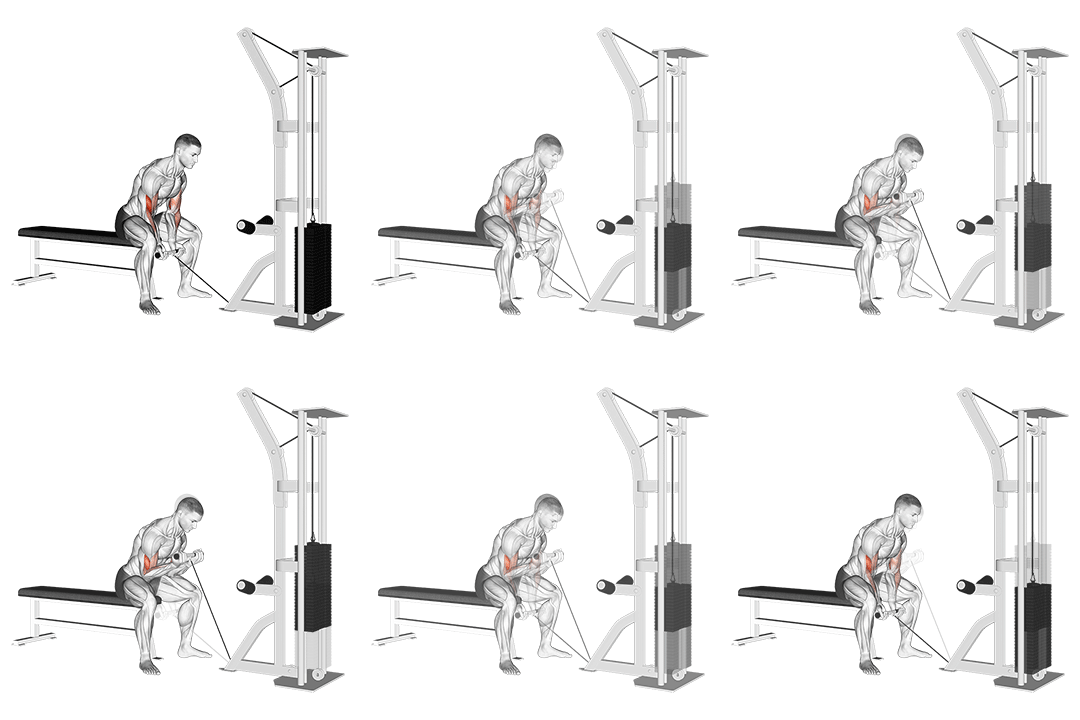
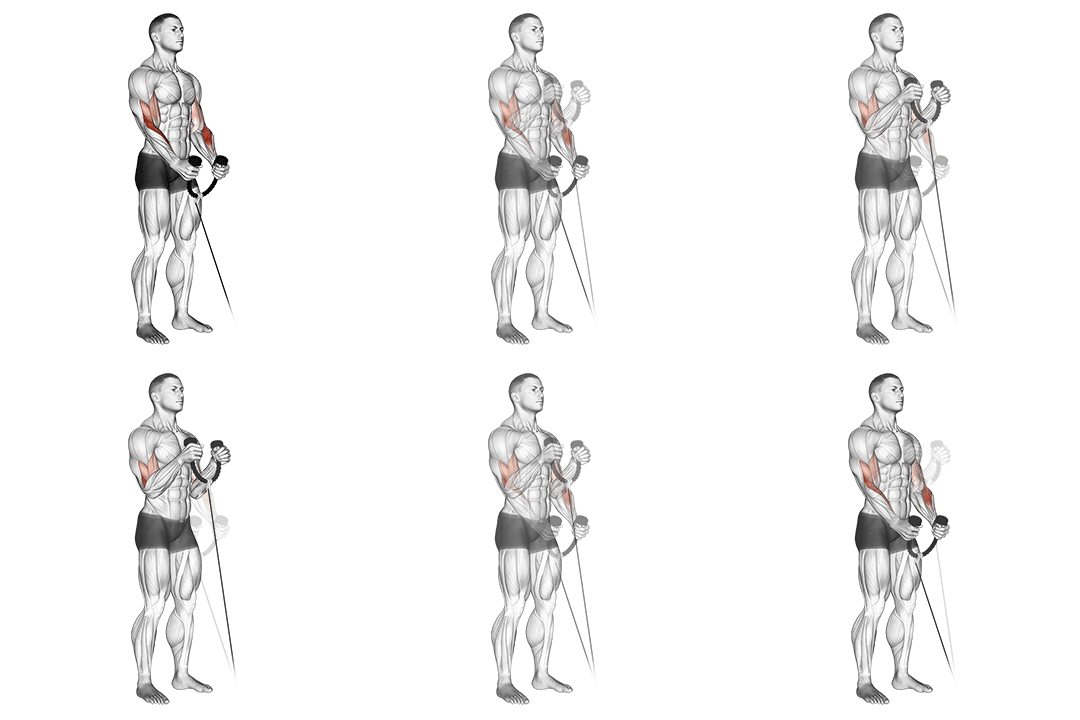
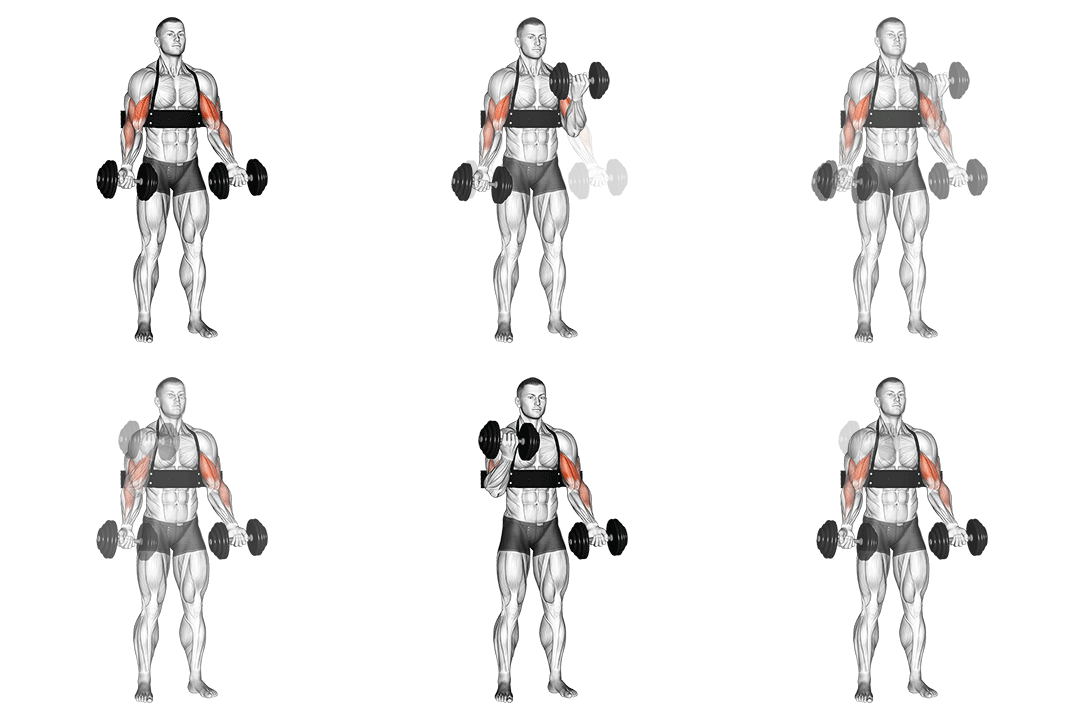
Cable Rope Hammer Preacher Curl demonstration

Cable Rope Hammer Preacher Curl

Target Biceps
Equipment Cable
Body Part Upper-arms
Difficulty Beginner
Movement Isolation
Secondary Muscles
Forearms
VS
Exercise B
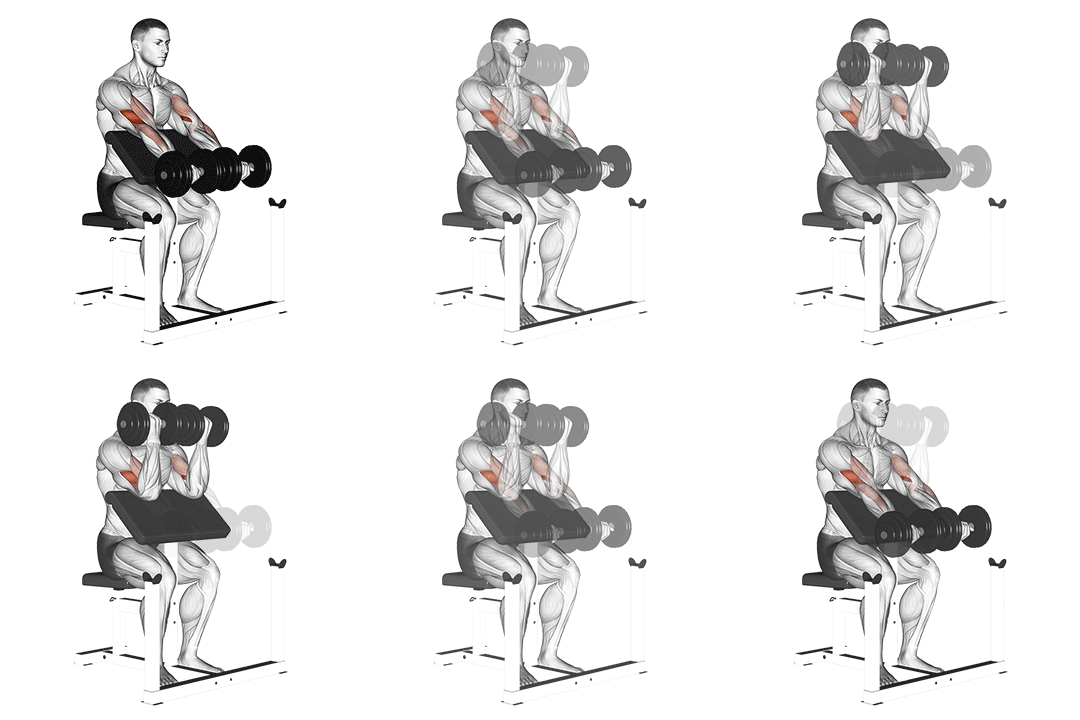
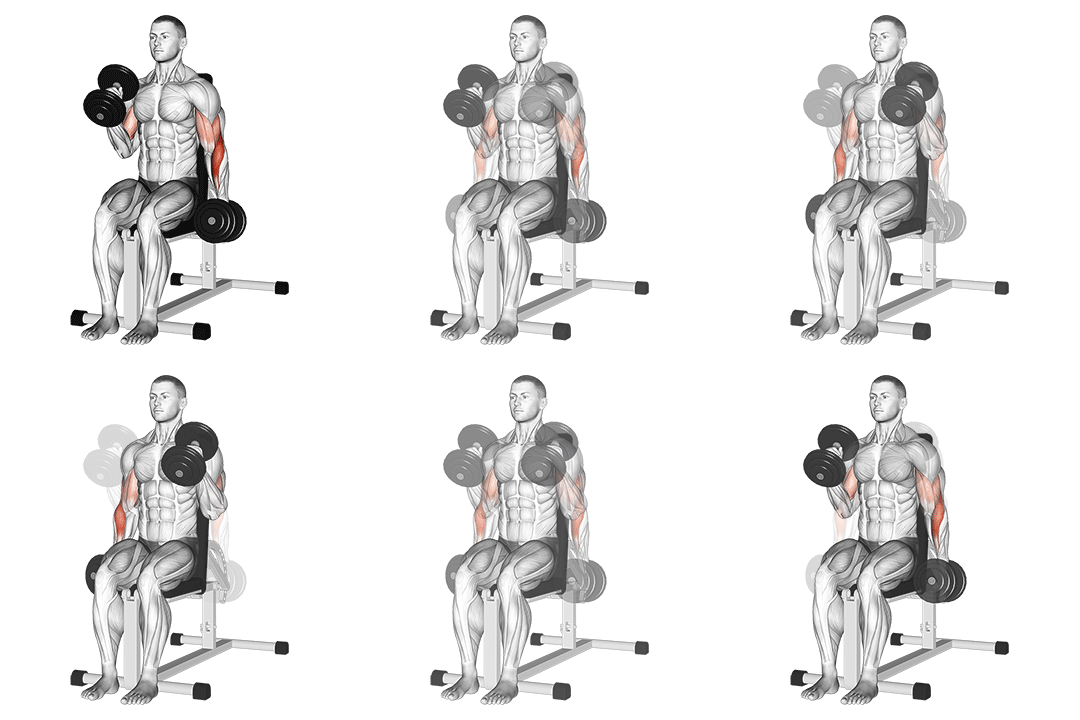
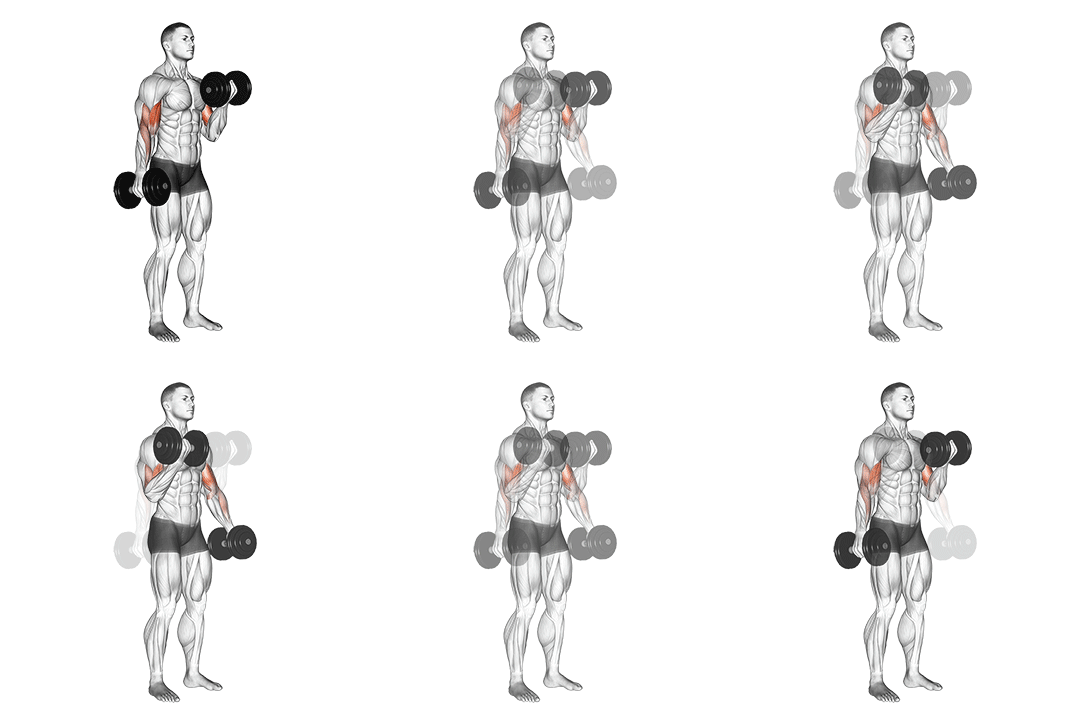
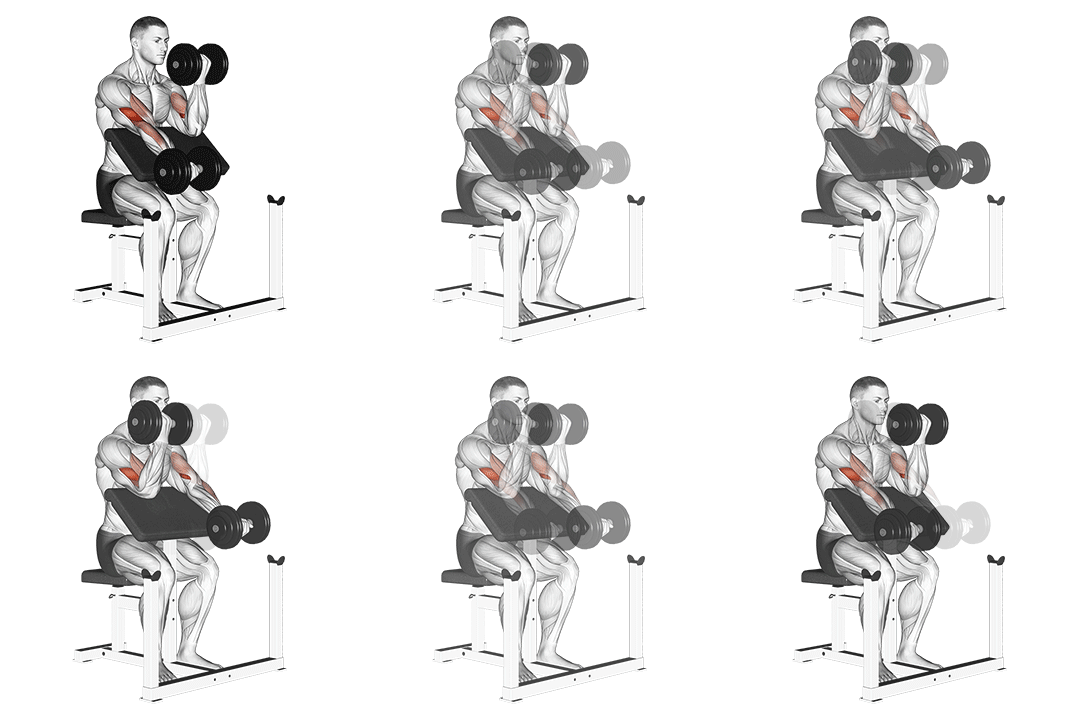
Dumbbell Seated Preacher Curl demonstration

Dumbbell Seated Preacher Curl

Target Biceps
Equipment Dumbbell
Body Part Upper-arms
Difficulty Intermediate
Movement Isolation
Secondary Muscles
Forearms

Head-to-Head Comparison

Different values are marked. These are catalogue attributes, not performance scores.

Muscles used

Listed target and secondary muscles, shown on the body. Locations, not activation or strength scores.

  • Target
  • Secondary
  • Not highlighted

Cable Rope Hammer Preacher Curl

Front
Cable Rope Hammer Preacher Curl: front muscle locationsSolid: listed target. Striped: listed secondary. Grey: not highlighted. Locations, not activation or strength scores. See the muscle names below.
Back
Cable Rope Hammer Preacher Curl: back muscle locationsSolid: listed target. Striped: listed secondary. Grey: not highlighted. Locations, not activation or strength scores. See the muscle names below.
Target
Biceps
Secondary
Forearms

Dumbbell Seated Preacher Curl

Front
Dumbbell Seated Preacher Curl: front muscle locationsSolid: listed target. Striped: listed secondary. Grey: not highlighted. Locations, not activation or strength scores. See the muscle names below.
Back
Dumbbell Seated Preacher Curl: back muscle locationsSolid: listed target. Striped: listed secondary. Grey: not highlighted. Locations, not activation or strength scores. See the muscle names below.
Target
Biceps
Secondary
Forearms

Grey does not mean a muscle is unused. The diagrams show only the mapped catalogue labels.

Attribute Cable Rope Hammer Preacher Curl Dumbbell Seated Preacher Curl
Target Muscle
Biceps
Biceps
Body Part
Upper-arms
Upper-arms
Equipment Different
Cable
Dumbbell
Difficulty Different
Beginner
Intermediate
Movement Type
Isolation
Isolation
Secondary Muscles
Forearms
Forearms

Visual Comparison

An illustrative 1–10 profile derived from catalog difficulty, equipment, and listed-muscle fields—not measured performance or muscle activation.

Key Differences

  • Equipment differs: Cable Rope Hammer Preacher Curl uses Cable, while Dumbbell Seated Preacher Curl requires Dumbbell.
  • Difficulty levels differ: Cable Rope Hammer Preacher Curl is beginner, while Dumbbell Seated Preacher Curl is intermediate.

Muscle comparison

Shared target muscles

Both exercises isolate the biceps brachii and limit shoulder involvement by using a preacher pad to lock the upper arm. They both load elbow flexion primarily, producing high biceps activation in the mid-range (roughly 40–100 degrees elbow flexion). The main overlap is strong recruitment of the biceps short head when the elbow is fixed on the pad and the shoulder is slightly flexed.

Secondary muscle differences

Cable Rope Hammer shifts emphasis toward the brachialis and brachioradialis because the neutral (hammer) grip reduces forearm supination, so the biceps long head contributes less than in a fully supinated curl. Dumbbell Seated Preacher Curl performed with a supinated grip increases biceps brachii (especially long head) peak activation at terminal elbow flexion and adds more supination torque from 30–0 degrees.

Muscle involvement analysis

The cable provides near-constant tension because the line of pull stays aligned with the forearm through the arc, keeping force production steadier at the top and bottom. Dumbbells follow gravity: tension peaks mid-range and can drop slightly at the top when the forearm becomes vertical. Biomechanically, the cable’s force vector produces consistent horizontal/diagonal load, while the dumbbell’s vertical vector changes moment arm as elbow angle changes, altering length-tension relationships.

Equipment and setup

Cable Rope Hammer Preacher Curl: setup

Cable machine with a rope attachment and a preacher bench or adjustable pad. You need a cable that allows the pulley to sit low so the rope pulls through the arm arc.

Dumbbell Seated Preacher Curl: setup

A pair of dumbbells and a preacher bench or adjustable pad. Seat height must be adjustable so the upper arm rests flat on the pad at roughly 45–90° to the torso.

Access and practicality

Dumbbell Seated Preacher Curl — dumbbells and a bench are common in most commercial gyms and many home gyms, while a cable machine with a rope attachment is less common at home.

Learning and progression

Learning the movements

Cable Rope Hammer Preacher Curl is easier for beginners because the neutral grip reduces the need for forearm supination and the cable guides the line of pull, making form easier to maintain. The steady tension also discourages momentum. Dumbbell Seated Preacher Curl requires more control of rotational forearm mechanics (supination) and stabilization of unilateral weight, so it’s intermediate.

Progression considerations

Cable offers microloading, easy tempo manipulation, and constant tension options (slow eccentrics, drop sets). Dumbbells allow clear stepwise jumps in absolute load and unilateral progression, which is valuable for strength asymmetries. Overall, both provide robust progression pathways when programmed with progressive overload and varied tempos.

Limitations and precautions

Both are low-risk when performed with controlled reps and proper pad positioning. Dumbbells carry a slightly higher risk of elbow flare and wrist strain if you use excessive weight or swing. Cable reduces momentum risk but can stress the wrist if you use an aggressive rope pull without maintaining neutral wrist alignment.

Pros & Cons

Cable Rope Hammer Preacher Curl

+ Pros

  • Keeps near-constant tension through the full range of motion
  • Neutral hammer grip increases brachialis and brachioradialis recruitment
  • Easier to control tempo and perform slow eccentrics or drop sets
  • Low tendency to use momentum because of stabilized cable line

− Cons

  • Requires a cable station and rope attachment — less common at home
  • Less direct biceps long-head activation than supinated curls
  • Can feel less natural at the top of the curl for some lifters

Dumbbell Seated Preacher Curl

+ Pros

  • Strong peak contraction for the biceps when performed supinated
  • Easily accessible equipment in most gyms and home setups
  • Allows unilateral work to correct imbalances
  • Clear, incremental progression using heavier dumbbells

− Cons

  • Tension drops slightly at the top due to gravity vector change
  • Requires more control of supination and wrist alignment
  • Slightly higher chance of cheating momentum with heavy loads

When Each Exercise Wins

1
For muscle hypertrophy: Dumbbell Seated Preacher Curl

Dumbbells allow stronger peak contraction in a supinated position and unilateral loading to eliminate imbalances. Use 8–12 reps with a 2–3 second eccentric and a 1–2 second concentric, and add pauses at 10–20° from full flexion to increase time under tension.

2
For strength gains: Dumbbell Seated Preacher Curl

For absolute strength the ability to load with heavier dumbbells and use unilateral progressive overload is advantageous. Work in 4–6 reps for heavier sets, keeping strict form and limiting body swing.

3
For beginners: Cable Rope Hammer Preacher Curl

Cable’s guided line of pull and neutral grip make it easier to learn elbow-flexion mechanics and maintain tension without needing advanced suprination control. Start with 10–15 reps focusing on controlled eccentrics.

4
For home workouts: Dumbbell Seated Preacher Curl

Dumbbells and a bench are far more common in home setups than a cable station. You can replicate tempo, drop sets, and unilateral progressions with limited equipment.

Frequently Asked Questions

Can I do both Cable Rope Hammer Preacher Curl and Dumbbell Seated Preacher Curl in the same workout?

Yes — pairing them works well. Start with the heavier dumbbell sets for 6–10 reps to tax peak contraction, then use cable hammer curls for 10–15 controlled reps to increase time under tension and fatigue the brachialis.

Which exercise is better for beginners?

Cable Rope Hammer Preacher Curl is better for beginners because the neutral grip and guided cable line reduce technique demands and momentum. It teaches elbow flexion control before adding supinated dumbbell work.

How do the muscle activation patterns differ?

Cable hammer curls keep a constant force vector, increasing brachialis and brachioradialis activation and maintaining tension at the top. Dumbbell seated preacher curls with a supinated grip boost biceps brachii (long-head) peak activation but show slightly lower tension when the forearm becomes vertical.

Can Dumbbell Seated Preacher Curl replace Cable Rope Hammer Preacher Curl?

It can replace it if your goal is biceps peak contraction or you lack cable equipment, but you’ll lose the constant-tension and neutral-grip emphasis that trains the brachialis. For comprehensive development, rotate both into your program.

Comparison Summary

Use Cable Rope Hammer Preacher Curl when you want constant tension, safer beginner-friendly mechanics, and to target the brachialis/brachioradialis with a neutral grip. It’s especially useful for tempo work and controlled eccentrics. Choose Dumbbell Seated Preacher Curl when you need stronger peak biceps contraction, unilateral correction, and straightforward progressive overload—ideal for hypertrophy and strength phases. Program-wise: cycles of 8–12 reps (2–3 sec eccentric) on dumbbells for mass, and 10–15 reps on cable for volume and form work. Rotate both across training blocks to exploit different force vectors and length-tension angles.

Exercise instructions

Steps from the exercise catalogue. Read the full sequence before starting.

Cable Rope Hammer Preacher Curl

  1. Attach a rope attachment to a low pulley cable machine.
  2. Stand facing the machine with your feet shoulder-width apart.
  3. Grasp the rope with a neutral grip (palms facing each other).
Read remaining steps for Cable Rope Hammer Preacher Curl
  1. Position your upper arms against the preacher bench pad, keeping your elbows slightly bent.
  2. Keeping your upper arms stationary, exhale and curl the rope towards your shoulders by contracting your biceps.
  3. Hold the contracted position for a brief pause as you squeeze your biceps.
  4. Inhale and slowly lower the rope back to the starting position.
  5. Repeat for the desired number of repetitions.

Dumbbell Seated Preacher Curl

  1. Sit on a preacher curl bench with your feet flat on the floor.
  2. Hold a dumbbell in one hand with an underhand grip, resting your upper arm against the preacher pad.
  3. Keeping your upper arm stationary, exhale and curl the dumbbell up towards your shoulder.
Read remaining steps for Dumbbell Seated Preacher Curl
  1. Pause for a moment at the top, then inhale and slowly lower the dumbbell back down to the starting position.
  2. Repeat for the desired number of repetitions, then switch arms.

Also Compare

Compare another pair

Choose two exercises to see their differences side by side.

Compare Exercises