

Chair Leg Extended Stretch vs Forward Jump: Complete Comparison Guide
Chair Leg Extended Stretch vs Forward Jump — you’re comparing two bodyweight moves that both load the quads but do it very differently. I’ll walk you through how each exercise stresses the quads, which secondary muscles pick up the work, the equipment and space you need, and practical programming cues (sets, reps or hold times). You’ll get clear technique tips, biomechanics (length–tension, force vectors, landing forces), and straightforward recommendations so you can pick which to use for mobility, quad development, power, or safe home training.
Exercise Comparison
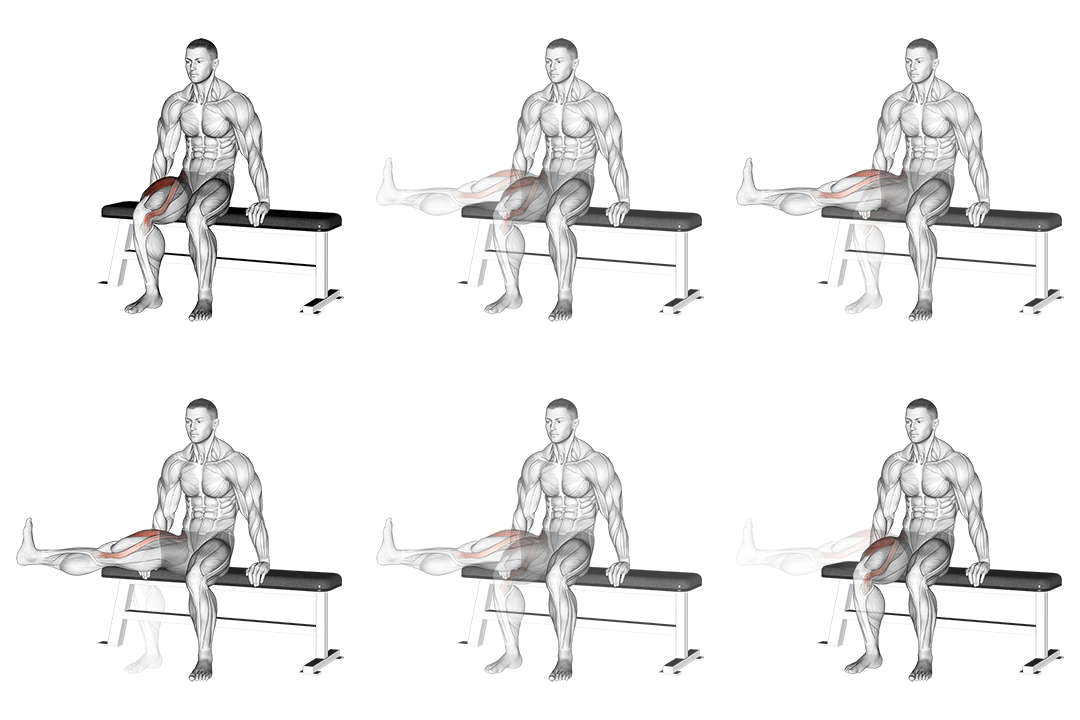
Chair Leg Extended Stretch
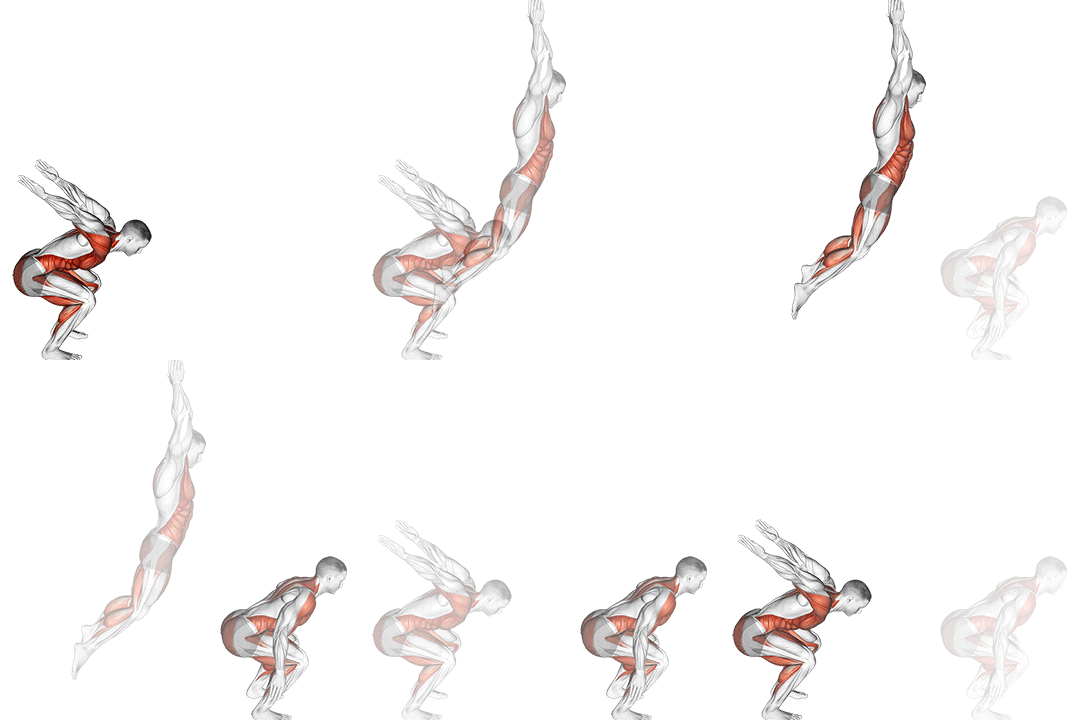
Forward Jump
Head-to-Head Comparison
| Attribute | Chair Leg Extended Stretch | Forward Jump |
|---|---|---|
| Target Muscle |
Quads
|
Quads
|
| Body Part |
Upper-legs
|
Upper-legs
|
| Equipment |
Body-weight
|
Body-weight
|
| Difficulty |
Beginner
|
Intermediate
|
| Movement Type |
Isolation
|
Compound
|
| Secondary Muscles |
2
|
3
|
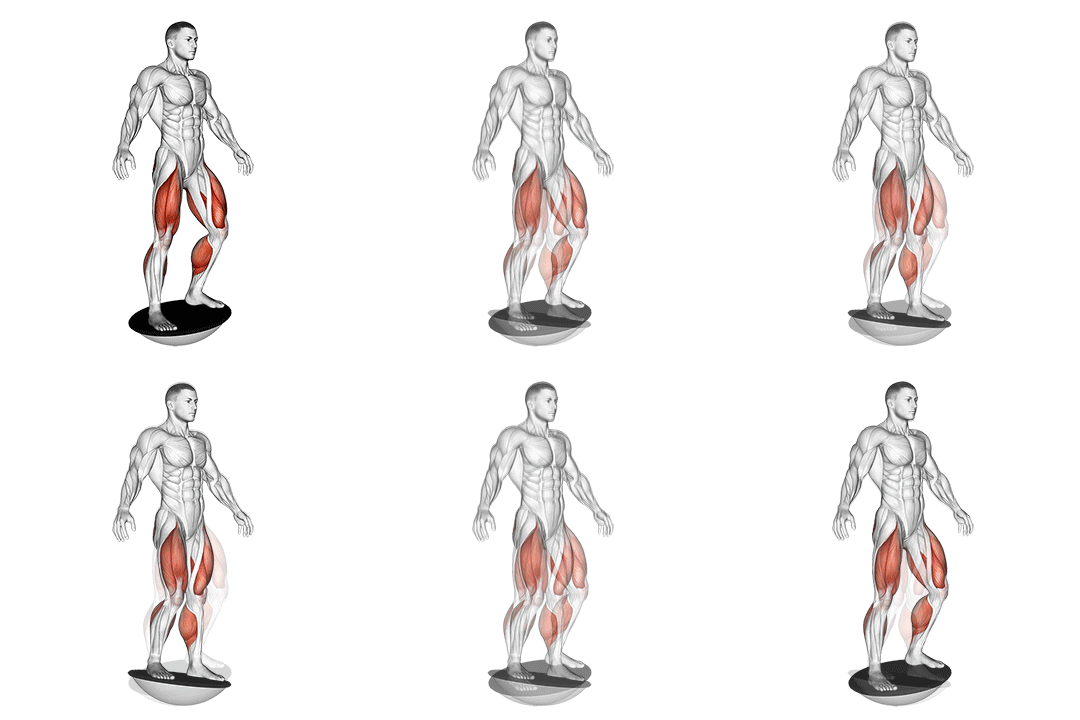
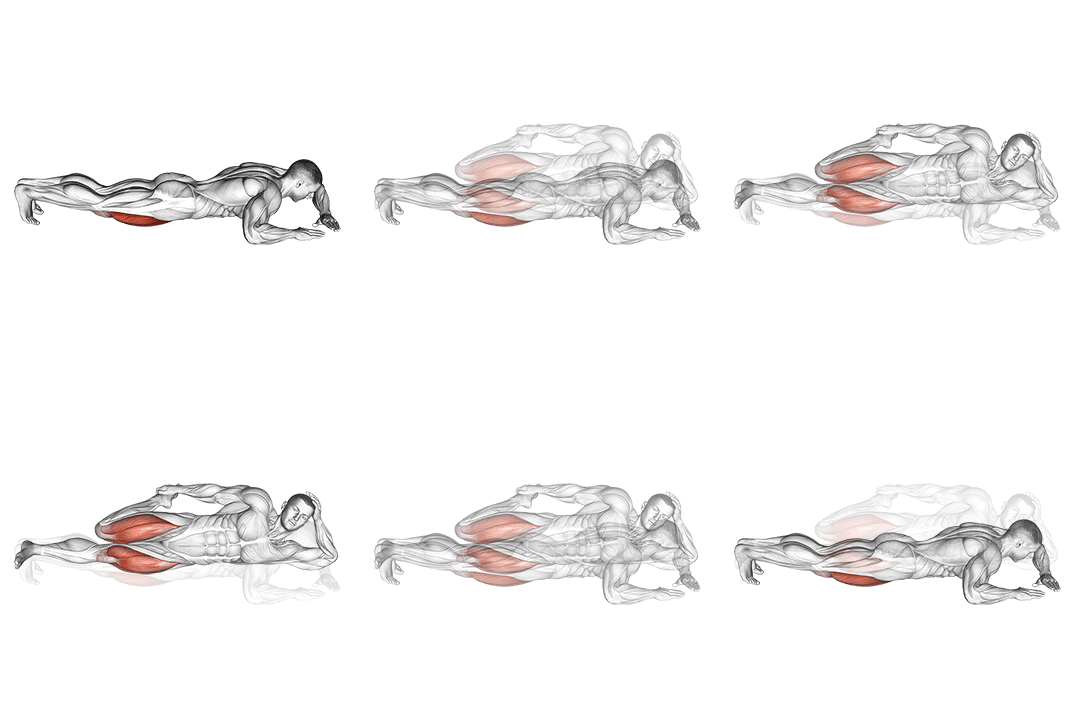
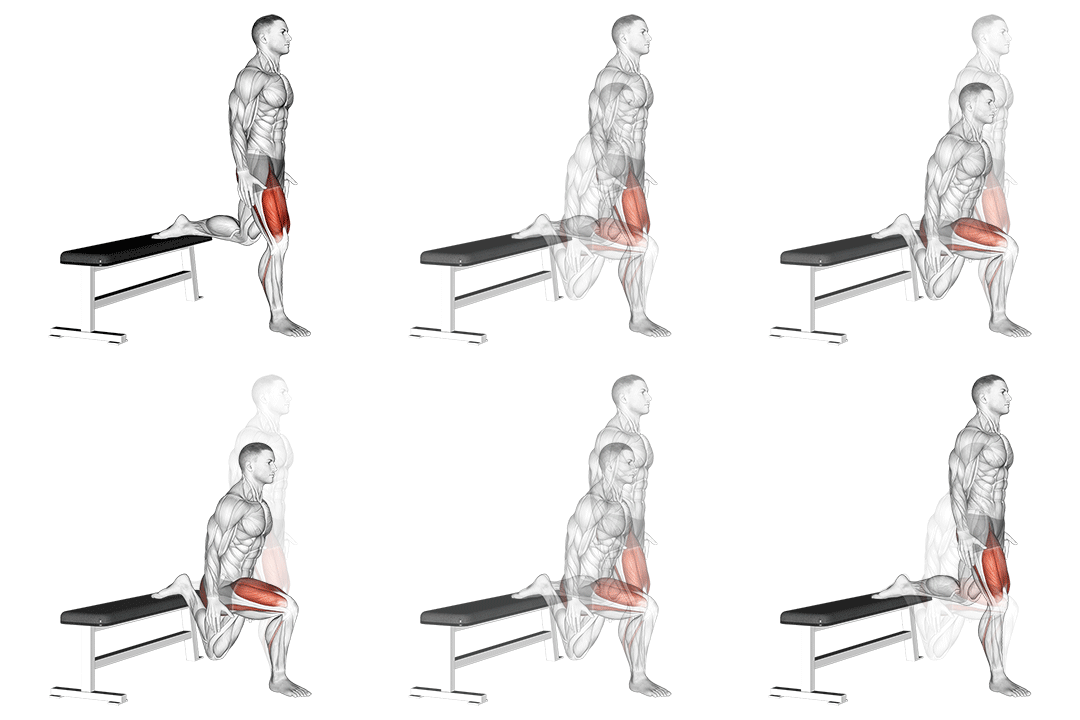
Secondary Muscles Activated
Chair Leg Extended Stretch
Forward Jump
Visual Comparison
Overview
Chair Leg Extended Stretch vs Forward Jump — you’re comparing two bodyweight moves that both load the quads but do it very differently. I’ll walk you through how each exercise stresses the quads, which secondary muscles pick up the work, the equipment and space you need, and practical programming cues (sets, reps or hold times). You’ll get clear technique tips, biomechanics (length–tension, force vectors, landing forces), and straightforward recommendations so you can pick which to use for mobility, quad development, power, or safe home training.
Key Differences
- Chair Leg Extended Stretch is an isolation exercise, while Forward Jump is a compound movement.
- Difficulty levels differ: Chair Leg Extended Stretch is beginner, while Forward Jump is intermediate.
- Both exercises target the Quads using Body-weight. The main differences are in their movement patterns and muscle activation angles.
Pros & Cons
Chair Leg Extended Stretch
+ Pros
- Isolates the quads for focused activation and rehab-style work
- Very low impact — safe for most beginners and those with joint sensitivity
- Requires minimal equipment and little space
- Easy to cue and ramp (add hold time or ankle weight)
− Cons
- Low peak force — limited for developing explosive power
- Limited posterior chain involvement and systemic conditioning
- Less effective for rapid strength progression unless external load added
Forward Jump
+ Pros
- Develops quad power via the stretch–shortening cycle
- Engages calves, hamstrings, and glutes for functional, compound strength
- Improves coordination, rate of force development, and conditioning
- Multiple progression paths (distance, single-leg, added load)
− Cons
- Higher impact — greater joint and soft-tissue stress on landing
- Requires more skill and space to perform safely
- Less isolated quad time-under-tension for targeted hypertrophy
When Each Exercise Wins
The chair stretch lets you target the quads with sustained time under tension (hold 30–90s or 8–12 slow reps at 3–4 s eccentric/ concentric tempo), which is more useful for isolated hypertrophy when external load is limited.
Forward Jump produces higher peak forces and recruits multiple joints, increasing overall lower-body strength and force production; use 3–6 sets of 3–8 explosive reps for strength/power development.
Beginner-friendly mechanics, low impact, and simple cues (keep knee tracking over toes, maintain neutral spine) make the chair stretch safer and easier to learn first.
Minimal space and no special footwear or shock-absorbing surface required — you can get quad-focused work at home with just a chair and proper technique cues.
Frequently Asked Questions
Can I do both Chair Leg Extended Stretch and Forward Jump in the same workout?
Yes — sequence the chair stretch or isolated quad work first to prime the muscle (2–3 sets of 30–60s), then perform forward jumps for power. Allow at least 2–3 minutes between explosive sets to preserve jump quality and reduce injury risk.
Which exercise is better for beginners?
Chair Leg Extended Stretch is better for beginners because it’s low impact and simpler to cue. Master knee tracking, neutral spine, and quad activation here before progressing to plyometric skills like forward jumps.
How do the muscle activation patterns differ?
Chair Leg Extended Stretch emphasizes sustained isometric/quasi-isotonic quad activation at mid-range lengths, increasing time under tension. Forward Jump uses an eccentric preload and rapid concentric contraction (stretch–shortening cycle), producing brief high-amplitude activation and greater posterior chain recruitment.
Can Forward Jump replace Chair Leg Extended Stretch?
Not entirely — Forward Jump can develop power and overall strength but won’t provide the same low-impact, isolated quad stimulus or sustained time under tension needed for certain rehab or hypertrophy goals. Use jumps for power and the chair stretch for targeted quad work.
Expert Verdict
Use Chair Leg Extended Stretch when you want low-impact, quad-isolation work: rehab, mobility, or targeted hypertrophy with holds (30–90s) or slow, controlled reps (8–12 at a 3–4 s tempo). Choose Forward Jump when your goal is power, athleticism, or compound lower-body strength — program 3–6 sets of explosive reps (3–8) and focus on soft landings (knee flexion ~30–45°) to manage forces. Combine both in a program: start with isolation or mobility work to prepare the quads, then add jumps for power once your movement quality and joint tolerance are solid.
Also Compare
More comparisons with Chair Leg Extended Stretch
Compare More Exercises
Use our free comparison tool to analyze any two exercises head-to-head.
Compare Exercises