

Chair Leg Extended Stretch vs Quads: Complete Comparison Guide
Chair Leg Extended Stretch vs Quads is a practical matchup if you want to prioritize quad work in short sessions. You’ll get a clear comparison of how each movement loads the quadriceps, which secondary muscles are involved, technical cues to protect your knees and hips, and when to choose one over the other based on muscle growth, strength, or accessibility. I’ll cover activation patterns, recommended rep ranges (20–40s holds or 8–15 reps), common mistakes, and straightforward progressions so you can pick the right tool for your training plan.
Exercise Comparison
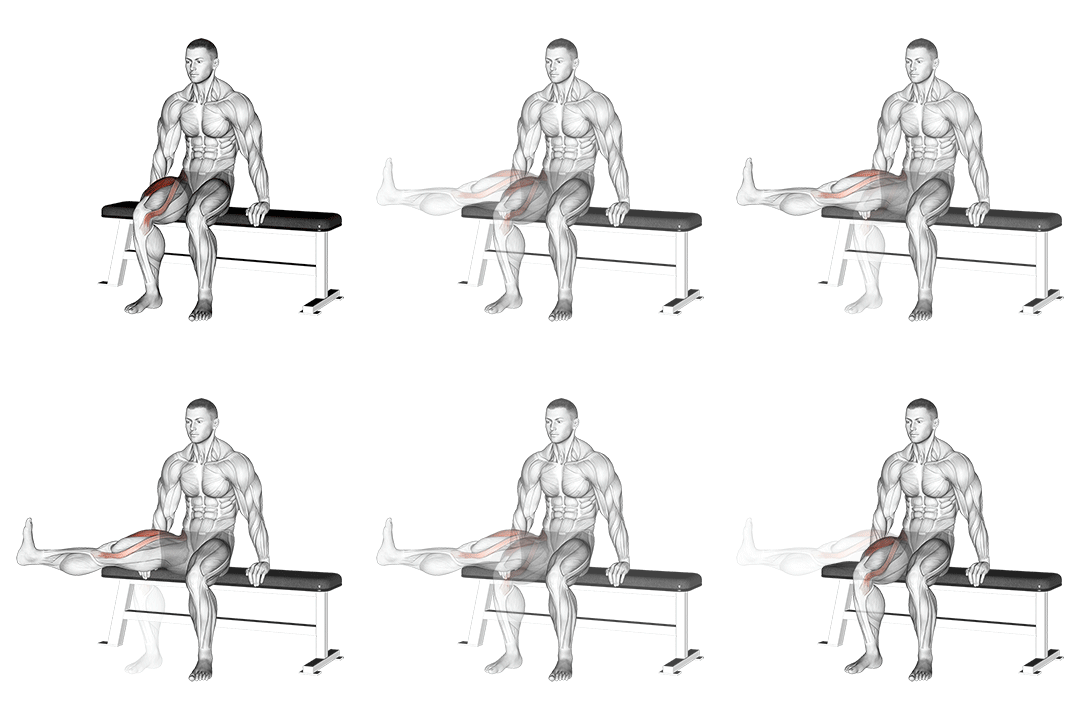
Chair Leg Extended Stretch
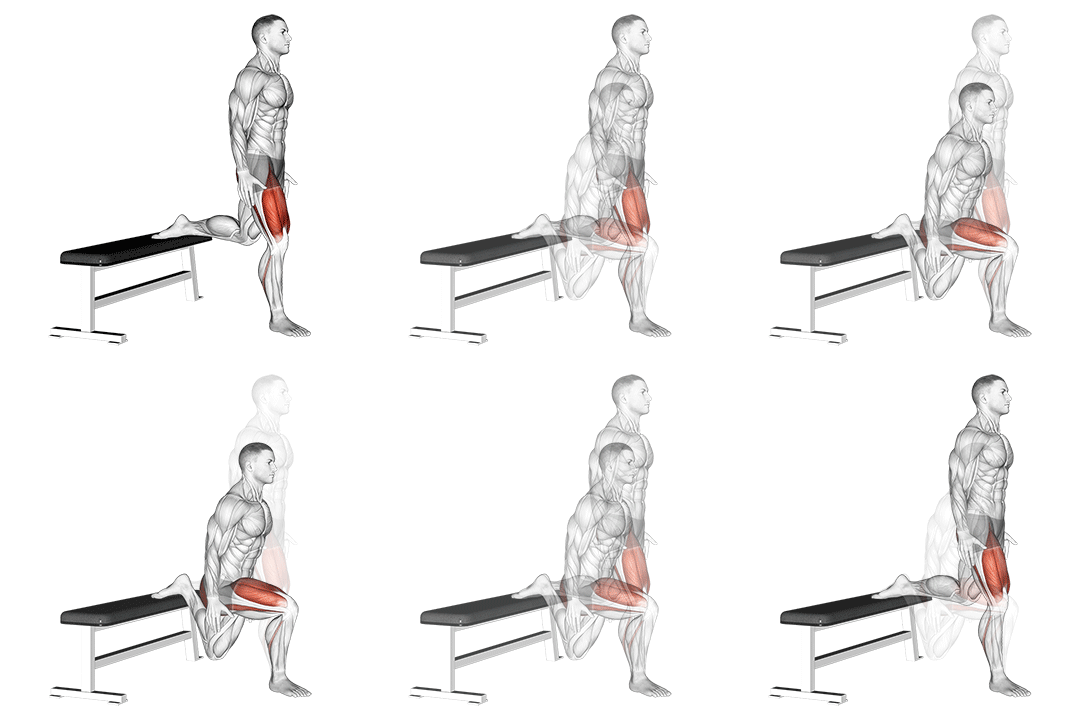
Quads
Head-to-Head Comparison
| Attribute | Chair Leg Extended Stretch | Quads |
|---|---|---|
| Target Muscle |
Quads
|
Quads
|
| Body Part |
Upper-legs
|
Upper-legs
|
| Equipment |
Body-weight
|
Body-weight
|
| Difficulty |
Beginner
|
Beginner
|
| Movement Type |
Isolation
|
Compound
|
| Secondary Muscles |
2
|
2
|
Secondary Muscles Activated
Chair Leg Extended Stretch
Quads
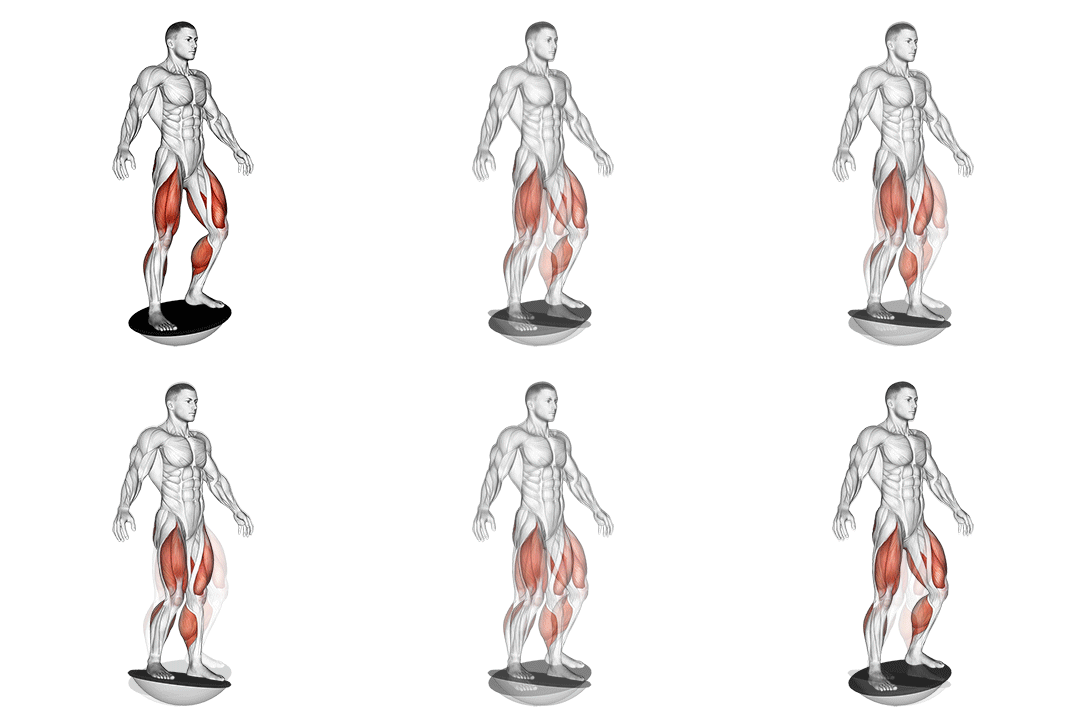
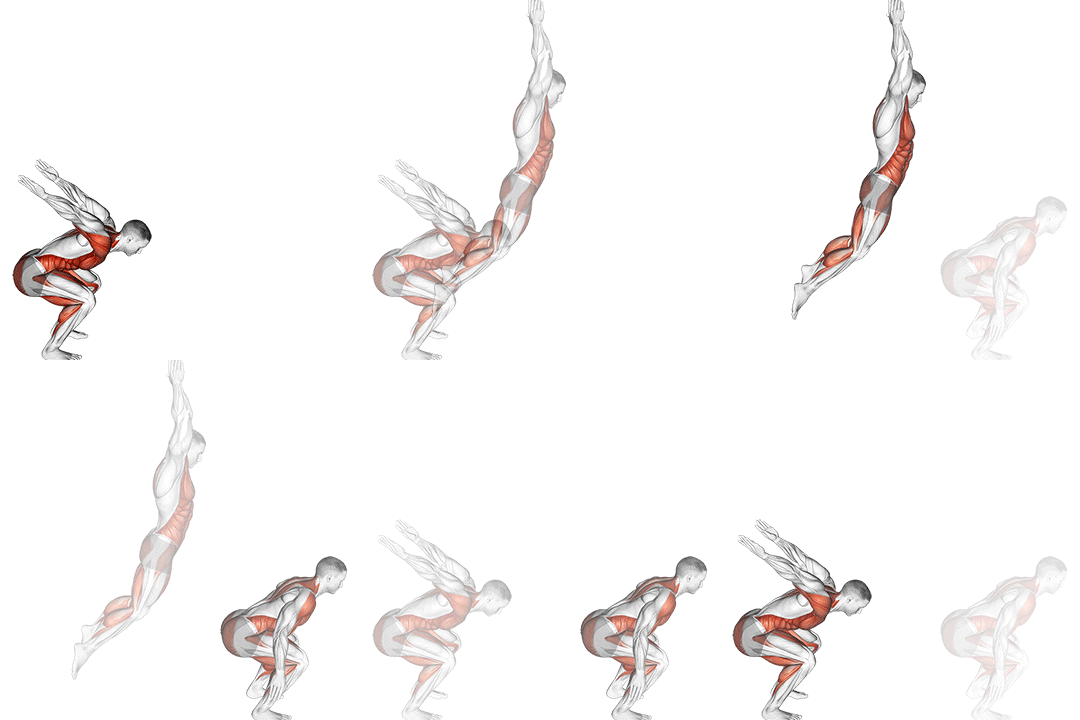
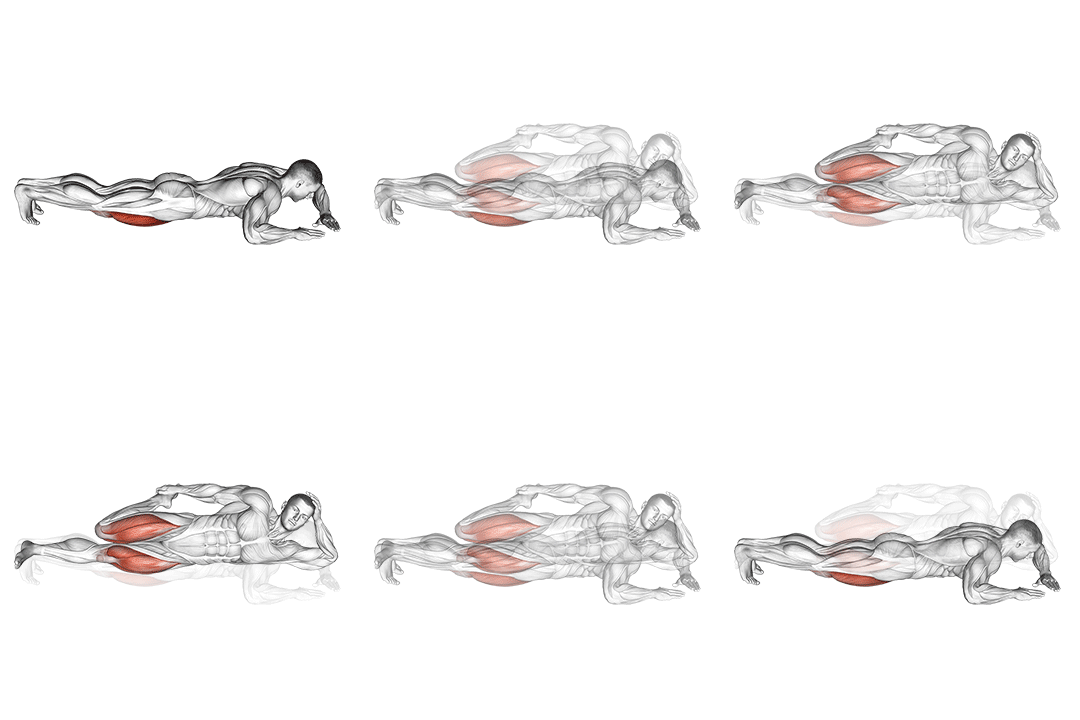
Visual Comparison
Overview
Chair Leg Extended Stretch vs Quads is a practical matchup if you want to prioritize quad work in short sessions. You’ll get a clear comparison of how each movement loads the quadriceps, which secondary muscles are involved, technical cues to protect your knees and hips, and when to choose one over the other based on muscle growth, strength, or accessibility. I’ll cover activation patterns, recommended rep ranges (20–40s holds or 8–15 reps), common mistakes, and straightforward progressions so you can pick the right tool for your training plan.
Key Differences
- Chair Leg Extended Stretch is an isolation exercise, while Quads is a compound movement.
- Both exercises target the Quads using Body-weight. The main differences are in their movement patterns and muscle activation angles.
Pros & Cons
Chair Leg Extended Stretch
+ Pros
- Strong quad isolation—directly targets rectus femoris and vasti
- Low balance and stability demands—performed seated
- Easy tech cues: sit tall, extend to near full knee extension, dorsiflex the foot
- Useful for rehab and pre-activation before compound lifts
− Cons
- Limited progression ceiling without external resistance
- Less posterior chain engagement—minimal glute and hamstring strengthening
- Can increase patellofemoral stress if repeated with poor knee alignment
Quads
+ Pros
- High overall lower-body stimulus—works quads plus glutes and hamstrings
- Large progression bandwidth—add load, unilateral variations, and tempo work
- Builds functional strength by training hip and knee coordination
- Improves balance and core stability through anti-flexion demands
− Cons
- Requires more motor control and mobility (hips, ankles, thoracic) to perform well
- Higher spinal and joint loads when weighted, increasing injury risk with poor form
- Less pure isolation of the quads—may not fully fatigue rectus femoris compared to isolation work
When Each Exercise Wins
Quads (compound) is the better primary choice because it allows progressive overload via added resistance and higher total work (sets × reps × load). Use 8–15 reps and 3–5 sets for hypertrophy, then finish with Chair Leg Extended Stretch as an isolation finisher to spike quad time under tension.
Compound Quads work builds multi-joint strength by training both knee and hip extensors together, which transfers to heavier loaded lifts. Load progression (adding 5–20% increments) and lower rep ranges (3–6) are effective for increasing maximal force.
The Chair Leg Extended Stretch is easier to learn and safer for absolute beginners because it isolates knee extension and minimizes balance demands. Start with 2–3 sets of 10–15 controlled extensions or 20–40s holds to build quad capacity before introducing compound patterns.
Bodyweight Quads movements (like bodyweight squats or lunges) give the most bang for your time at home since they require no furniture and scale with unilateral progressions. You can progress with tempo, single-leg versions, or household weight to maintain overload.
Frequently Asked Questions
Can I do both Chair Leg Extended Stretch and Quads in the same workout?
Yes. Pair the compound Quads movement first for heavy sets, then use Chair Leg Extended Stretch as a finisher to increase time under tension and isolate the rectus femoris. That order uses fatigue management and maintains movement quality for multi-joint lifts.
Which exercise is better for beginners?
Chair Leg Extended Stretch is typically better for beginners because it minimizes balance and coordination demands and teaches knee extension mechanics. Once basic quad control and hip mobility are present, add compound Quads to build functional strength.
How do the muscle activation patterns differ?
Chair Leg Extended Stretch emphasizes knee extension with the hip stabilized, increasing rectus femoris and vasti activation and direct anterior force vectors. Compound Quads split torque between knee extension and hip extension, recruiting glutes and hamstrings and shifting the force vector posteriorly as hip flexion increases.
Can Quads replace Chair Leg Extended Stretch?
Quads can replace Chair Leg Extended Stretch for general strength and hypertrophy, but not entirely for isolation needs. If you need targeted rectus femoris stimulation or low-balance work (rehab or activation), keep the Chair Leg Extended Stretch as a complementary exercise.
Expert Verdict
Use Chair Leg Extended Stretch when you need targeted quad activation, low balance demand, or rehab-friendly loading—perform 2–3 sets of 10–20 reps or 20–60s holds, focusing on full knee extension and dorsiflexion. Choose Quads (compound) when your goal is hypertrophy or strength because it allows heavier progressive overload and recruits glutes and hamstrings for greater total force production; work in 3–5 sets of 6–15 reps and aim for controlled descent to ~90° knee flexion to hit peak quad torque. For most trainees, prioritize compound Quads as the foundation and add Chair Leg Extended Stretch as an isolation finisher or for beginners and rehab.
Also Compare
More comparisons with Chair Leg Extended Stretch
Compare More Exercises
Use our free comparison tool to analyze any two exercises head-to-head.
Compare Exercises