

Chest Dip vs Pushups: Complete Comparison Guide
Chest Dip vs Pushups — two foundational chest presses that both build your pecs but do it differently. You’ll get clear, actionable guidance on how each move loads the pectorals, which secondary muscles they recruit, how to perform them with safe technique, and which to pick for hypertrophy, strength, beginners, or home workouts. I’ll cover biomechanics (force vectors, length-tension), specific technique cues (angles, elbow position, tempo), progression options, and injury-risk tradeoffs so you can choose the exercise that best matches your goals and training environment.
Exercise Comparison
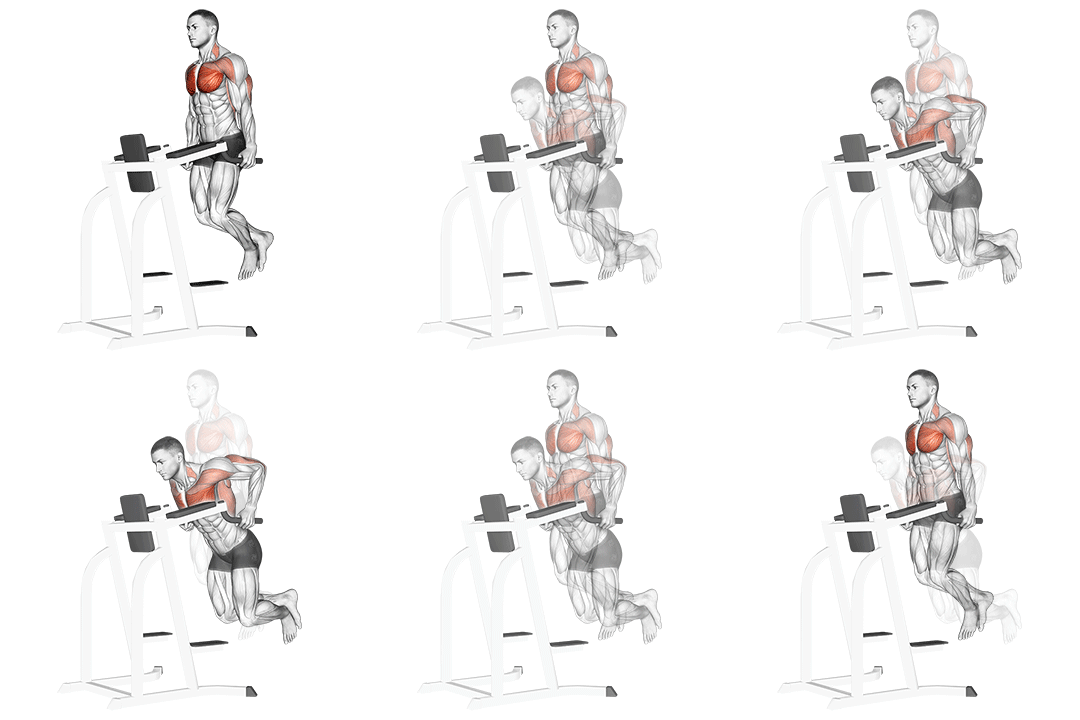
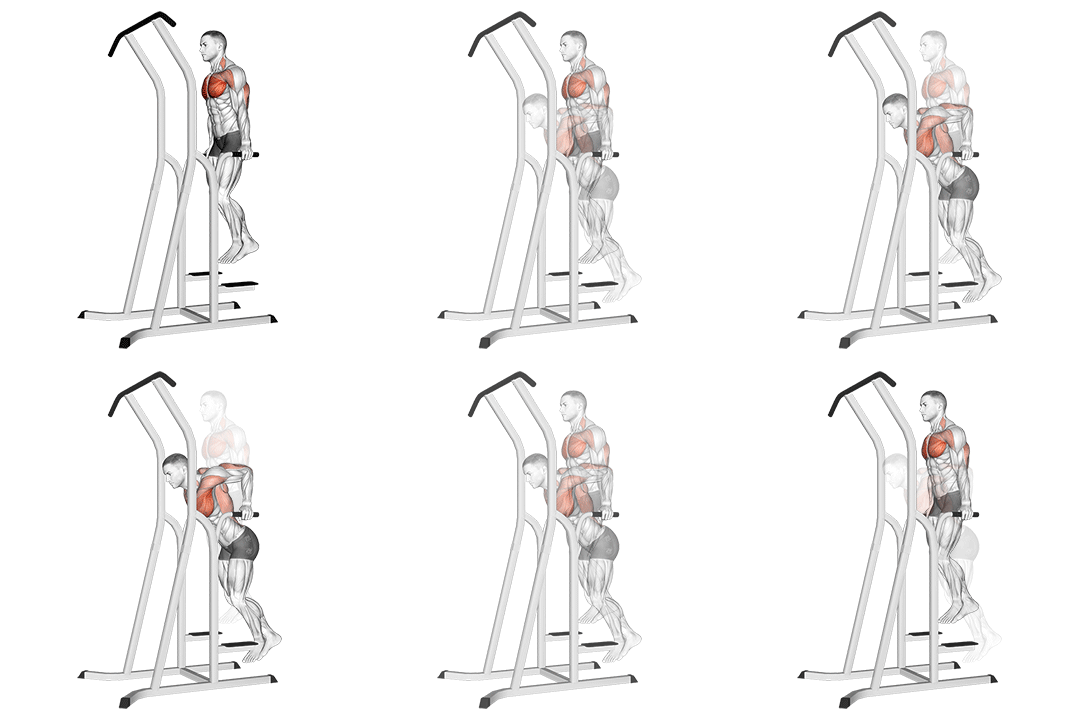
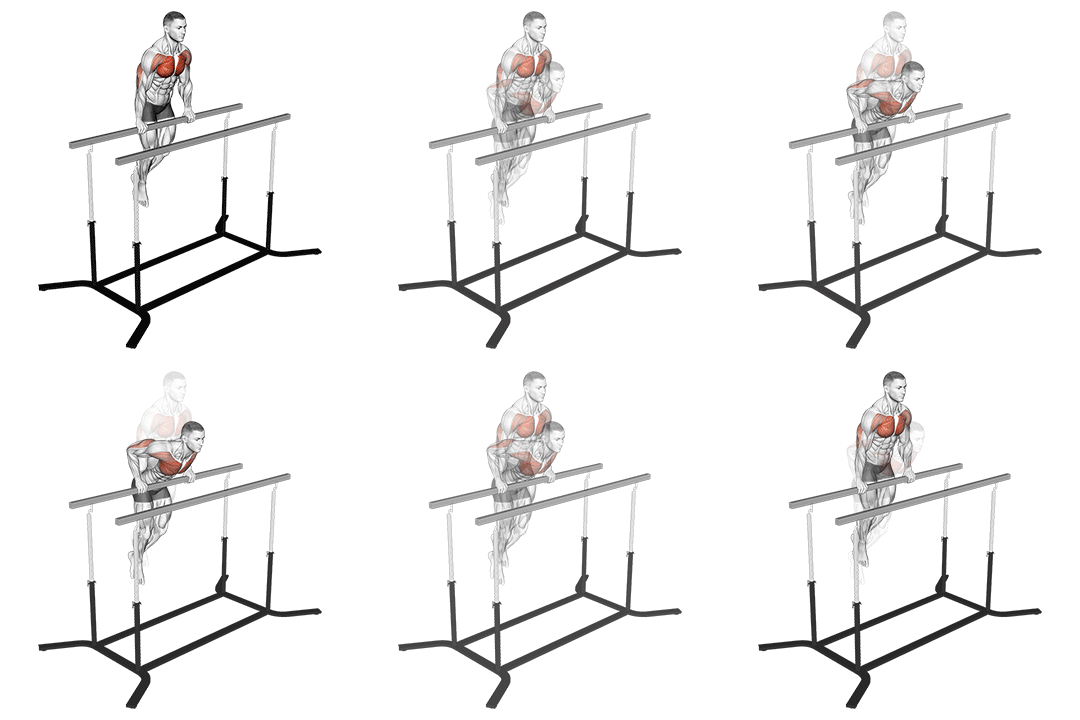
Chest Dip
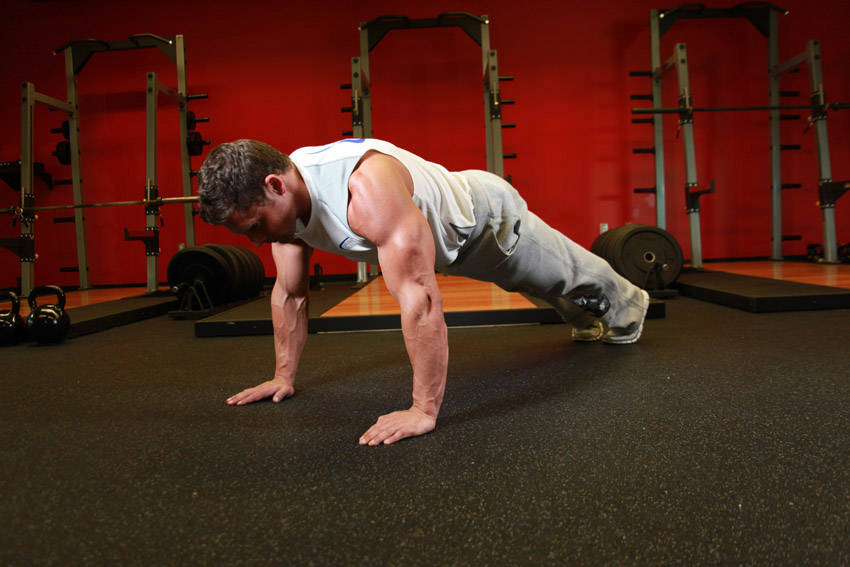
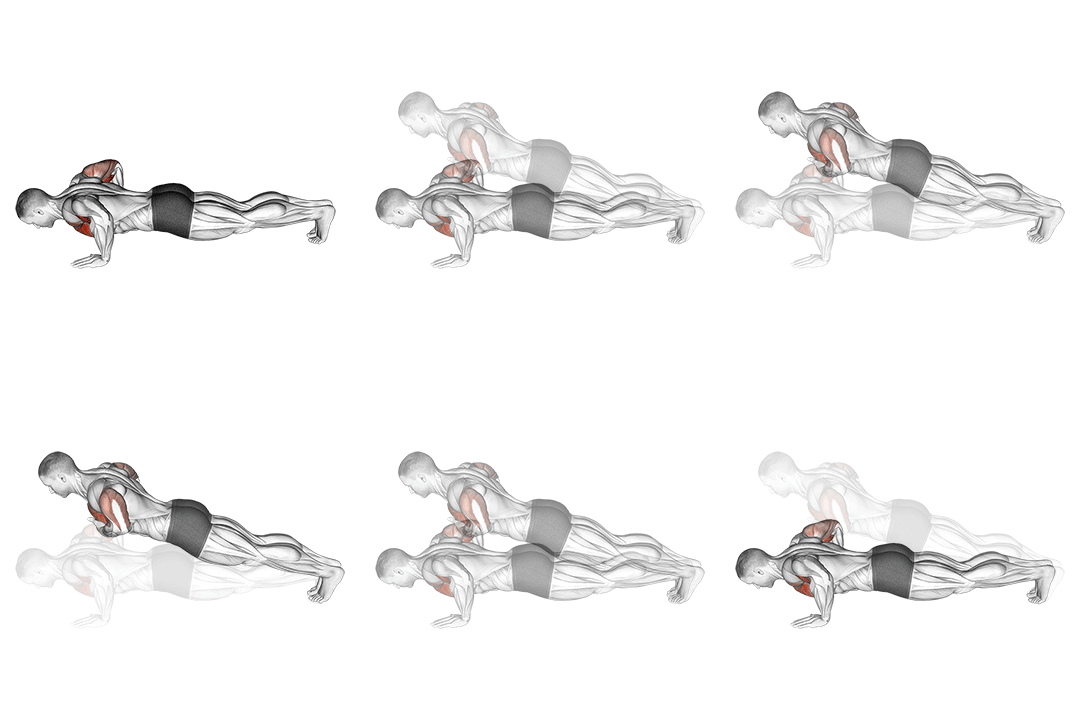
Pushups
Head-to-Head Comparison
| Attribute | Chest Dip | Pushups |
|---|---|---|
| Target Muscle |
Pectorals
|
Pectorals
|
| Body Part |
Chest
|
Chest
|
| Equipment |
Body-weight
|
Body-weight
|
| Difficulty |
Advanced
|
Beginner
|
| Movement Type |
Compound
|
Compound
|
| Secondary Muscles |
2
|
2
|
Secondary Muscles Activated
Chest Dip
Pushups
Visual Comparison
Overview
Chest Dip vs Pushups — two foundational chest presses that both build your pecs but do it differently. You’ll get clear, actionable guidance on how each move loads the pectorals, which secondary muscles they recruit, how to perform them with safe technique, and which to pick for hypertrophy, strength, beginners, or home workouts. I’ll cover biomechanics (force vectors, length-tension), specific technique cues (angles, elbow position, tempo), progression options, and injury-risk tradeoffs so you can choose the exercise that best matches your goals and training environment.
Key Differences
- Difficulty levels differ: Chest Dip is advanced, while Pushups is beginner.
- Both exercises target the Pectorals using Body-weight. The main differences are in their movement patterns and muscle activation angles.
Pros & Cons
Chest Dip
+ Pros
- Loads pecs through a longer, stretch-rich ROM for strong mechanical tension
- Easy to add progressive overload with weight belts or vests
- Higher triceps and anterior deltoid recruitment supports pressing strength
- Scalable to high absolute loads for strength-focused phases
− Cons
- Greater shoulder stress at deep ranges can increase injury risk
- Requires dip bars, rings, or equipment often not available at home
- Advanced skill and scapular control needed—harder to learn
Pushups
+ Pros
- Requires no equipment and is highly accessible
- Easy to regress or progress (knees, incline, decline, tempo)
- Encourages core and serratus anterior stability when performed correctly
- Lower shoulder injury risk for most lifters when using proper elbow angle
− Cons
- Limited absolute loading without creative progressions or added weight
- Shorter ROM and mid-range emphasis can reduce stretch-mediated stimulus
- Wrist discomfort for some people without modifications
When Each Exercise Wins
Chest dips produce a larger eccentric stretch and allow straightforward progressive overload with added weight, which increases mechanical tension—the primary driver of muscle growth. Aim for 6–12 reps with controlled 2–3s eccentrics or 8–15 reps bodyweight-style for higher volume.
Dips allow you to overload the movement in a linear fashion (weighted dips), so you can achieve high absolute loads and work in low-rep strength ranges (3–6 reps). The vertical force vector also transfers well to other heavy pressing patterns.
Pushups are easier to learn and scale down (incline, knees, wall) while teaching core bracing, scapular control, and horizontal pressing mechanics. They build a safer base before introducing deep-shoulder-extension movements like dips.
Pushups need virtually no equipment and can target the chest effectively using variations (incline/decline, tempo, unilateral). Most lifters get consistent chest stimulus at home with progressive pushup routines.
Frequently Asked Questions
Can I do both Chest Dip and Pushups in the same workout?
Yes. Pairing them works well: use pushups early for volume and scapular control (higher reps, 8–15) and follow with weighted or heavy dips for lower-rep strength work (3–8). Monitor shoulder fatigue and reduce dip depth or reps if you feel instability or pain.
Which exercise is better for beginners?
Pushups are better for beginners because they’re easy to regress and teach core bracing, scapular mechanics, and horizontal pressing. Start with incline or knee pushups and build to full pushups before introducing assisted or bodyweight dips.
How do the muscle activation patterns differ?
Dips lengthen the pecs more at the bottom and require stronger concentric force through shoulder extension, producing a stretch-mediated activation pattern. Pushups emphasize mid-range horizontal adduction with consistent serratus and core engagement across the rep; hand width and elbow angle shift activation between chest and triceps.
Can Pushups replace Chest Dip?
Pushups can substitute for dips in many programs, especially for beginners and home trainers, but they don’t replicate the deep-stretch stimulus and simple weighted overload that dips provide. If your goal is maximal hypertrophy or heavy pressing strength, include dips or a weighted pushup progression to reach higher absolute loads.
Expert Verdict
Choose chest dips when your goal is high mechanical tension and straightforward progressive overload for muscle growth or heavy pressing strength—and you have the shoulder mobility and equipment. Use a controlled 20–30° forward lean, stop above painful end ranges, and load for 3–12 reps depending on your phase. Choose pushups if you need accessibility, safer shoulder loading, or you’re building a technical base; progress via incline/decline, tempo, and weighted vests for 8–20 rep ranges. If possible, cycle both: use pushups for volume and conditioning and dips as a heavy overload tool when your shoulders are ready.
Also Compare
More comparisons with Chest Dip
Compare More Exercises
Use our free comparison tool to analyze any two exercises head-to-head.
Compare Exercises