

Clean Deadlift vs Power Clean: Complete Comparison Guide
Clean Deadlift vs Power Clean ({Exercise1} vs {Exercise2}) — you’re choosing between a heavy hip-hinge and an explosive Olympic lift. In this guide you’ll get a clear breakdown of how each move loads the hamstrings and upper-legs, the secondary muscles involved, equipment needs, learning curve, and when to use each for hypertrophy, strength, or power. I’ll include specific technique cues (bar path, hip angle, foot position), rep ranges and percentage guidelines, plus biomechanical reasons—like length-tension and force vectors—behind the recommendations so you can pick what's right for your training.
Exercise Comparison
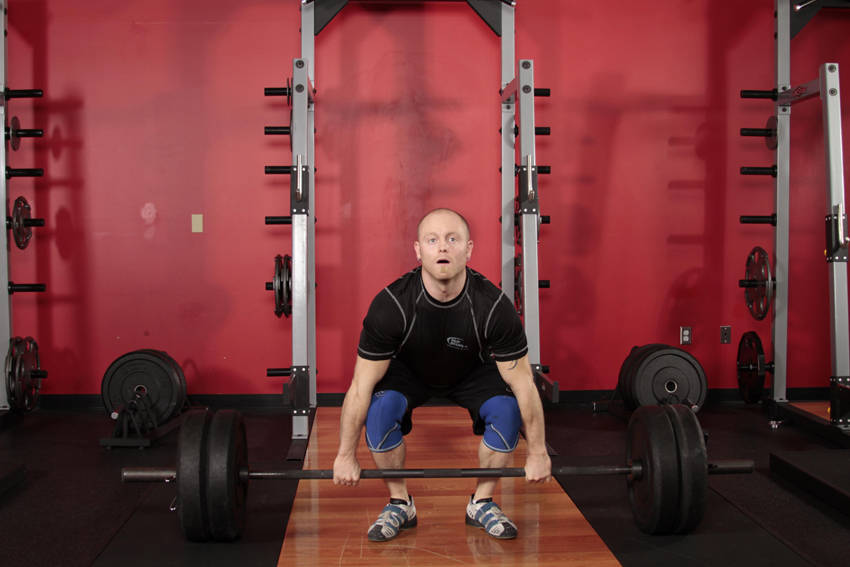
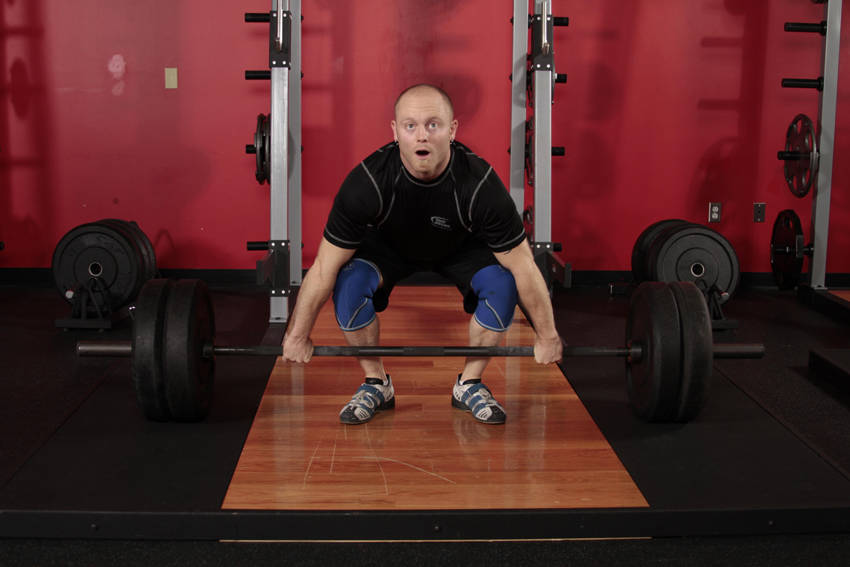
Clean Deadlift
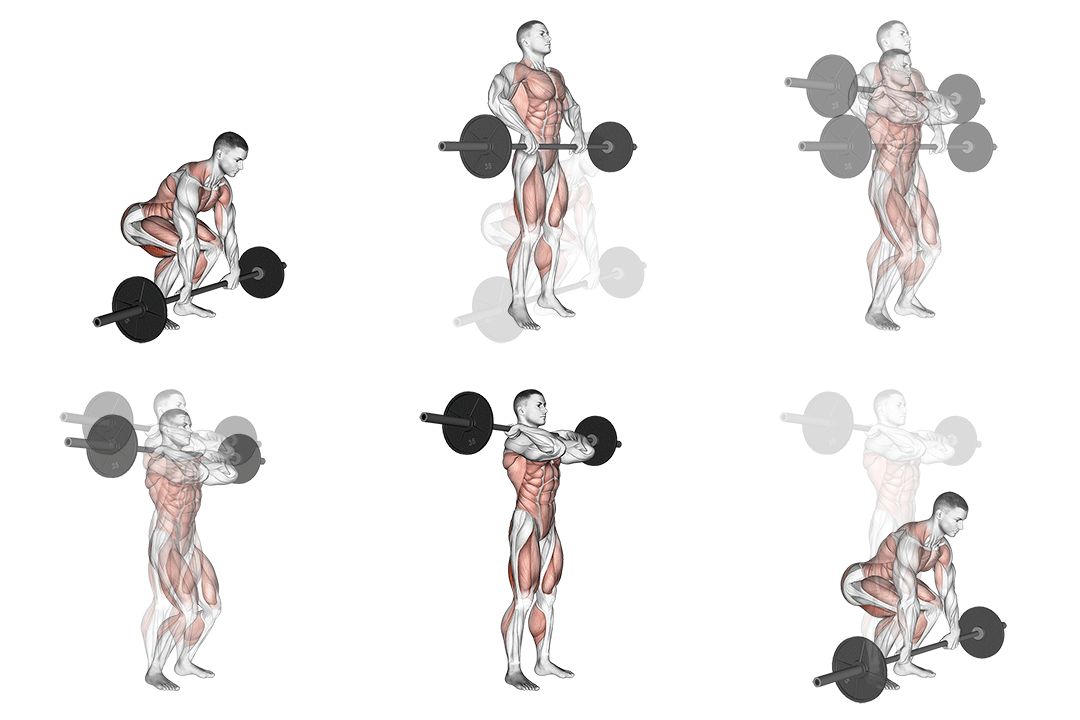
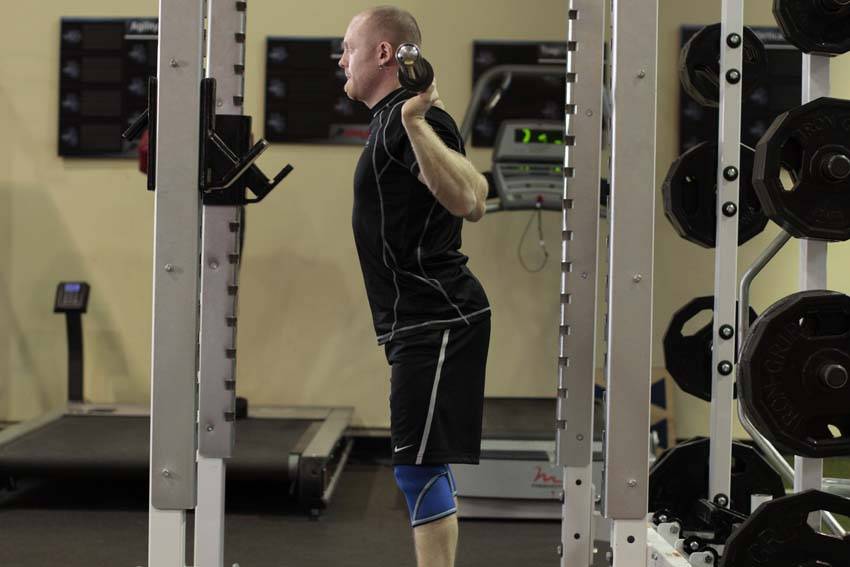
Power Clean
Head-to-Head Comparison
| Attribute | Clean Deadlift | Power Clean |
|---|---|---|
| Target Muscle |
Hamstrings
|
Hamstrings
|
| Body Part |
Upper-legs
|
Upper-legs
|
| Equipment |
Barbell
|
Barbell
|
| Difficulty |
Intermediate
|
Advanced
|
| Movement Type |
Compound
|
Compound
|
| Secondary Muscles |
6
|
3
|
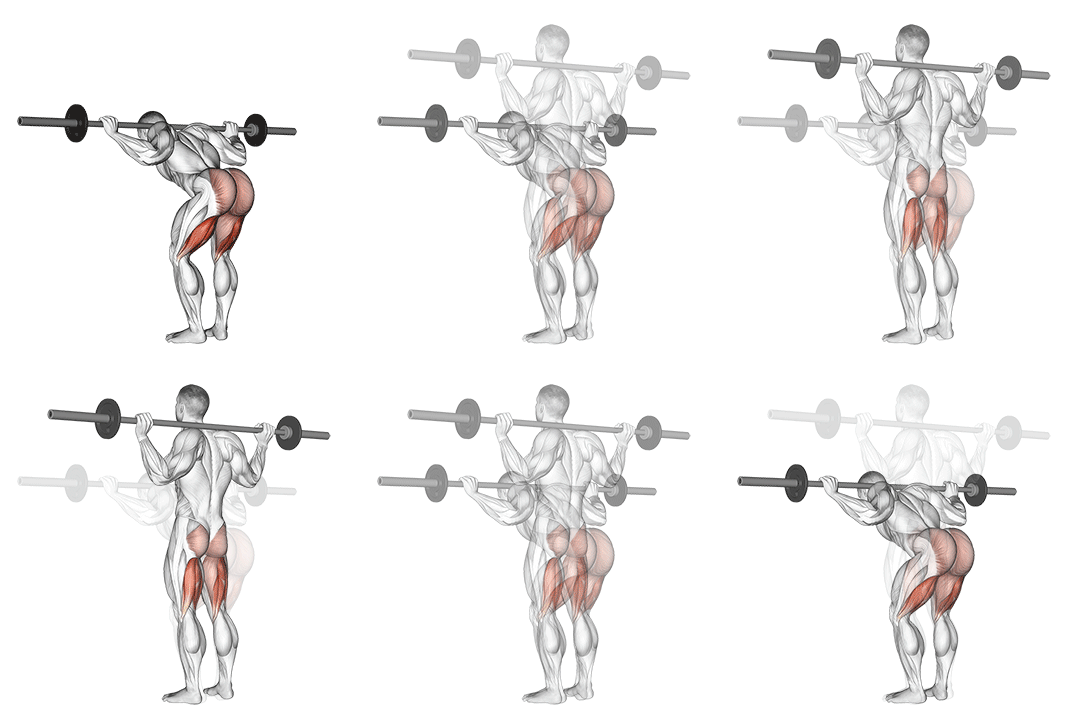
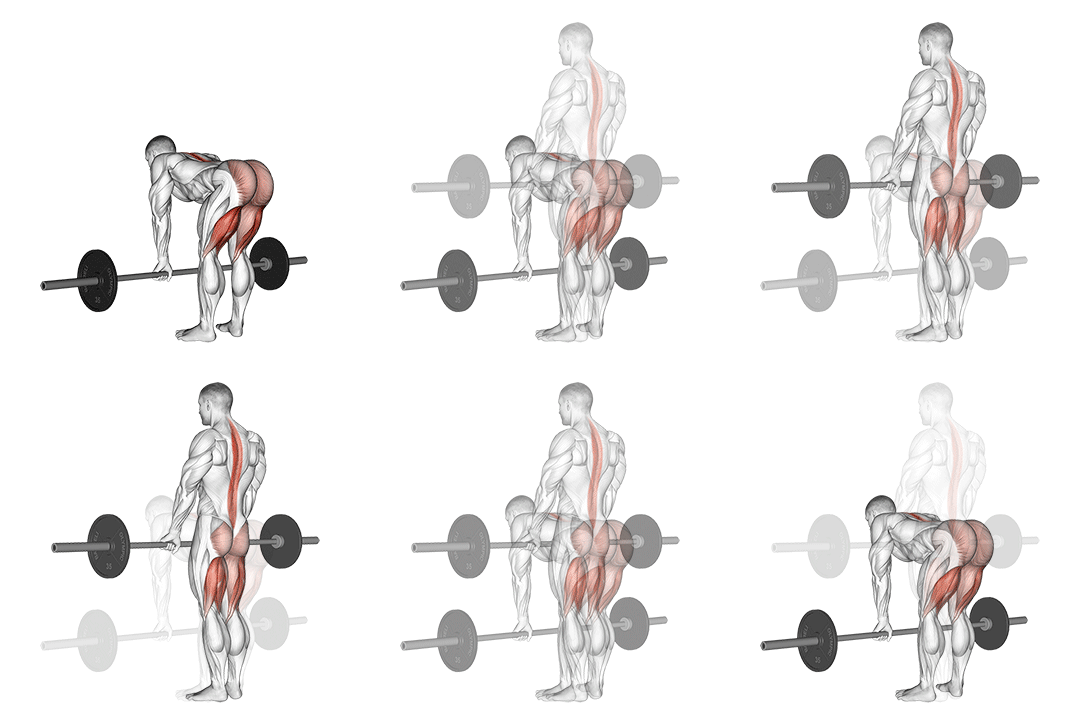
Secondary Muscles Activated
Clean Deadlift
Power Clean
Visual Comparison
Overview
Clean Deadlift vs Power Clean ({Exercise1} vs {Exercise2}) — you’re choosing between a heavy hip-hinge and an explosive Olympic lift. In this guide you’ll get a clear breakdown of how each move loads the hamstrings and upper-legs, the secondary muscles involved, equipment needs, learning curve, and when to use each for hypertrophy, strength, or power. I’ll include specific technique cues (bar path, hip angle, foot position), rep ranges and percentage guidelines, plus biomechanical reasons—like length-tension and force vectors—behind the recommendations so you can pick what's right for your training.
Key Differences
- Difficulty levels differ: Clean Deadlift is intermediate, while Power Clean is advanced.
- Both exercises target the Hamstrings using Barbell. The main differences are in their movement patterns and muscle activation angles.
Pros & Cons
Clean Deadlift
+ Pros
- Simpler technique—easier to teach and learn
- Allows heavier loads for maximal strength (85–95% 1RM)
- Greater time under tension for hamstrings and spinal erectors
- Requires minimal equipment and space
− Cons
- Less carryover to explosive power and athletic movement
- Can place high cumulative load on lower back if form breaks
- Limited upper-trap and ankle plantarflexion development compared to ballistic lifts
Power Clean
+ Pros
- Maximizes rate of force development and triple extension
- Develops coordination and athletic power
- Greater trap and calf recruitment during the explosive phase
- Translates well to sprinting, jumping, and sport-specific moves
− Cons
- Steep technical learning curve and higher acute injury risk
- Requires bumper plates or a place to safely drop the bar
- Less maximal load on hamstrings compared with heavy deadlift variations
When Each Exercise Wins
The Clean Deadlift allows heavier loads and longer time under tension for the hamstrings and spinal erectors, making it superior for upper-leg hypertrophy. Train in 6–12 rep ranges or heavy sets (3–6 reps at 80–90% 1RM) to maximize mechanical tension.
For raw maximal strength—especially posterior chain and deadlift-specific strength—the Clean Deadlift is preferable since you can safely target 85–95% 1RM. Its steady force curve builds torque through the full hip extension range.
Beginners learn the hip-hinge and load tolerance faster with the Clean Deadlift, which has fewer timing demands. Mastering this movement builds a strong technical base before introducing explosive lifts like the Power Clean.
The Clean Deadlift needs only a barbell and plates and doesn’t require dropping the weight, making it safer for home settings with limited space and no bumper plates.
Frequently Asked Questions
Can I do both Clean Deadlift and Power Clean in the same workout?
Yes. Pair them strategically—do Power Cleans early when you’re fresh to prioritize speed and RFD (1–5 reps, 3–6 sets), then follow with Clean Deadlifts for heavy strength work (3–6 reps or heavy singles). Keep total volume in check to avoid CNS fatigue.
Which exercise is better for beginners?
The Clean Deadlift is better for beginners because it reinforces a safe hip hinge and allows progressive loading with simpler technique. Once you have stable bracing and hip extension strength, add Power Clean progressions (hang pulls, high pulls) under a coach’s supervision.
How do the muscle activation patterns differ?
The Clean Deadlift produces a slower, peak-at-lockout activation pattern that increases time under tension in hamstrings and erectors. The Power Clean produces a rapid, high-RFD activation with a pronounced second pull and ankle plantarflexion, recruiting fast-twitch fibers for explosive extension.
Can Power Clean replace Clean Deadlift?
Not entirely. Power Cleans develop power and coordination but typically use lighter loads and shorter time under tension, so they don’t fully replace the strength and hypertrophy stimulus of Clean Deadlifts. Use Power Cleans to complement, not substitute, heavy posterior-chain work.
Expert Verdict
Use the Clean Deadlift when your priority is posterior-chain hypertrophy and maximal strength. Its controlled hip hinge and higher-load capacity make it ideal for 6–12 rep hypertrophy blocks or heavy singles/doubles at 85–95% 1RM. Choose the Power Clean when you need to train power, rate of force development, and sport-specific triple extension; program it for low reps (1–5) at 60–85% 1RM with technical drills. If you must pick one for general strength and accessibility, start with Clean Deadlifts to build force capacity, then add Power Cleans to convert that force into speed once your technique is solid.
Also Compare
More comparisons with Clean Deadlift
Compare More Exercises
Use our free comparison tool to analyze any two exercises head-to-head.
Compare Exercises