

Curtsey Squat vs Forward Lunge (male): Complete Comparison Guide
Curtsey Squat vs Forward Lunge (male) — two bodyweight, compound moves that target your glutes and upper legs. You’ll get clear direction on how each exercise loads the glutes, how secondary muscles like quads and hamstrings contribute, and which movement fits your goals: muscle growth, strength, learning curve, or home training. I’ll cover technique cues (step length, torso angle, knee position), biomechanics (force vectors, length–tension), rep ranges for progress, and practical programming tips so you can choose and use the right exercise for your training plan.
Exercise Comparison
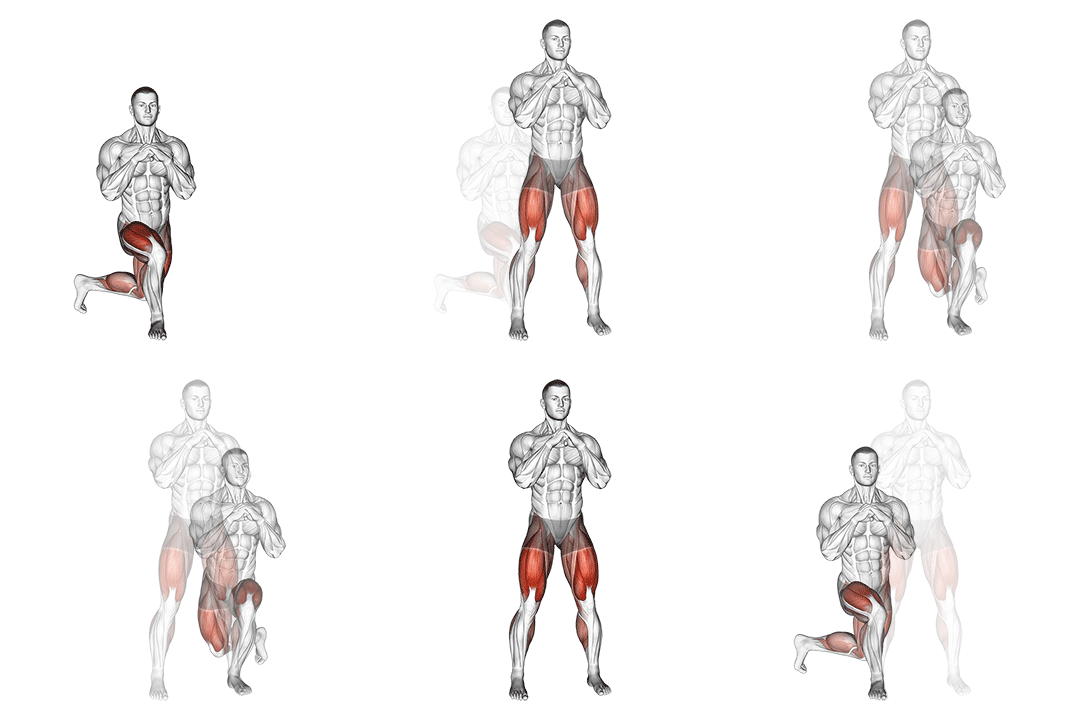
Curtsey Squat
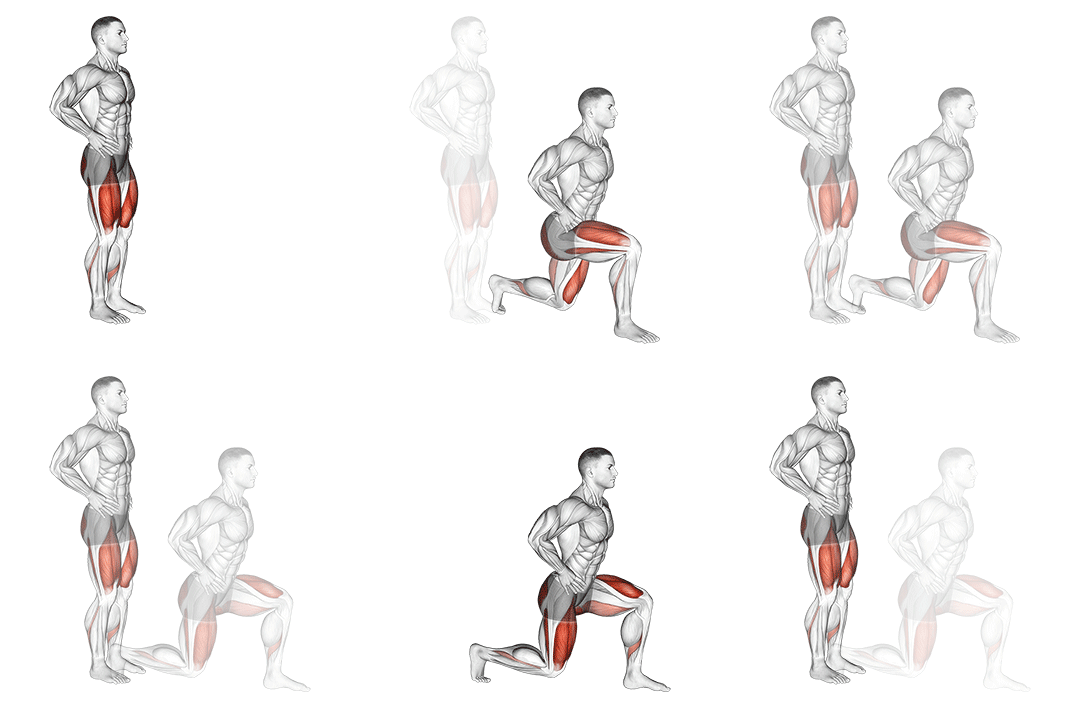
Forward Lunge (male)
Head-to-Head Comparison
| Attribute | Curtsey Squat | Forward Lunge (male) |
|---|---|---|
| Target Muscle |
Glutes
|
Glutes
|
| Body Part |
Upper-legs
|
Upper-legs
|
| Equipment |
Body-weight
|
Body-weight
|
| Difficulty |
Beginner
|
Beginner
|
| Movement Type |
Compound
|
Compound
|
| Secondary Muscles |
3
|
3
|
Secondary Muscles Activated
Curtsey Squat
Forward Lunge (male)
Visual Comparison
Overview
Curtsey Squat vs Forward Lunge (male) — two bodyweight, compound moves that target your glutes and upper legs. You’ll get clear direction on how each exercise loads the glutes, how secondary muscles like quads and hamstrings contribute, and which movement fits your goals: muscle growth, strength, learning curve, or home training. I’ll cover technique cues (step length, torso angle, knee position), biomechanics (force vectors, length–tension), rep ranges for progress, and practical programming tips so you can choose and use the right exercise for your training plan.
Key Differences
- Both exercises target the Glutes using Body-weight. The main differences are in their movement patterns and muscle activation angles.
Pros & Cons
Curtsey Squat
+ Pros
- Targets glute medius and adductors more due to cross-body vector
- Great for unilateral hip stability and lateral strength transfer
- Low equipment need and minimal forward knee travel
- Can correct side-to-side asymmetries by emphasizing controlled descent
− Cons
- Requires more coordination and balance than a straight lunge
- Harder to progressively overload with heavy bilateral weight
- May stress groin/adductor area if mobility is limited
Forward Lunge (male)
+ Pros
- Clear sagittal pattern that’s easy to learn
- Straightforward to add load for strength (dumbbells, barbell)
- Strong quadriceps and glute stimulus, good for muscle growth (8–12 rep range)
- Compact step makes it suitable for limited space and high-volume sets
− Cons
- Greater anterior knee torque if technique breaks down
- Less emphasis on glute medius and frontal plane control
- Can reinforce side-to-side imbalances if one leg consistently dominant
When Each Exercise Wins
Forward lunge lets you easily load the movement and hit classic hypertrophy ranges (8–12 reps, 3–4 sets) with progressive overload. Its larger sagittal-plane knee and hip torque increases time-under-tension for both quads and glute max, which supports localized muscle growth.
You can add heavier external load and systematically increase intensity (4–6 rep ranges, heavier sets) in forward lunges, making them better for building single-leg strength. The linear force vector transfers directly to loaded split-squat and step-up progressions.
Forward lunges are more intuitive and have a gentler learning curve because balance is primarily anterior-posterior. You can teach technique (knee tracking, hip hinge) quickly and progress reps without complex transverse-plane coordination.
Curtsey squats require minimal space and no forward stepping room, and they engage stabilizers so you get a lot of training effect with bodyweight only. They’re also lower-impact on the front knee when performed with a shorter step, making them comfortable for frequent home sets (3×12–15).
Frequently Asked Questions
Can I do both Curtsey Squat and Forward Lunge (male) in the same workout?
Yes — pairing them works well: use lunges early in the session for heavier sets or strength work and add curtsey squats later for stability and glute med focus. Structure sets so you don’t pre-fatigue one leg excessively: for example, 3 sets of weighted forward lunges followed by 2–3 sets of bodyweight curtseys at higher reps.
Which exercise is better for beginners?
Forward Lunge (male) is generally better for beginners because the movement is easier to learn and to progress with added weight. Start with bodyweight lunges, focus on knee tracking (over midfoot) and 80–90° knee flexion, then progress load or reps.
How do the muscle activation patterns differ?
Forward lunges produce higher sagittal-plane torque so the glute max and quads drive most of the work, with peak activation near full hip extension. Curtsey squats shift some load into the glute medius and adductors because of the diagonal step and hip ab/adduction, creating more sustained stabilizer activation across the set.
Can Forward Lunge (male) replace Curtsey Squat?
If your goal is pure hypertrophy or strength, forward lunges can replace curtsey squats since they’re easier to load. If you need frontal-plane stability, hip abduction strength, or rehab-focused conditioning, keep curtsey squats in the program because they target different stabilizers and movement patterns.
Expert Verdict
Use forward lunges when your priority is straightforward muscle growth or single-leg strength because they handle progressive overload and standard rep ranges well (hypertrophy 8–12 reps, strength 4–6 reps). Choose curtsey squats when you want to emphasize glute medius, frontal-plane control, and unilateral stability without long steps — they’re particularly useful for injury prevention and balance work. If you train at home or have knee sensitivity, include curtseys in higher rep schemes (12–15) and use lunges for heavier, loaded sessions. Combine both across cycles: emphasize lunges for 6–12 weeks of loading, then a block of curtseys for stability and frontal-plane conditioning.
Also Compare
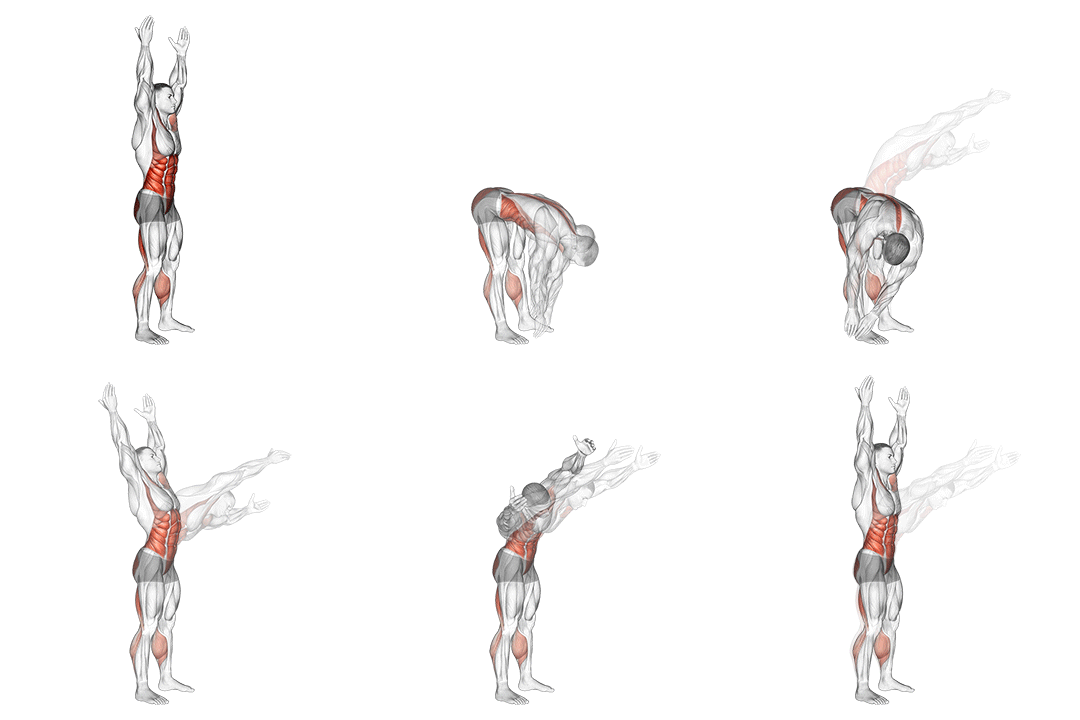
More comparisons with Curtsey Squat
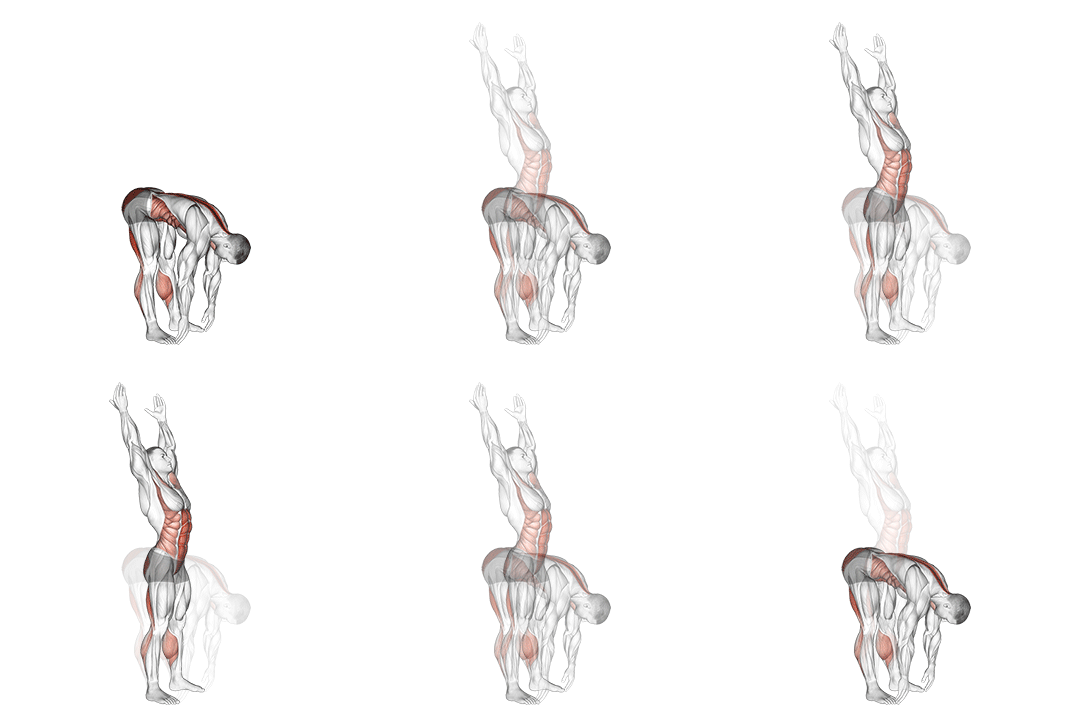
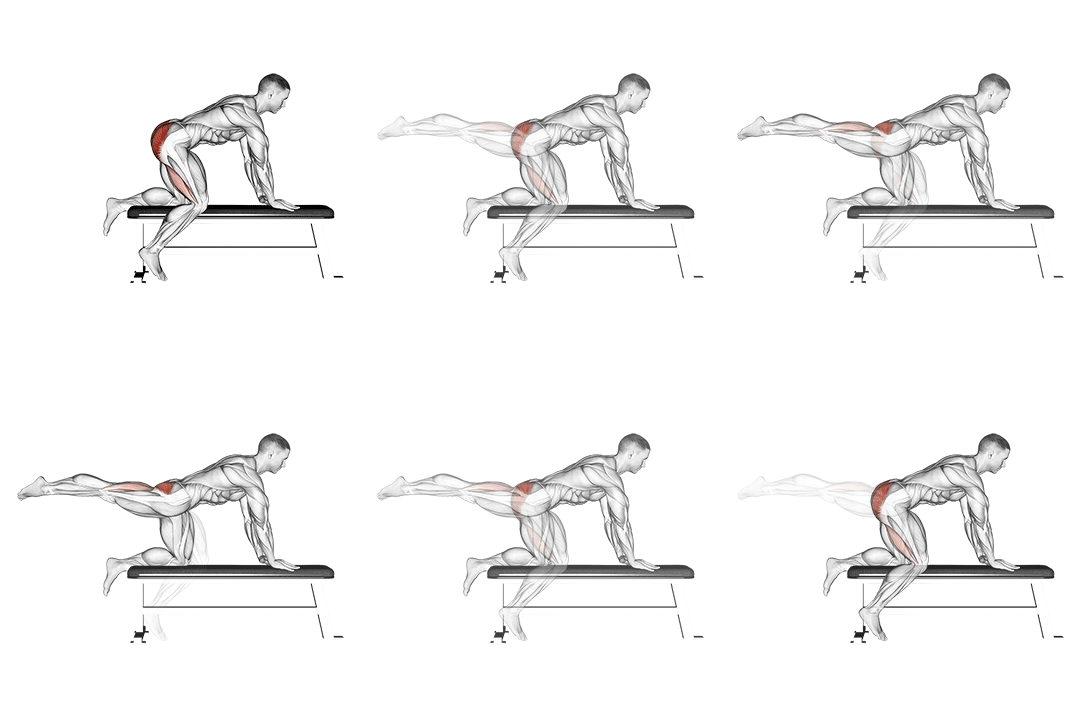
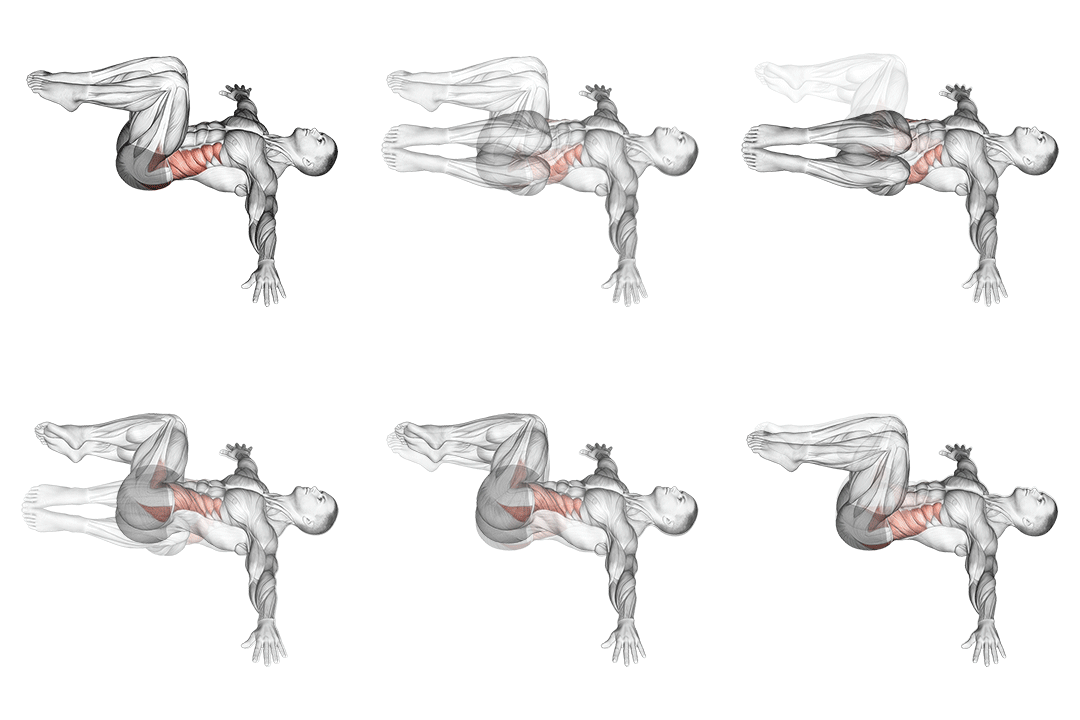
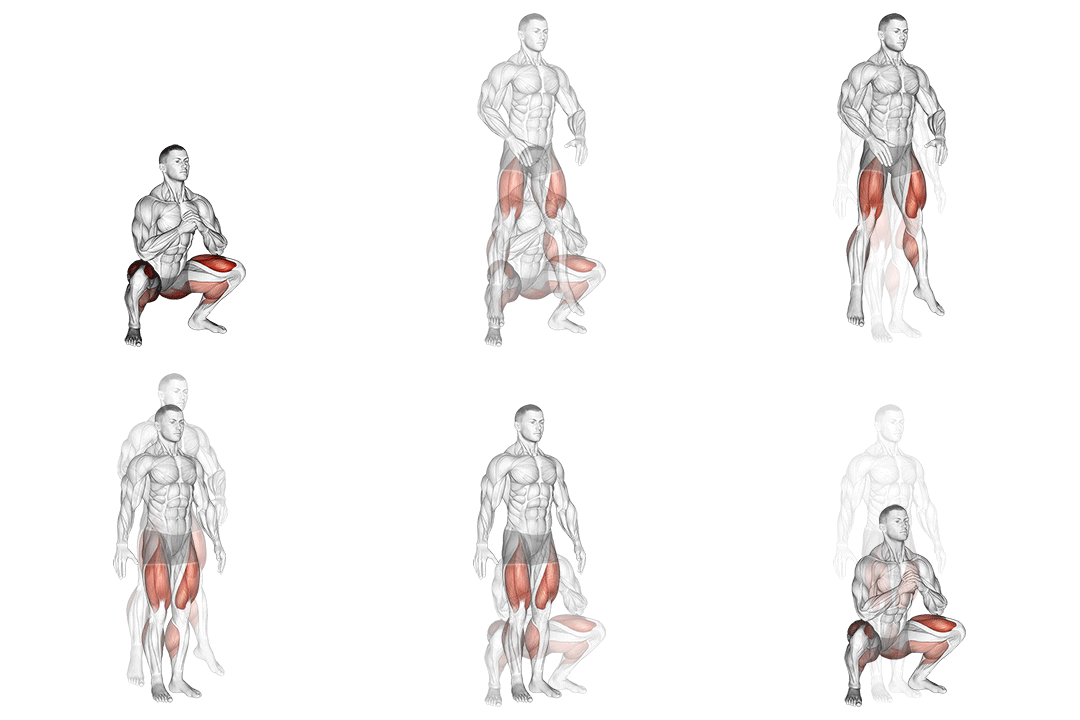
More comparisons with Forward Lunge (male)
Compare More Exercises
Use our free comparison tool to analyze any two exercises head-to-head.
Compare Exercises