

Deep Push Up vs Dumbbell Around Pullover: Complete Comparison Guide
Deep Push Up vs Dumbbell Around Pullover — you want chest work that fits your goals and gear, so I'll walk you through both. You'll get clear comparisons of primary and secondary muscle activation, exact technique cues, equipment and progression options, and decisive winners for hypertrophy, strength, beginners, and home training. Read the cues and rep ranges to pick the move that matches your shoulder mobility, preferred force vector, and how you want to overload the pectorals.
Exercise Comparison
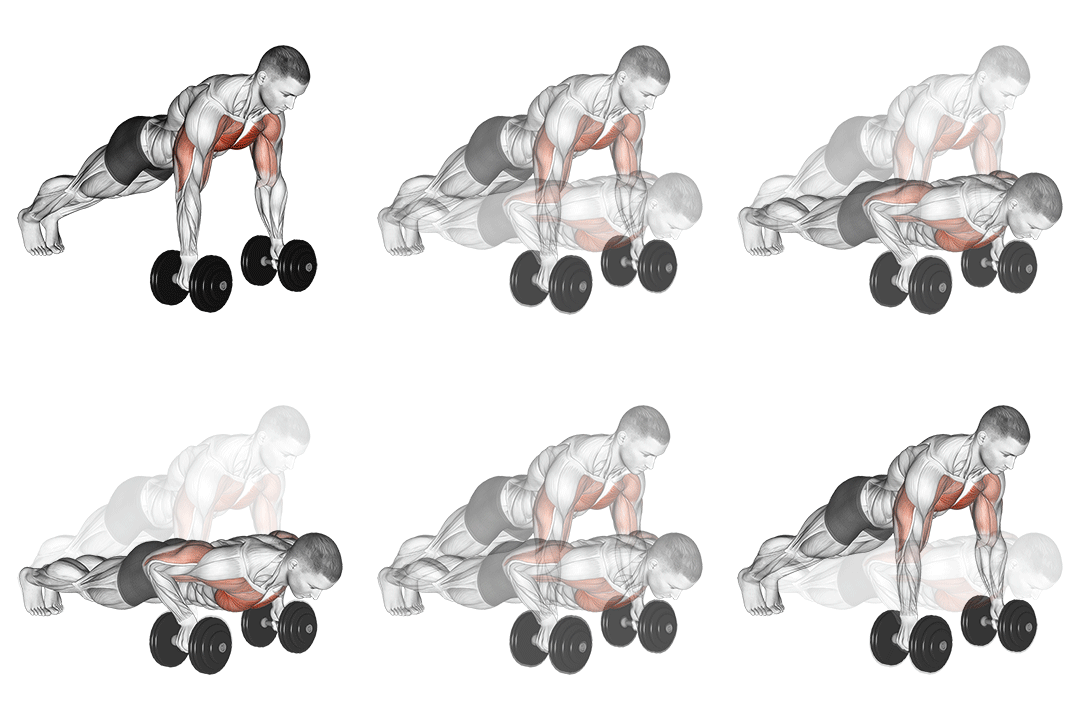
Deep Push Up
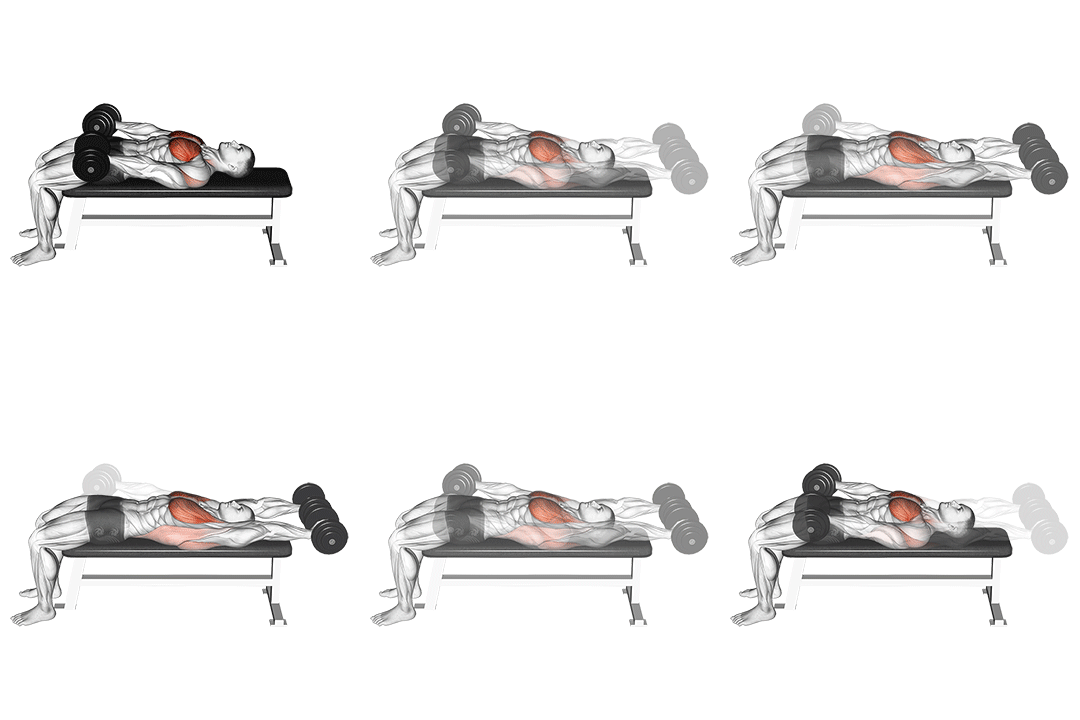
Dumbbell Around Pullover
Head-to-Head Comparison
| Attribute | Deep Push Up | Dumbbell Around Pullover |
|---|---|---|
| Target Muscle |
Pectorals
|
Pectorals
|
| Body Part |
Chest
|
Chest
|
| Equipment |
Dumbbell
|
Dumbbell
|
| Difficulty |
Intermediate
|
Intermediate
|
| Movement Type |
Compound
|
Compound
|
| Secondary Muscles |
2
|
2
|
Secondary Muscles Activated
Deep Push Up
Dumbbell Around Pullover
Visual Comparison
Overview
Deep Push Up vs Dumbbell Around Pullover — you want chest work that fits your goals and gear, so I'll walk you through both. You'll get clear comparisons of primary and secondary muscle activation, exact technique cues, equipment and progression options, and decisive winners for hypertrophy, strength, beginners, and home training. Read the cues and rep ranges to pick the move that matches your shoulder mobility, preferred force vector, and how you want to overload the pectorals.
Key Differences
- Both exercises target the Pectorals using Dumbbell. The main differences are in their movement patterns and muscle activation angles.
Pros & Cons
Deep Push Up
+ Pros
- Strong horizontal adduction load that mimics pressing; ideal for chest hypertrophy (6–12 reps).
- Easy to progressively overload with weight vests, chains, or added pause/tempo work.
- High triceps and anterior delt recruitment for compound pressing strength.
- Scalable for home or gym: handles, bars, or household objects work.
− Cons
- Requires solid scapular control; poor technique increases shoulder strain.
- Deeper range increases demand on wrists and elbows without proper equipment.
- Harder to learn for novices compared with lying, supported exercises.
Dumbbell Around Pullover
+ Pros
- Places pecs under long-length tension; useful for improving peak stretch and chest development.
- Stabilized supine position reduces spinal loading and simplifies learning.
- Engages lats and long-head triceps, helping upper-body integration across planes.
- Single-dumbbell setup requires minimal equipment.
− Cons
- Greater shoulder extension can provoke impingement in restricted shoulders.
- Less direct horizontal pressing stimulus, so limited carryover to bench press strength.
- Progression options are narrower; heavier single-dumbbell increments are less granular.
When Each Exercise Wins
Deep Push Up provides a stronger horizontal adduction force vector and easier progressive overload (weight vests, added plates, tempo), making it better for 6–12 rep hypertrophy work and increased time under tension.
The pressing mechanics of the Deep Push Up translate directly to bench and pressing strength because it loads the pecs, triceps, and anterior delts in a similar force vector and allows heavy progressive loading (3–6 rep ranges).
Dumbbell Around Pullover is performed lying down, which stabilizes the spine and simplifies motor control; beginners can focus on a controlled 90–120° arm arc and learn tension without complex scapular coordination.
Deep Push Up needs minimal gear and can be scaled with household items or bodyweight variations, making it more practical for limited-equipment home training and quicker setup between sets.
Frequently Asked Questions
Can I do both Deep Push Up and Dumbbell Around Pullover in the same workout?
Yes. Structure Deep Push Up as your primary compound press (3–4 sets at 6–12 reps) and use Dumbbell Around Pullover as an accessory (2–3 sets of 8–15) to increase pec length-tension and lat engagement without taxing the same concentric pathway.
Which exercise is better for beginners?
Dumbbell Around Pullover is generally easier for beginners because the supine position stabilizes the torso and reduces the need for advanced scapular control. Start with light loads and a controlled 90–120° arc to build shoulder mobility and kinesthetic awareness.
How do the muscle activation patterns differ?
The Deep Push Up produces peak pectoral activation during concentric horizontal adduction and at shorter muscle lengths near lockout, whereas the Around Pullover maintains tension across longer muscle lengths during humeral extension, shifting some load to the lats and changing moment arms across the shoulder.
Can Dumbbell Around Pullover replace Deep Push Up?
Not as a direct replacement for pressing strength: pullover improves stretch and sagittal-plane strength but lacks the horizontal pressing vector and progressive loading options of Deep Push Up. Use pullover as a supplement for mobility and long-length tension, not as a primary press replacement.
Expert Verdict
Use Deep Push Up when you want a robust, progressive chest press that develops horizontal adduction strength, triceps capacity, and pressing transfer to bench-style lifts. Aim for 3–6 reps for strength, 6–12 for hypertrophy, and emphasize a controlled eccentric to full depth (elbow ~90° or deeper) with scapular control. Choose Dumbbell Around Pullover when you need a low-spine, high-stretch option that loads the pecs at long muscle lengths and recruits the lats; keep elbows slightly bent (~10–20°) and stop the arc before pain, usually around 30–60° humeral extension. Pair them: pullover for accessory length/tension work, deep push-up for primary pressing overload.
Also Compare
More comparisons with Deep Push Up
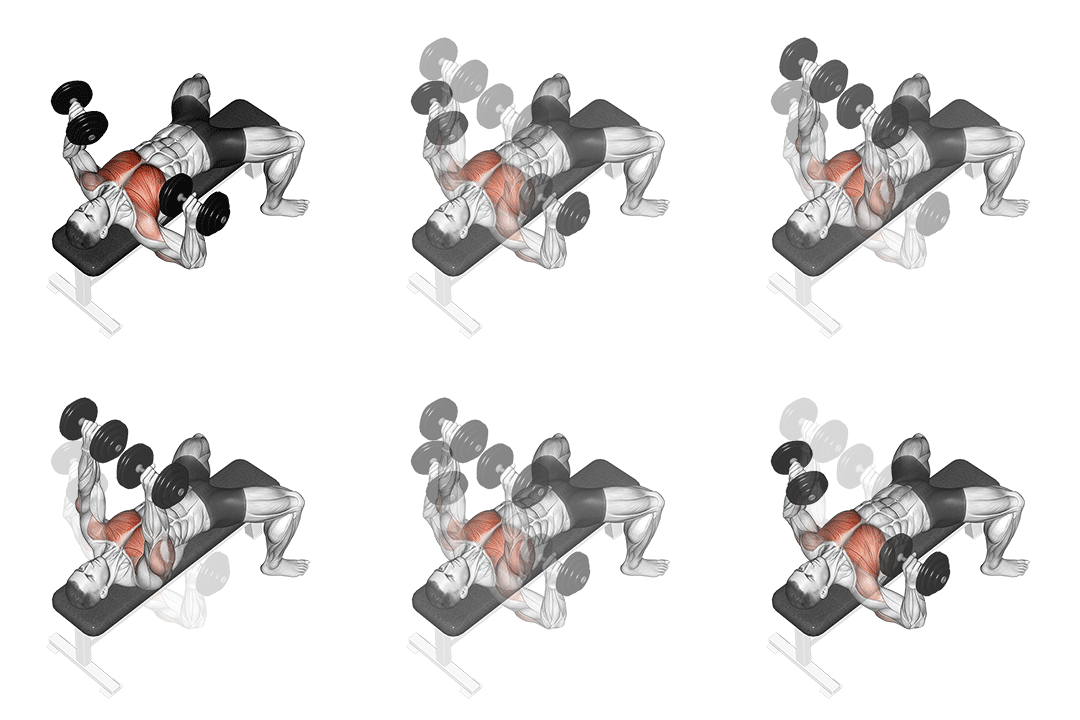
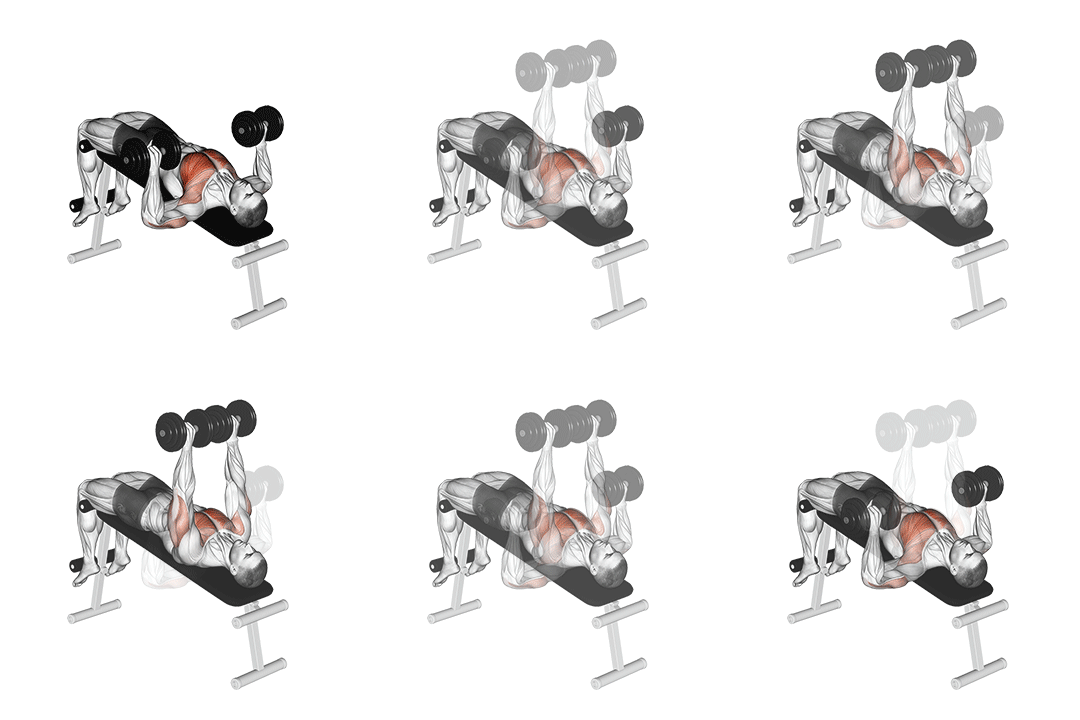
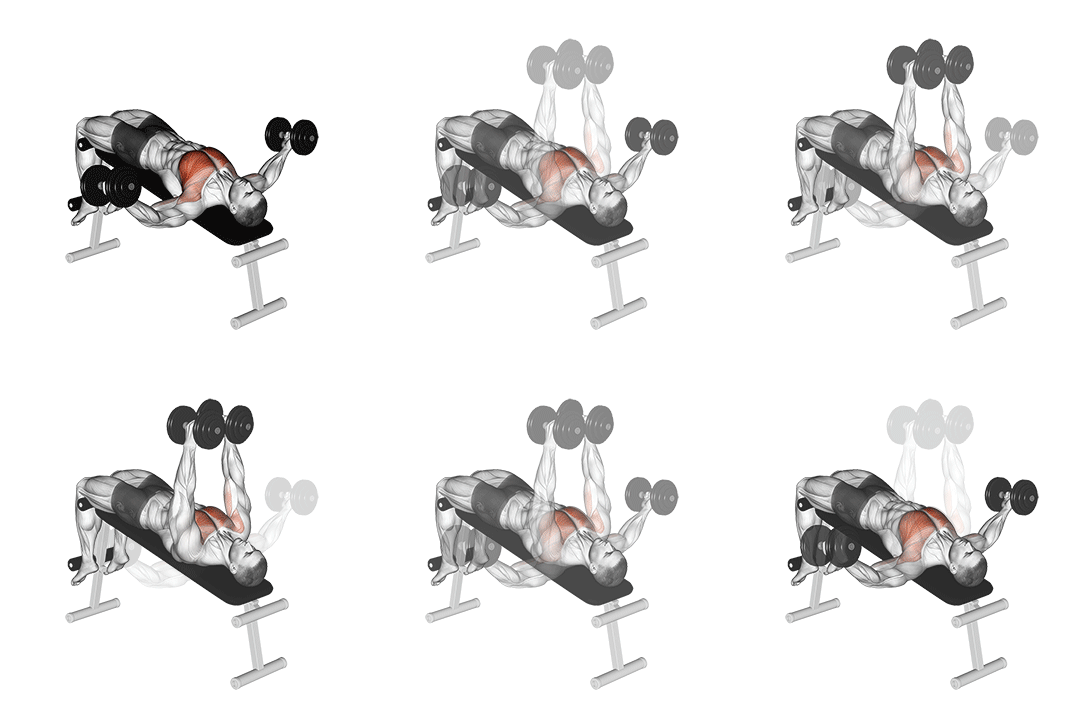
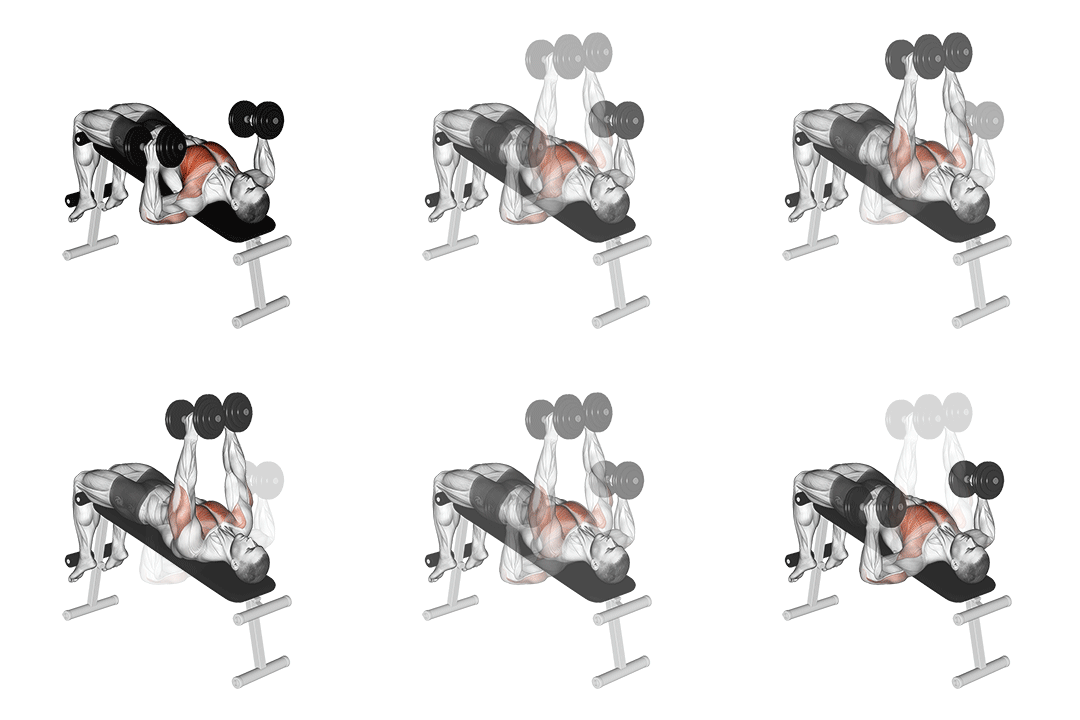
More comparisons with Dumbbell Around Pullover
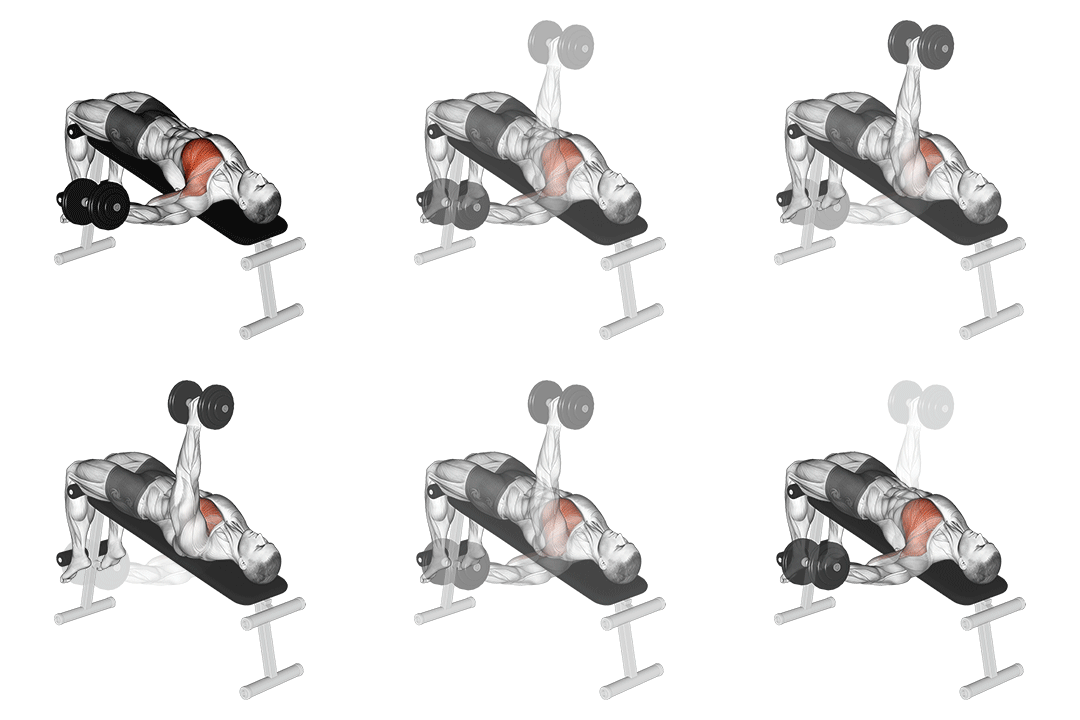
Compare More Exercises
Use our free comparison tool to analyze any two exercises head-to-head.
Compare Exercises