

Deep Push Up vs Dumbbell Bench Press: Complete Comparison Guide
Deep Push Up vs Dumbbell Bench Press — if you want a stronger, fuller chest, you should know how these two stack up. I’ll walk you through primary muscle activation, secondary muscles, equipment needs, progression options, and injury risk so you can pick the best move for your program. You’ll get clear technique cues (hand width, elbow angle, scapular position), rep ranges for hypertrophy and strength, and specific biomechanical notes on length-tension and force vectors. Read on to find which exercise fits your schedule, setup, and muscle-growth goals.
Exercise Comparison
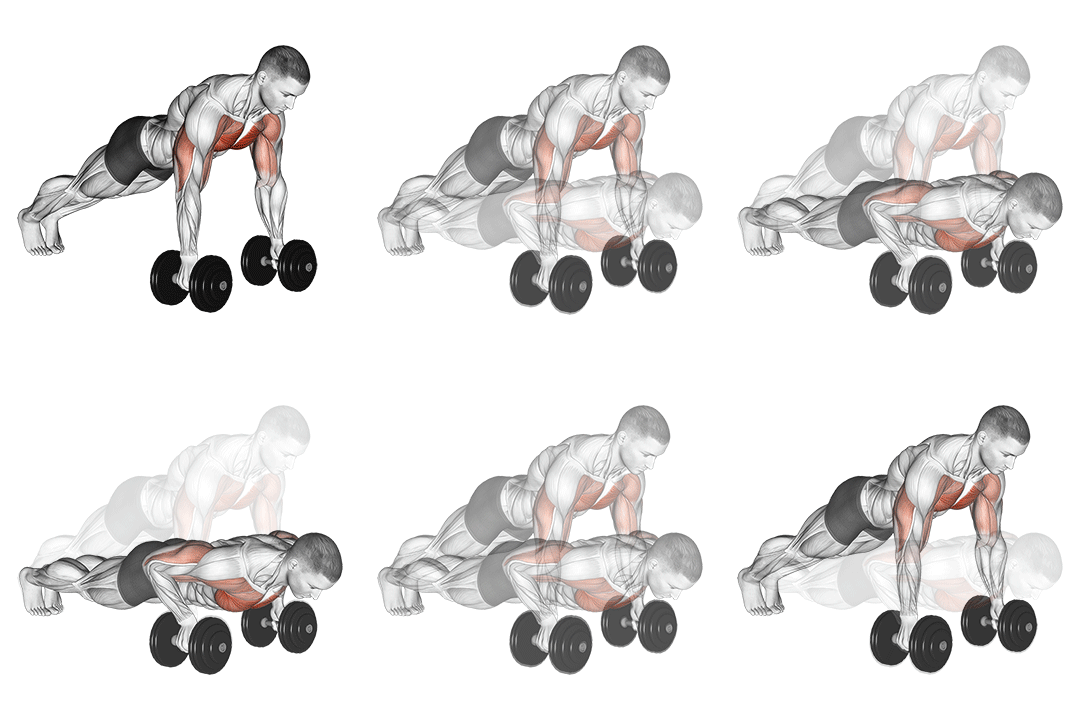
Deep Push Up
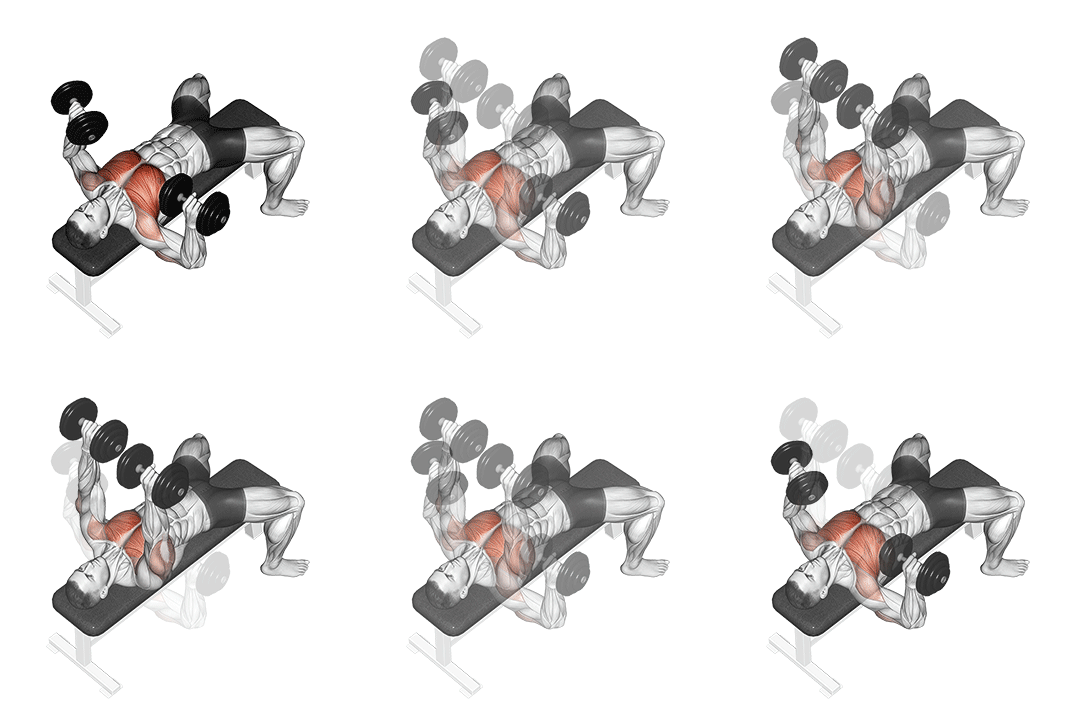
Dumbbell Bench Press
Head-to-Head Comparison
| Attribute | Deep Push Up | Dumbbell Bench Press |
|---|---|---|
| Target Muscle |
Pectorals
|
Pectorals
|
| Body Part |
Chest
|
Chest
|
| Equipment |
Dumbbell
|
Dumbbell
|
| Difficulty |
Intermediate
|
Intermediate
|
| Movement Type |
Compound
|
Compound
|
| Secondary Muscles |
2
|
2
|
Secondary Muscles Activated
Deep Push Up
Dumbbell Bench Press
Visual Comparison
Overview
Deep Push Up vs Dumbbell Bench Press — if you want a stronger, fuller chest, you should know how these two stack up. I’ll walk you through primary muscle activation, secondary muscles, equipment needs, progression options, and injury risk so you can pick the best move for your program. You’ll get clear technique cues (hand width, elbow angle, scapular position), rep ranges for hypertrophy and strength, and specific biomechanical notes on length-tension and force vectors. Read on to find which exercise fits your schedule, setup, and muscle-growth goals.
Key Differences
- Both exercises target the Pectorals using Dumbbell. The main differences are in their movement patterns and muscle activation angles.
Pros & Cons
Deep Push Up
+ Pros
- Requires minimal equipment — can be done at home with dumbbells/handles
- Greater stretch at the bottom increases time under tension for hypertrophy
- Greater core and scapular stabilization improves functional strength
- Easily scaled with inclines, weighted vests, or tempo work
− Cons
- Harder on wrists and shoulders in deeper positions without good mobility
- Progressive overload is less precise than adding dumbbell weight
- Can be limited by bodyweight for advanced strength targets
Dumbbell Bench Press
+ Pros
- Precise progressive overload with incremental dumbbell increases
- Better for maximal strength due to ability to handle heavier external loads
- Independent limb loading reduces left-right strength imbalances
- Bench eliminates the need for high core demand, letting you focus on chest force production
− Cons
- Requires a bench and a wider range of dumbbell weights
- Higher risk to anterior shoulder if scapula isn't retracted and elbow flare is excessive
- Less whole-body stability development compared with closed-chain push-ups
When Each Exercise Wins
Dumbbell Bench Press wins because you can precisely increase external load (use 6–12 reps, 3–5 sets) and manipulate peak tension. The ability to add 2.5–5 lb per dumbbell and use pauses at mid-range gives cleaner progressive overload for chest fiber recruitment.
For raw pressing strength the bench press allows heavier absolute loads and low-rep schemes (3–6 reps) while keeping the spine supported. That lets you produce greater concentric force and adapt the neuromuscular system to heavier resistance.
Beginners benefit from Deep Push Ups because the horizontal push pattern is simpler to scale (incline, knees) and reinforces core and scapular control. It also builds work capacity before adding heavy external load.
Deep Push Ups require minimal gear and are easier to modify for space- and equipment-limited setups. You can progress with tempo, elevation, or added bodyweight without a bench and large dumbbells.
Frequently Asked Questions
Can I do both Deep Push Up and Dumbbell Bench Press in the same workout?
Yes. Pair them by intensity: do heavy sets of Dumbbell Bench Press first for 3–6 top-end strength sets, then use Deep Push Ups for higher-volume hypertrophy (8–15 reps) to increase time under tension and reinforce scapular control.
Which exercise is better for beginners?
Deep Push Up is friendlier for beginners because you can scale it with inclines or knees and it builds core and scapular stability. If a beginner has access to a bench and light dumbbells, start with moderate loads and focus on scapular retraction and controlled reps.
How do the muscle activation patterns differ?
Deep Push Ups load the pecs at longer muscle lengths during the bottom eccentric phase and increase serratus anterior and core activation via closed-chain mechanics. Dumbbell Bench Press emphasizes concentric force against external load and increases anterior deltoid and triceps demand when heavier weights are used.
Can Dumbbell Bench Press replace Deep Push Up?
Dumbbell Bench Press can substitute for chest loading, but it won’t fully replace the scapular stability and core benefits of Deep Push Ups. Use the bench press for strength blocks and add push-up variations to maintain shoulder health and stability.
Expert Verdict
Both Deep Push Ups and Dumbbell Bench Press build strong pectorals, but choose based on your priority. If you want precise progressive overload and maximal strength, prioritize the Dumbbell Bench Press with 3–6 reps for strength and 6–12 for hypertrophy, maintaining a 45–70° elbow carriage and retracted scapula. If you train at home, want greater scapular and core involvement, or prefer a deeper pec stretch, program Deep Push Ups (6–15 reps) and progress via incline/decline or weighted vests (+10–30% bodyweight). For balanced development, alternate both across phases: bench press for heavy blocks, deep push-ups for volume and stability work.
Also Compare
More comparisons with Deep Push Up
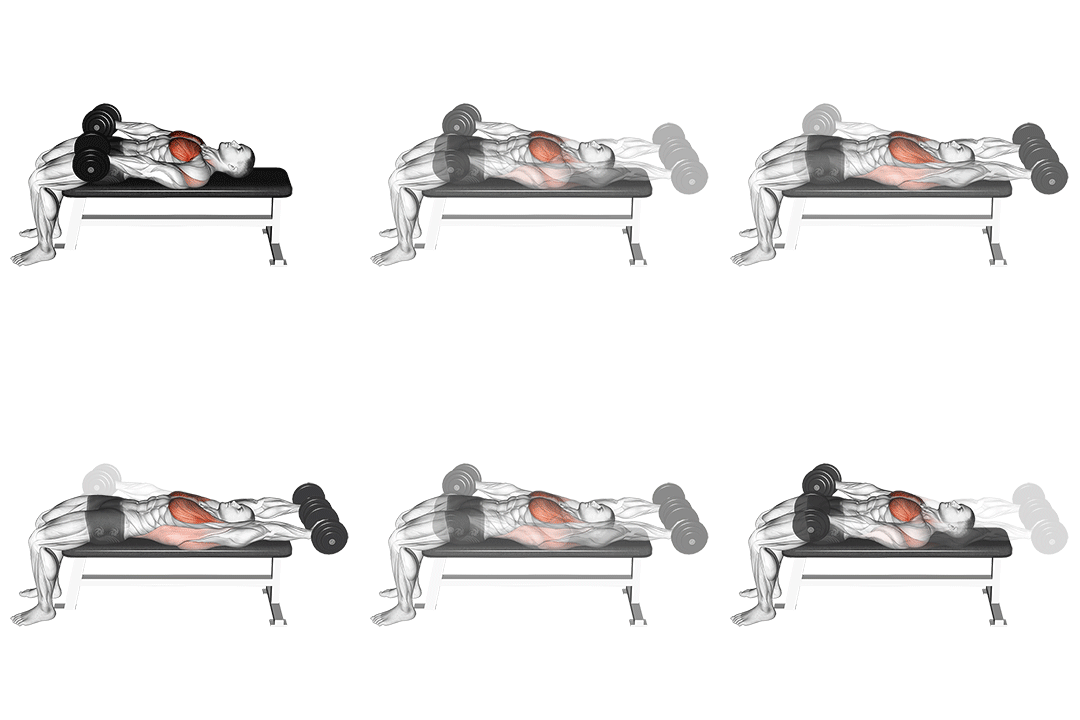
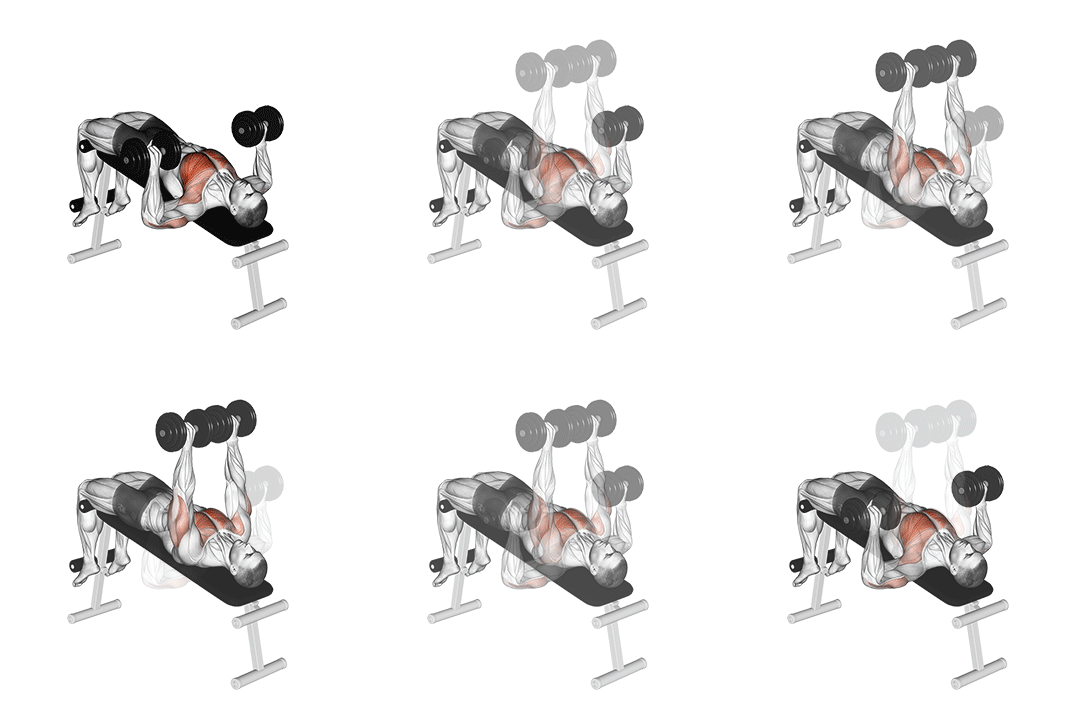
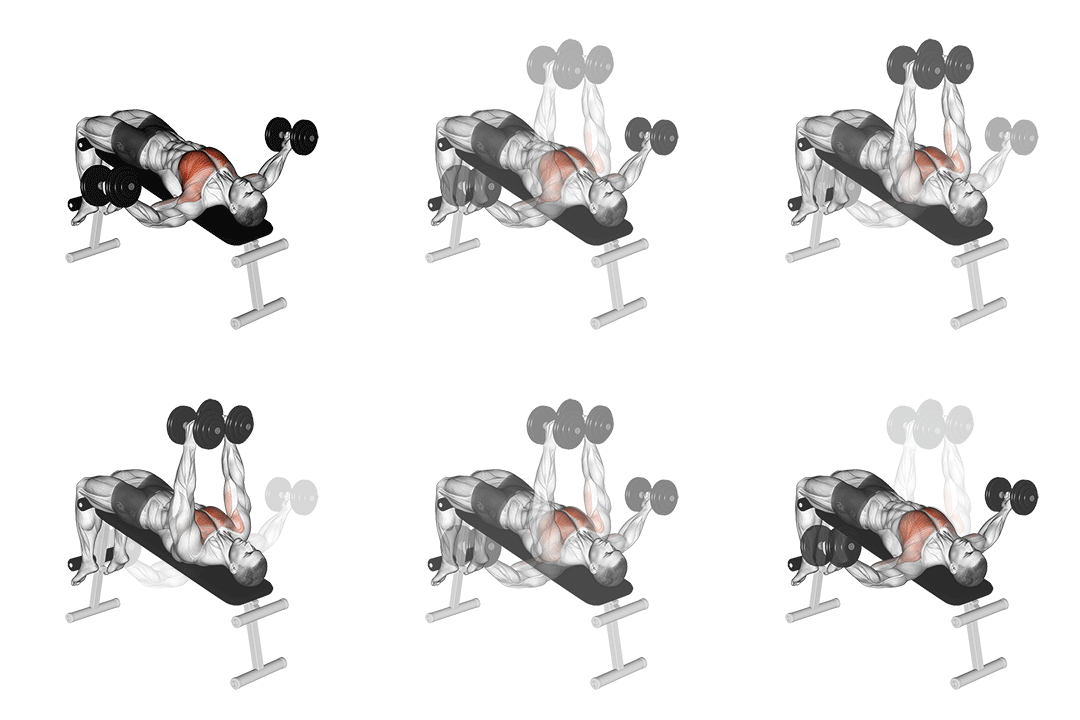
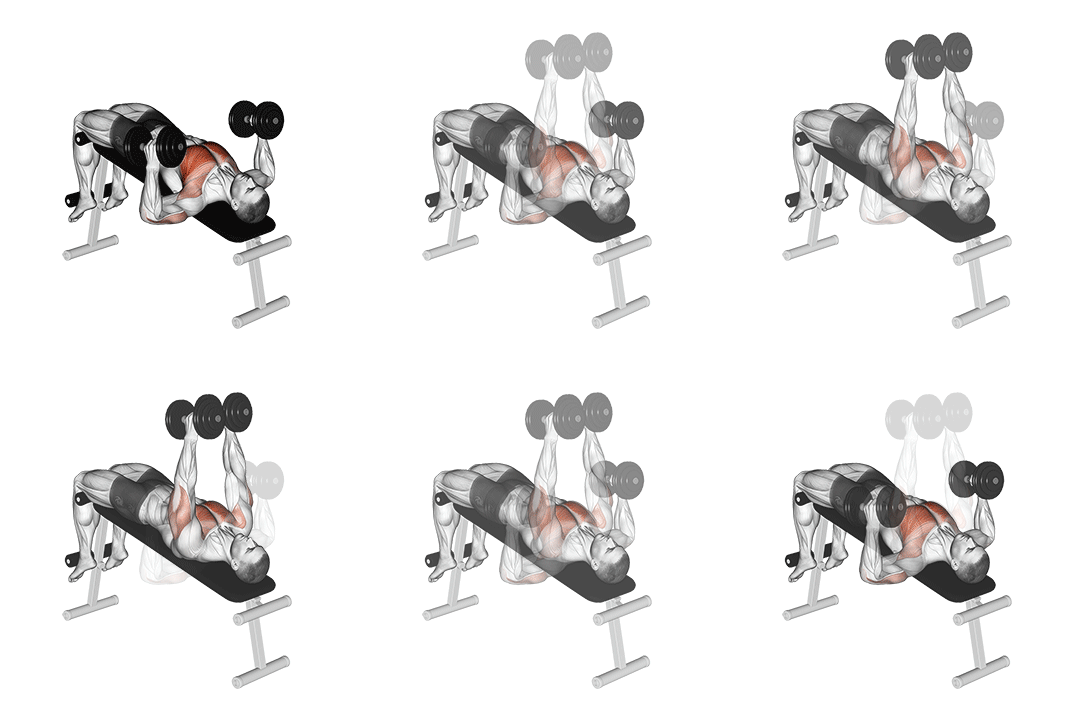
More comparisons with Dumbbell Bench Press
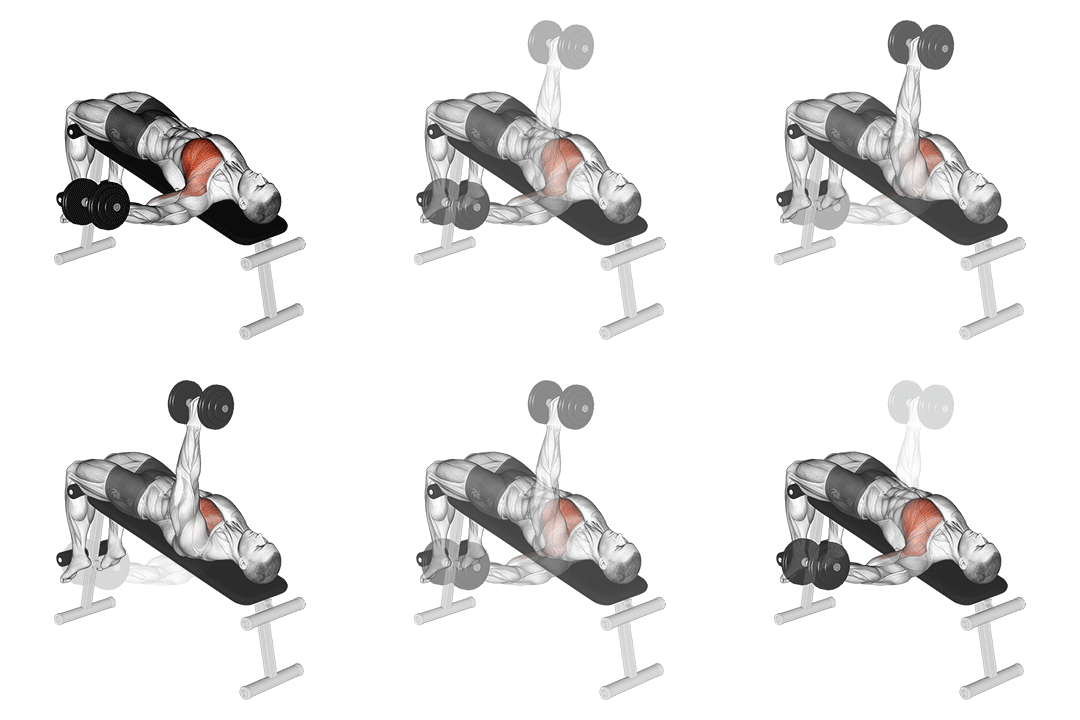
Compare More Exercises
Use our free comparison tool to analyze any two exercises head-to-head.
Compare Exercises