

Deep Push Up vs Dumbbell Decline Bench Press: Complete Comparison Guide
Deep Push Up vs Dumbbell Decline Bench Press — which one should you prioritize for chest development? You’ll get a clear, practical breakdown that covers muscle activation, equipment needs, technique cues, injury risk, and program placement. I’ll show how each exercise stresses the pectorals differently, give rep ranges and progression options, and recommend when to use the deep push up or the dumbbell decline bench press based on hypertrophy, strength, beginners, and home training. Read on to pick the move that matches your goals and training setup.
Exercise Comparison
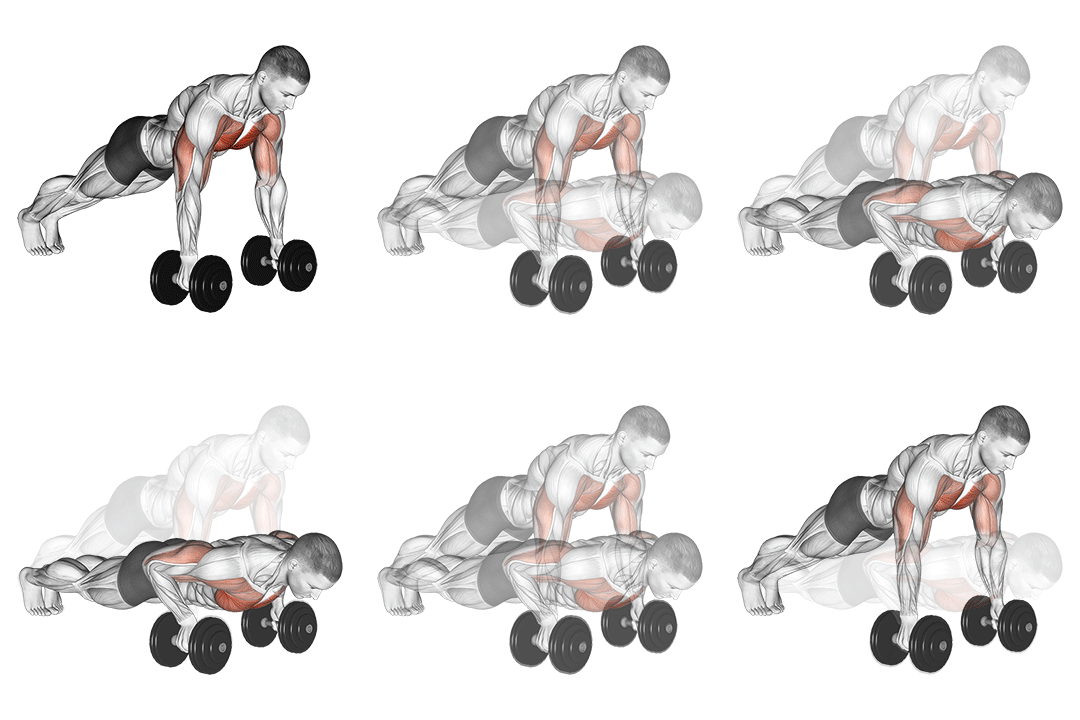
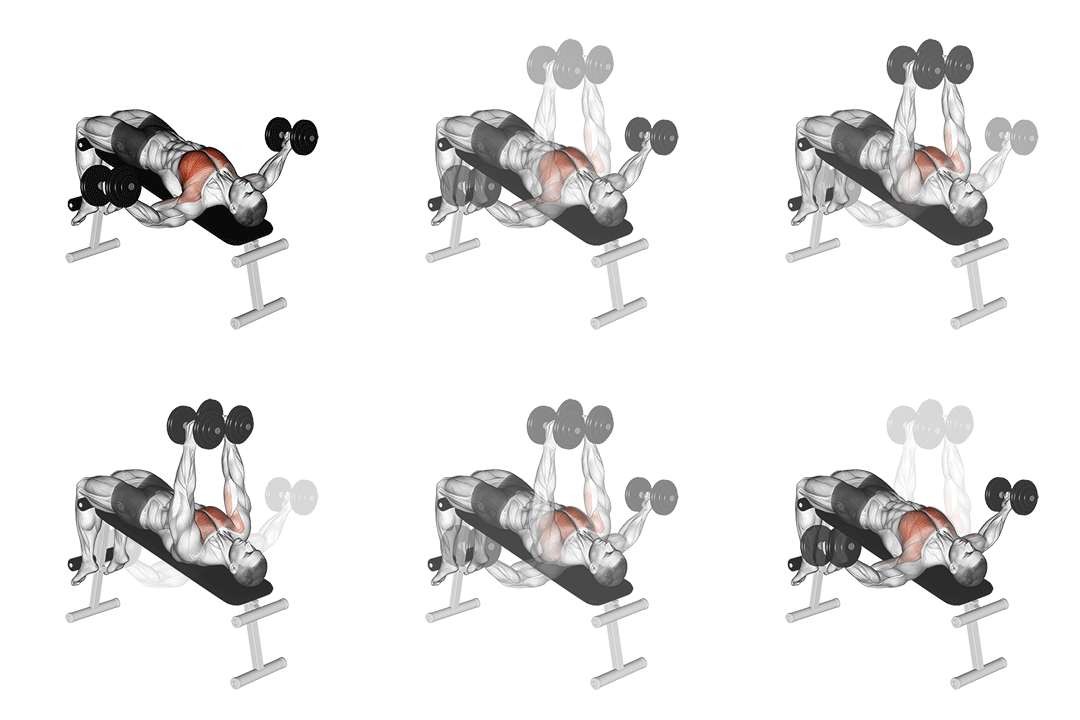
Deep Push Up
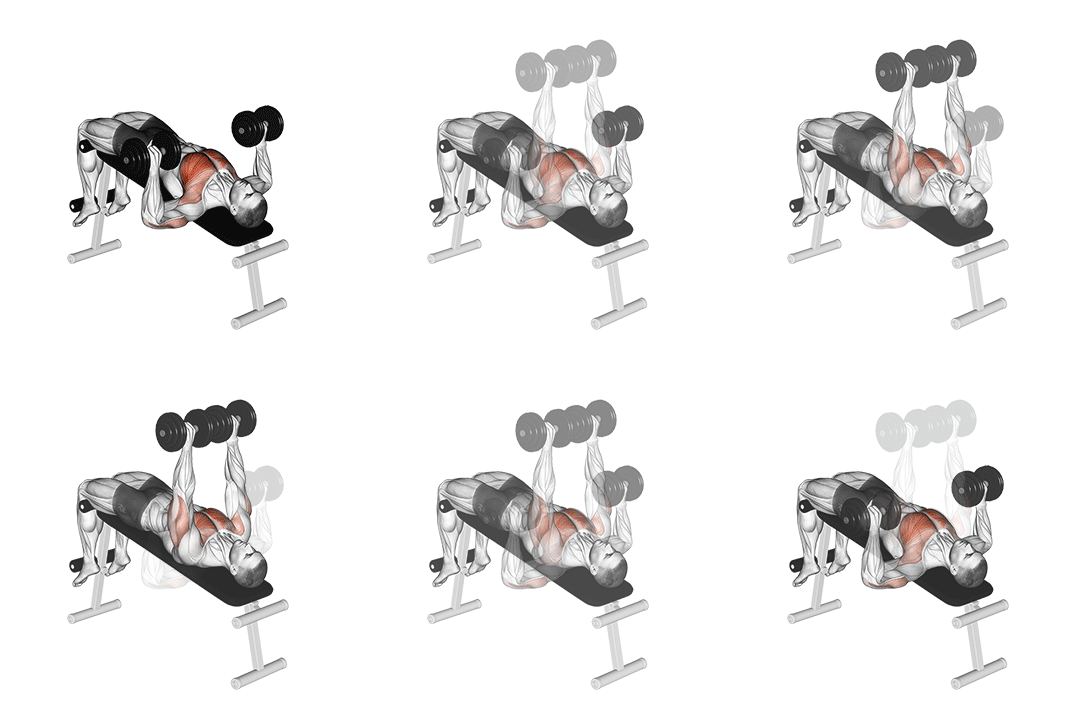
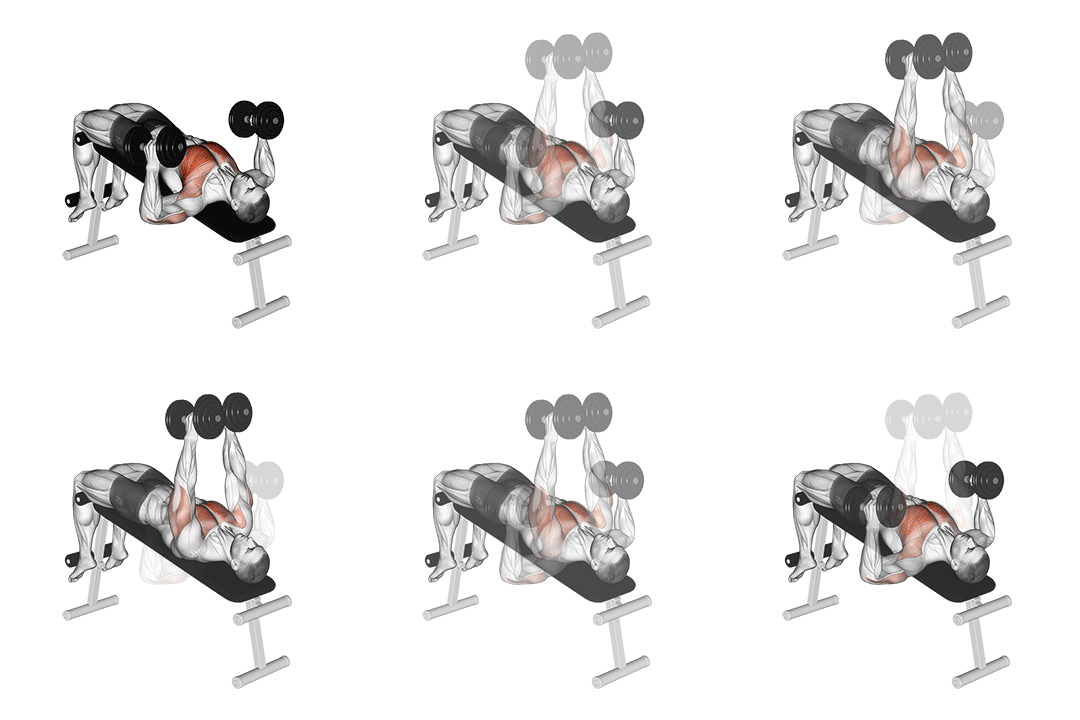
Dumbbell Decline Bench Press
Head-to-Head Comparison
| Attribute | Deep Push Up | Dumbbell Decline Bench Press |
|---|---|---|
| Target Muscle |
Pectorals
|
Pectorals
|
| Body Part |
Chest
|
Chest
|
| Equipment |
Dumbbell
|
Dumbbell
|
| Difficulty |
Intermediate
|
Intermediate
|
| Movement Type |
Compound
|
Compound
|
| Secondary Muscles |
2
|
2
|
Secondary Muscles Activated
Deep Push Up
Dumbbell Decline Bench Press
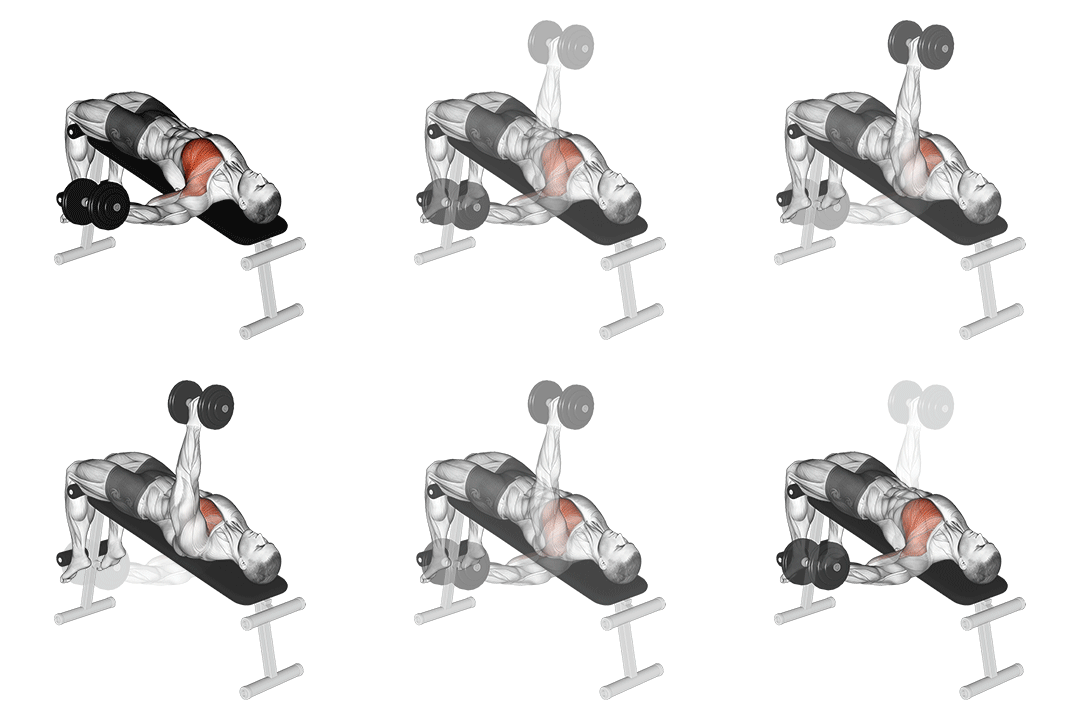
Visual Comparison
Overview
Deep Push Up vs Dumbbell Decline Bench Press — which one should you prioritize for chest development? You’ll get a clear, practical breakdown that covers muscle activation, equipment needs, technique cues, injury risk, and program placement. I’ll show how each exercise stresses the pectorals differently, give rep ranges and progression options, and recommend when to use the deep push up or the dumbbell decline bench press based on hypertrophy, strength, beginners, and home training. Read on to pick the move that matches your goals and training setup.
Key Differences
- Both exercises target the Pectorals using Dumbbell. The main differences are in their movement patterns and muscle activation angles.
Pros & Cons
Deep Push Up
+ Pros
- Requires minimal equipment — ideal for home training
- Greater stretch and time under tension at bottom of range
- Improves scapular stability and serratus anterior engagement
- Easy to modify tempo and hand position for variety
− Cons
- Harder to load progressively without a vest or partner
- Increased stress at end-range can irritate shoulders if mobility is limited
- Depth requires good wrist and scapular control, which takes practice
Dumbbell Decline Bench Press
+ Pros
- Straightforward progressive overload with dumbbells
- Targets lower pec fibers via decline angle (15–30°)
- Stable setup lets you lift heavier safely with proper spotter
- Dumbbells increase unilateral balance and ROM versus barbell
− Cons
- Requires a decline bench and sufficient dumbbell weight
- Can place greater compressive/shear forces on shoulders under heavy load
- Less demand on scapular stabilizers and core compared with bodyweight deep push up
When Each Exercise Wins
Use 6–12 reps with progressive overload; decline dumbbell presses let you add precise external load and volume to the lower pecs. Heavier, controlled sets produce higher mechanical tension, which most strongly drives muscle growth.
Strength requires lifting heavier absolute loads (3–6 reps). The decline press allows incremental loading and better neural adaptation to heavy horizontal pressing due to stable setup and measurable progression.
Beginners can safely master bodyweight pressing mechanics and scapular control before loading. Start with elevated hands or partial depth and progress to full deep push ups to build coordination and mobility.
Deep push ups need little equipment and can be varied (handles, tempo, unilateral) to create progressive overload at home without a bench or heavy dumbbells.
Frequently Asked Questions
Can I do both Deep Push Up and Dumbbell Decline Bench Press in the same workout?
Yes. Pair them smartly: perform decline presses as the heavy compound (3–6 or 6–10 reps) early in the session, then follow with deep push ups as a volume or metabolic finisher (8–15+ reps) to add stretch and time under tension without excessive load.
Which exercise is better for beginners?
Deep Push Up is better for most beginners because it develops pressing mechanics, scapular control, and shoulder mobility with lower absolute load. Start with elevated hands or partial range before advancing depth or adding weight.
How do the muscle activation patterns differ?
Decline pressing shifts the force vector downward, biasing the lower sternal fibers and allowing higher concentric force production under load. Deep push ups increase eccentric stretch and time under tension across the whole pec, recruiting more stabilizers like serratus anterior and rotator cuff to control the deeper range.
Can Dumbbell Decline Bench Press replace Deep Push Up?
Not completely. Decline presses replace heavy-load stimulus and allow precise progressive overload, but they don’t provide the same end-range stretch and scapular stabilization challenge. If you must choose one, pick decline press for raw strength/hypertrophy and deep push up for accessibility and functional stability.
Expert Verdict
Choose the dumbbell decline bench press when your main goal is measurable hypertrophy or strength in the lower pectorals and you have access to a bench and incrementally heavier dumbbells. Use 3–6 reps for strength, 6–12 for hypertrophy, and keep the bench at a 15–30° decline. Pick the deep push up when you train at home, need more stretch-driven tension, or want to improve scapular and core stability; progress with weighted vests, slower eccentrics, and increased range. For balanced chest development, rotate both: cycle focused decline press phases for 6–12 weeks, then a bodyweight phase emphasizing deep push ups for mobility and time under tension.
Also Compare
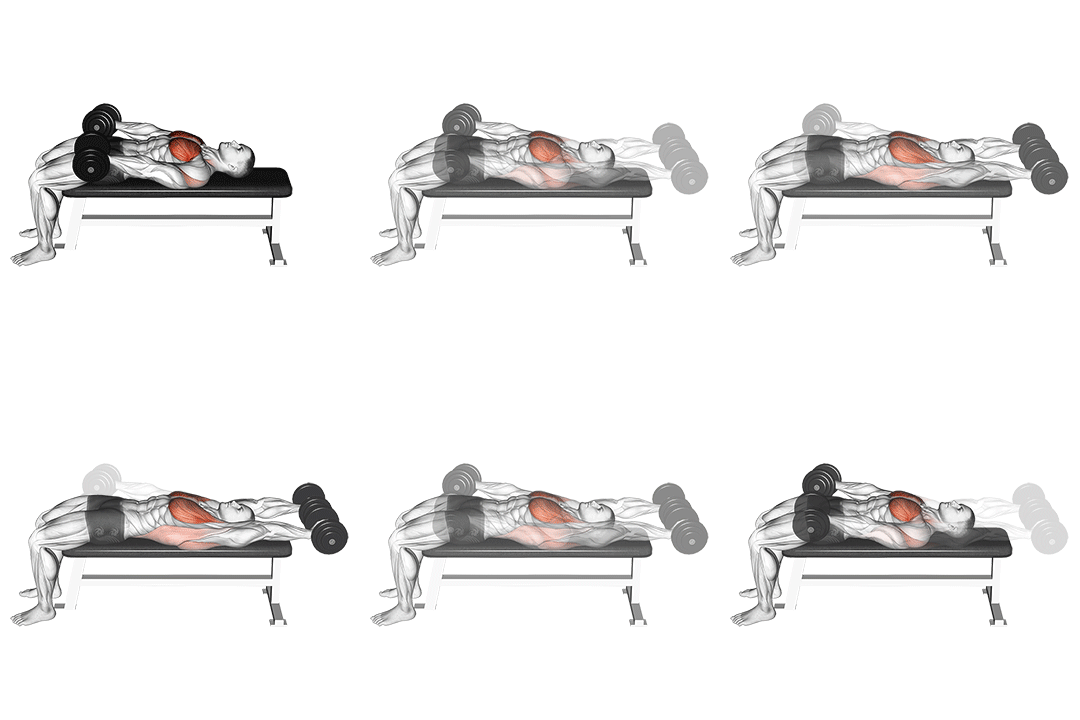
More comparisons with Deep Push Up
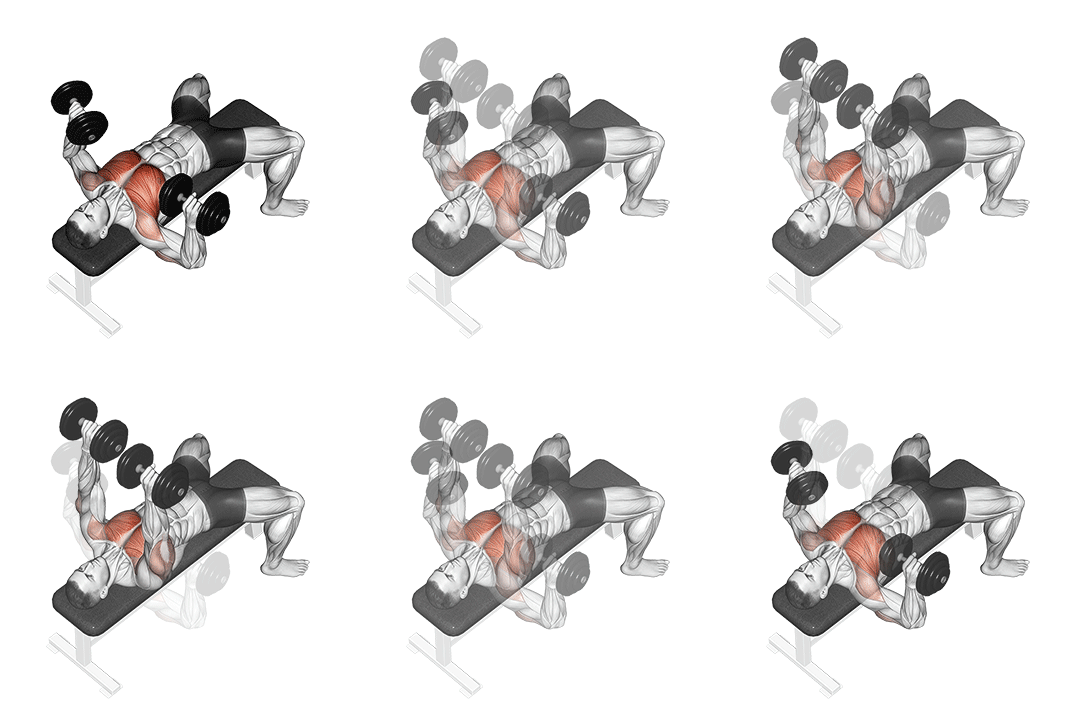
More comparisons with Dumbbell Decline Bench Press
Compare More Exercises
Use our free comparison tool to analyze any two exercises head-to-head.
Compare Exercises