

Deep Push Up vs Dumbbell Decline Fly: Complete Comparison Guide
Deep Push Up vs Dumbbell Decline Fly — you want chest development that fits your goals and equipment. I’ll walk you through how each exercise loads the pectorals, which muscles pick up the slack, what gear you need, and practical technique cues so you can perform each safely. You’ll get clear rep ranges, angles (decline bench 15–30 degrees), and programming tips for hypertrophy and strength. Read on to learn which move to prioritize based on muscle activation, accessibility, and the type of stimulus you want in your program.
Exercise Comparison
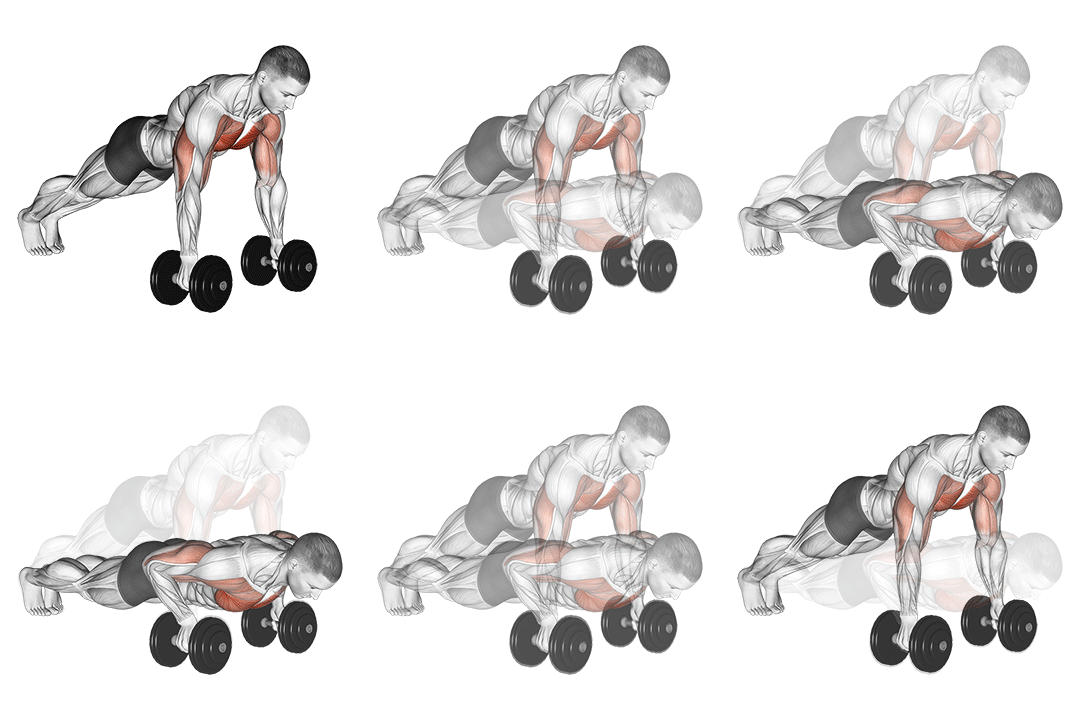
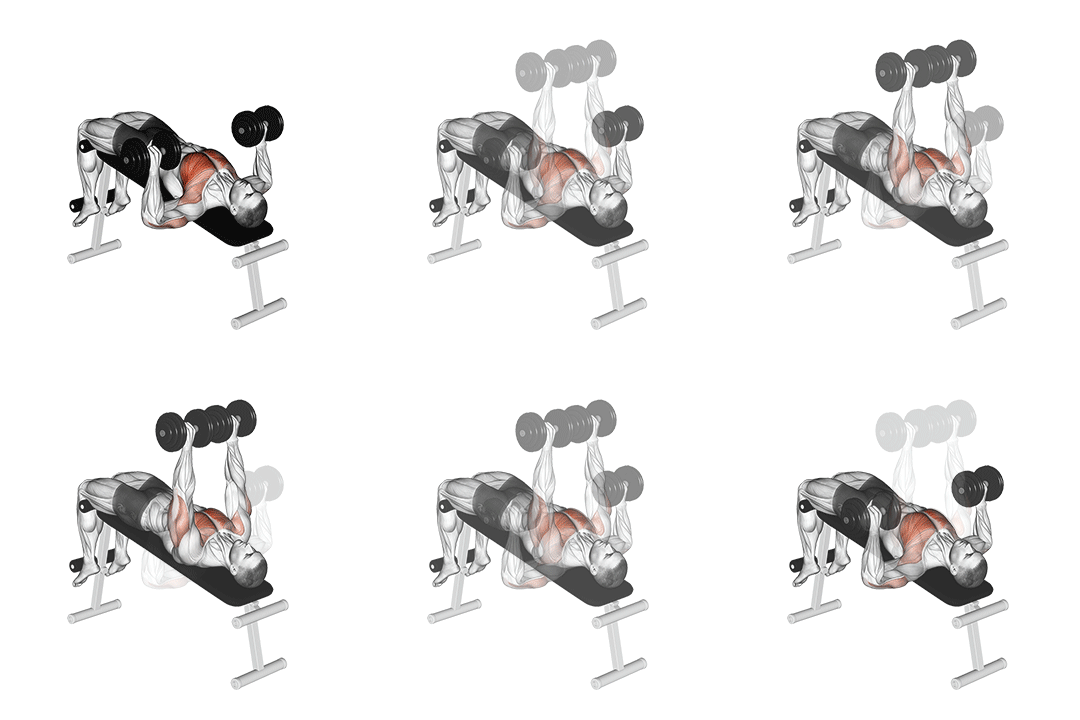
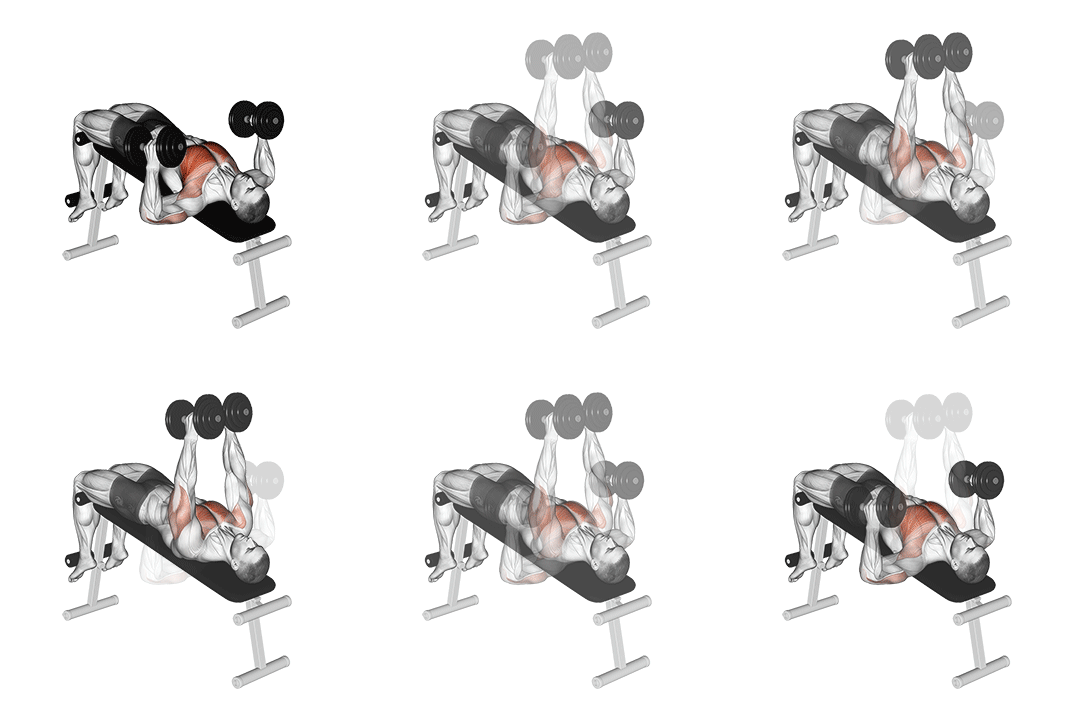
Deep Push Up
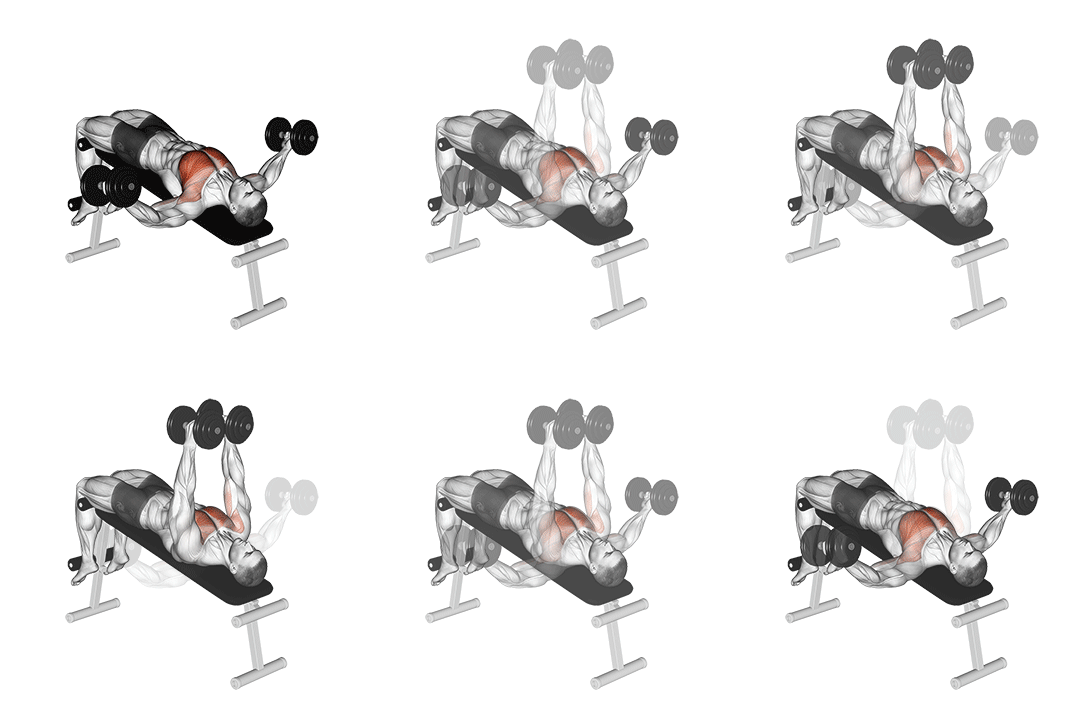
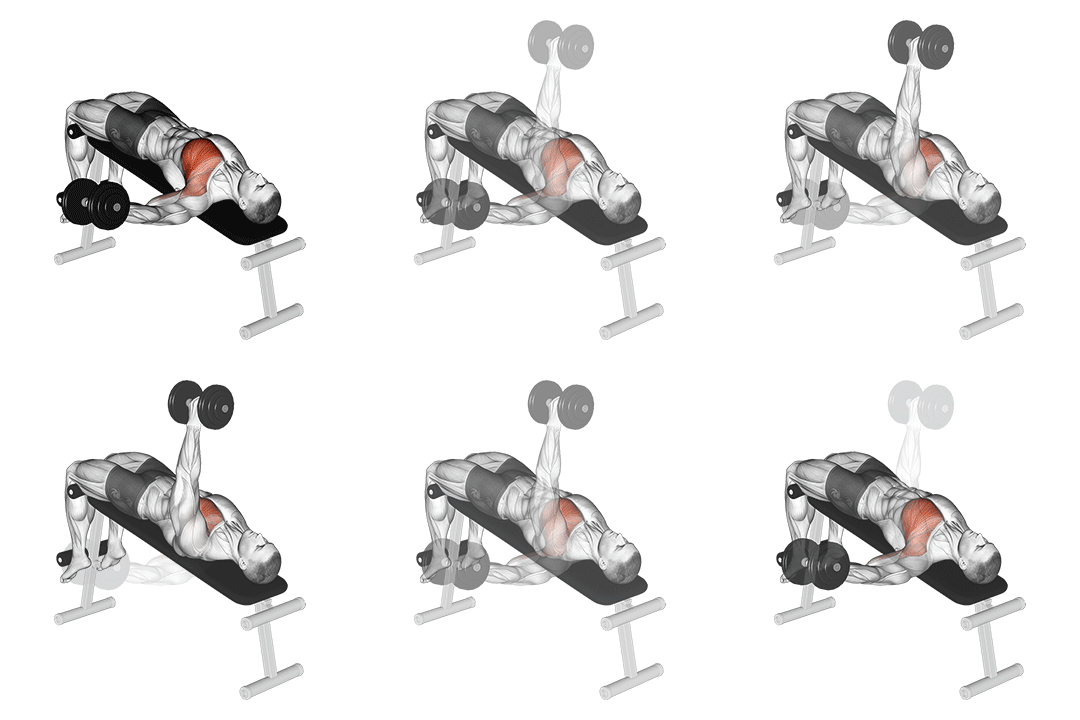
Dumbbell Decline Fly
Head-to-Head Comparison
| Attribute | Deep Push Up | Dumbbell Decline Fly |
|---|---|---|
| Target Muscle |
Pectorals
|
Pectorals
|
| Body Part |
Chest
|
Chest
|
| Equipment |
Dumbbell
|
Dumbbell
|
| Difficulty |
Intermediate
|
Beginner
|
| Movement Type |
Compound
|
Isolation
|
| Secondary Muscles |
2
|
1
|
Secondary Muscles Activated
Deep Push Up
Dumbbell Decline Fly
Visual Comparison
Overview
Deep Push Up vs Dumbbell Decline Fly — you want chest development that fits your goals and equipment. I’ll walk you through how each exercise loads the pectorals, which muscles pick up the slack, what gear you need, and practical technique cues so you can perform each safely. You’ll get clear rep ranges, angles (decline bench 15–30 degrees), and programming tips for hypertrophy and strength. Read on to learn which move to prioritize based on muscle activation, accessibility, and the type of stimulus you want in your program.
Key Differences
- Deep Push Up is a compound movement, while Dumbbell Decline Fly is an isolation exercise.
- Difficulty levels differ: Deep Push Up is intermediate, while Dumbbell Decline Fly is beginner.
- Both exercises target the Pectorals using Dumbbell. The main differences are in their movement patterns and muscle activation angles.
Pros & Cons
Deep Push Up
+ Pros
- Compound movement that builds pressing strength and functional force transfer
- Easier to progressively overload with added weight or leverage changes
- Engages stabilizers (serratus anterior, core) improving joint health and control
- Handles or dumbbells allow deeper ROM while maintaining neutral wrist
− Cons
- Requires greater core and scapular control—harder to master for some
- Places more load on triceps, making isolated pec stimulus less pure
- Progression can plateau without access to added weight or advanced variations
Dumbbell Decline Fly
+ Pros
- Excellent pec isolation with strong eccentric stretch for hypertrophy
- Beginner‑friendly setup with predictable ROM and tempo work
- Lower core demand lets you focus purely on pectoral tension
- Easy to target lower sternal fibers via decline angle (15–30°)
− Cons
- Higher shoulder joint stress at end‑range if mobility is limited
- Limited overload potential compared with compound presses
- Less carryover to overall pressing strength due to low triceps involvement
When Each Exercise Wins
The decline fly places the pecs under a long eccentric stretch and isolates horizontal adduction, maximizing mechanical tension in the pectoralis major for 8–12 rep ranges. Use slow 3–4 second eccentrics and stop before painful end‑range to exploit length‑tension without injuring the shoulder.
As a compound closed‑chain press, the deep push up lets you apply higher overall force and progressively overload via added weight or leverage changes, translating better to pressing strength. The movement also trains triceps and scapular stabilizers important for heavy presses.
The decline fly is simpler to cue and perform with light weights and a bench, reducing demands on core and scapular control. Start with 8–15 reps focusing on controlled eccentrics and shoulder safety.
Deep push ups require minimal equipment—just handles or dumbbells—and you can vary intensity by changing elevation or adding a vest, making them ideal for limited‑equipment home programming.
Frequently Asked Questions
Can I do both Deep Push Up and Dumbbell Decline Fly in the same workout?
Yes. Use deep push ups as your compound movement early in the session (3–5 sets of 6–12) and follow with 2–4 sets of 8–12 decline flies as a hypertrophy finisher to focus on pec stretch and time under tension.
Which exercise is better for beginners?
Dumbbell Decline Fly is typically easier for beginners because the bench stabilizes the torso and you can isolate the pecs with light load. Prioritize controlled eccentrics and stop short of painful end‑range to protect the shoulder.
How do the muscle activation patterns differ?
Deep Push Up is closed‑chain with combined pec and triceps activation and strong scapular stabilizer involvement; peak force is generated in the concentric midrange. Decline Fly is open‑chain, producing high pec tension at the eccentric end‑range via long muscle lengths and horizontal adduction vectors, with much lower triceps demand.
Can Dumbbell Decline Fly replace Deep Push Up?
If your goal is pure pec isolation and hypertrophy, the fly can substitute, but it won’t replace the compound strength, triceps development, and scapular control you get from deep push ups. For a complete program include both or pair the fly with a pressing compound elsewhere in the workout.
Expert Verdict
Choose the Dumbbell Decline Fly when your primary goal is pectoral hypertrophy and you can control shoulder range of motion—use 8–12 reps, slow eccentrics, and a 15–30° decline to emphasize lower sternal fibers. Opt for the Deep Push Up when you want compound strength, scalable loading, and improved scapular and core function; work in 6–15 rep ranges and add weight or single‑arm progressions to increase demand. For balanced chest development, rotate both: use flies as an isolation finish to maximize mechanical tension and push‑ups earlier in the workout for heavy compound stimulus.
Also Compare
More comparisons with Deep Push Up
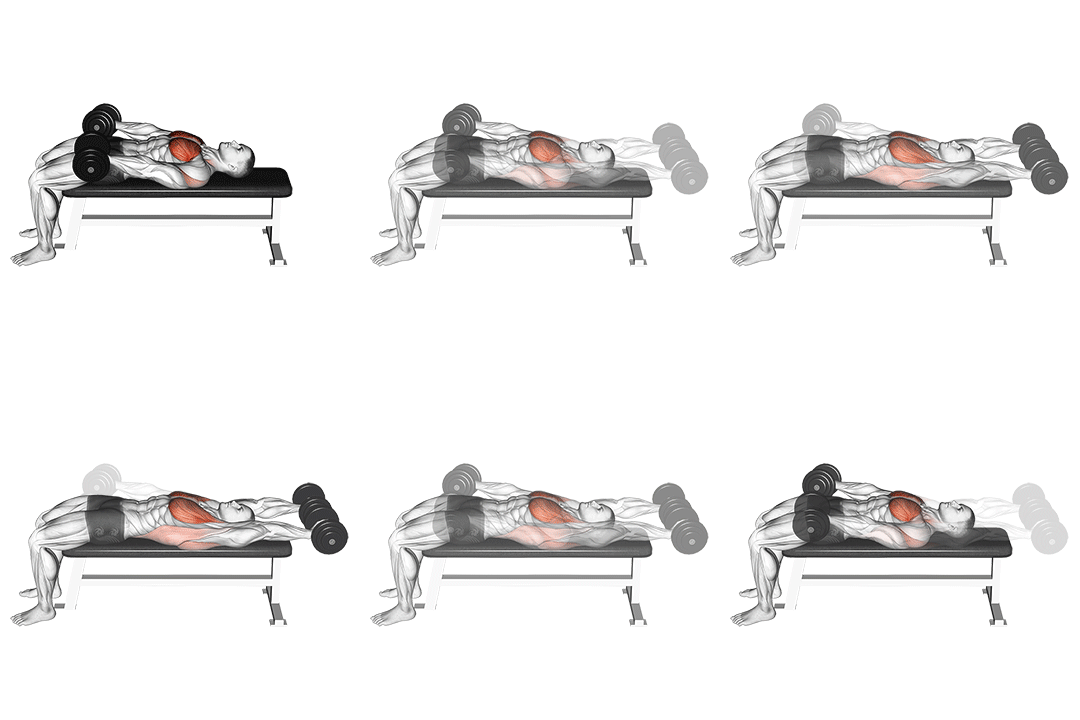
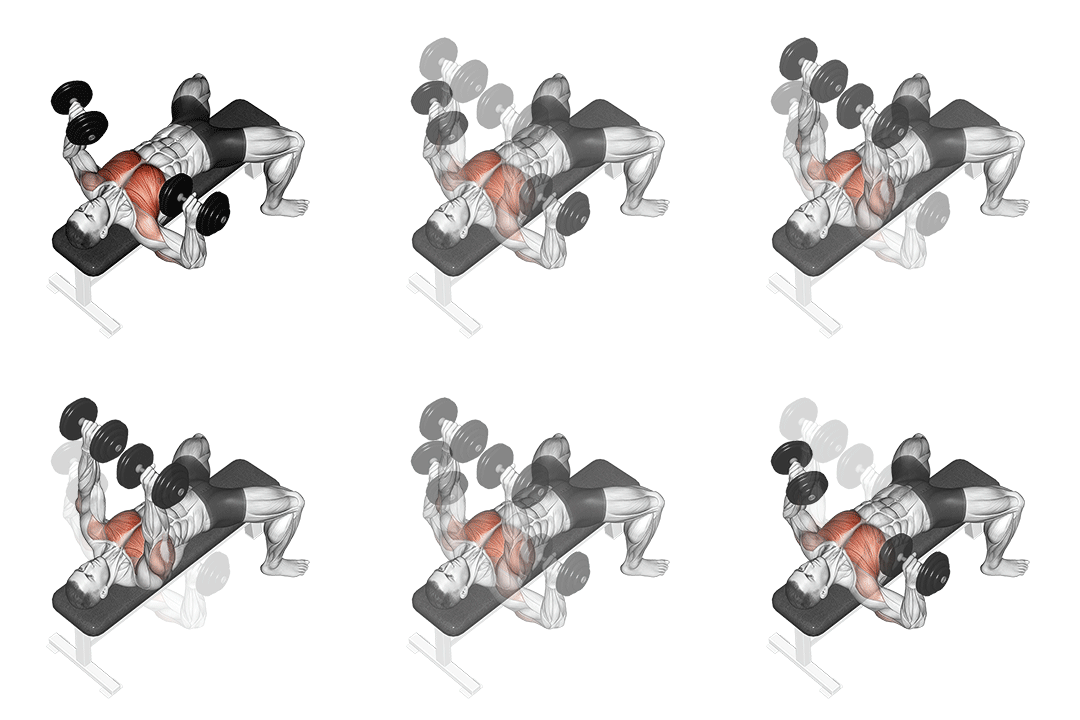
More comparisons with Dumbbell Decline Fly
Compare More Exercises
Use our free comparison tool to analyze any two exercises head-to-head.
Compare Exercises