

Dumbbell Alternate Side Press vs Dumbbell Cuban Press: Complete Comparison Guide
Dumbbell Alternate Side Press vs Dumbbell Cuban Press is a matchup between two compound dumbbell moves that both target the delts but use different movement patterns. If you want clear guidance on which to pick, this comparison walks you through primary and secondary muscle recruitment, technique cues, mobility demands, progression options, and injury risk. You’ll get practical tips for reps, angles, and programming so you can choose the best move for hypertrophy, strength, shoulder health, or home workouts.
Exercise Comparison
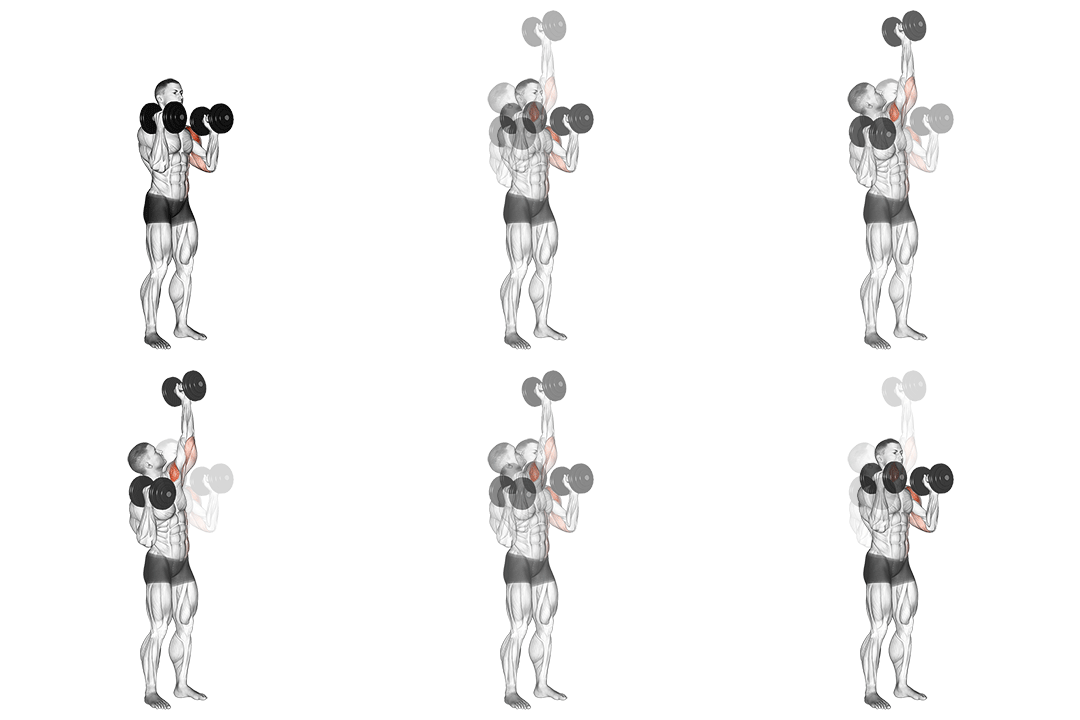
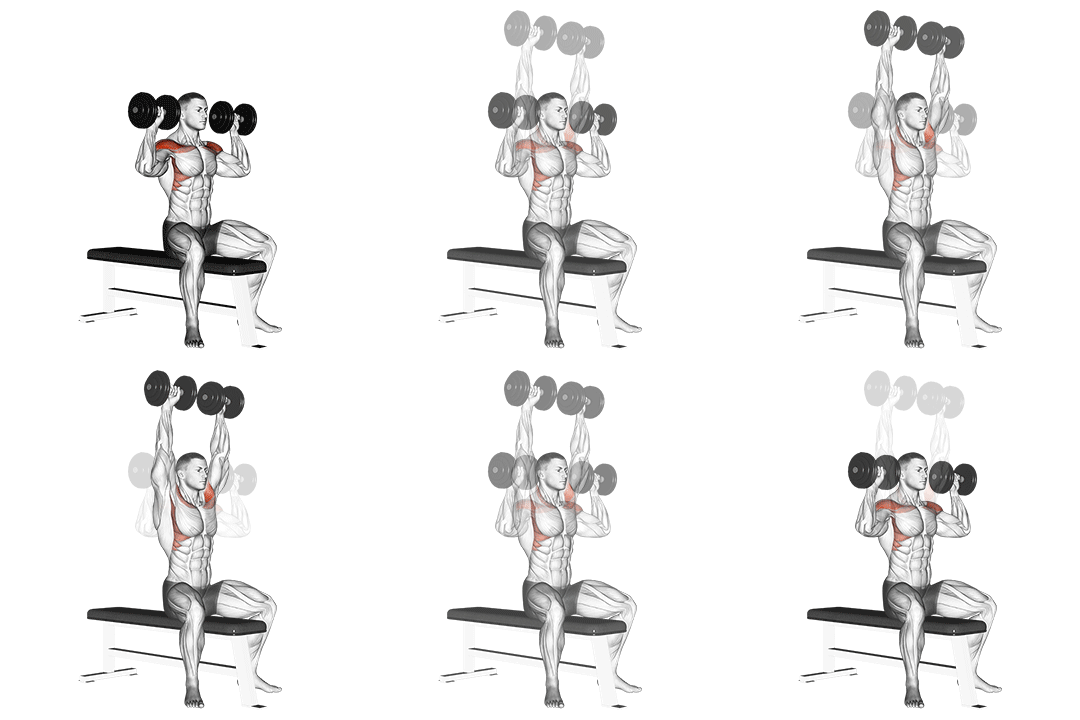
Dumbbell Alternate Side Press
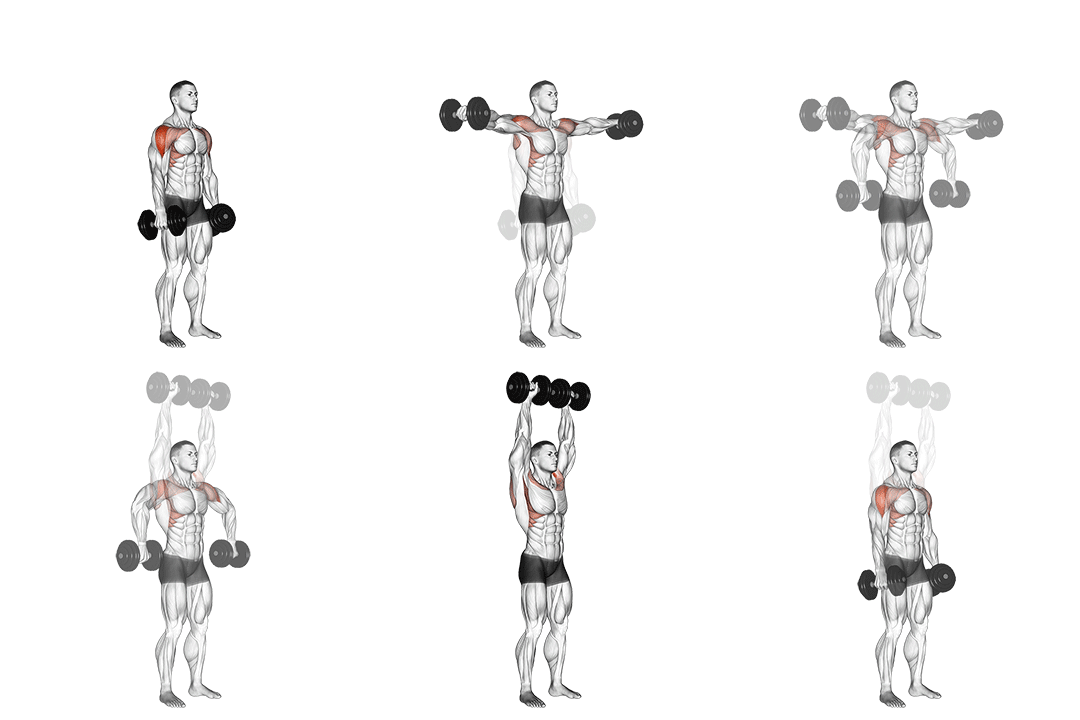
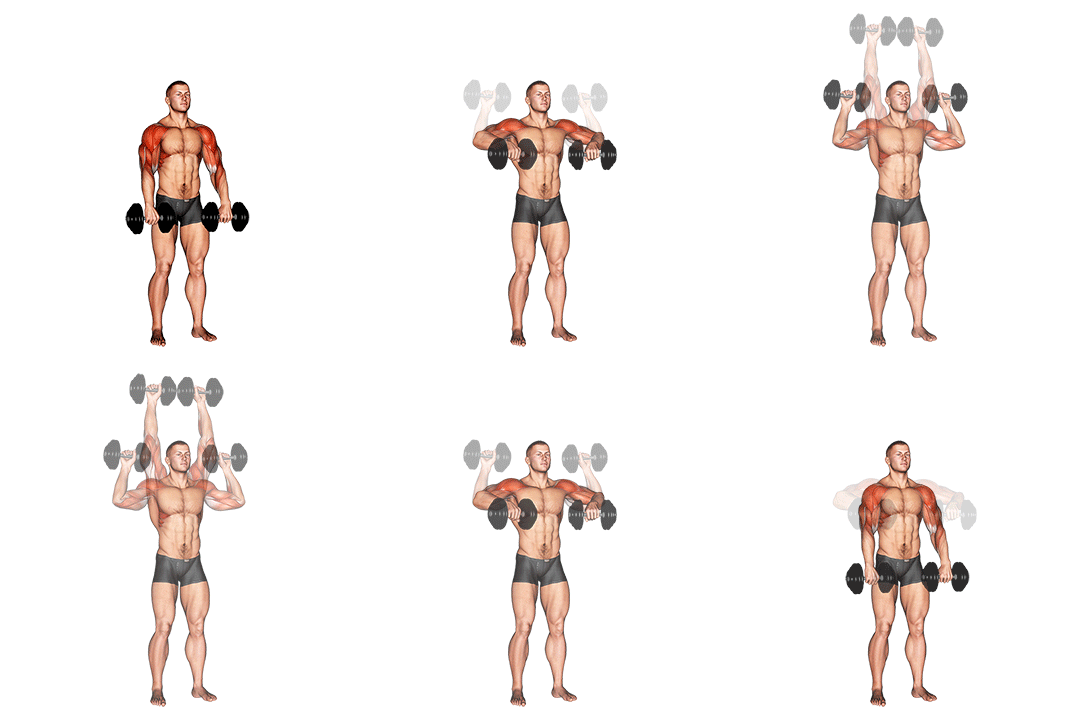
Dumbbell Cuban Press
Head-to-Head Comparison
| Attribute | Dumbbell Alternate Side Press | Dumbbell Cuban Press |
|---|---|---|
| Target Muscle |
Delts
|
Delts
|
| Body Part |
Shoulders
|
Shoulders
|
| Equipment |
Dumbbell
|
Dumbbell
|
| Difficulty |
Intermediate
|
Intermediate
|
| Movement Type |
Compound
|
Compound
|
| Secondary Muscles |
2
|
2
|
Secondary Muscles Activated
Dumbbell Alternate Side Press
Dumbbell Cuban Press
Visual Comparison
Overview
Dumbbell Alternate Side Press vs Dumbbell Cuban Press is a matchup between two compound dumbbell moves that both target the delts but use different movement patterns. If you want clear guidance on which to pick, this comparison walks you through primary and secondary muscle recruitment, technique cues, mobility demands, progression options, and injury risk. You’ll get practical tips for reps, angles, and programming so you can choose the best move for hypertrophy, strength, shoulder health, or home workouts.
Key Differences
- Both exercises target the Delts using Dumbbell. The main differences are in their movement patterns and muscle activation angles.
Pros & Cons
Dumbbell Alternate Side Press
+ Pros
- Direct lateral delt overload via vertical pressing vector
- High anti-rotation core demand builds stability
- Easier to load progressively for strength and hypertrophy (6–12 reps)
- Simple setup — good for home or crowded gyms
− Cons
- Can expose trunk rotation or pelvic tilt if not braced
- Less emphasis on posterior delts and upper back
- May exacerbate shoulder impingement if elbow flares and scapular control are weak
Dumbbell Cuban Press
+ Pros
- Strong posterior delt and rotator cuff activation through external-rotation phase
- Improves scapular control and upper-back strength
- Helps shoulder health when performed with light, controlled loads
- Good warm-up/activation option before heavy pressing
− Cons
- Technical sequence requires solid shoulder mobility and coordination
- Not ideal for heavy loading — use lighter weights for safety
- Higher risk for those with existing rotator cuff issues if overloaded
When Each Exercise Wins
The unilateral vertical press allows heavier progressive overload on the lateral deltoid and cleaner loading in the 6–12 rep range, producing more mechanical tension for delt hypertrophy. Anti-rotation demand also recruits core stabilizers that support heavier sets.
Because it tolerates heavier loads and simpler mechanics, the Alternate Side Press lets you increase absolute load and practice force production through a vertical vector, which transfers better to other pressing strength work.
Its single-phase pressing pattern is easier to teach and requires less shoulder mobility. Beginners can focus on bracing, elbow path (roughly 20–30° from the torso), and progressive loading before adding complexity.
Requires only dumbbells and minimal space, scales well with moderate weights, and avoids the mobility-specific setup the Cuban Press needs. It yields more direct shoulder stimulus with simple programming.
Frequently Asked Questions
Can I do both Dumbbell Alternate Side Press and Dumbbell Cuban Press in the same workout?
Yes — pair them strategically. Use the Cuban Press as a light activation or prehab set (12–20 reps, 40–60% of pressing load) to prime the rotator cuff, then follow with 3–5 working sets of Alternate Side Press for heavier loading and hypertrophy.
Which exercise is better for beginners?
The Dumbbell Alternate Side Press is better for beginners because it has simpler mechanics and a more forgiving mobility demand. Teach proper bracing, elbow path (slightly forward of the shaft), and unilateral control before introducing the Cuban sequence.
How do the muscle activation patterns differ?
The Alternate Side Press emphasizes lateral deltoid and anti-rotation core activation during the vertical press, while the Cuban Press activates posterior delts and external rotators early in the row/external-rotation phase, then adds a lighter vertical press — so timing and vector change which muscles peak when.
Can Dumbbell Cuban Press replace Dumbbell Alternate Side Press?
Not fully. Cuban Press is great for posterior delts and cuff health but typically uses lighter loads and less raw vertical overload. If your goal is hypertrophy or pressing strength, keep the Alternate Side Press as a primary movement and use the Cuban Press as an accessory.
Expert Verdict
Use the Dumbbell Alternate Side Press when your priority is lateral delt hypertrophy, pressing strength, or simple, progressive programming at home. It lets you load heavier (aim 6–12 reps for strength/hypertrophy) while training anti-rotation core control and vertical force production. Use the Dumbbell Cuban Press as a supplemental or prehab movement when you want to strengthen the posterior deltoid, rotator cuff, and upper back; perform it lighter (12–20 rep range) with strict external-rotation control to build scapular stability. If you have shoulder mobility and want improved cuff resilience, add Cuban presses as an accessory; if you need raw shoulder size and pressing power, prioritize the Alternate Side Press.
Also Compare
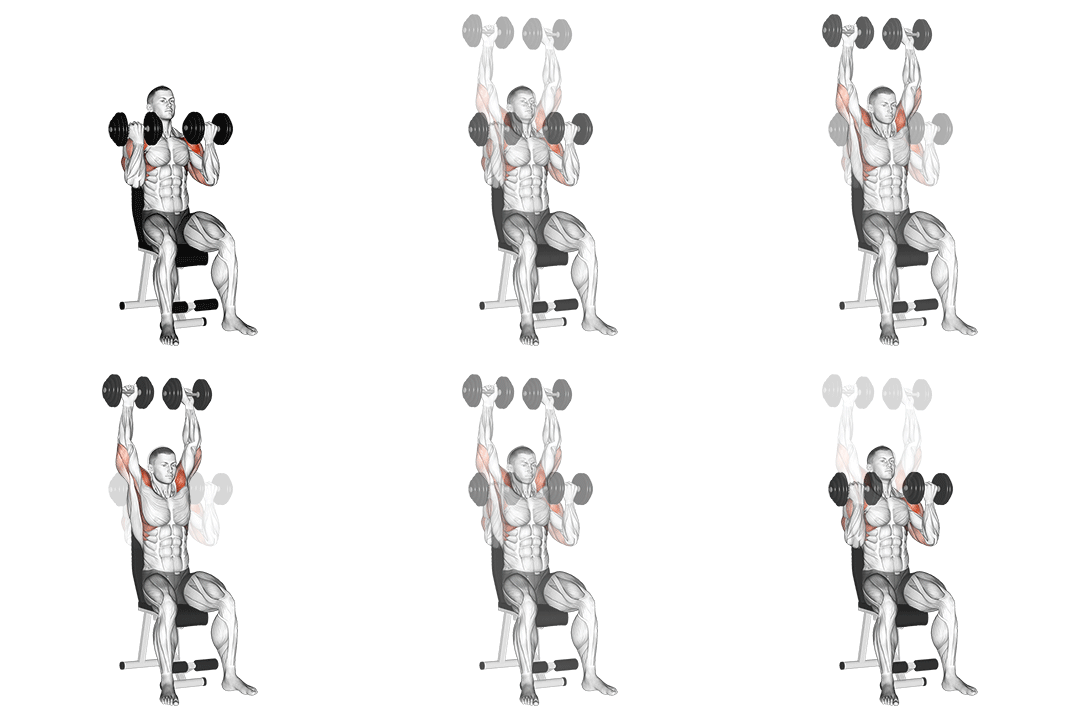
More comparisons with Dumbbell Alternate Side Press
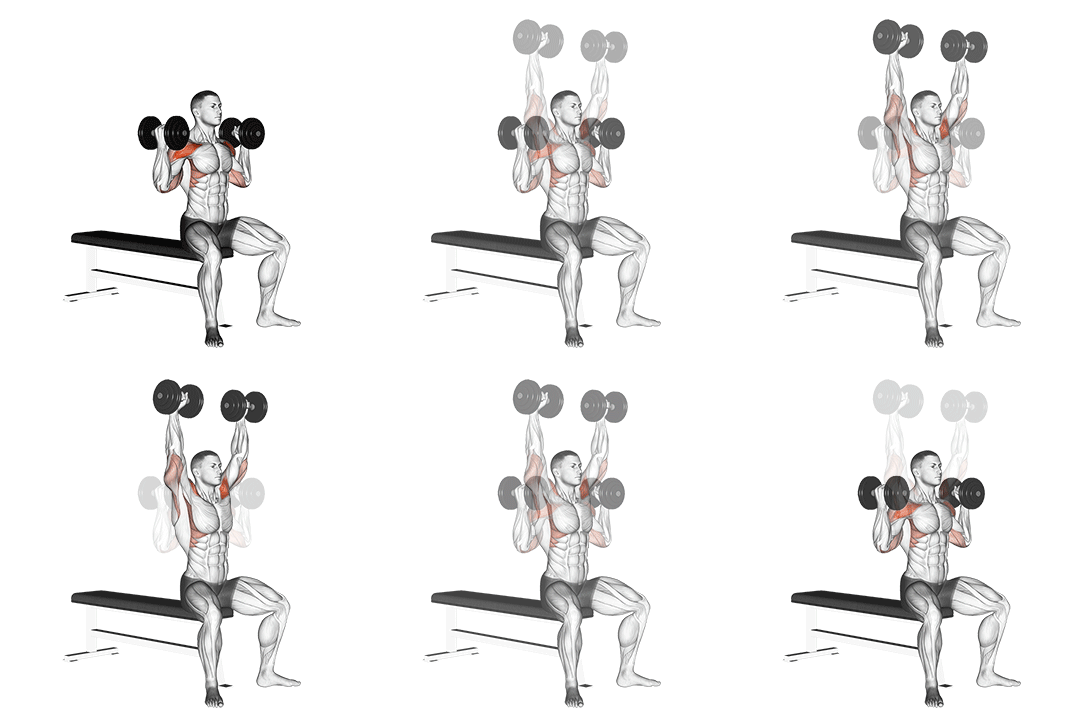
More comparisons with Dumbbell Cuban Press
Compare More Exercises
Use our free comparison tool to analyze any two exercises head-to-head.
Compare Exercises