

Dumbbell Alternate Side Press vs Dumbbell Cuban Press V. 2: Complete Comparison Guide
Dumbbell Alternate Side Press vs Dumbbell Cuban Press V. 2 is a practical matchup for shoulder development and joint health. You’ll get a clear breakdown of which exercise targets the delts more directly, how each stresses the rotator cuff and scapular stabilizers, and which movement fits different goals. I’ll cover primary and secondary muscle activation, detailed technique cues (hand path, elbow angle, scapula control), equipment needs, progression options, rep ranges (6–12 for hypertrophy, 4–6 for strength), and injury-risk considerations so you can choose the best press for your program.
Exercise Comparison
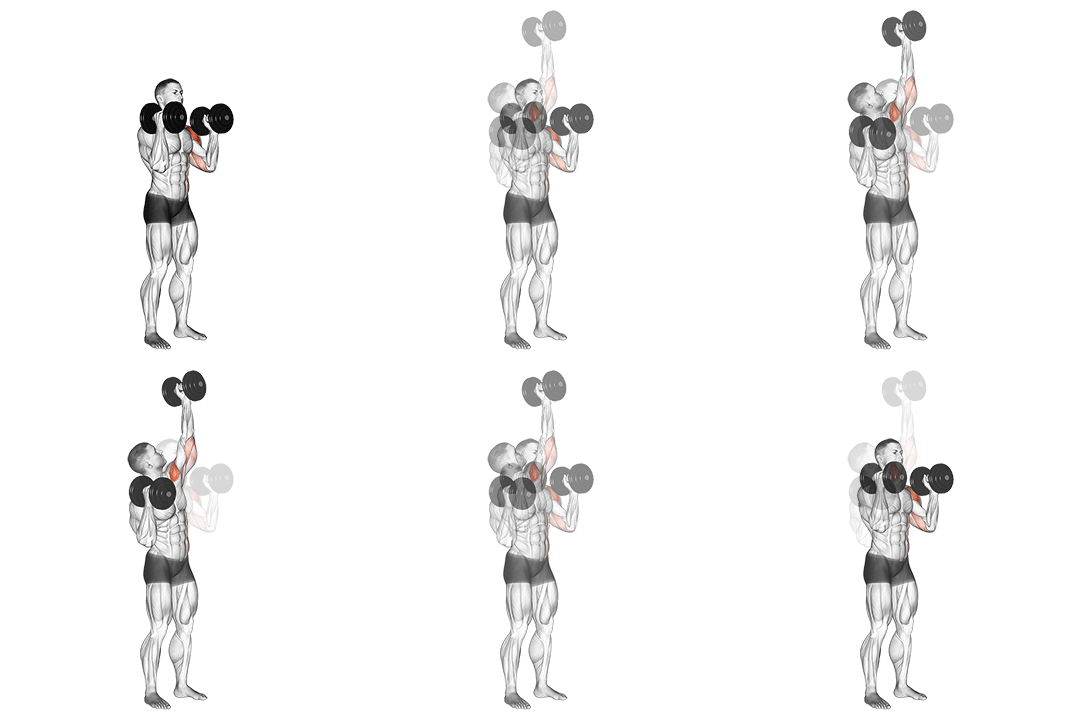
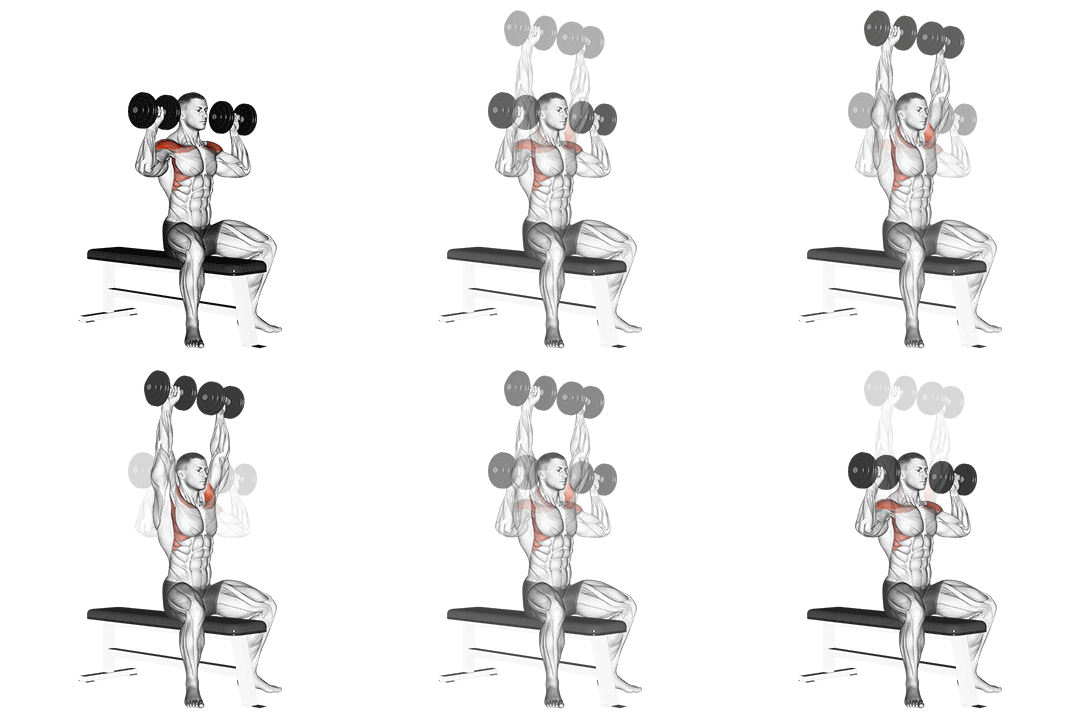
Dumbbell Alternate Side Press
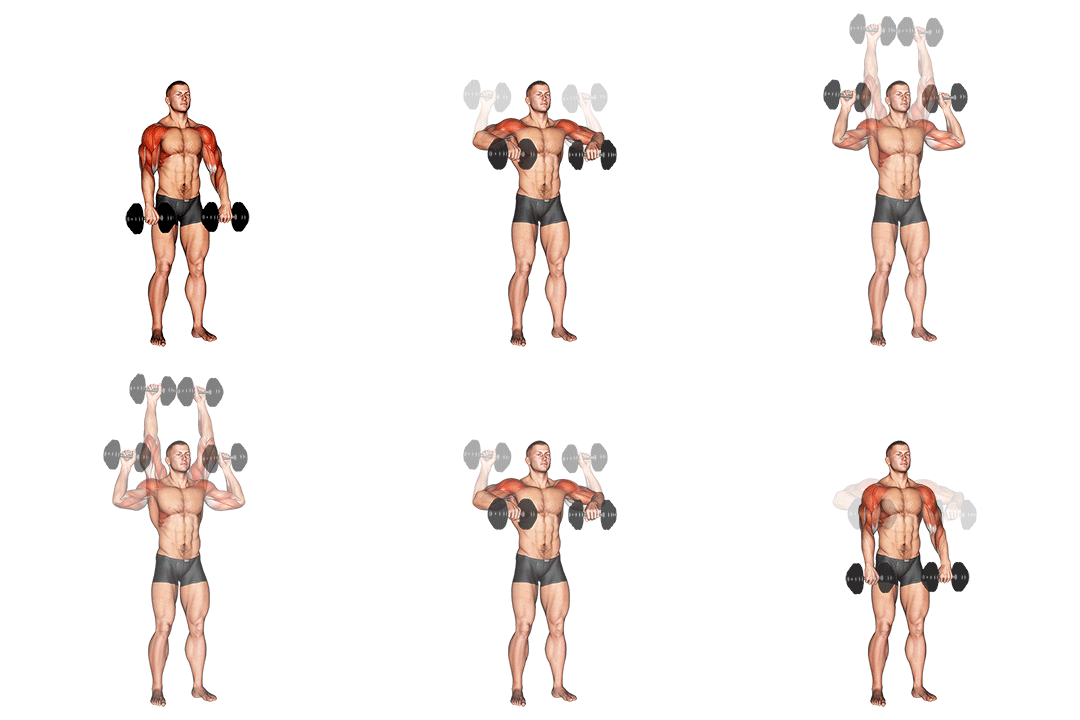
Dumbbell Cuban Press V. 2
Head-to-Head Comparison
| Attribute | Dumbbell Alternate Side Press | Dumbbell Cuban Press V. 2 |
|---|---|---|
| Target Muscle |
Delts
|
Delts
|
| Body Part |
Shoulders
|
Shoulders
|
| Equipment |
Dumbbell
|
Dumbbell
|
| Difficulty |
Intermediate
|
Intermediate
|
| Movement Type |
Compound
|
Compound
|
| Secondary Muscles |
2
|
2
|
Secondary Muscles Activated
Dumbbell Alternate Side Press
Dumbbell Cuban Press V. 2
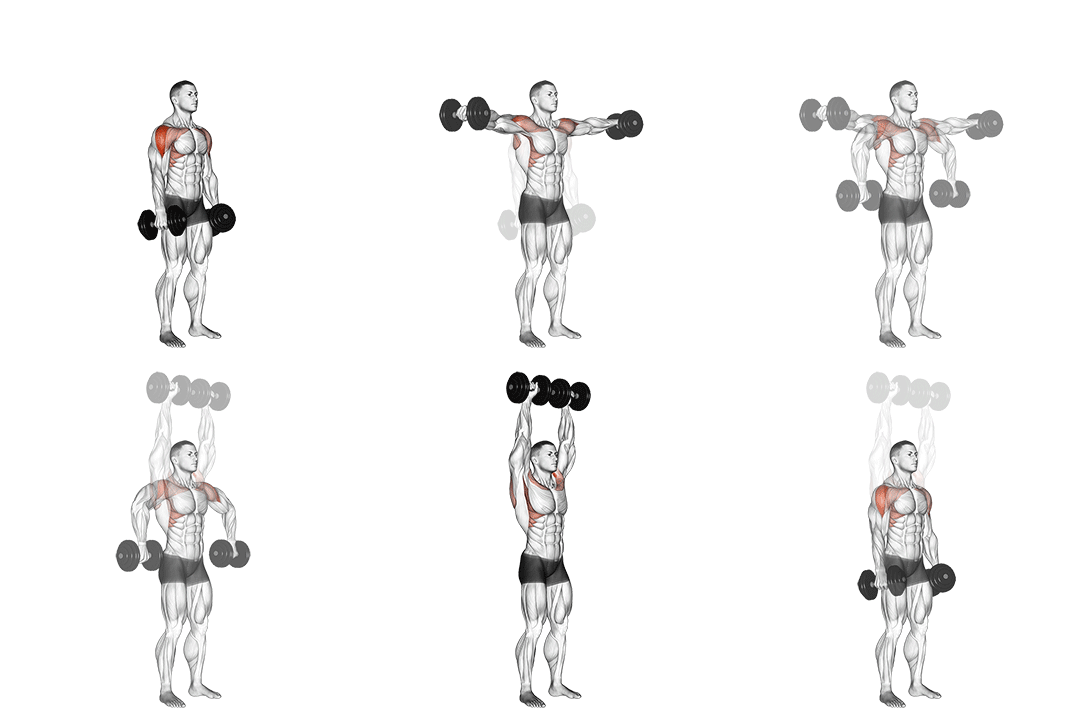
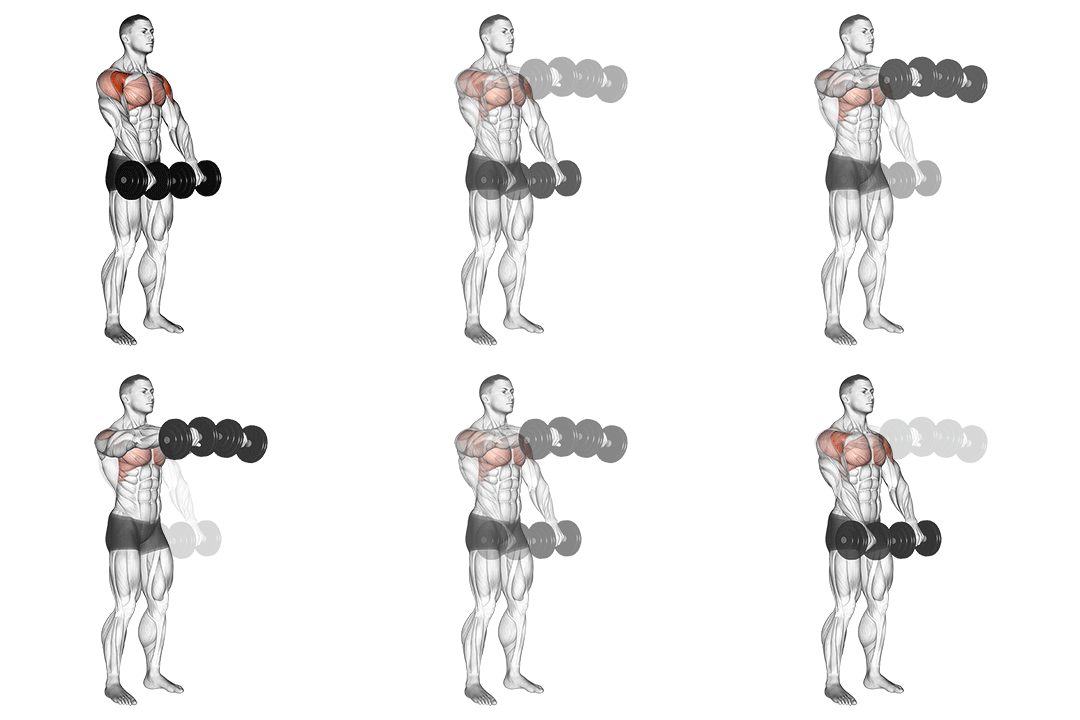
Visual Comparison
Overview
Dumbbell Alternate Side Press vs Dumbbell Cuban Press V. 2 is a practical matchup for shoulder development and joint health. You’ll get a clear breakdown of which exercise targets the delts more directly, how each stresses the rotator cuff and scapular stabilizers, and which movement fits different goals. I’ll cover primary and secondary muscle activation, detailed technique cues (hand path, elbow angle, scapula control), equipment needs, progression options, rep ranges (6–12 for hypertrophy, 4–6 for strength), and injury-risk considerations so you can choose the best press for your program.
Key Differences
- Both exercises target the Delts using Dumbbell. The main differences are in their movement patterns and muscle activation angles.
Pros & Cons
Dumbbell Alternate Side Press
+ Pros
- Strong deltoid stimulus with a vertical force vector ideal for shoulder size and pressing strength
- High core activation for anti-rotation and stability carryover
- Simple to scale with heavier dumbbells or unilateral loading
- Easy to teach and perform with minimal mobility demands
− Cons
- Less upper-back and posterior deltoid recruitment compared with Cuban Press
- Can overload the lumbar spine if core bracing is poor
- May emphasize anterior deltoid more, risking imbalance without posterior work
Dumbbell Cuban Press V. 2
+ Pros
- Combines external-rotation strengthening and scapular retraction, improving shoulder health
- Stimulates upper back and posterior deltoid along with the delts
- Useful for correcting rounded-shoulder posture and enhancing scapular control
- Good carryover to athletic horizontal pulling patterns
− Cons
- Complex motor pattern that requires good shoulder mobility and cuff strength
- Harder to load heavy for pure pressing strength due to rotation phase
- Greater risk to the glenohumeral joint if performed with too much weight or poor technique
When Each Exercise Wins
The Alternate Side Press lets you apply a direct vertical force vector to the deltoids and progressively overload with heavier dumbbells, sets of 6–12 reps, and tempo manipulation to maximize time under tension for muscle growth.
Its simpler path and ability to handle heavier loads make it better for building unilateral pressing strength and transferring to heavier bilateral presses; aim for 4–6 reps with controlled eccentrics.
Lower technical demand and immediate scalability make it safer for novices. It teaches core bracing and pressing mechanics before adding complex rotations or cuff-loading movements.
Requires only dumbbells and less shoulder mobility; you can perform it standing in tight spaces and progress with one heavier dumbbell or tempo variations.
Frequently Asked Questions
Can I do both Dumbbell Alternate Side Press and Dumbbell Cuban Press V. 2 in the same workout?
Yes. Structure the Alternate Side Press as your primary heavy or hypertrophy movement (4–12 reps), then use the Cuban Press V. 2 as an accessory for 8–15 reps to target the rotator cuff and upper back. Perform the Cuban Press with lighter loads and controlled tempo to avoid fatigue-related form breakdown.
Which exercise is better for beginners?
The Dumbbell Alternate Side Press is better for beginners because it has a simpler vertical path, lower mobility demands, and teaches pressing/bracing fundamentals. Introduce the Cuban Press later once shoulder mobility and cuff strength are established.
How do the muscle activation patterns differ?
The Alternate Side Press peaks deltoid activation during the vertical press phase with high core engagement for anti-rotation, while the Cuban Press splits activation: rotator cuff and posterior chain during the external-rotation/row phase, then deltoid and triceps during the press. Timing and force vectors shift where peak tension occurs.
Can Dumbbell Cuban Press V. 2 replace Dumbbell Alternate Side Press?
Not entirely. Cuban Press V. 2 is great for shoulder health and posterior/upper-back work but is harder to load for heavy pressing. If your primary goal is deltoid size or pressing strength, keep the Alternate Side Press as your staple and use Cuban Press as an accessory.
Expert Verdict
Use the Dumbbell Alternate Side Press as your go-to shoulder press when you want straightforward deltoid overload, core stability work, and easy progression for strength and hypertrophy. Favor sets of 6–12 for muscle growth and 4–6 for strength, brace the ribs and hips, and keep the elbow tracking slightly forward. Use the Dumbbell Cuban Press V. 2 when you need to emphasize rotator-cuff strength, posterior delt and upper-back activation, or rehab/prehab the shoulder—start with light load (8–15 reps) and focus on clean external rotation to 90° before pressing. Pair the two across a program: prioritize Alternate Side Press for heavy work and use Cuban Press as an accessory to balance the shoulder girdle.
Also Compare
More comparisons with Dumbbell Alternate Side Press
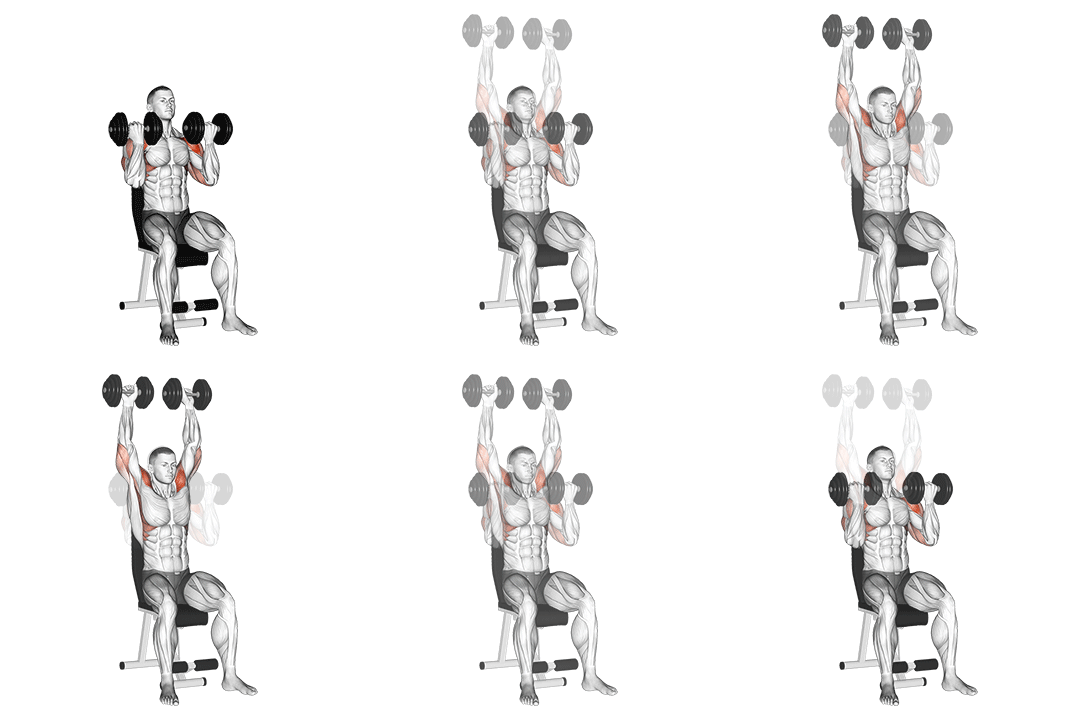
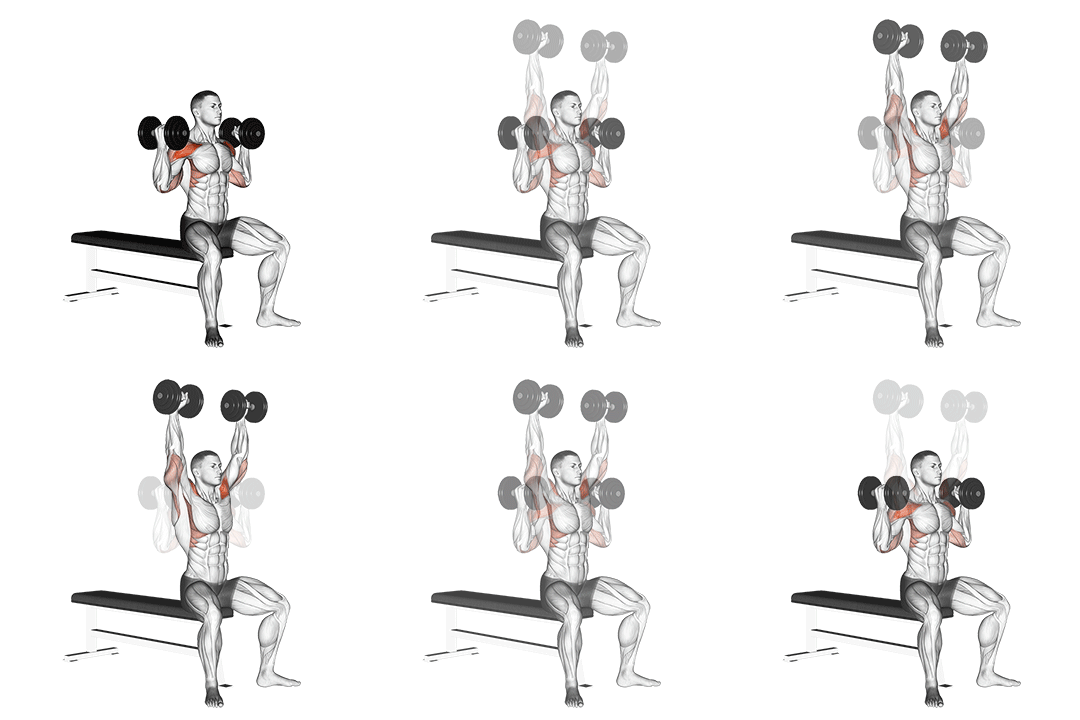
More comparisons with Dumbbell Cuban Press V. 2
Compare More Exercises
Use our free comparison tool to analyze any two exercises head-to-head.
Compare Exercises