

Dumbbell Arnold Press vs Dumbbell Bench Seated Press: Complete Comparison Guide
Dumbbell Arnold Press vs Dumbbell Bench Seated Press — you want clearer shoulder development and efficient training time. {Exercise1} vs {Exercise2} is a useful shorthand for comparing rotation-based versus fixed-plane presses. I’ll walk you through muscle activation, movement mechanics, equipment needs, progression options, and injury considerations so you can pick the right move for your goals. Expect concrete technique cues (elbow angles, palm rotation), rep ranges (6–12 for size, 3–6 for strength), and programming tips that fit intermediate lifters who already have some pressing experience.
Exercise Comparison
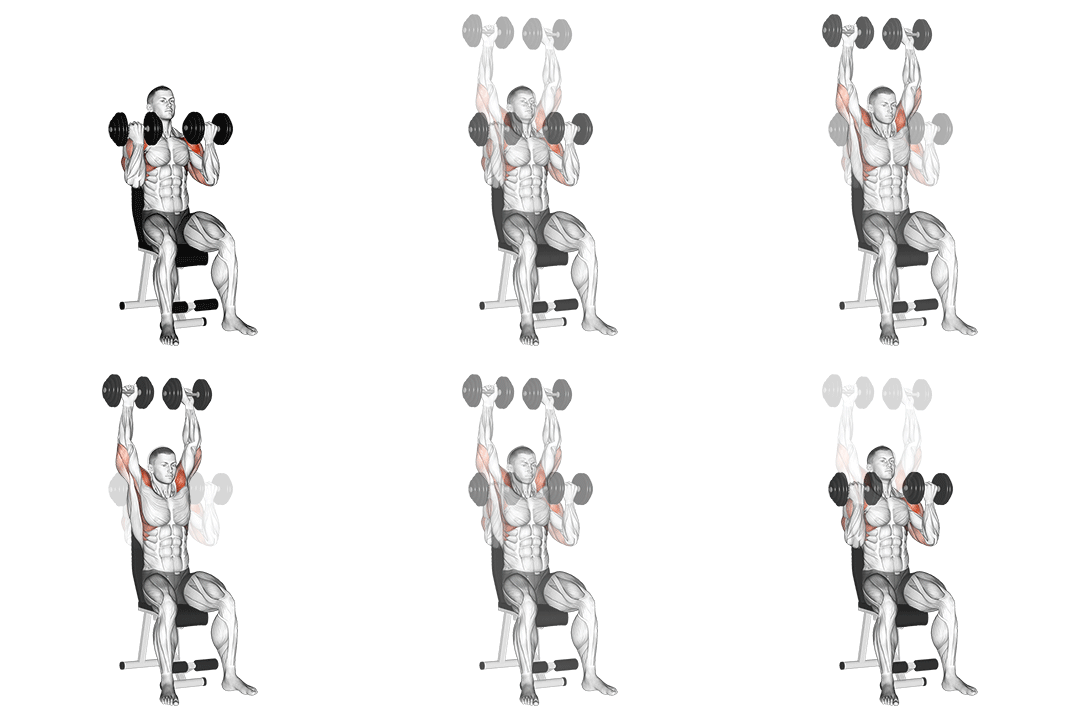
Dumbbell Arnold Press
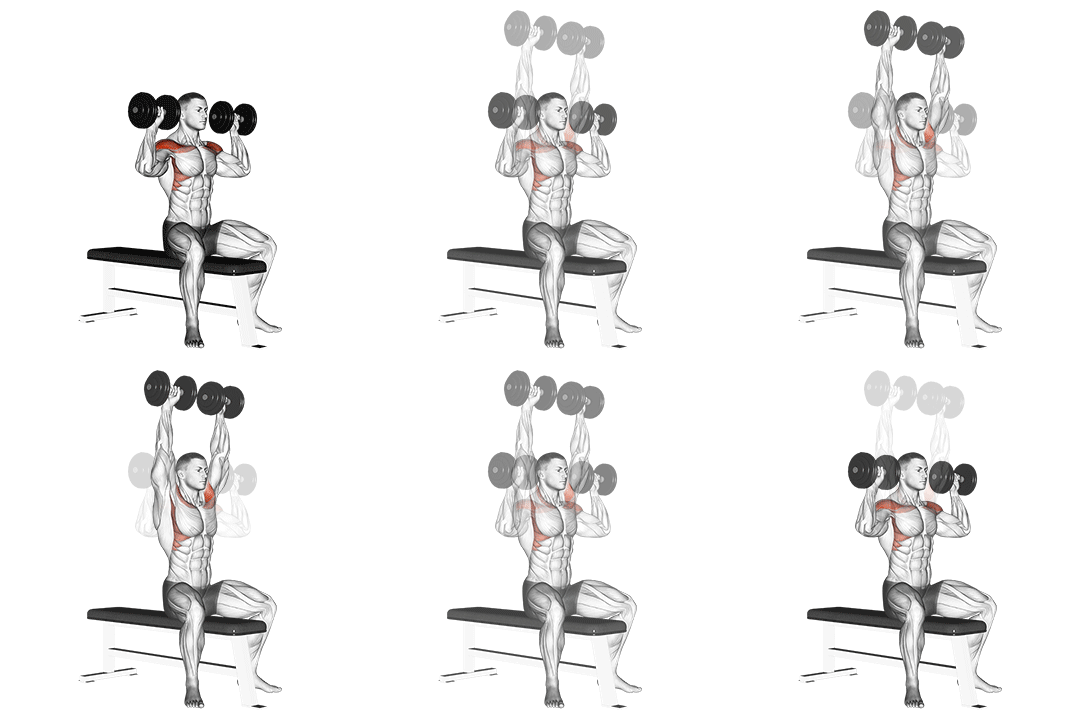
Dumbbell Bench Seated Press
Head-to-Head Comparison
| Attribute | Dumbbell Arnold Press | Dumbbell Bench Seated Press |
|---|---|---|
| Target Muscle |
Delts
|
Delts
|
| Body Part |
Shoulders
|
Shoulders
|
| Equipment |
Dumbbell
|
Dumbbell
|
| Difficulty |
Intermediate
|
Intermediate
|
| Movement Type |
Compound
|
Compound
|
| Secondary Muscles |
2
|
2
|
Secondary Muscles Activated
Dumbbell Arnold Press
Dumbbell Bench Seated Press
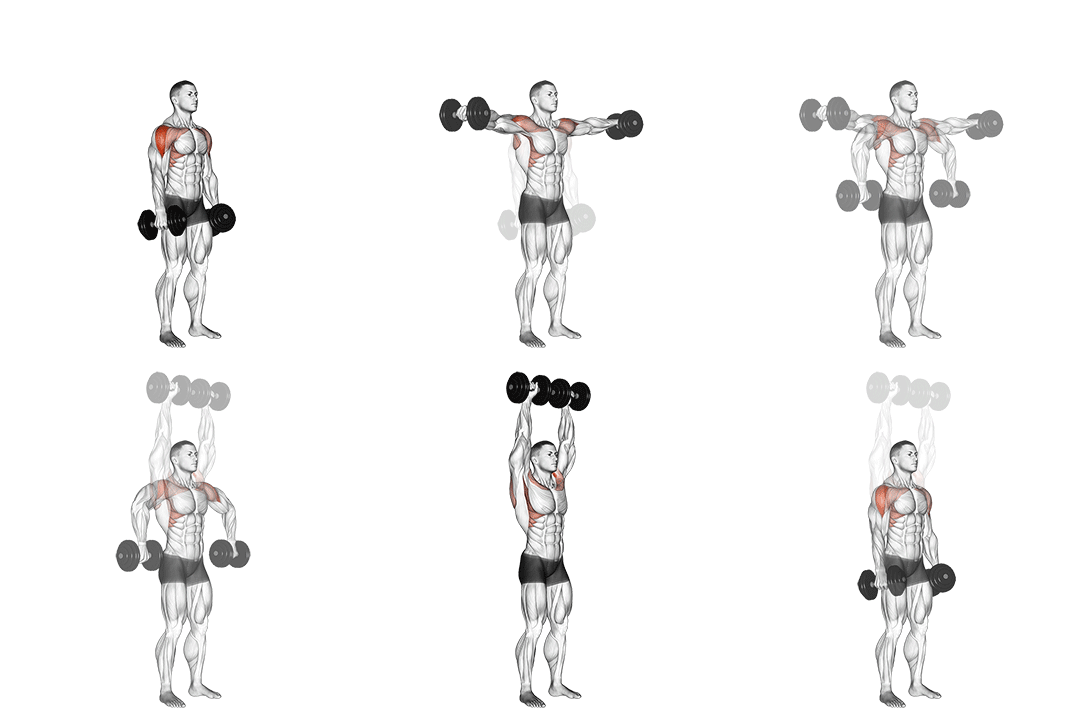
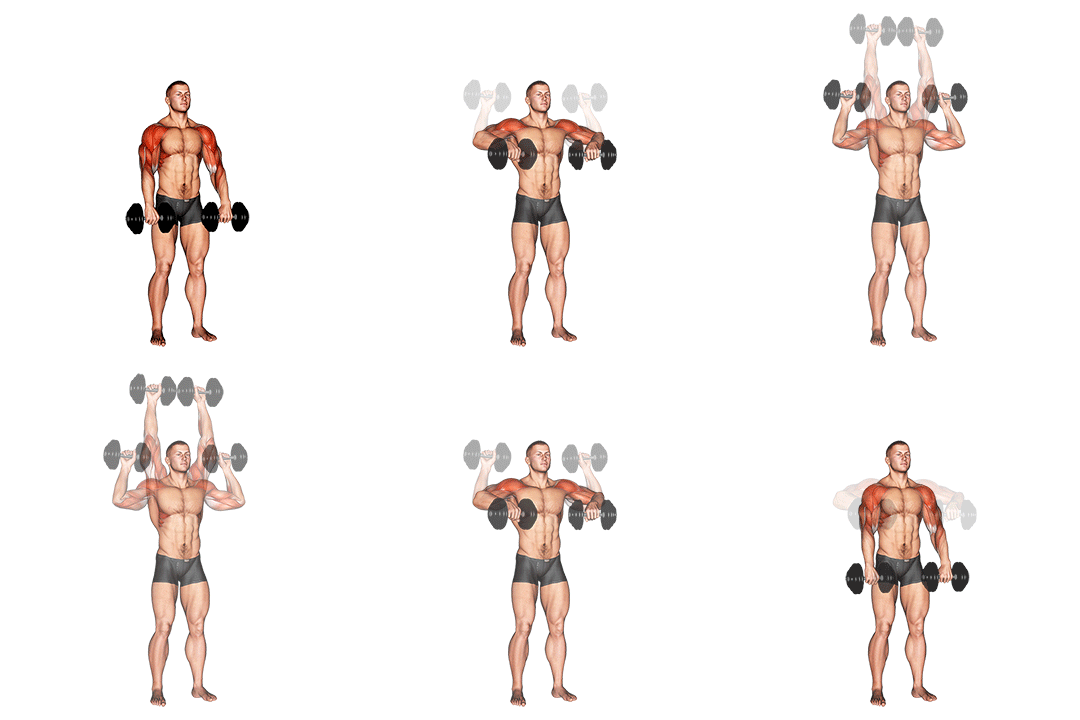
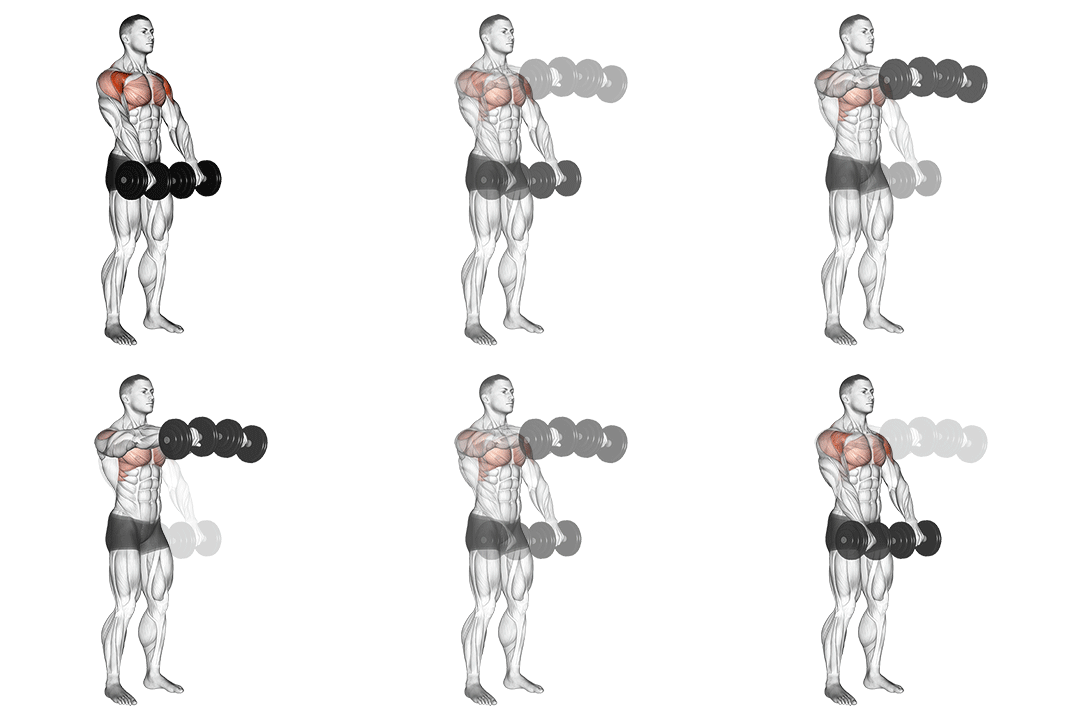
Visual Comparison
Overview
Dumbbell Arnold Press vs Dumbbell Bench Seated Press — you want clearer shoulder development and efficient training time. {Exercise1} vs {Exercise2} is a useful shorthand for comparing rotation-based versus fixed-plane presses. I’ll walk you through muscle activation, movement mechanics, equipment needs, progression options, and injury considerations so you can pick the right move for your goals. Expect concrete technique cues (elbow angles, palm rotation), rep ranges (6–12 for size, 3–6 for strength), and programming tips that fit intermediate lifters who already have some pressing experience.
Key Differences
- Both exercises target the Delts using Dumbbell. The main differences are in their movement patterns and muscle activation angles.
Pros & Cons
Dumbbell Arnold Press
+ Pros
- Increased ROM and rotational stimulus for more deltoid and upper-chest tension
- Requires only dumbbells—good for home training
- Improves shoulder mobility and external rotation strength when performed correctly
- Front-to-side deltoid transfer enhances balanced shoulder development
− Cons
- Higher technical demand—needs good scapular control and external rotation
- Less capacity for maximal load, limiting heavy strength progression
- Greater risk for impingement if mobility is limited or technique slips
Dumbbell Bench Seated Press
+ Pros
- Stable pressing platform allows heavier loads and clear strength progressions
- Simpler motor pattern—easier for beginners to learn good pressing mechanics
- Strong triceps recruitment supports lockout strength
- Back support reduces lower-back strain and helps maintain force vector
− Cons
- Requires a bench—less ideal for minimal-equipment settings
- Less rotational stimulus, so lateral deltoid hypertrophy may be comparatively lower
- Can encourage elbow flaring if lifter sacrifices shoulder health for load
When Each Exercise Wins
Its rotation increases ROM and loads the anterior and lateral delts across different length-tension positions, producing broader deltoid stimulus. Use 8–12 reps and controlled 2–3 second eccentrics to maximize time under tension.
The bench provides a stable base that lets you load heavier and train lower rep ranges (3–6) safely, improving force production and triceps-driven lockout strength.
Its constrained plane and back support simplify technique and reduce the need for advanced scapular control, making it faster to learn effective pressing mechanics.
It needs only dumbbells and space, and it hits multiple shoulder heads plus upper chest without requiring a bench. It’s efficient for limited-equipment sessions.
Frequently Asked Questions
Can I do both Dumbbell Arnold Press and Dumbbell Bench Seated Press in the same workout?
Yes — pair them intelligently by sequencing. Use the Bench Seated Press early for heavy sets (3–6 reps) to build strength, then follow with lighter Arnold Press sets (8–12 reps) to add ROM and hypertrophy stimulus without maximal loading.
Which exercise is better for beginners?
The Bench Seated Press is better for most beginners because the bench stabilizes your torso and simplifies the press path. It lets you practice shoulder pressing under safe conditions before adding rotational complexity.
How do the muscle activation patterns differ?
The Arnold Press shifts activation through internal-to-external rotation, extending deltoid tension across a larger range and recruiting upper-chest fibers. The Bench Seated Press maintains a vertical force vector that concentrates load on the anterior deltoid and triceps near lockout.
Can Dumbbell Bench Seated Press replace Dumbbell Arnold Press?
It can replace the Arnold Press if your goal is pure pressing strength or you lack shoulder mobility. However, you’ll lose the rotational stimulus and some lateral deltoid/upper-chest tension that the Arnold provides, so rotate both into your program over time for balanced development.
Expert Verdict
Choose the Dumbbell Arnold Press when your priority is balanced shoulder hypertrophy and improving rotational control—especially for building the anterior and lateral deltoids and adding upper-chest tension. Keep reps in the 8–12 range, rotate palms smoothly, and avoid heavy loads if your external rotation is limited. Pick the Dumbbell Bench Seated Press when you want straightforward strength progression and heavier loading for the delts and triceps; train with 3–6 reps for strength phases or 6–10 for muscle growth. If you have shoulder pain or limited mobility, start with the bench press to build raw pressing strength, then add Arnold variations once your mobility and scapular control improve.
Also Compare
More comparisons with Dumbbell Arnold Press
More comparisons with Dumbbell Bench Seated Press
Compare More Exercises
Use our free comparison tool to analyze any two exercises head-to-head.
Compare Exercises