

Dumbbell Arnold Press vs Dumbbell Cuban Press V. 2: Complete Comparison Guide
Dumbbell Arnold Press vs Dumbbell Cuban Press V. 2 — you’ve got two compound dumbbell moves that attack the delts from different angles. You’ll learn how each exercise stresses the anterior, medial, and posterior deltoid heads, the rotator cuff and scapular stabilizers, plus technique cues, rep ranges, and programming advice. I’ll compare muscle activation, equipment needs, learning curve, injury risk, and which to pick for hypertrophy, strength, or shoulder health. Read the clear takeaways and actionable tips so you can choose the right press for your training plan.
Exercise Comparison
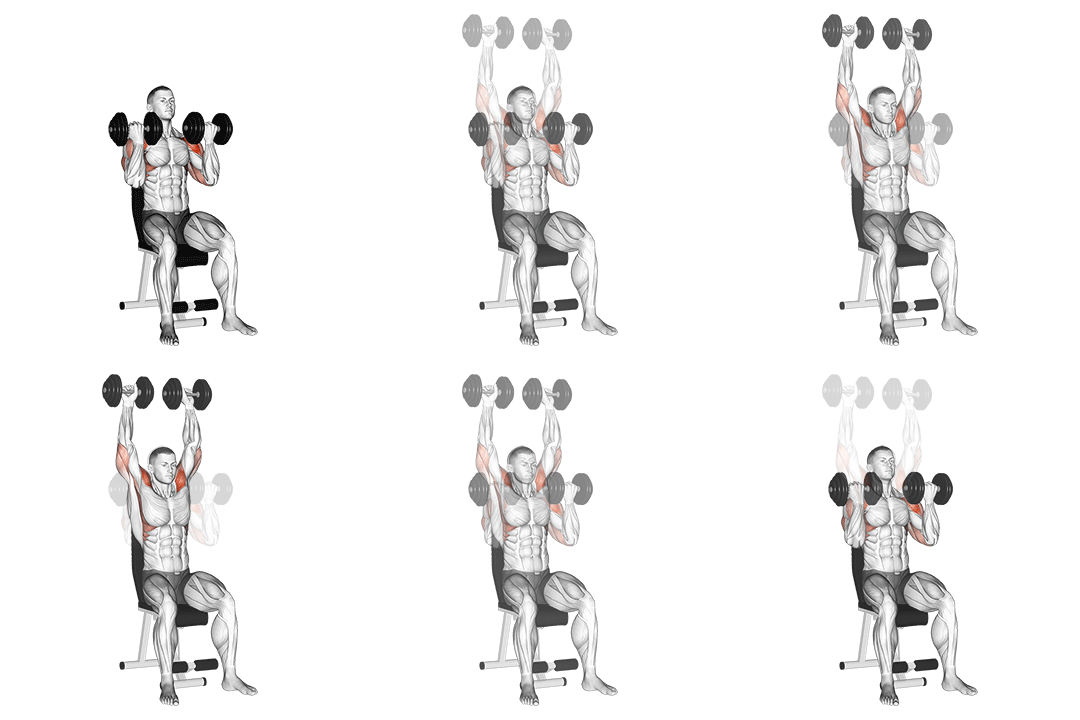
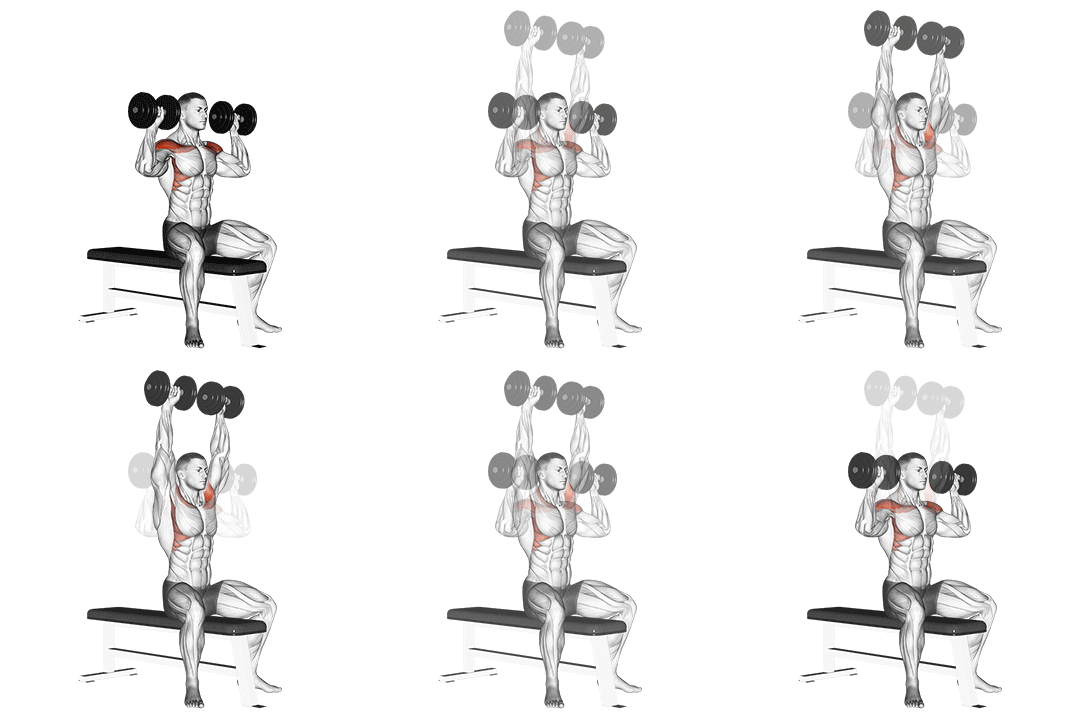
Dumbbell Arnold Press
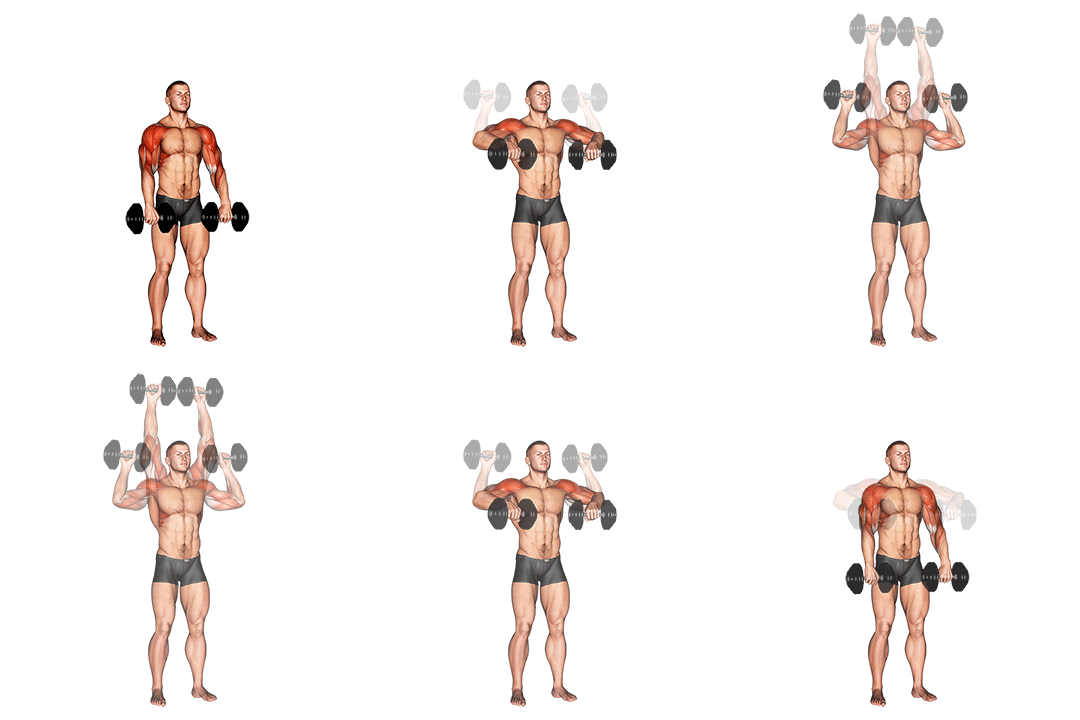
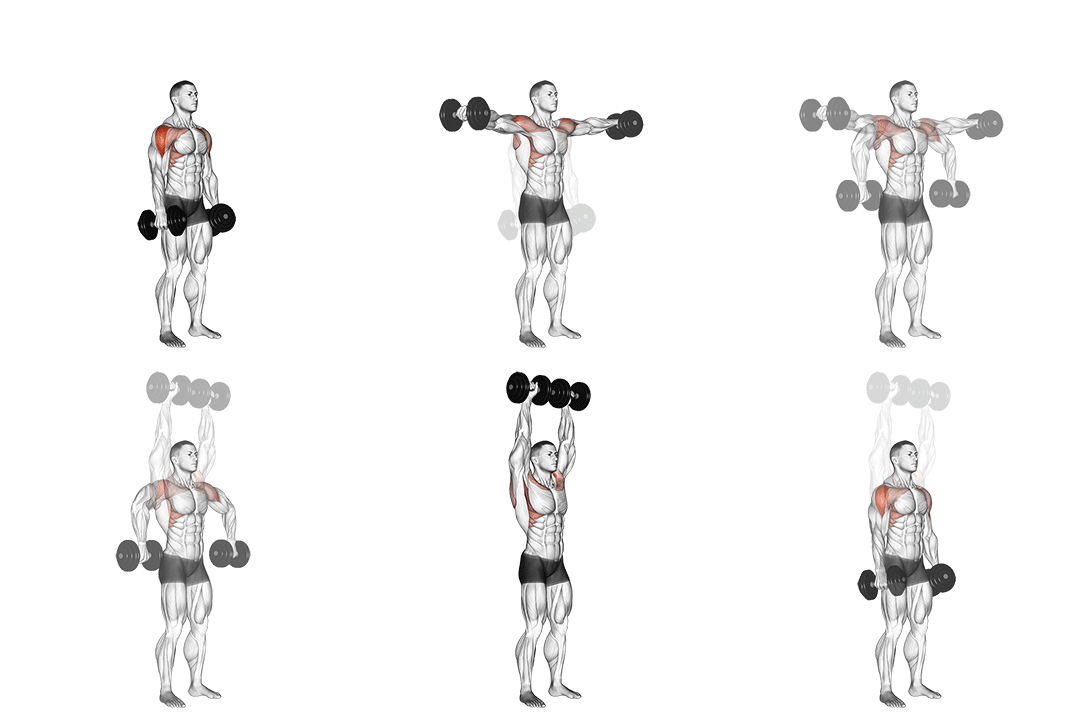
Dumbbell Cuban Press V. 2
Head-to-Head Comparison
| Attribute | Dumbbell Arnold Press | Dumbbell Cuban Press V. 2 |
|---|---|---|
| Target Muscle |
Delts
|
Delts
|
| Body Part |
Shoulders
|
Shoulders
|
| Equipment |
Dumbbell
|
Dumbbell
|
| Difficulty |
Intermediate
|
Intermediate
|
| Movement Type |
Compound
|
Compound
|
| Secondary Muscles |
2
|
2
|
Secondary Muscles Activated
Dumbbell Arnold Press
Dumbbell Cuban Press V. 2
Visual Comparison
Overview
Dumbbell Arnold Press vs Dumbbell Cuban Press V. 2 — you’ve got two compound dumbbell moves that attack the delts from different angles. You’ll learn how each exercise stresses the anterior, medial, and posterior deltoid heads, the rotator cuff and scapular stabilizers, plus technique cues, rep ranges, and programming advice. I’ll compare muscle activation, equipment needs, learning curve, injury risk, and which to pick for hypertrophy, strength, or shoulder health. Read the clear takeaways and actionable tips so you can choose the right press for your training plan.
Key Differences
- Both exercises target the Delts using Dumbbell. The main differences are in their movement patterns and muscle activation angles.
Pros & Cons
Dumbbell Arnold Press
+ Pros
- Direct anterior and medial delt targeting with easy load progression
- Allows heavier weights for strength work (3–6 rep ranges)
- Transferable press pattern for overhead strength and upper chest involvement
- Can be performed seated to reduce lower-back involvement
− Cons
- Risk of anterior shoulder irritation if elbows flare past ~45°
- Rotation can encourage poor tempo; fast reps reduce deltoid time under tension
- Less emphasis on posterior deltoid and scapular stabilizers
Dumbbell Cuban Press V. 2
+ Pros
- Improves rotator-cuff strength and scapular control through external rotation
- Activates upper back and posterior delts during the high-pull phase
- Great for shoulder health when done with light load and strict tempo
- Teaches coordinated scapulohumeral rhythm and timing
− Cons
- Technically demanding; poor form increases injury risk
- Requires lighter weights and slower tempo, limiting raw strength overload
- Takes more practice to integrate into heavy pressing sessions
When Each Exercise Wins
The Arnold Press allows heavier loading and a long muscle tension window across the anterior and medial deltoids. Use 6–12 reps, 2–4 sets, 2–3s eccentric tempo to maximize mechanical tension and hypertrophy.
Arnold Press supports progressive overload and heavier absolute loads, making it better for increasing pressing strength. Train in 3–6 rep ranges with 80–90% of 1RM and full recovery between sets.
Its movement is easier to understand and scale: start light, master the rotation and press path, and build up weight. Cuban Press V. 2 requires rotator-cuff control and is better added after you have basic shoulder stability.
Arnold Press needs only a pair of dumbbells and minimal coaching, and it scales well for hypertrophy or strength. Cuban Press V. 2 is useful at home too, but demands lighter dumbbells and careful form monitoring.
Frequently Asked Questions
Can I do both Dumbbell Arnold Press and Dumbbell Cuban Press V. 2 in the same workout?
Yes—use the Arnold Press as your heavier primary movement (3–6 or 6–12 reps) and follow with 2–3 sets of Cuban Press V. 2 at lighter loads for 12–20 reps to train rotator-cuff endurance and scapular control. Put the Cuban Press later in the session to avoid fatiguing stabilizers before heavy presses.
Which exercise is better for beginners?
The Dumbbell Arnold Press is better for most beginners because it’s easier to learn and scale. Start with light weight, practice the 90° rotation and elbow path, and add Cuban Press V. 2 once you have solid shoulder stability.
How do the muscle activation patterns differ?
The Arnold Press biases anterior and medial deltoid fibers via internal rotation and shoulder flexion, increasing triceps and upper-chest contribution during the push. The Cuban Press V. 2 uses a high-pull and external rotation that increases rotator-cuff and posterior deltoid activation before the final press shifts load back to the lateral/anterior heads.
Can Dumbbell Cuban Press V. 2 replace Dumbbell Arnold Press?
Not completely—Cuban Press V. 2 is an excellent accessory for shoulder health and posterior chain balance but doesn’t allow the same heavy, progressive overload for anterior/medial deltoid mass. Use the Cuban Press to complement the Arnold Press rather than as a direct substitute.
Expert Verdict
Choose the Dumbbell Arnold Press when your priority is shoulder mass and pressing strength: it lets you load heavier, use traditional hypertrophy rep ranges (6–12) and progress linearly. Use cues like elbows ~45° from the torso, rotate palms from facing you to facing forward across ~90° during the ascent, and control the eccentric for 2–3 seconds. Use the Dumbbell Cuban Press V. 2 as a targeted accessory for rotator-cuff resilience, scapular control, and posterior deltoid balance—perform lighter sets (12–20 reps), slow tempo, and focus on external rotation to 90°. Program both: Arnold Press for primary pressing days, Cuban Press for shoulder health and accessory work.
Also Compare
More comparisons with Dumbbell Arnold Press
More comparisons with Dumbbell Cuban Press V. 2
Compare More Exercises
Use our free comparison tool to analyze any two exercises head-to-head.
Compare Exercises