

Dumbbell Arnold Press vs Dumbbell Front Raise: Complete Comparison Guide
Dumbbell Arnold Press vs Dumbbell Front Raise — two common shoulder moves that look similar but load your delts very differently. You’ll get clear, actionable guidance on which to pick for size, strength, or rehab. I’ll cover primary and secondary muscle recruitment, biomechanics (angles, force vectors, and length-tension), technique cues you can use today, rep ranges and progression options, and practical programming tips so you can include the right one in your workouts.
Exercise Comparison
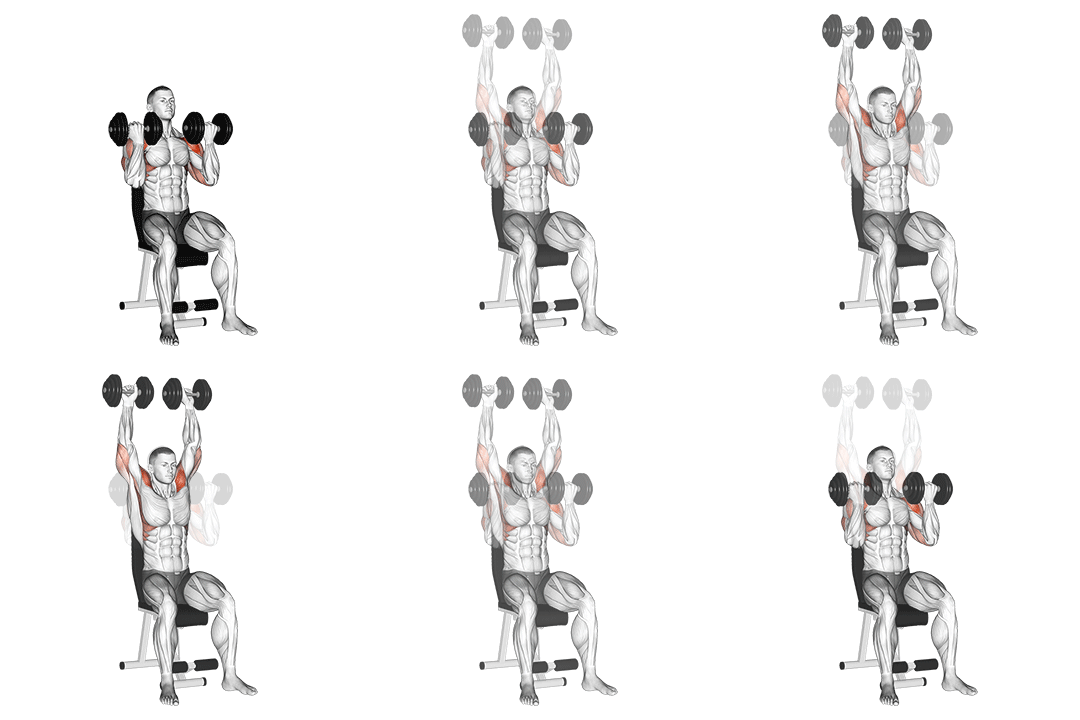
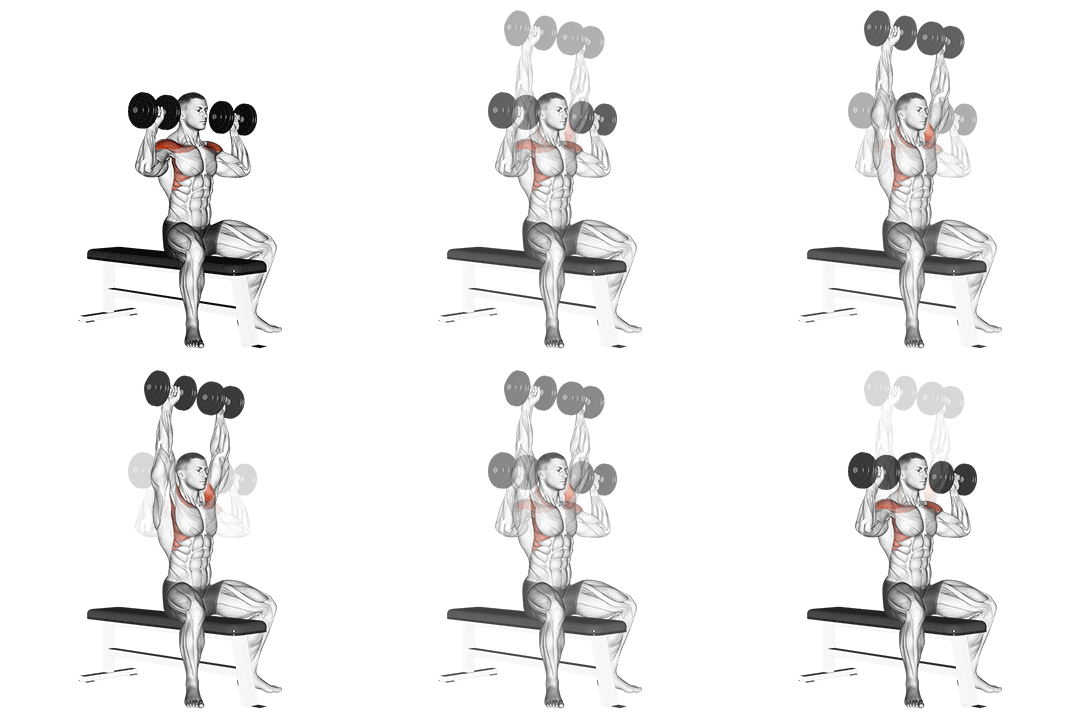
Dumbbell Arnold Press
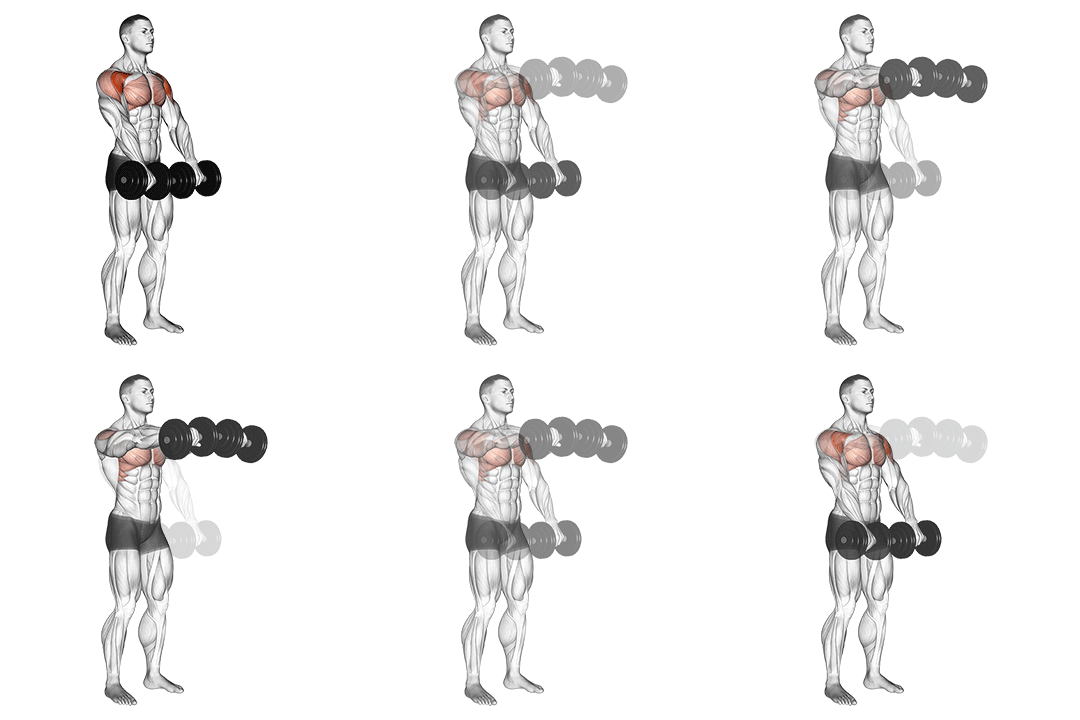
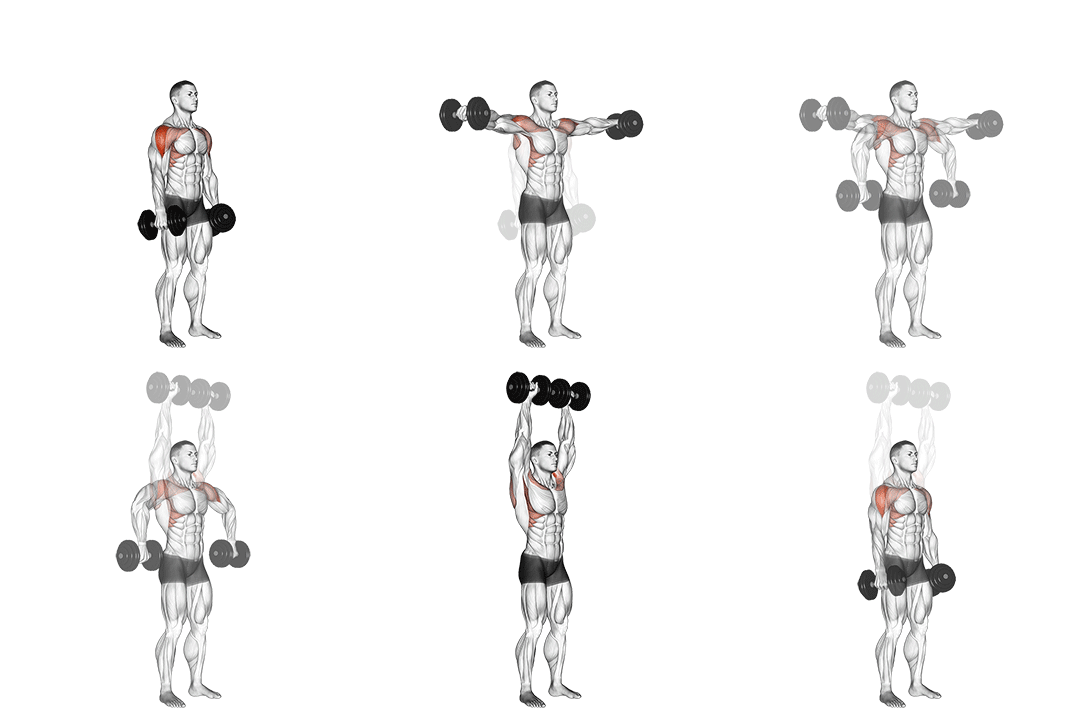
Dumbbell Front Raise
Head-to-Head Comparison
| Attribute | Dumbbell Arnold Press | Dumbbell Front Raise |
|---|---|---|
| Target Muscle |
Delts
|
Delts
|
| Body Part |
Shoulders
|
Shoulders
|
| Equipment |
Dumbbell
|
Dumbbell
|
| Difficulty |
Intermediate
|
Beginner
|
| Movement Type |
Compound
|
Isolation
|
| Secondary Muscles |
2
|
2
|
Secondary Muscles Activated
Dumbbell Arnold Press
Dumbbell Front Raise
Visual Comparison
Overview
Dumbbell Arnold Press vs Dumbbell Front Raise — two common shoulder moves that look similar but load your delts very differently. You’ll get clear, actionable guidance on which to pick for size, strength, or rehab. I’ll cover primary and secondary muscle recruitment, biomechanics (angles, force vectors, and length-tension), technique cues you can use today, rep ranges and progression options, and practical programming tips so you can include the right one in your workouts.
Key Differences
- Dumbbell Arnold Press is a compound movement, while Dumbbell Front Raise is an isolation exercise.
- Difficulty levels differ: Dumbbell Arnold Press is intermediate, while Dumbbell Front Raise is beginner.
- Both exercises target the Delts using Dumbbell. The main differences are in their movement patterns and muscle activation angles.
Pros & Cons
Dumbbell Arnold Press
+ Pros
- Compound movement that trains delts, triceps, and upper chest together
- Allows heavier loading for strength and progressive overload (6–12 rep sweet spot)
- Built-in rotational component improves shoulder external rotation control
- Transfers well to overhead pressing strength and functional pushing
− Cons
- Requires good overhead mobility and scapular control
- Higher technical demand; poor form can stress the rotator cuff
- Harder to isolate the anterior deltoid for targeted hypertrophy
Dumbbell Front Raise
+ Pros
- Simple single-joint isolation with high anterior deltoid focus
- Minimal equipment and low technical barrier for beginners
- Easy to scale volume with reps, tempo, or single-arm progressions
- Lower systemic fatigue—useful as an accessory without wrecking the CNS
− Cons
- Limited absolute load potential; plateaus sooner for strength
- Can irritate the anterior shoulder if performed above 90° or with heavy momentum
- Less carryover to compound pressing and overall upper-body strength
When Each Exercise Wins
The Arnold Press loads multiple deltoid heads and allows heavier, progressive loading (6–12 reps) which stimulates greater overall muscle growth. Use it as a primary shoulder movement, then add Front Raises for anterior head finisher work.
As a compound press it accepts heavier loads and trains the triceps and stabilizers needed for overhead strength. Progress with sets in the 4–8 rep range, strict tempo, and incremental weight increases.
Front Raises are easier to teach and control, require less overhead mobility, and let you safely accumulate volume (8–15+ reps) while learning shoulder isolation and scapular control.
Front Raises need only light dumbbells or bands and little space; you can do effective high-rep work or single-arm sets at home. Arnold Presses work too if overhead space and heavier dumbbells are available.
Frequently Asked Questions
Can I do both Dumbbell Arnold Press and Dumbbell Front Raise in the same workout?
Yes. Pair the Arnold Press as your primary compound (3–5 sets of 6–12) and follow with Front Raises for 2–4 sets of 8–15 as an isolation finisher. That sequence uses the press for overload and the raise to increase time under tension for the anterior deltoid.
Which exercise is better for beginners?
The Dumbbell Front Raise is better for most beginners because it’s a single-joint motion with minimal mobility demands. Start with light weight and focus on controlled eccentrics before progressing to compound presses like the Arnold Press.
How do the muscle activation patterns differ?
The Arnold Press shifts activation across anterior and lateral deltoids and increases triceps engagement near lockout due to changing force vectors and rotation. The Front Raise maintains a consistent anterior-deltoid moment arm from 0°–90°, producing steady, high localized activation of the front head.
Can Dumbbell Front Raise replace Dumbbell Arnold Press?
Not if your goal is overhead strength or full-shoulder development. Front Raises can replace the Arnold Press as an isolation option for anterior deltoid emphasis or when overhead loading isn’t possible, but they don’t recruit triceps or allow the same progressive overload for pressing strength.
Expert Verdict
Use the Arnold Press when your goal is full-shoulder development and overhead strength. Its compound mechanics let you load the delts, triceps, and upper chest across a longer ROM, making it ideal for 6–12 rep strength and hypertrophy cycles. Choose the Dumbbell Front Raise when you need targeted anterior deltoid work, lower technical demand, or higher rep accessory volume (8–20 reps). If you want both muscle growth and balanced development, program the Arnold Press as a primary movement and add Front Raises as finishers or corrective work to address anterior-head lag or posture-related imbalances.
Also Compare
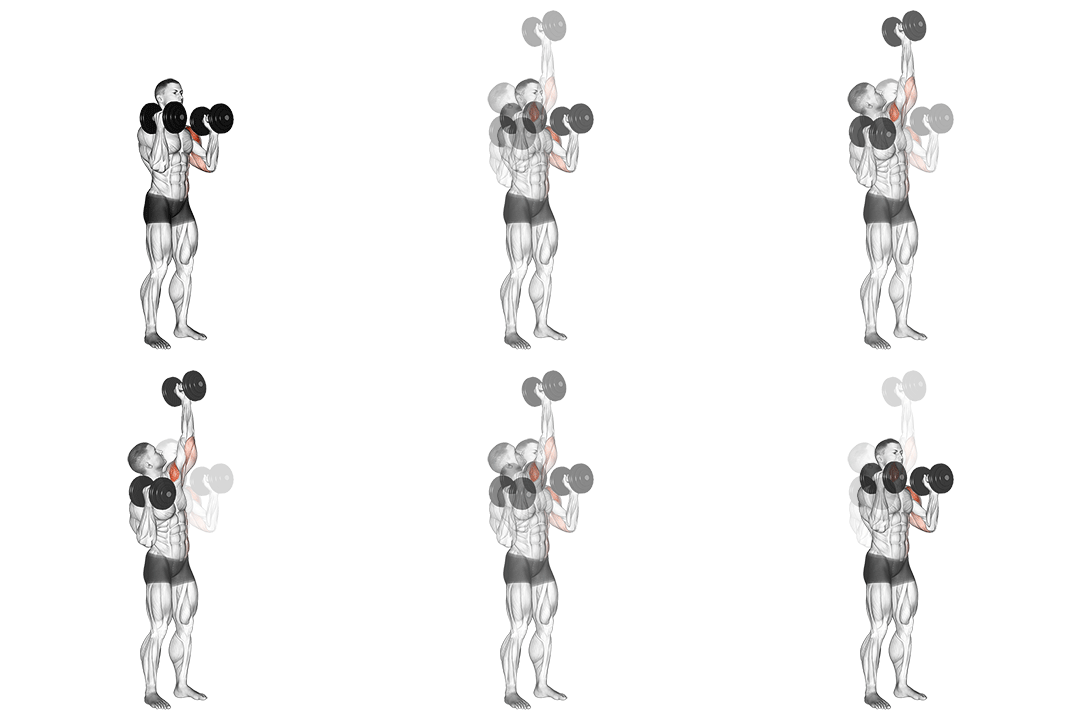
More comparisons with Dumbbell Arnold Press
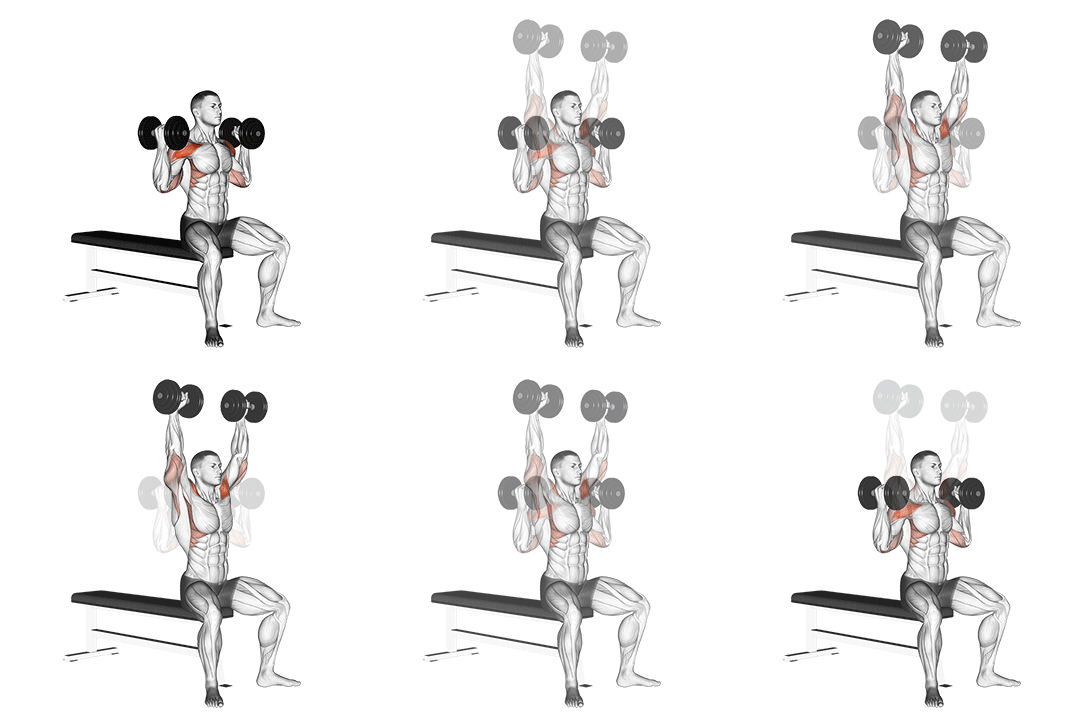
More comparisons with Dumbbell Front Raise
Compare More Exercises
Use our free comparison tool to analyze any two exercises head-to-head.
Compare Exercises