

Dumbbell Arnold Press vs Reverse Flyes: Complete Comparison Guide
Dumbbell Arnold Press vs Reverse Flyes — you likely want clearer shoulder development and you're weighing compound power against isolation control. I'll walk you through which exercise stresses which part of the delts, how the force vectors and joint angles change activation, equipment and setup differences, rep ranges and progression strategies, and clean technique cues so you can use each move safely. Read on to learn when to prioritize the rotational, multi-joint Arnold press and when to add targeted rear-delt reverse flyes for balanced shoulder development.
Exercise Comparison
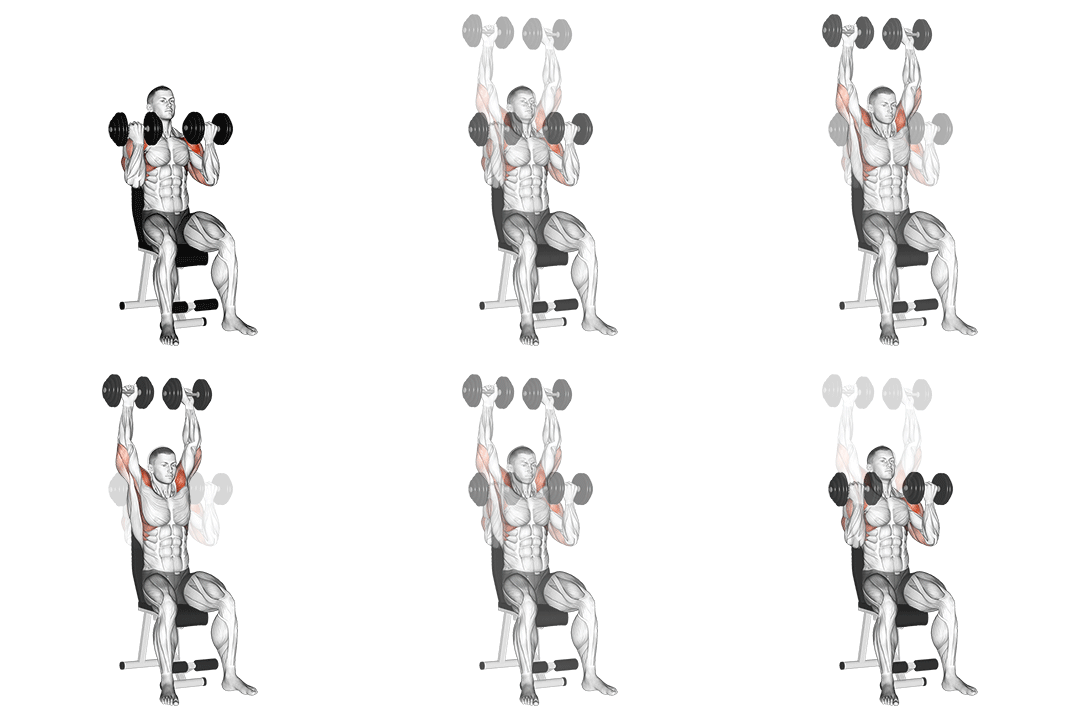
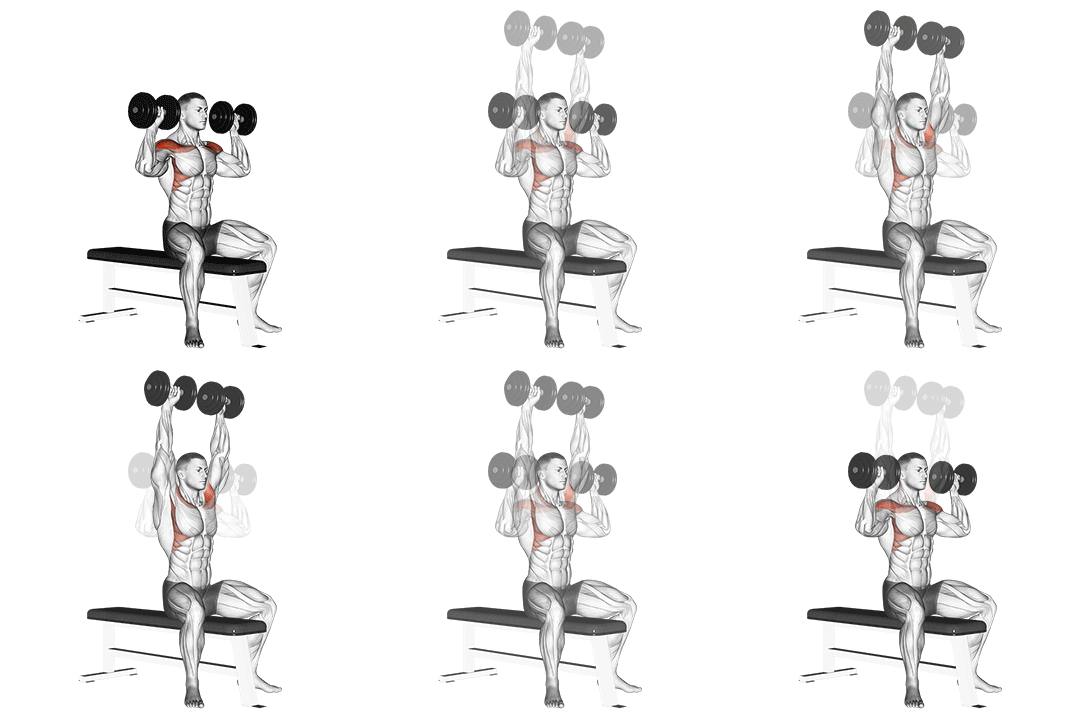
Dumbbell Arnold Press
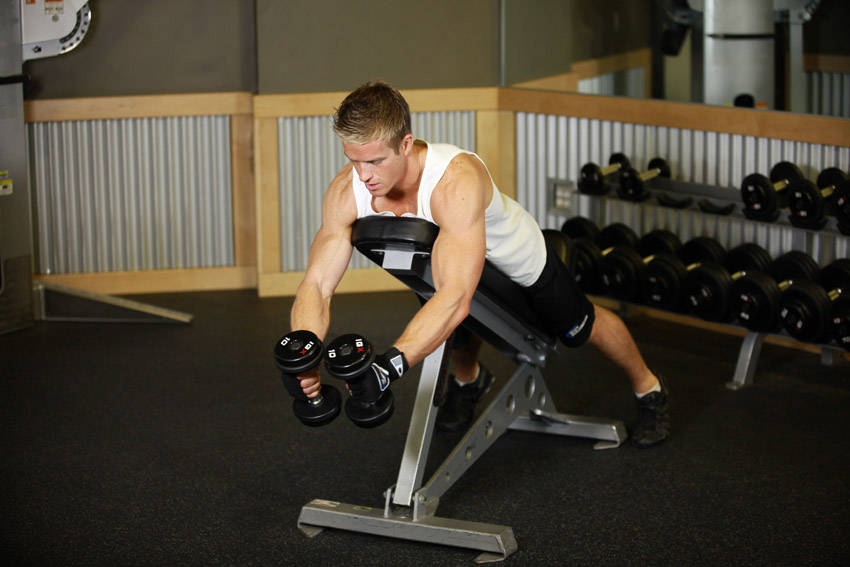
Reverse Flyes
Head-to-Head Comparison
| Attribute | Dumbbell Arnold Press | Reverse Flyes |
|---|---|---|
| Target Muscle |
Delts
|
Delts
|
| Body Part |
Shoulders
|
Shoulders
|
| Equipment |
Dumbbell
|
Dumbbell
|
| Difficulty |
Intermediate
|
Beginner
|
| Movement Type |
Compound
|
Isolation
|
| Secondary Muscles |
2
|
0
|
Secondary Muscles Activated
Dumbbell Arnold Press
Reverse Flyes
Visual Comparison
Overview
Dumbbell Arnold Press vs Reverse Flyes — you likely want clearer shoulder development and you're weighing compound power against isolation control. I'll walk you through which exercise stresses which part of the delts, how the force vectors and joint angles change activation, equipment and setup differences, rep ranges and progression strategies, and clean technique cues so you can use each move safely. Read on to learn when to prioritize the rotational, multi-joint Arnold press and when to add targeted rear-delt reverse flyes for balanced shoulder development.
Key Differences
- Dumbbell Arnold Press is a compound movement, while Reverse Flyes is an isolation exercise.
- Difficulty levels differ: Dumbbell Arnold Press is intermediate, while Reverse Flyes is beginner.
- Both exercises target the Delts using Dumbbell. The main differences are in their movement patterns and muscle activation angles.
Pros & Cons
Dumbbell Arnold Press
+ Pros
- Simultaneously trains anterior and lateral deltoids and builds overall shoulder mass
- Allows heavy progressive overload for strength (6–12 rep sweet spot)
- Engages triceps and upper chest for efficient compound work
- Can be done standing or seated with only dumbbells
− Cons
- Higher technical demand due to rotational movement and scapulohumeral coordination
- Greater shoulder impingement risk with poor external rotation control
- Less direct posterior delt stimulation — needs accessory work for balance
Reverse Flyes
+ Pros
- Directly isolates the posterior deltoid for improved shoulder balance
- Low contribution from triceps — excellent for targeted hypertrophy
- Simple movement pattern suitable for beginners with proper scapular cueing
- Can be modified with incline bench to remove lower-back stress
− Cons
- Limited progressive overload via heavy weights due to small muscle size
- Requires strict tempo to avoid momentum and maximize tension
- May need a bench or strict hinge to avoid lower-back strain
When Each Exercise Wins
The Arnold press loads multiple deltoid heads and allows heavier weights and progressive overload (6–12 reps, 3–5 sets), producing greater overall shoulder muscle growth. Use reverse flyes as a posterior-delt finisher (10–20 reps) to round out development.
As a compound, multi-joint lift, the Arnold press lets you increase absolute load and develop pressing strength and triceps support. Train with 4–6 reps for strength cycles and focus on strict scapular control.
Reverse flyes are easier to learn as an isolated horizontal-abduction movement and teach scapular retraction and posterior control. Start with light weight and slow tempo (2–3 second eccentric) before adding other shoulder work.
You only need a pair of dumbbells and space to stand; the Arnold press builds size and strength efficiently without a bench. Keep loads conservative and prioritize rotation control to protect the joint.
Frequently Asked Questions
Can I do both Dumbbell Arnold Press and Reverse Flyes in the same workout?
Yes. Structure the Arnold press as your primary compound (3–5 sets at 6–12 reps) then follow with reverse flyes for 3–4 sets of 10–20 reps as an accessory. This orders heavier multi-joint loading first, then targets posterior delts under high time under tension.
Which exercise is better for beginners?
Reverse flyes are easier to learn because they isolate horizontal abduction and teach scapular retraction. Begin light to establish control, then add compound presses like the Arnold press once your shoulder stability and motor control improve.
How do the muscle activation patterns differ?
Arnold presses use a vertical force vector with combined flexion and rotation, stressing anterior and lateral deltoids and recruiting triceps. Reverse flyes use horizontal abduction and scapular retraction, lengthening then contracting the posterior deltoid and engaging mid-traps and rhomboids for stabilization.
Can Reverse Flyes replace Dumbbell Arnold Press?
No, not fully. Reverse flyes isolate the posterior deltoid and won’t provide the same multi-joint overload, triceps work, or overall shoulder mass that the Arnold press provides. Use reverse flyes as a complement when your goal is balanced shoulder development.
Expert Verdict
Use the Dumbbell Arnold Press when your priority is overall shoulder size and pressing strength. Its vertical force vector, rotational component, and triceps involvement let you overload the delts with heavier weights (6–12 reps for hypertrophy, 4–6 for strength phases). Use solid cues: maintain a neutral spine, rotate palms from supine to pronation as you press, and avoid excessive forward head or scapular shrug. Use Reverse Flyes when you need targeted posterior delt work, scapular retraction practice, or to correct anterior-dominant shoulders — perform them bent-over or on a 30° incline with elbows soft (15–30°) and a 2–3 second eccentric. Ideally pair them: prioritize Arnold presses in the main press sets and finish with reverse flyes to balance development and reduce injury risk.
Also Compare
More comparisons with Dumbbell Arnold Press
Compare More Exercises
Use our free comparison tool to analyze any two exercises head-to-head.
Compare Exercises