

Dumbbell Around Pullover vs Dumbbell Decline Hammer Press: Complete Comparison Guide
Dumbbell Around Pullover vs Dumbbell Decline Hammer Press — two intermediate compound chest moves that look similar on paper but load your muscles very differently. You’ll get clear, actionable guidance on muscle activation, equipment needs, technique cues, rep ranges (6–12 for strength/hypertrophy, 12–20 for metabolic work), and when to pick each exercise. I’ll show how joint angles, force vectors, and length–tension affect the pectorals, lats, triceps, and shoulders so you can pick the right lift for your progress.
Exercise Comparison
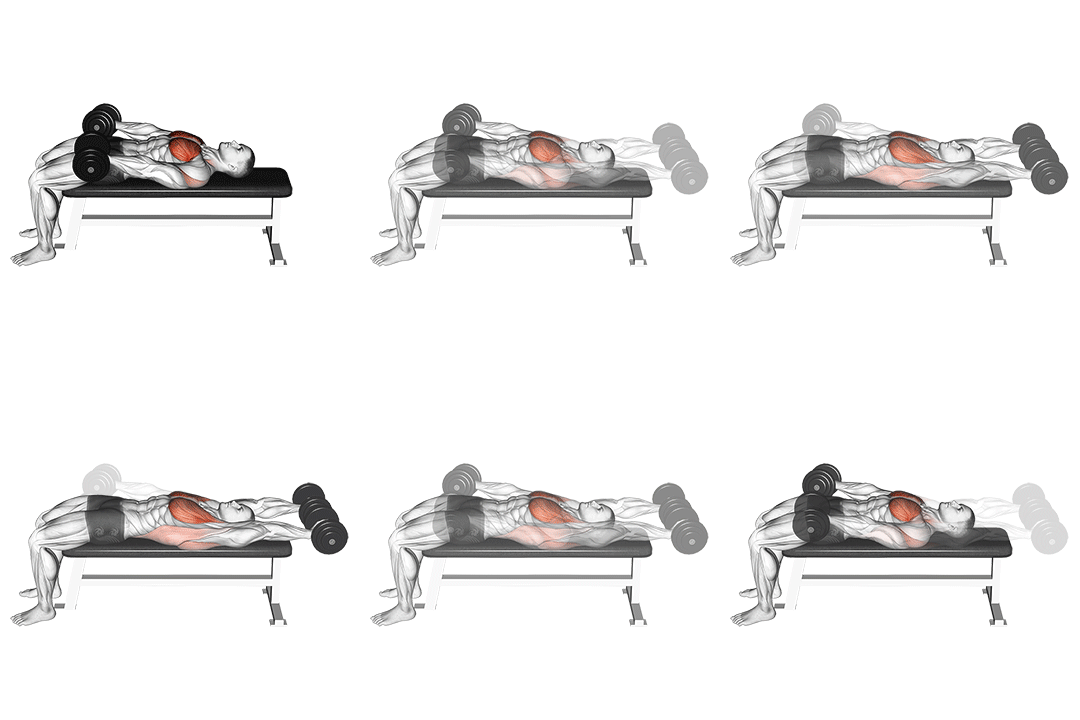
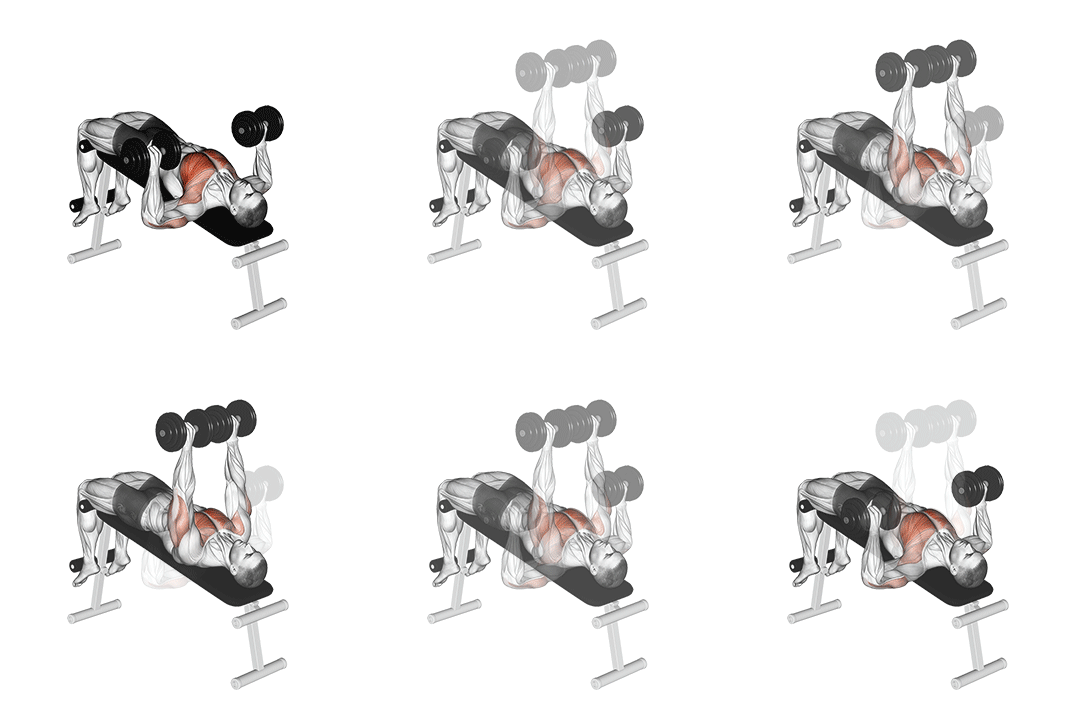
Dumbbell Around Pullover
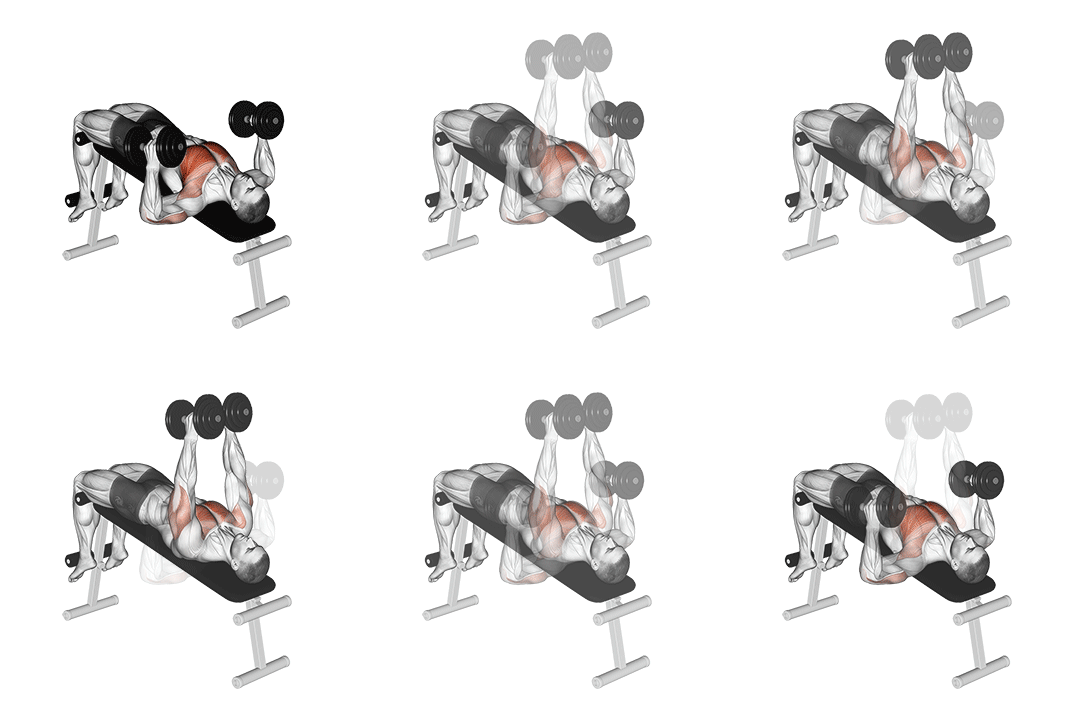
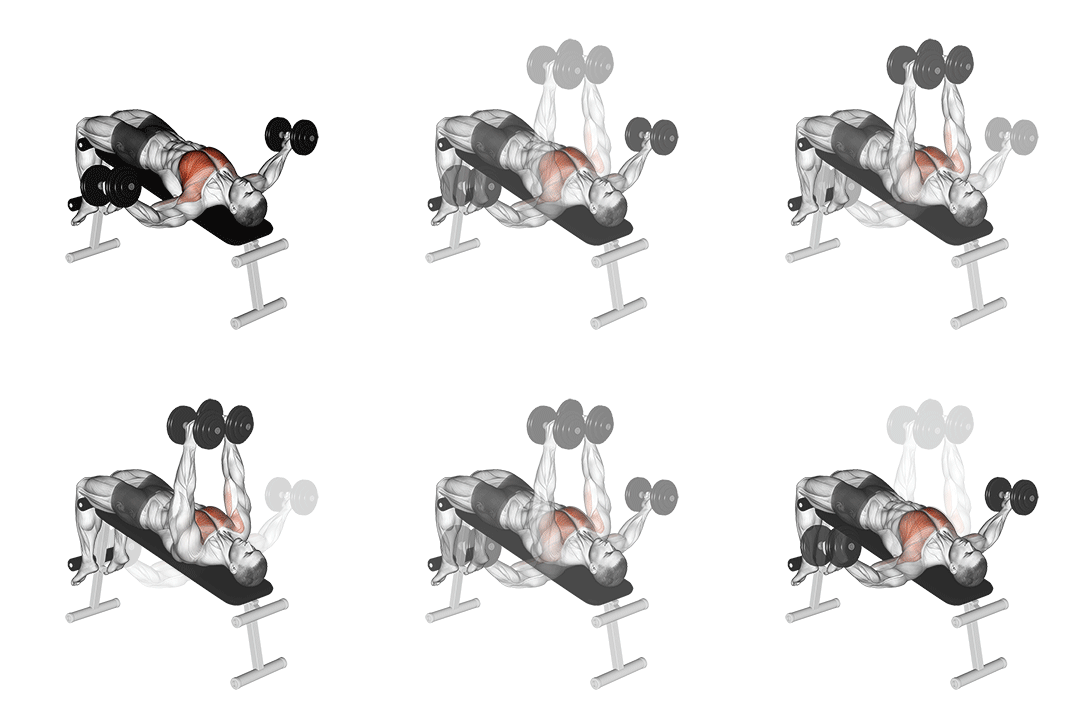
Dumbbell Decline Hammer Press
Head-to-Head Comparison
| Attribute | Dumbbell Around Pullover | Dumbbell Decline Hammer Press |
|---|---|---|
| Target Muscle |
Pectorals
|
Pectorals
|
| Body Part |
Chest
|
Chest
|
| Equipment |
Dumbbell
|
Dumbbell
|
| Difficulty |
Intermediate
|
Intermediate
|
| Movement Type |
Compound
|
Compound
|
| Secondary Muscles |
2
|
2
|
Secondary Muscles Activated
Dumbbell Around Pullover
Dumbbell Decline Hammer Press
Visual Comparison
Overview
Dumbbell Around Pullover vs Dumbbell Decline Hammer Press — two intermediate compound chest moves that look similar on paper but load your muscles very differently. You’ll get clear, actionable guidance on muscle activation, equipment needs, technique cues, rep ranges (6–12 for strength/hypertrophy, 12–20 for metabolic work), and when to pick each exercise. I’ll show how joint angles, force vectors, and length–tension affect the pectorals, lats, triceps, and shoulders so you can pick the right lift for your progress.
Key Differences
- Both exercises target the Pectorals using Dumbbell. The main differences are in their movement patterns and muscle activation angles.
Pros & Cons
Dumbbell Around Pullover
+ Pros
- Stretches pectorals and lats, improving length–tension and chest development
- Requires only one dumbbell and a flat bench or ball
- Strong carryover to thoracic mobility and upper-body coordination
- Good single-arm variations to fix unilateral imbalances
− Cons
- Higher shoulder strain risk at end-range with poor mobility
- Harder to progressively overload compared to bilateral presses
- Technique-sensitive: timing and scapular control are crucial
Dumbbell Decline Hammer Press
+ Pros
- Direct lower-chest emphasis via 15–30° decline angle
- Cleaner progressive overload with two dumbbells
- Neutral (hammer) grip reduces shoulder external rotation stress
- Stronger triceps involvement helps overall pressing strength
− Cons
- Requires a decline bench or specific setup
- Less lat involvement and less ROM stretch for pecs
- Can drive excessive anterior shoulder loading if form breaks
When Each Exercise Wins
The decline hammer press produces higher mechanical tension on the lower pecs and allows heavier bilateral loading and progressive overload (6–12 reps). That consistent loading pattern is more effective for targeted hypertrophy of the pectorals.
Stronger force vectors and the ability to incrementally increase bilateral load make the decline hammer press better for building pressing strength. The neutral grip also offloads the shoulder, letting you move heavier weights safely.
Beginners learn pressing mechanics faster; the decline hammer press uses a familiar elbow-extension pattern and is easier to coach. It requires less shoulder mobility and has a simpler path for increasing weight.
Pullover needs only one dumbbell and a flat surface or stability ball, so you can do it with minimal gear. Its single-dumbbell options and mobility benefits make it practical for limited-equipment settings.
Frequently Asked Questions
Can I do both Dumbbell Around Pullover and Dumbbell Decline Hammer Press in the same workout?
Yes. Do the decline hammer press as your primary heavy press (sets of 4–6) and add pullover as an accessory (2–4 sets of 8–15) to increase pec stretch and lat engagement. Sequence presses first to prioritize strength, then use pullovers for controlled ROM and metabolic finishers.
Which exercise is better for beginners?
Dumbbell Decline Hammer Press is better for beginners because the press pattern is easier to learn and scale. It places less demand on shoulder mobility and lets beginners add weight in predictable increments.
How do the muscle activation patterns differ?
Pullover emphasizes eccentric stretch of the pecs and lats during shoulder extension and shifts torque across the shoulder joint, increasing lat co-activation. Decline hammer press centers force on horizontal adduction and elbow extension, raising triceps contribution and lower-pec tension.
Can Dumbbell Decline Hammer Press replace Dumbbell Around Pullover?
Yes for direct chest overload and strength work, but not entirely. Decline hammer press replaces heavy horizontal pressing needs, while pullovers add ROM, lat carryover, and stretch-induced hypertrophy—use both across a training cycle for complete development.
Expert Verdict
Use the Dumbbell Decline Hammer Press when you want direct lower-chest development, clear progressive overload, and strength across 6–12 rep ranges. Keep the decline angle around 15–30° and use a neutral grip to protect the shoulder. Choose the Dumbbell Around Pullover when you want to improve chest and lat length–tension, add ROM-focused work, or have limited equipment. Control the arc, avoid end-range shoulder collapse, and use 8–15 reps for hypertrophy with timed eccentrics. For balanced programs, prioritize the decline press for heavy work and add pullovers as accessory volume to enhance stretch and upper-body mobility.
Also Compare
More comparisons with Dumbbell Around Pullover
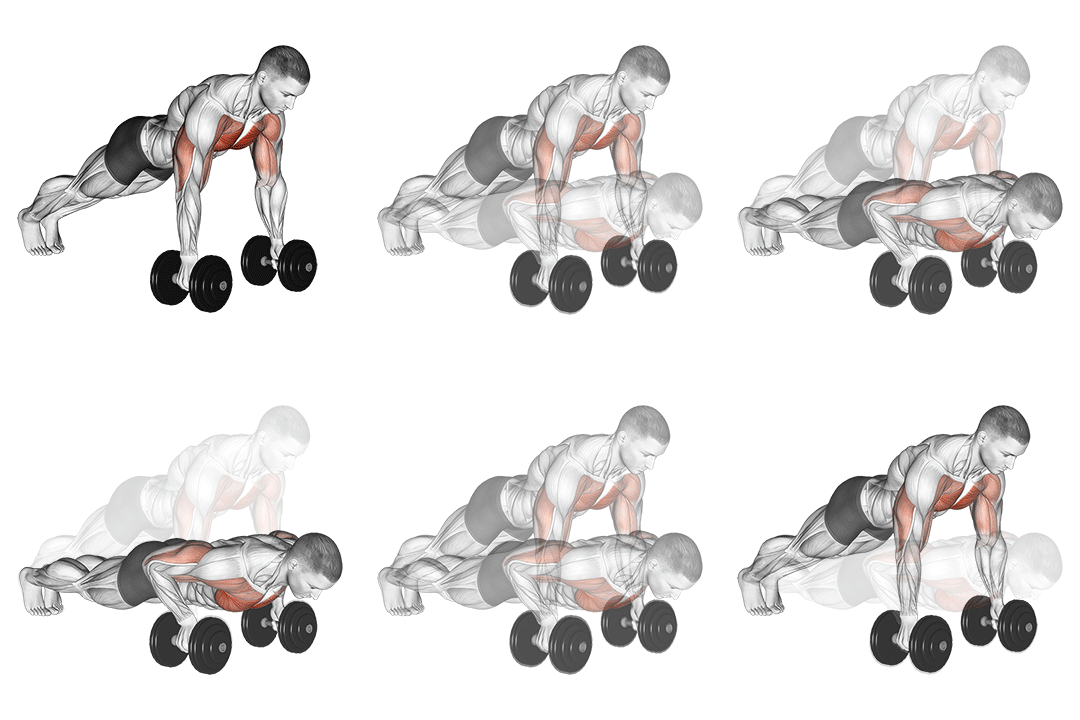
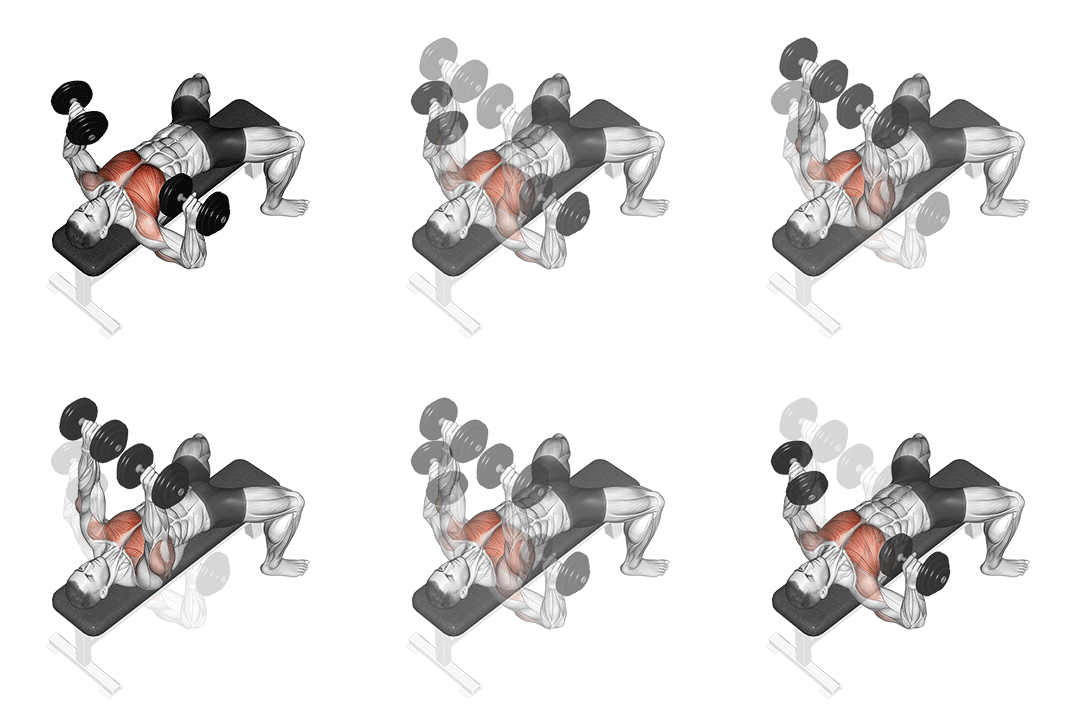
More comparisons with Dumbbell Decline Hammer Press
Compare More Exercises
Use our free comparison tool to analyze any two exercises head-to-head.
Compare Exercises