

Dumbbell Bench Press vs Dumbbell Decline Hammer Press: Complete Comparison Guide
Dumbbell Bench Press vs Dumbbell Decline Hammer Press — if you want a stronger, fuller chest you need to know how these two presses differ. You’ll get clear comparisons of muscle emphasis, movement mechanics, equipment needs, and progression strategies. I’ll cover technique cues (elbow path, grip, decline angle), biomechanics (force vectors, length-tension), rep ranges for hypertrophy and strength, and which exercise to pick for specific goals like upper-pec growth or lower-pec detailing. Read on and you’ll have a practical plan to use either press effectively in your next cycle.
Exercise Comparison
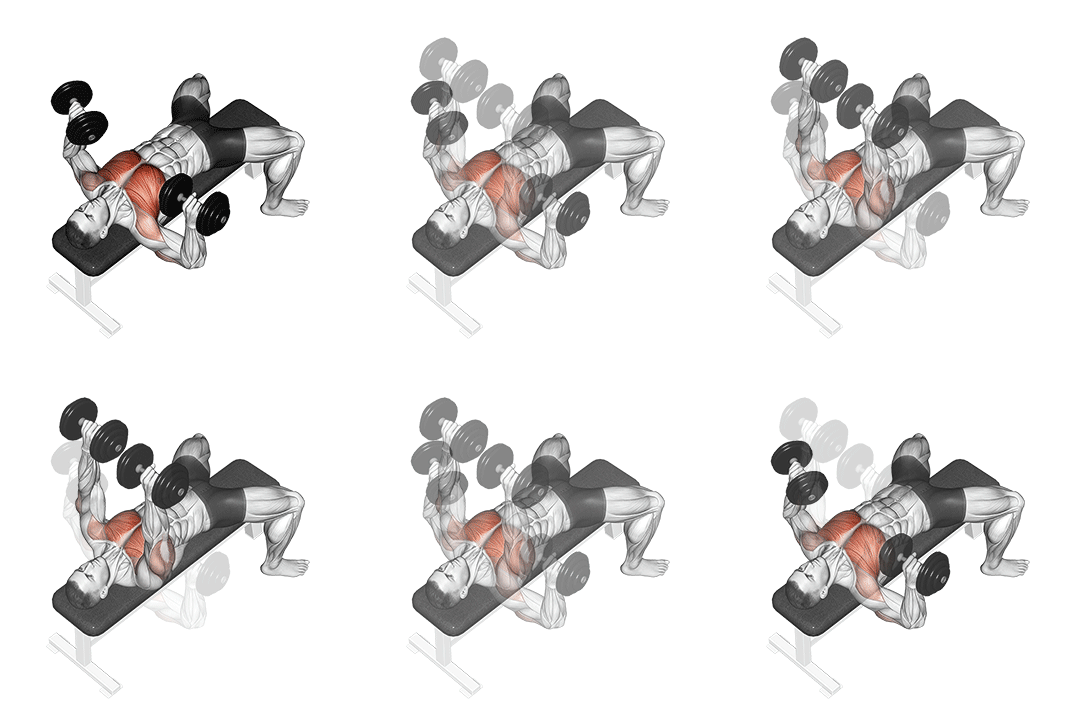
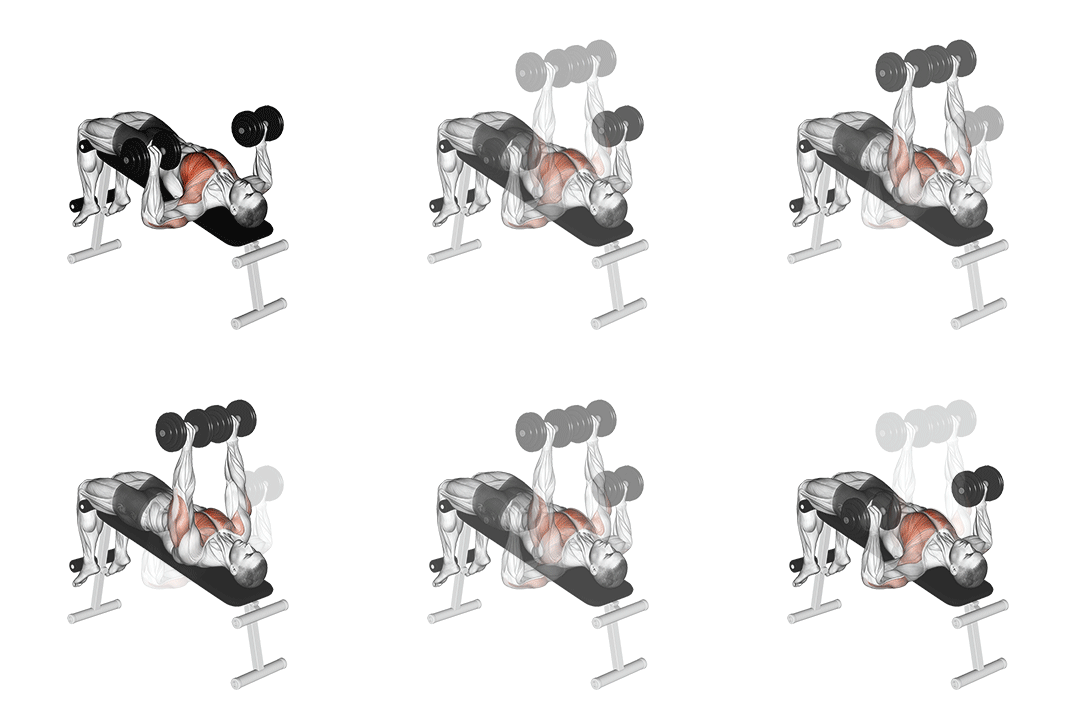
Dumbbell Bench Press
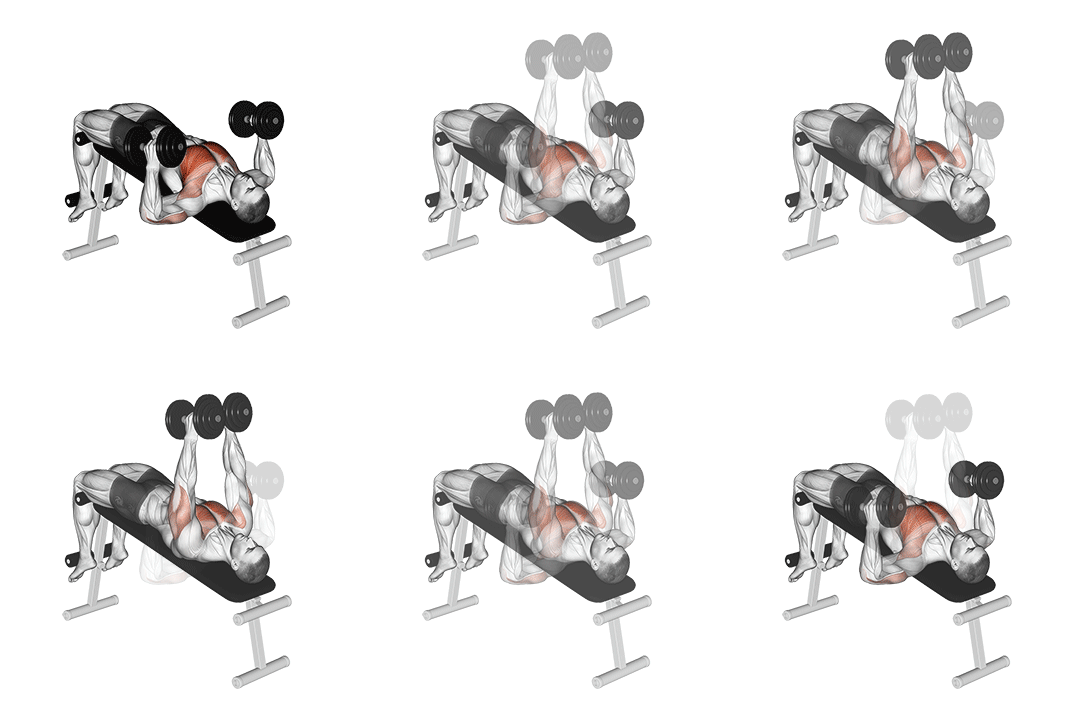
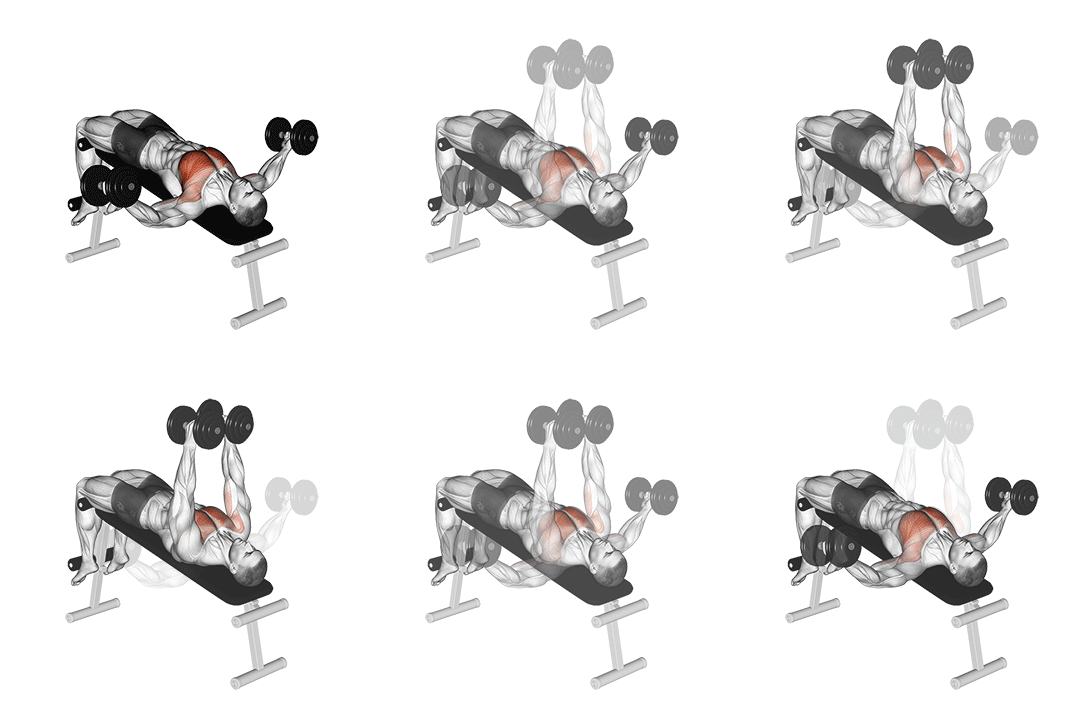
Dumbbell Decline Hammer Press
Head-to-Head Comparison
| Attribute | Dumbbell Bench Press | Dumbbell Decline Hammer Press |
|---|---|---|
| Target Muscle |
Pectorals
|
Pectorals
|
| Body Part |
Chest
|
Chest
|
| Equipment |
Dumbbell
|
Dumbbell
|
| Difficulty |
Intermediate
|
Intermediate
|
| Movement Type |
Compound
|
Compound
|
| Secondary Muscles |
2
|
2
|
Secondary Muscles Activated
Dumbbell Bench Press
Dumbbell Decline Hammer Press
Visual Comparison
Overview
Dumbbell Bench Press vs Dumbbell Decline Hammer Press — if you want a stronger, fuller chest you need to know how these two presses differ. You’ll get clear comparisons of muscle emphasis, movement mechanics, equipment needs, and progression strategies. I’ll cover technique cues (elbow path, grip, decline angle), biomechanics (force vectors, length-tension), rep ranges for hypertrophy and strength, and which exercise to pick for specific goals like upper-pec growth or lower-pec detailing. Read on and you’ll have a practical plan to use either press effectively in your next cycle.
Key Differences
- Both exercises target the Pectorals using Dumbbell. The main differences are in their movement patterns and muscle activation angles.
Pros & Cons
Dumbbell Bench Press
+ Pros
- Even mid-pec stimulus that supports overall chest development
- Easier setup and safer unracking for most lifters
- Versatile across rep ranges (4–6 strength, 8–15 hypertrophy)
- Better carryover to other horizontal pressing movements
− Cons
- Can load the anterior deltoid more if elbows flare
- Requires strict scapular control to avoid shoulder strain
- Less specific lower-pec emphasis compared to decline press
Dumbbell Decline Hammer Press
+ Pros
- Biases lower sternal pec fibers via a downward force vector
- Neutral (hammer) grip can reduce shoulder strain
- Can allow slightly heavier lockout loads due to mechanical advantage
- Great for adding variety and shaping the lower chest
− Cons
- Requires a decline bench or secure setup that not all gyms/home gyms have
- Harder to get into and out of safely without a spotter or foot anchors
- Shorter pec length at bottom may reduce stretch-mediated hypertrophy compared to flat press
When Each Exercise Wins
The flat dumbbell bench produces a longer eccentric stretch and wider range of motion, increasing time under tension across mid-pec fibers. Use 8–12 reps, 2–4 sets, and controlled 2–4 second eccentrics to maximize mechanical tension and hypertrophy.
For pure horizontal pressing strength the flat press offers better transfer and programming consistency. Work in heavier ranges (4–6 reps) with progressive overload; decline can supplement but flat pressing builds a stronger base.
The flat press is easier to learn, safer to unrack, and requires less specialized equipment. Beginners can establish scapular control and pressing mechanics before adding decline variations.
Most home setups include a flat or adjustable bench and dumbbells, while decline benches are uncommon. The flat press gives the most bang for your equipment and space.
Frequently Asked Questions
Can I do both Dumbbell Bench Press and Dumbbell Decline Hammer Press in the same workout?
Yes. Start with the flat dumbbell bench as your main heavy movement (4–6 or 6–10 reps), then use decline hammer presses as a finishing movement for 8–15 reps to bias the lower pecs and increase total volume.
Which exercise is better for beginners?
The Dumbbell Bench Press is better for beginners because it’s simpler to set up, easier to learn safe unracking and scapular positioning, and gives more balanced chest development before adding decline variations.
How do the muscle activation patterns differ?
Flat dumbbell benching produces peak activation later in the concentric and through a larger length-tension excursion, while decline hammer pressing shifts peak activation toward the lower sternocostal fibers and earlier in the concentric due to a downward force vector and shortened start length.
Can Dumbbell Decline Hammer Press replace Dumbbell Bench Press?
It can replace the flat press for lower-pec emphasis or to reduce shoulder torque, but it shouldn’t be your only horizontal press. Keep the flat bench as the foundation for overall chest strength and use decline hammer presses as a complementary variation.
Expert Verdict
Use the flat Dumbbell Bench Press as your primary horizontal pressing exercise: it’s accessible, easier to program across rep ranges, and produces a long eccentric stretch beneficial for hypertrophy and strength. Add the Dumbbell Decline Hammer Press as a targeted accessory when you want extra lower-pec emphasis, less anterior shoulder torque, or variation in the pressing plane; set the bench to roughly -15° to -30° and use a neutral grip for safer shoulders. For most lifters prioritize the flat press for foundational progress and insert decline hammer presses 1–2 times weekly for specialization and shape work.
Also Compare
More comparisons with Dumbbell Bench Press
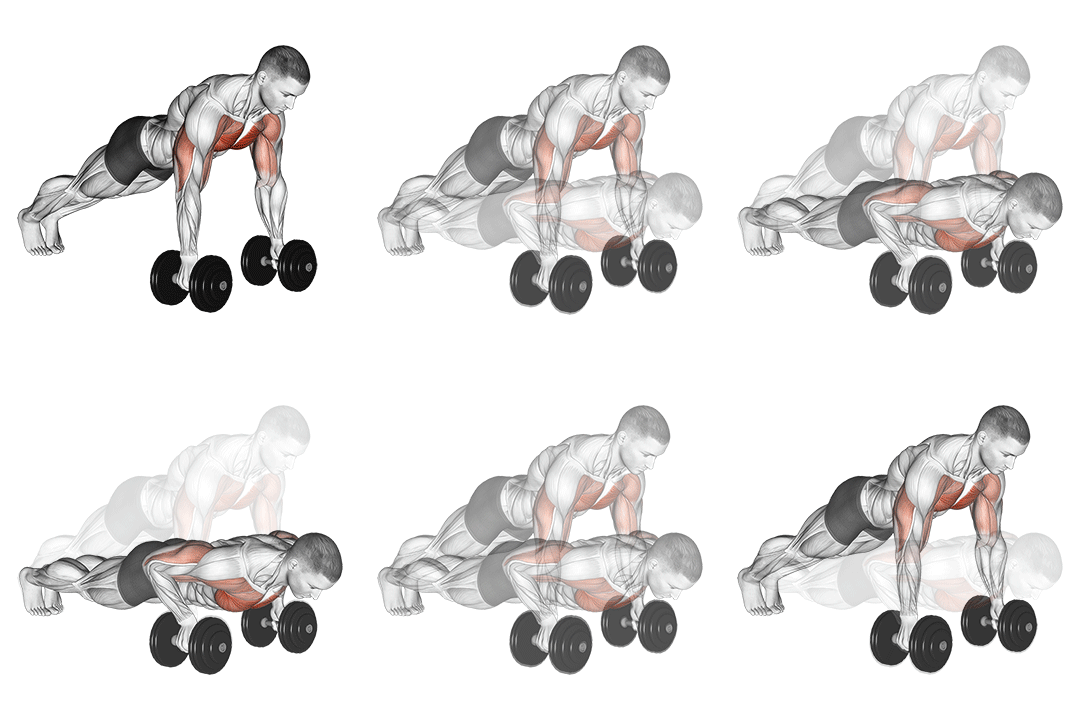
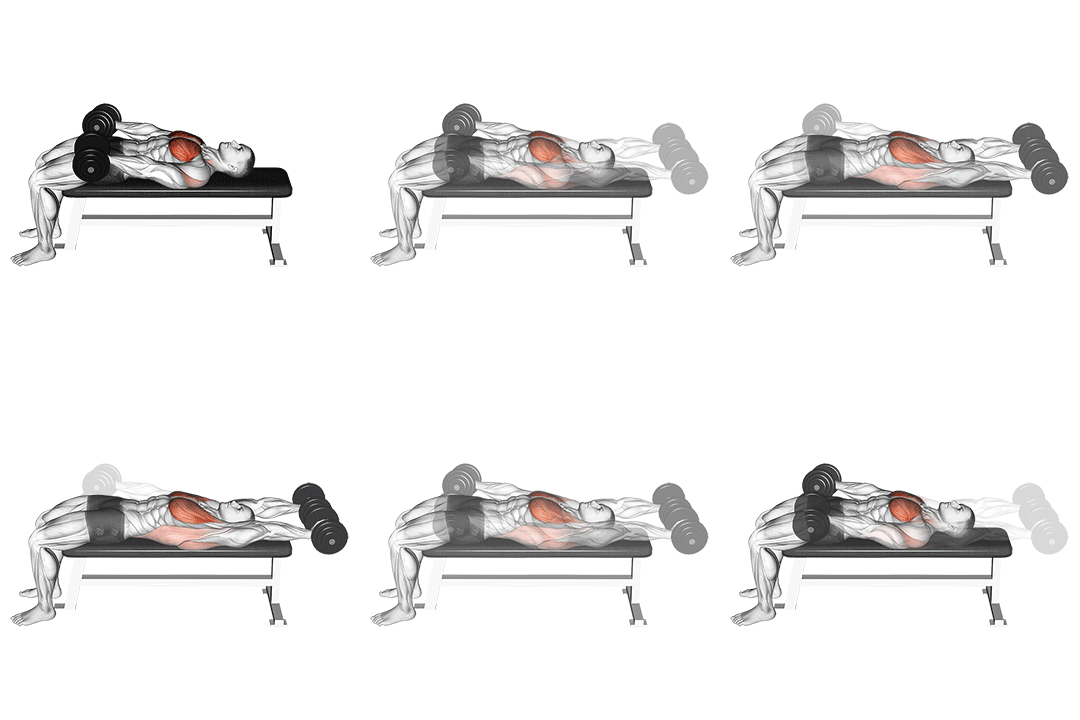
More comparisons with Dumbbell Decline Hammer Press
Compare More Exercises
Use our free comparison tool to analyze any two exercises head-to-head.
Compare Exercises