

Dumbbell Close-grip Press vs Dumbbell Decline Triceps Extension: Complete Comparison Guide
Dumbbell Close-grip Press vs Dumbbell Decline Triceps Extension — you want stronger, thicker triceps and need to pick the right move. This comparison walks you through how each exercise loads the triceps, how they differ in muscle recruitment and biomechanics, what equipment and angles they require, and clear recommendations for hypertrophy, strength, beginners, and home workouts. Read on for specific cues, rep ranges (6–12 for strength-to-hypertrophy, 8–15 for isolation work), and when to program each exercise into your routine.
Exercise Comparison
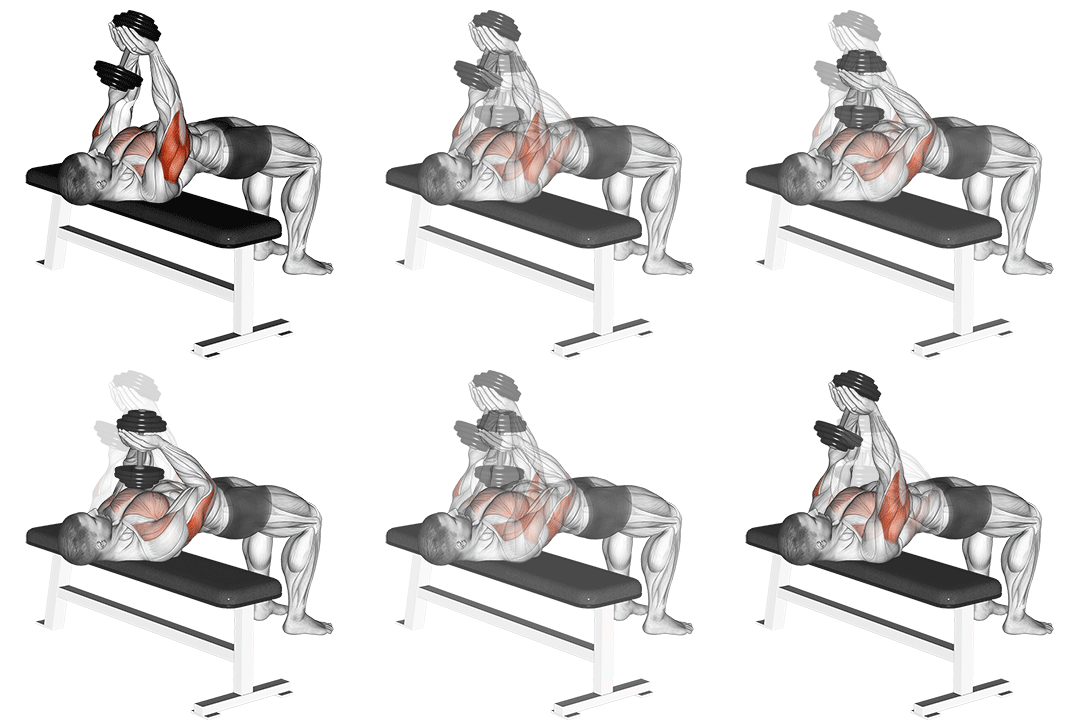
Dumbbell Close-grip Press
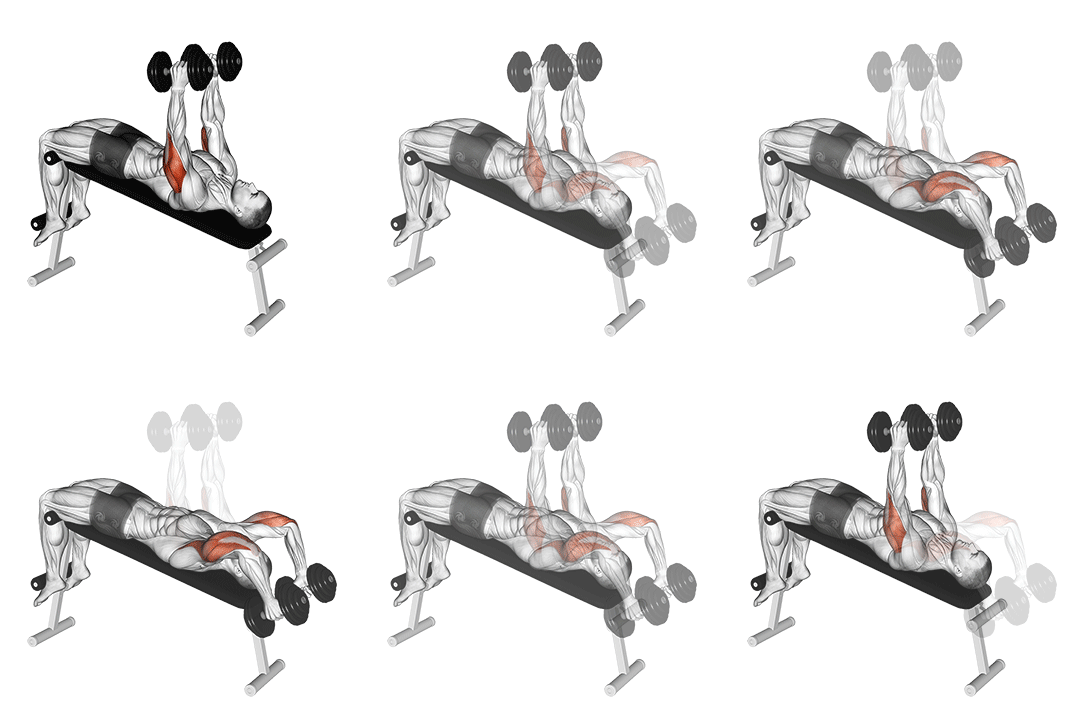
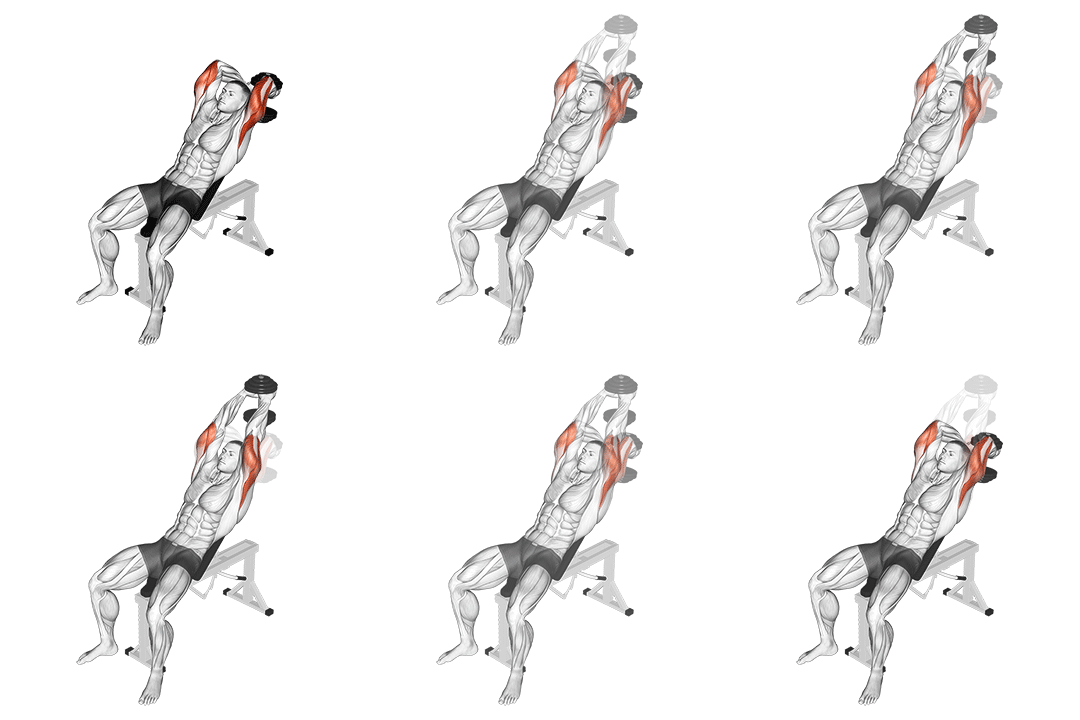
Dumbbell Decline Triceps Extension
Head-to-Head Comparison
| Attribute | Dumbbell Close-grip Press | Dumbbell Decline Triceps Extension |
|---|---|---|
| Target Muscle |
Triceps
|
Triceps
|
| Body Part |
Upper-arms
|
Upper-arms
|
| Equipment |
Dumbbell
|
Dumbbell
|
| Difficulty |
Intermediate
|
Intermediate
|
| Movement Type |
Compound
|
Isolation
|
| Secondary Muscles |
2
|
1
|
Secondary Muscles Activated
Dumbbell Close-grip Press
Dumbbell Decline Triceps Extension
Visual Comparison
Overview
Dumbbell Close-grip Press vs Dumbbell Decline Triceps Extension — you want stronger, thicker triceps and need to pick the right move. This comparison walks you through how each exercise loads the triceps, how they differ in muscle recruitment and biomechanics, what equipment and angles they require, and clear recommendations for hypertrophy, strength, beginners, and home workouts. Read on for specific cues, rep ranges (6–12 for strength-to-hypertrophy, 8–15 for isolation work), and when to program each exercise into your routine.
Key Differences
- Dumbbell Close-grip Press is a compound movement, while Dumbbell Decline Triceps Extension is an isolation exercise.
- Both exercises target the Triceps using Dumbbell. The main differences are in their movement patterns and muscle activation angles.
Pros & Cons
Dumbbell Close-grip Press
+ Pros
- Compound movement that trains triceps while building pressing strength
- Requires minimal equipment; can be performed on bench or floor
- Easier to progressively overload with heavier dumbbells
- Transfers well to pressing performance (bench press, push-ups)
− Cons
- Shares load with chest and shoulders, reducing pure triceps isolation
- Requires strict elbow tracking to avoid shoulder strain
- Less stretch-mediated stimulus to the triceps long head
Dumbbell Decline Triceps Extension
+ Pros
- High triceps isolation with strong stretch at the bottom for long-head stimulus
- Allows precise focus on elbow extension and tempo control
- Effective for sculpting the medial and long heads with controlled reps
- Good for pre-exhaust or finisher work with moderate weights
− Cons
- Requires a decline bench, limiting accessibility
- Higher stress on elbows and long-head tendon when overloaded
- Harder to load heavily compared with compound presses
When Each Exercise Wins
The decline extension increases stretch on the long head and lets you control tempo for time-under-tension (8–15 reps). That lengthened position and isolated loading create a stronger hypertrophic stimulus to the triceps long head than a compound press.
Close-grip presses let you use heavier loads and build integrated pressing strength because they recruit chest and shoulders along with triceps. Use 4–6 rep ranges and progressive overload to raise overall pressing force production.
The pressing pattern is simpler and transfers to common movements; it’s easier to teach elbow tuck and grip cues. Beginners can safely load the movement with fewer joint-control demands than decline extensions.
Close-grip presses can be performed on the floor or a stable chair with just dumbbells, while decline triceps extensions require a decline bench making them impractical for most home setups.
Frequently Asked Questions
Can I do both Dumbbell Close-grip Press and Dumbbell Decline Triceps Extension in the same workout?
Yes — pair them strategically. Use the close-grip press as a primary compound movement (3–5 sets) and follow with decline extensions for 2–4 sets at higher reps to isolate the triceps and increase time under tension.
Which exercise is better for beginners?
Dumbbell Close-grip Press is better for beginners because it uses a familiar pressing pattern and is easier to scale. Beginners should focus on 6–12 reps with strict elbow tracking before adding isolation work.
How do the muscle activation patterns differ?
Close-grip presses load the triceps along a horizontal force vector, so peak triceps torque is closer to lockout while chest and deltoid share mid-range load. Decline extensions load the triceps through a longer ROM with peak tension during the concentric from ~90° elbow flexion to extension, emphasizing the long head via length-tension mechanics.
Can Dumbbell Decline Triceps Extension replace Dumbbell Close-grip Press?
Not fully — decline extensions are great for isolation and hypertrophy but don’t build the same multi-joint pressing strength. If your goal is heavier pressing or upper-body strength transfer, keep the close-grip press in the program and add decline extensions as accessory work.
Expert Verdict
Use the Dumbbell Close-grip Press when you want to build pressing strength and handle heavier loads with a compound movement that also trains chest and shoulders. Choose the Dumbbell Decline Triceps Extension when your goal is direct triceps hypertrophy—especially for the long head—by exploiting the greater stretch and isolation. For programming: prioritize close-grip presses 2–3x/week in strength cycles (4–6 reps) and add decline extensions as finishers or accessory work in hypertrophy phases (8–15 reps, 2–4 sets). Favor the press for accessibility and strength, and the decline extension for targeted size and shape.
Also Compare
More comparisons with Dumbbell Close-grip Press
More comparisons with Dumbbell Decline Triceps Extension
Compare More Exercises
Use our free comparison tool to analyze any two exercises head-to-head.
Compare Exercises