

Dumbbell Close-grip Press vs Dumbbell Floor Press: Complete Comparison Guide
Dumbbell Close-grip Press vs Dumbbell Floor Press — if you want stronger, thicker upper-arms you need to pick the right tool. This guide breaks down muscle emphasis, joint mechanics, equipment needs, and programming so you can choose based on your goals. You’ll get clear technique cues (hand width, elbow path, set-up), numeric rep ranges for hypertrophy and strength (6–12 reps, 3–6 reps), and programming tips for combining both movements. Read on to learn how force vectors, length-tension relationships, and range of motion change which muscles work hardest and when to use each lift.
Exercise Comparison
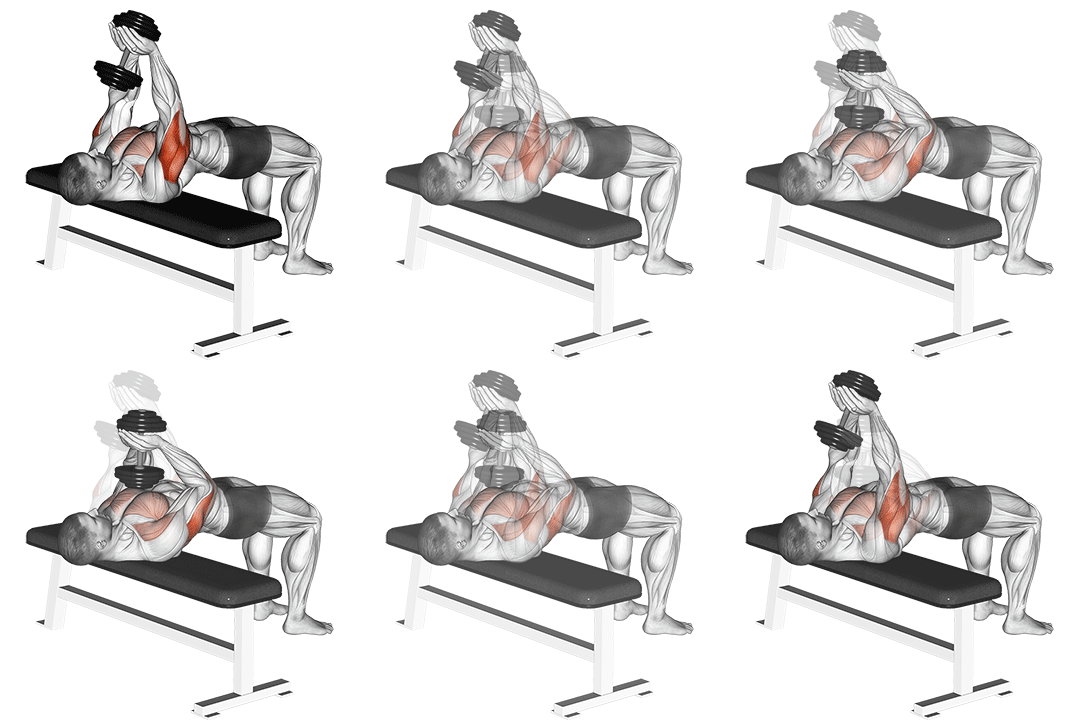
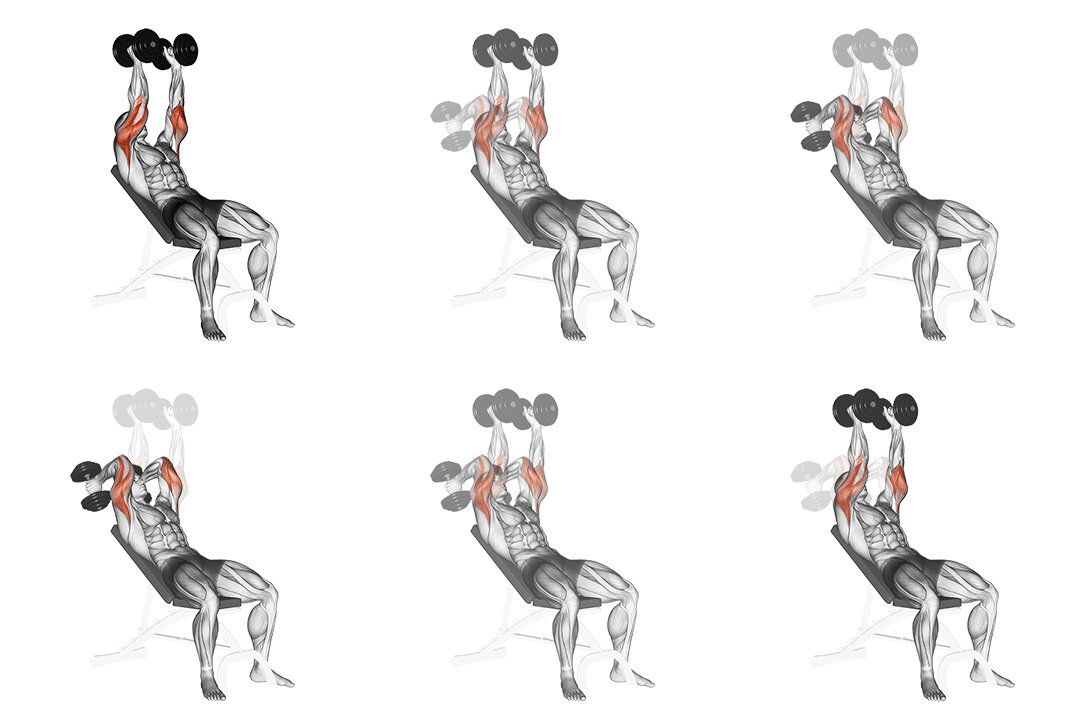
Dumbbell Close-grip Press
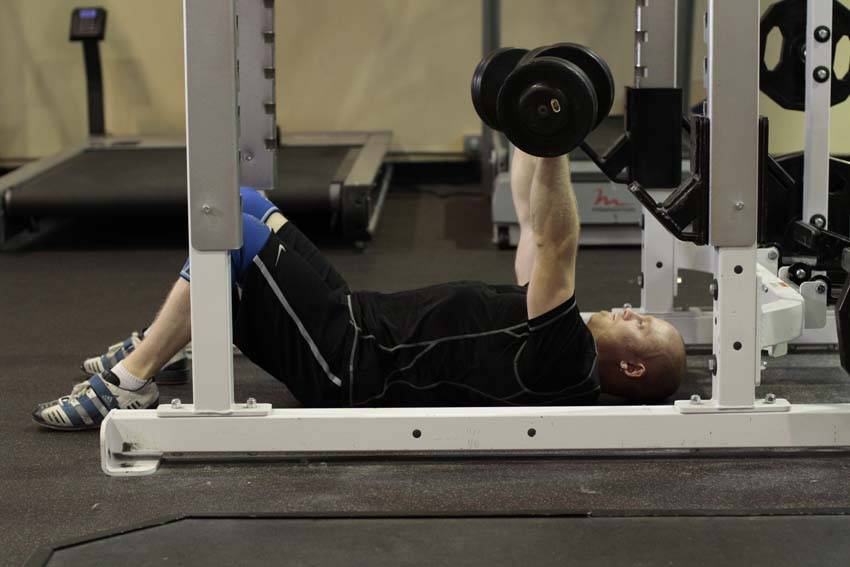
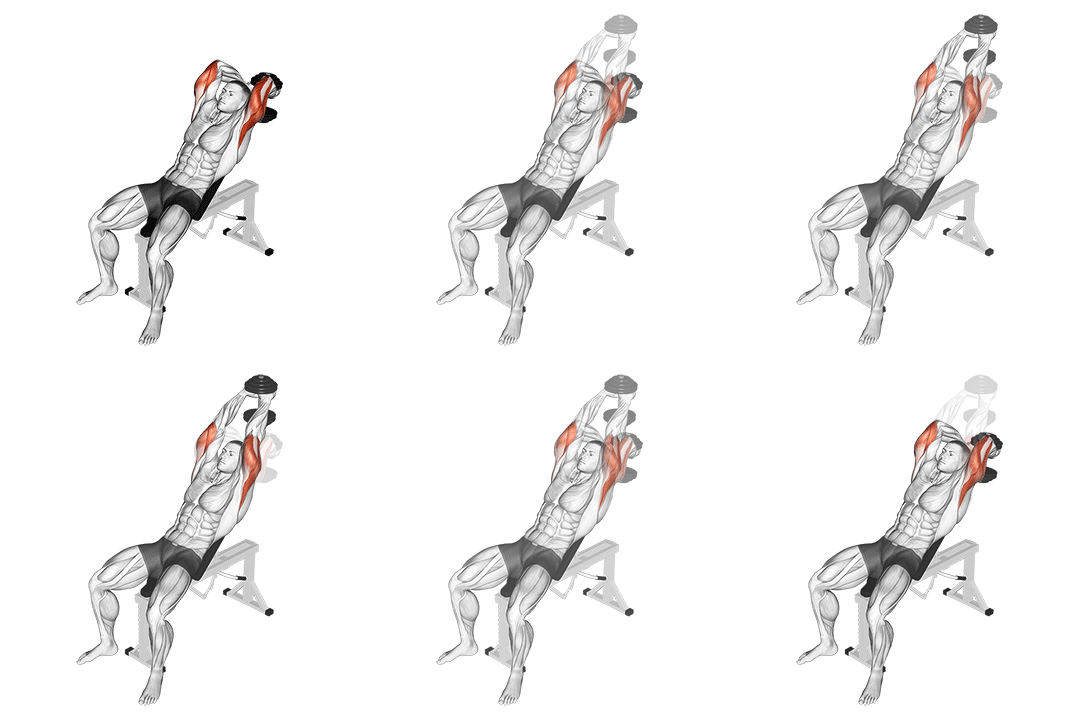
Dumbbell Floor Press
Head-to-Head Comparison
| Attribute | Dumbbell Close-grip Press | Dumbbell Floor Press |
|---|---|---|
| Target Muscle |
Triceps
|
Triceps
|
| Body Part |
Upper-arms
|
Upper-arms
|
| Equipment |
Dumbbell
|
Dumbbell
|
| Difficulty |
Intermediate
|
Intermediate
|
| Movement Type |
Compound
|
Compound
|
| Secondary Muscles |
2
|
2
|
Secondary Muscles Activated
Dumbbell Close-grip Press
Dumbbell Floor Press
Visual Comparison
Overview
Dumbbell Close-grip Press vs Dumbbell Floor Press — if you want stronger, thicker upper-arms you need to pick the right tool. This guide breaks down muscle emphasis, joint mechanics, equipment needs, and programming so you can choose based on your goals. You’ll get clear technique cues (hand width, elbow path, set-up), numeric rep ranges for hypertrophy and strength (6–12 reps, 3–6 reps), and programming tips for combining both movements. Read on to learn how force vectors, length-tension relationships, and range of motion change which muscles work hardest and when to use each lift.
Key Differences
- Both exercises target the Triceps using Dumbbell. The main differences are in their movement patterns and muscle activation angles.
Pros & Cons
Dumbbell Close-grip Press
+ Pros
- Higher time-under-tension across a longer ROM for hypertrophy
- Better chest and anterior deltoid engagement for balanced upper-body development
- Easier to manipulate tempo and range (partials to full ROM) for progressive overload
- Strong transfer to mid-range pressing strength and everyday pushing
− Cons
- Requires bench or stable surface, less suitable for minimal-equipment setups
- Greater shoulder and elbow stress if technique breaks down (elbows flaring)
- Slightly harder to load maximally compared to floor press due to longer ROM
Dumbbell Floor Press
+ Pros
- Shoulder-friendly due to limited shoulder extension and fixed floor stop
- Allows heavier loads for lockout strength because of reduced ROM
- Very accessible for home workouts with just dumbbells
- Simple set-up and easier to teach to beginners
− Cons
- Shorter ROM limits pec stretch and may reduce chest hypertrophy potential
- Less work at long muscle lengths, which can blunt full-range muscle growth
- Getting dumbbells into start position can be awkward without a bench or rack
When Each Exercise Wins
The close-grip press provides a longer ROM and greater time under tension across the triceps, pecs, and deltoids, which better stimulates muscle growth. Aim for 8–12 reps with a controlled 2–3 second eccentric to maximize mechanical tension and metabolic stress.
Floor press lets you handle heavier loads with a shorter ROM, improving lockout strength and top-end pressing power. Use 3–6 rep sets and consider tripling weekly heavy sets to build neural strength at the sticking point.
Floor press has a lower technical demand and limits shoulder ROM, making it safer and easier to learn stable pressing mechanics. Start with 8–10 controlled reps to build baseline pressing strength and teach elbow tracking.
No bench is required and you can progress by increasing dumbbell weight or adding bands, so the floor press fits minimal-equipment setups. It also reduces the need for a spotter when working heavy.
Frequently Asked Questions
Can I do both Dumbbell Close-grip Press and Dumbbell Floor Press in the same workout?
Yes — pair them intelligently: use the floor press first for heavy triples to train lockout strength, then follow with close-grip sets for hypertrophy at 8–12 reps. Keep total volume manageable (8–12 sets per muscle group per week) to avoid overtraining.
Which exercise is better for beginners?
The floor press is better for beginners because the stop on the floor limits shoulder ROM and simplifies depth control, reducing injury risk. Start with light loads and focus on elbow alignment and a controlled tempo.
How do the muscle activation patterns differ?
Close-grip presses activate triceps across a longer ROM while also loading the sternal pec and anterior deltoid during shoulder horizontal adduction. Floor presses cut shoulder ROM and shift force vectors so the triceps dominate near lockout, increasing distal triceps activation but reducing pec stretch.
Can Dumbbell Floor Press replace Dumbbell Close-grip Press?
The floor press can replace close-grip press if your goal is lockout strength or you have shoulder limitations, but it won’t fully substitute for the hypertrophy stimulus of a full-ROM close-grip press. If you need both strength and size, cycle or program both into your routine.
Expert Verdict
Use the Dumbbell Close-grip Press when your priority is triceps and upper-body hypertrophy or when you want a full ROM pressing movement that also brings chest and anterior deltoid involvement. Program it for 6–12 reps with deliberate tempo to exploit length-tension relationships. Choose the Dumbbell Floor Press when you want shoulder-friendly lockout strength, to handle heavier loads, or when equipment is limited — program heavy triples or doubles (3–6 reps) and include paused reps to overload the triceps near full extension. For most training blocks, rotate both: emphasize close-grip for mass phases and floor press for strength or shoulder-rehab phases.
Also Compare
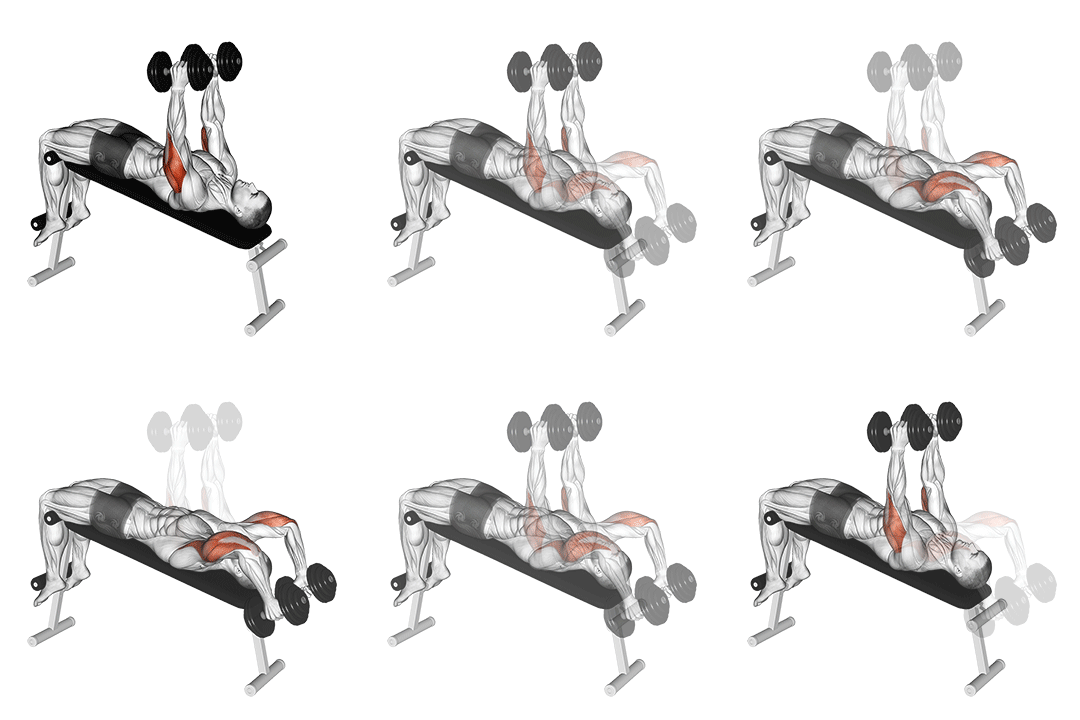
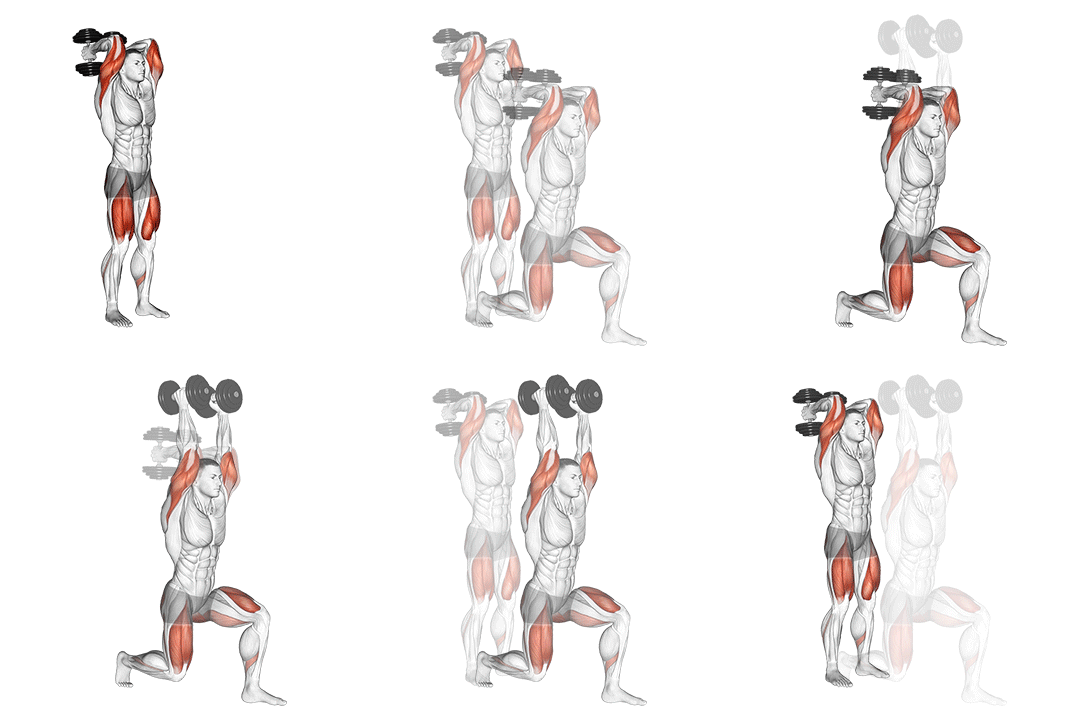
More comparisons with Dumbbell Close-grip Press
More comparisons with Dumbbell Floor Press
Compare More Exercises
Use our free comparison tool to analyze any two exercises head-to-head.
Compare Exercises