

Dumbbell Close-grip Press vs Dumbbell Incline Triceps Extension: Complete Comparison Guide
Dumbbell Close-grip Press vs Dumbbell Incline Triceps Extension — two solid triceps builders that work the same target muscle through different movement patterns. You’ll get a clear breakdown of primary and secondary muscle recruitment, recommended angles and rep ranges, technique cues, and when to choose each exercise based on hypertrophy, strength, or convenience. I’ll explain the biomechanics — length-tension relationships, force vectors, and joint moments — and give practical progressions so you can apply the right exercise to your training plan.
Exercise Comparison
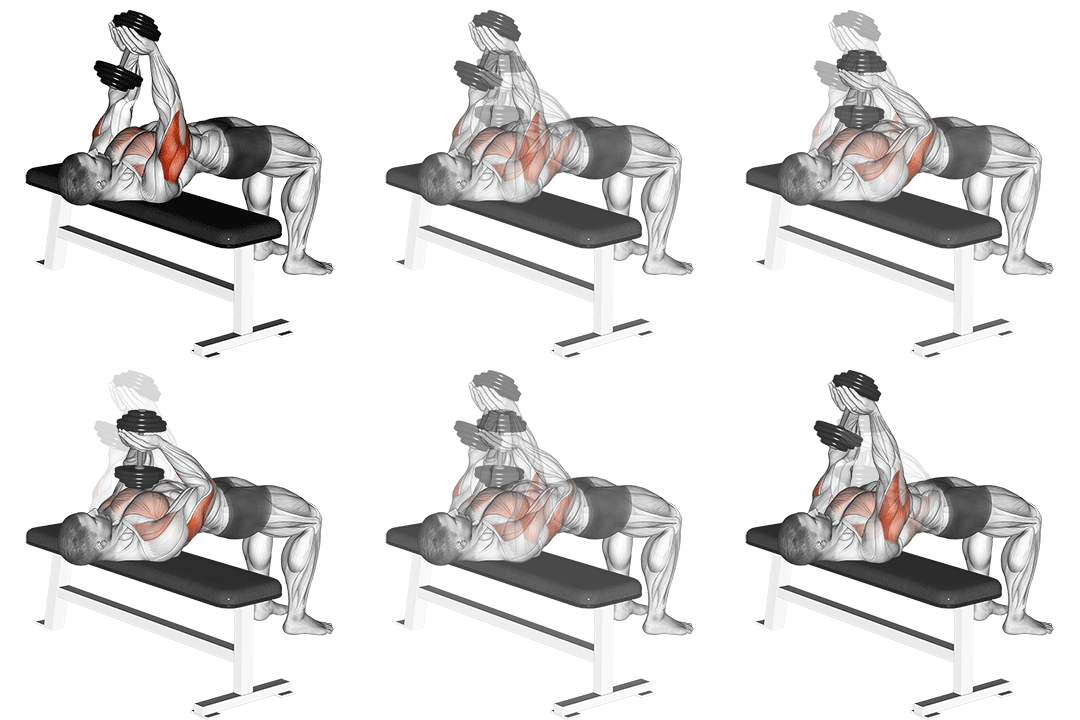
Dumbbell Close-grip Press
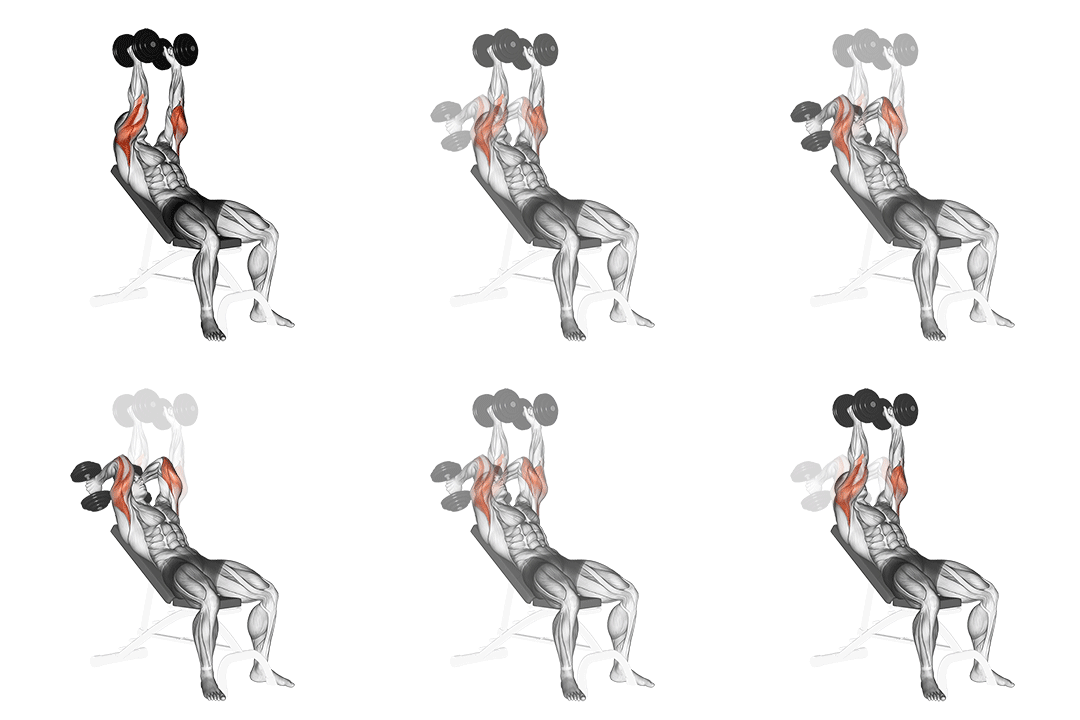
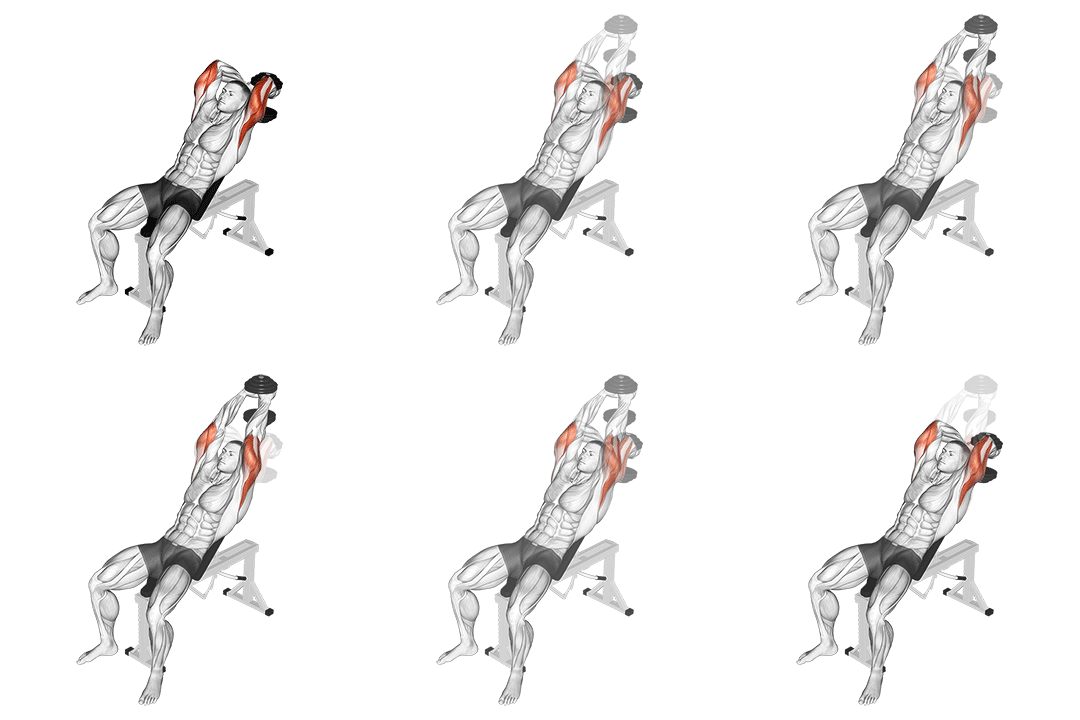
Dumbbell Incline Triceps Extension
Head-to-Head Comparison
| Attribute | Dumbbell Close-grip Press | Dumbbell Incline Triceps Extension |
|---|---|---|
| Target Muscle |
Triceps
|
Triceps
|
| Body Part |
Upper-arms
|
Upper-arms
|
| Equipment |
Dumbbell
|
Dumbbell
|
| Difficulty |
Intermediate
|
Intermediate
|
| Movement Type |
Compound
|
Isolation
|
| Secondary Muscles |
2
|
1
|
Secondary Muscles Activated
Dumbbell Close-grip Press
Dumbbell Incline Triceps Extension
Visual Comparison
Overview
Dumbbell Close-grip Press vs Dumbbell Incline Triceps Extension — two solid triceps builders that work the same target muscle through different movement patterns. You’ll get a clear breakdown of primary and secondary muscle recruitment, recommended angles and rep ranges, technique cues, and when to choose each exercise based on hypertrophy, strength, or convenience. I’ll explain the biomechanics — length-tension relationships, force vectors, and joint moments — and give practical progressions so you can apply the right exercise to your training plan.
Key Differences
- Dumbbell Close-grip Press is a compound movement, while Dumbbell Incline Triceps Extension is an isolation exercise.
- Both exercises target the Triceps using Dumbbell. The main differences are in their movement patterns and muscle activation angles.
Pros & Cons
Dumbbell Close-grip Press
+ Pros
- Allows heavier loads for greater mechanical tension
- Also trains chest and anterior delts — efficient compound movement
- Can be performed on floor if no bench is available
- Simple progression with increased weight and lower reps (3–8 for strength)
− Cons
- Less isolation of the triceps long head
- Chest and shoulder fatigue can limit triceps work
- Poor form (elbow flare) shifts load to shoulders and reduces triceps stimulus
Dumbbell Incline Triceps Extension
+ Pros
- Better long-head emphasis via shoulder position and stretch
- High time-under-tension potential for hypertrophy (8–20 reps)
- Lower chest involvement allows focused triceps overload
- Easy to manipulate tempo and partials for advanced hypertrophy work
− Cons
- Requires adjustable bench set at 30–45°
- Higher tendon stress at end range if overloaded
- Harder to progressively overload with large weight jumps
When Each Exercise Wins
The incline position places the long head on a greater stretch and increases time under tension, making it ideal for targeted hypertrophy in the 8–15 rep range with controlled tempos.
As a compound press you can load heavier (3–6 rep range) and build overall pressing strength and elbow-extension torque, which translates to stronger triceps under high loads.
It uses familiar pressing mechanics, is easier to set up on a flat surface or the floor, and lets you progressively add weight without complex motor control demands.
You can perform it without an adjustable bench, and it tolerates heavier, simpler loading patterns — ideal if equipment is limited.
Frequently Asked Questions
Can I do both Dumbbell Close-grip Press and Dumbbell Incline Triceps Extension in the same workout?
Yes. Start with the close-grip press as your heavy compound (3–6 or 6–8 reps), then follow with incline triceps extensions for 2–4 sets of 8–15 reps as an isolation finisher to maximize time under tension and target the long head.
Which exercise is better for beginners?
Dumbbell Close-grip Press is generally better for beginners because it uses familiar pressing mechanics, is easier to set up on a flat surface or floor, and allows straightforward load progression with less motor control demand.
How do the muscle activation patterns differ?
Close-grip press combines elbow-extension and horizontal-press moments, so triceps activation is high but shared with pecs and delts. Incline triceps extension isolates elbow extension with the shoulder at 30–45° of flexion, increasing long-head length and concentrating activation on the triceps.
Can Dumbbell Incline Triceps Extension replace Dumbbell Close-grip Press?
Not entirely. If your goal is pure triceps hypertrophy you can prioritize the incline extension, but for strength and heavy loading you should keep the close-grip press. Use the incline exercise as a supplemental isolation movement, not a full replacement when you need compound strength.
Expert Verdict
Use Dumbbell Close-grip Press when you need heavy, compound loading to build pressing strength and overall upper-body mass. Its horizontal force vector recruits pecs and delts, allowing larger weights and clear progression (3–6 reps for strength, 6–12 for mixed goals). Choose Dumbbell Incline Triceps Extension when you want focused triceps development, especially of the long head: set the bench at 30–45°, use 8–15 reps with slow eccentrics and avoid dropping too far behind the head to protect the tendon. Combine both across a training block — heavy close-grip presses early, then inclined extensions as an isolation finisher — to maximize triceps size and balance.
Also Compare
More comparisons with Dumbbell Close-grip Press
More comparisons with Dumbbell Incline Triceps Extension
Compare More Exercises
Use our free comparison tool to analyze any two exercises head-to-head.
Compare Exercises