

Dumbbell Close-grip Press vs Dumbbell Kickback: Complete Comparison Guide
Dumbbell Close-grip Press vs Dumbbell Kickback — you’re deciding between a compound triceps mover and a single-joint isolation. This guide shows you how each exercise loads the triceps, which secondary muscles get involved, the typical rep ranges and progression options, and which fits your program: hypertrophy, strength, beginners, or home training. You’ll get concrete technique cues (elbow path, torso angle, rep ranges), biomechanics explanations (force vectors, length-tension), and clear recommendations so you can pick the right exercise for your goal and program.
Exercise Comparison
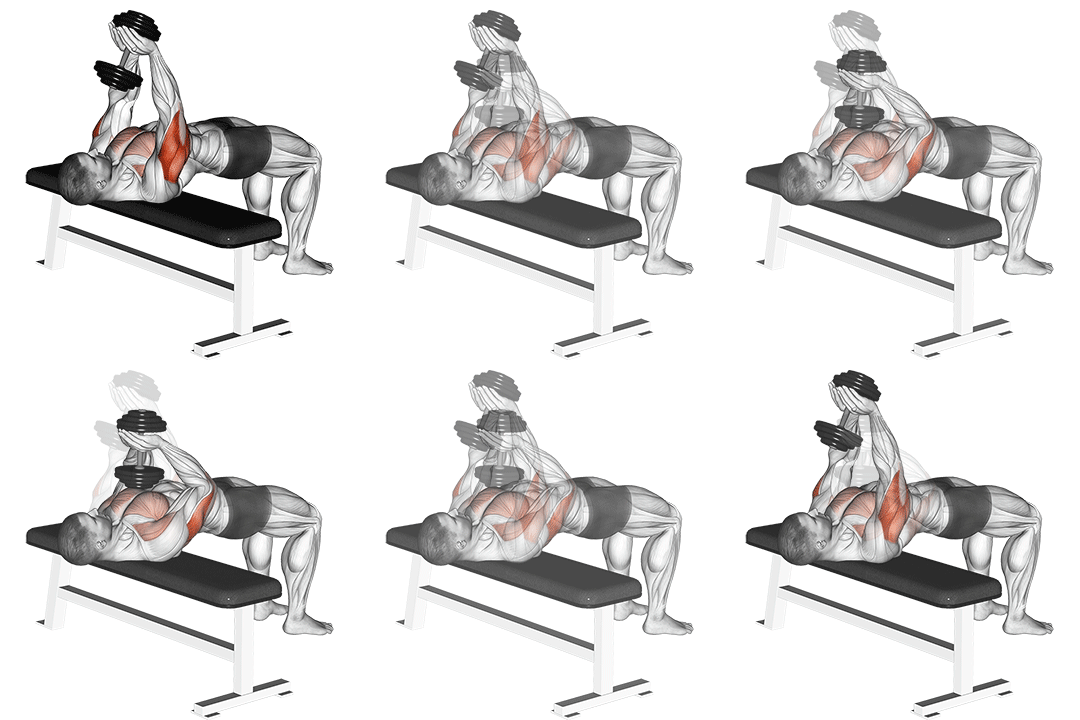
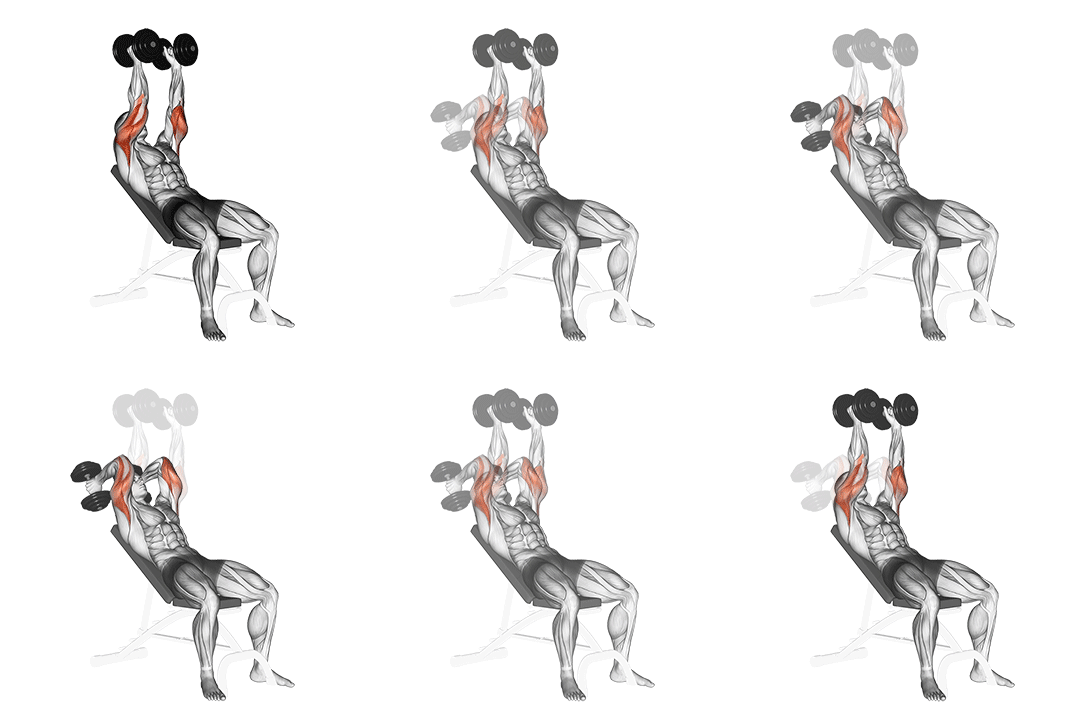
Dumbbell Close-grip Press
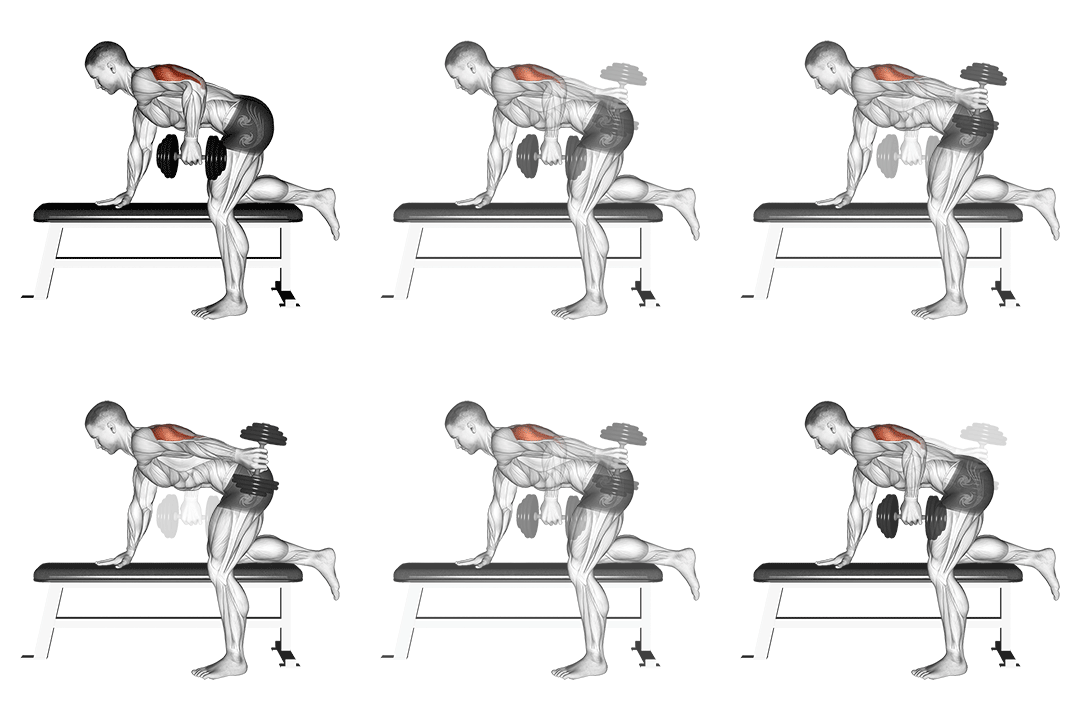
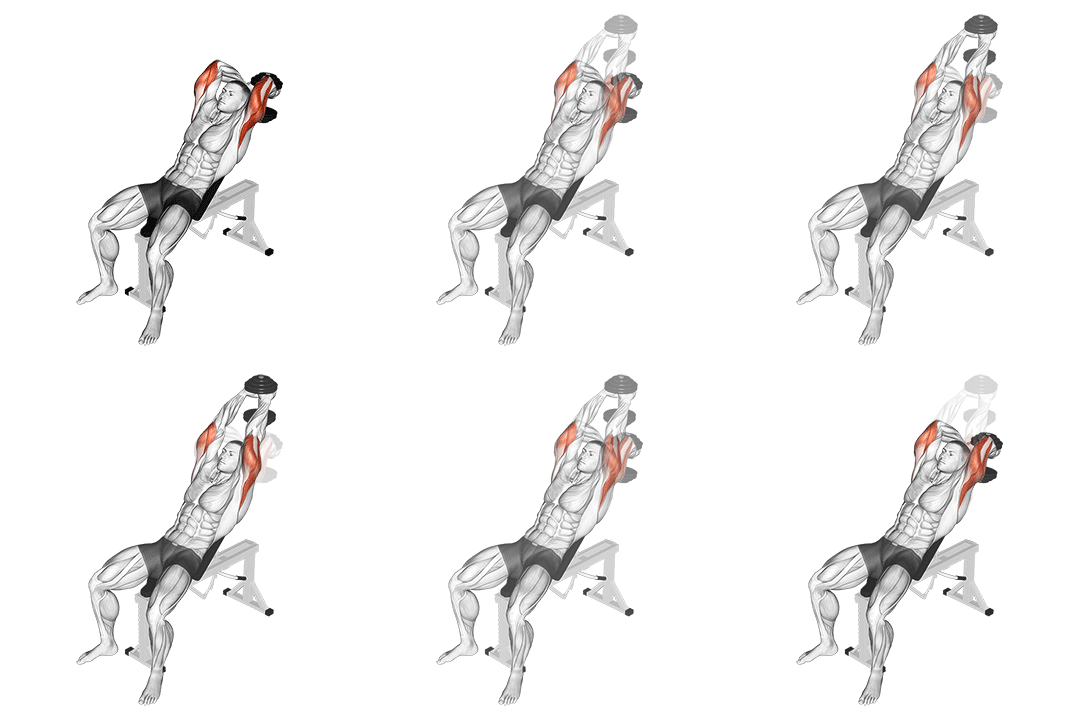
Dumbbell Kickback
Head-to-Head Comparison
| Attribute | Dumbbell Close-grip Press | Dumbbell Kickback |
|---|---|---|
| Target Muscle |
Triceps
|
Triceps
|
| Body Part |
Upper-arms
|
Upper-arms
|
| Equipment |
Dumbbell
|
Dumbbell
|
| Difficulty |
Intermediate
|
Beginner
|
| Movement Type |
Compound
|
Isolation
|
| Secondary Muscles |
2
|
1
|
Secondary Muscles Activated
Dumbbell Close-grip Press
Dumbbell Kickback
Visual Comparison
Overview
Dumbbell Close-grip Press vs Dumbbell Kickback — you’re deciding between a compound triceps mover and a single-joint isolation. This guide shows you how each exercise loads the triceps, which secondary muscles get involved, the typical rep ranges and progression options, and which fits your program: hypertrophy, strength, beginners, or home training. You’ll get concrete technique cues (elbow path, torso angle, rep ranges), biomechanics explanations (force vectors, length-tension), and clear recommendations so you can pick the right exercise for your goal and program.
Key Differences
- Dumbbell Close-grip Press is a compound movement, while Dumbbell Kickback is an isolation exercise.
- Difficulty levels differ: Dumbbell Close-grip Press is intermediate, while Dumbbell Kickback is beginner.
- Both exercises target the Triceps using Dumbbell. The main differences are in their movement patterns and muscle activation angles.
Pros & Cons
Dumbbell Close-grip Press
+ Pros
- Allows heavier loading — useful for strength and hypertrophy (use 3–6 reps for strength, 6–12 for size)
- Recruits triceps plus chest and anterior deltoid for compound productivity
- Improves pressing strength transferable to other lifts due to horizontal force vector
- Greater progression options: load, tempo, and rep-range manipulation
− Cons
- Requires bench and heavier dumbbells for maximal effect
- Higher technical demand — needs elbow tuck and shoulder control
- Greater shoulder/elbow stress if performed with poor mechanics
Dumbbell Kickback
+ Pros
- Simple to learn — single-joint focus ideal for beginners
- Minimal equipment — one dumbbell and a support suffice
- Excellent for isolating lateral/medial heads and refining end-range contraction
- Low systemic fatigue — useful as a finisher or burn-set
− Cons
- Limited absolute load — harder to progressively overload with heavy weight
- Shorter range of effective tension compared with compound presses
- Can encourage momentum or poor scapular stability if done too fast
When Each Exercise Wins
The close-grip press allows heavier loads and longer effective tension across the triceps and chest. Use 6–12 reps, progressive overload, and controlled eccentric tempo to maximize muscle growth.
As a compound lift it produces higher joint torque and neurological adaptation; loading in the 3–6 rep range improves absolute triceps and pressing strength more effectively than isolation work.
Kickbacks teach pure elbow extension without complex scapular or shoulder coordination. Start with 8–15 reps, focus on a 30–45° torso hinge and strict elbow path, then add load or reps.
Kickbacks need minimal gear and space, and they let you get high-quality isolation work with a single dumbbell and a chair. They’re easy to program as finishers or part of circuits.
Frequently Asked Questions
Can I do both Dumbbell Close-grip Press and Dumbbell Kickback in the same workout?
Yes. Pair the close-grip press as your primary heavy movement (3–12 reps depending on goal) and follow with kickbacks for 2–4 sets of 8–20 to target end-range contraction. Do presses first to avoid pre-fatiguing the triceps and compromising pressing form.
Which exercise is better for beginners?
Dumbbell Kickback is better for absolute beginners because it isolates elbow extension and has a small technical learning curve. Once you can control scapular and elbow position, add close-grip presses for compound strength and progressive overload.
How do the muscle activation patterns differ?
Close-grip presses activate the triceps across a longer range while engaging chest and anterior deltoid due to a horizontal force vector; peak triceps torque occurs mid-range. Kickbacks concentrate activation at terminal elbow extension with minimal shoulder motion, producing high tension at the end range and isolating the lateral and medial heads.
Can Dumbbell Kickback replace Dumbbell Close-grip Press?
Not if your primary goal is strength or heavy hypertrophy. Kickbacks are a valuable isolation tool but don’t allow the same loading or systemic stimulus as close-grip presses. Use kickbacks as a complementary exercise, not a full replacement, when you need isolation or have limited equipment.
Expert Verdict
Use the Dumbbell Close-grip Press when you want heavy, multi-joint triceps work that also strengthens pressing patterns and adds overall upper-body load capacity. Prioritize it for hypertrophy (6–12 reps) and strength (3–6 reps), maintain elbows tucked 10–30° from the torso, and press along a horizontal vector. Choose the Dumbbell Kickback when you need targeted isolation, lower equipment needs, or a low-fatigue finisher; hinge at 30–45°, keep the elbow stationary, and emphasize a slow 2–3 second concentric with a 2–3 second eccentric for 8–20 reps. Both have a place: press for progressive overload and systemic strength, kickback for precision and finishing work.
Also Compare
More comparisons with Dumbbell Close-grip Press
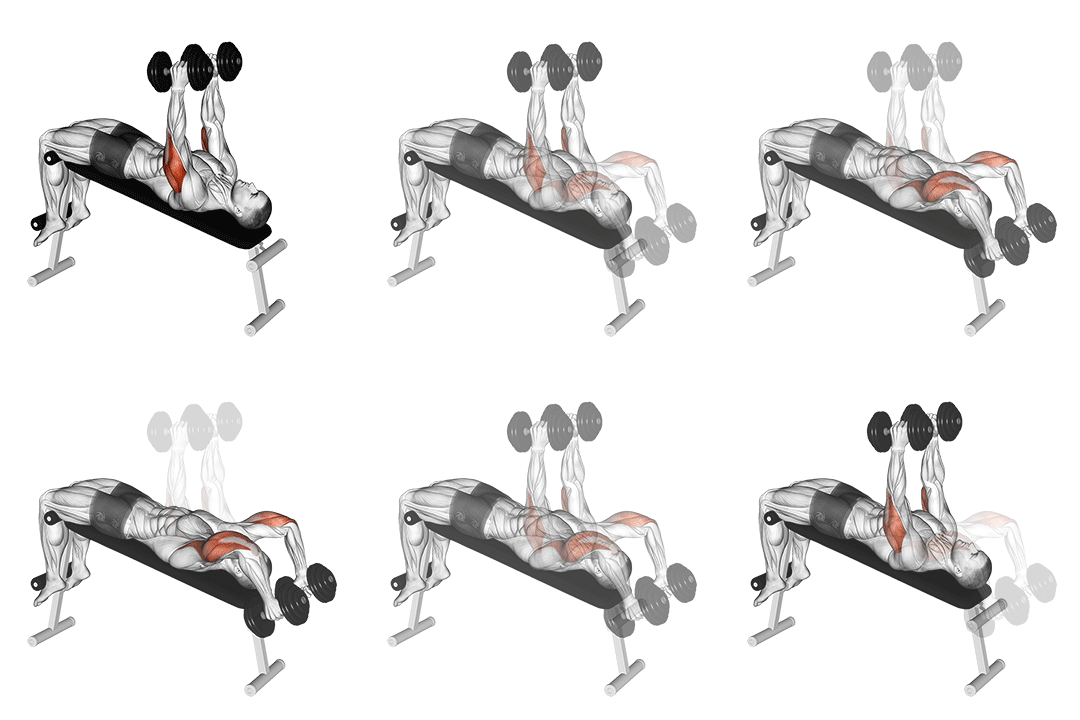
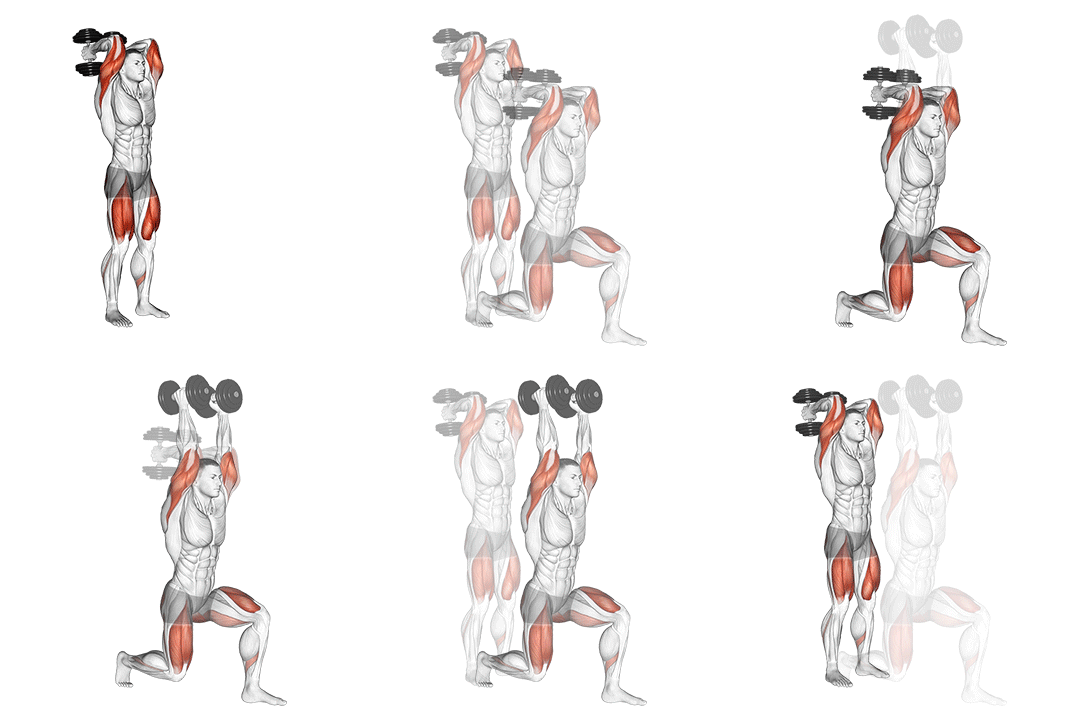
More comparisons with Dumbbell Kickback
Compare More Exercises
Use our free comparison tool to analyze any two exercises head-to-head.
Compare Exercises