

Dumbbell Decline Fly vs Dumbbell Decline Hammer Press: Complete Comparison Guide
Dumbbell Decline Fly vs Dumbbell Decline Hammer Press — you’re choosing between an isolation move that stretches and sculpts the lower chest and a compound press that lets you load the pecs and triceps heavily. I’ll walk you through mechanics, muscle activation, equipment needs, injury risk, and practical programming: angles to use, rep ranges (8–15 for flies, 4–10 for heavy presses), and when to pick each exercise based on your goals and training level.
Exercise Comparison
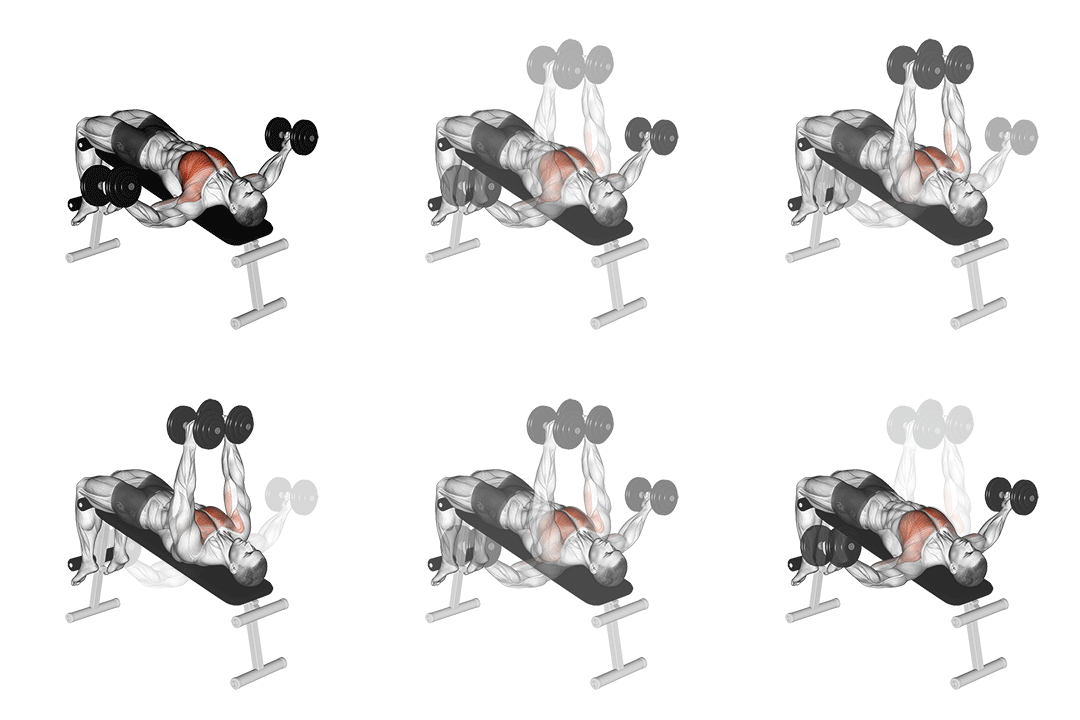
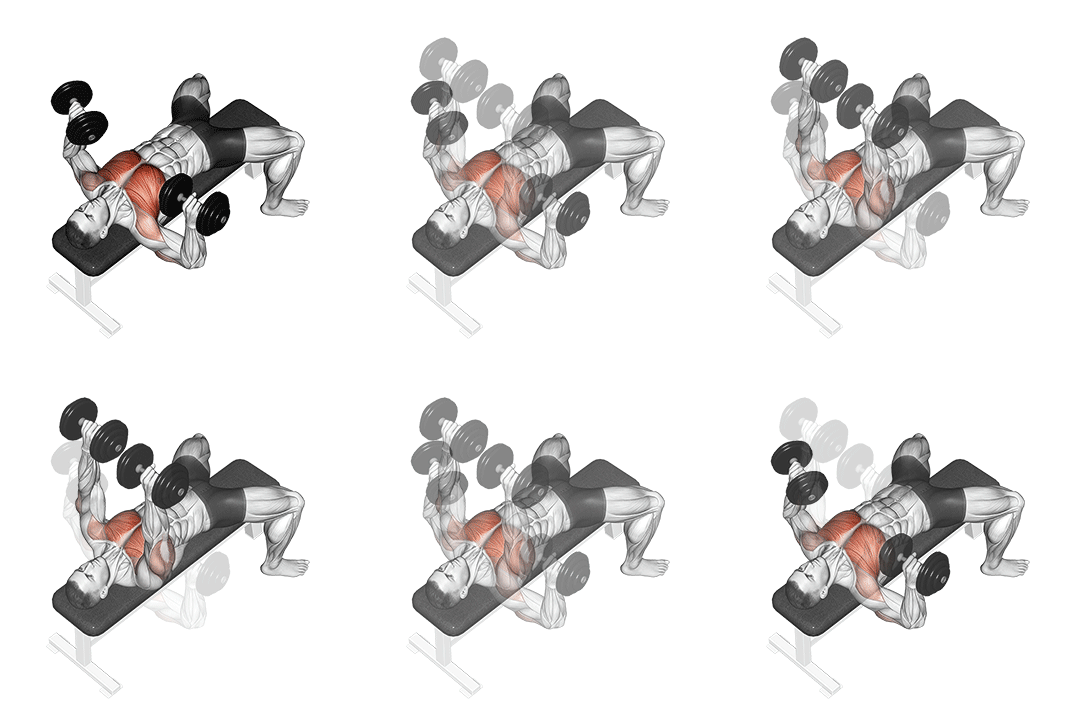
Dumbbell Decline Fly
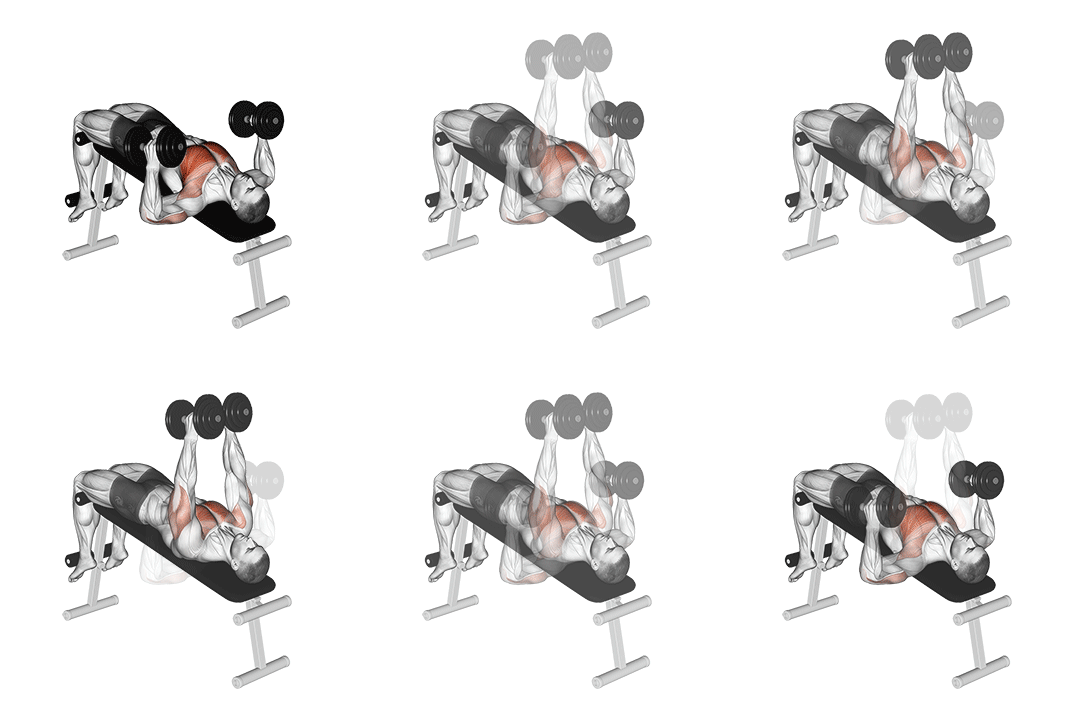
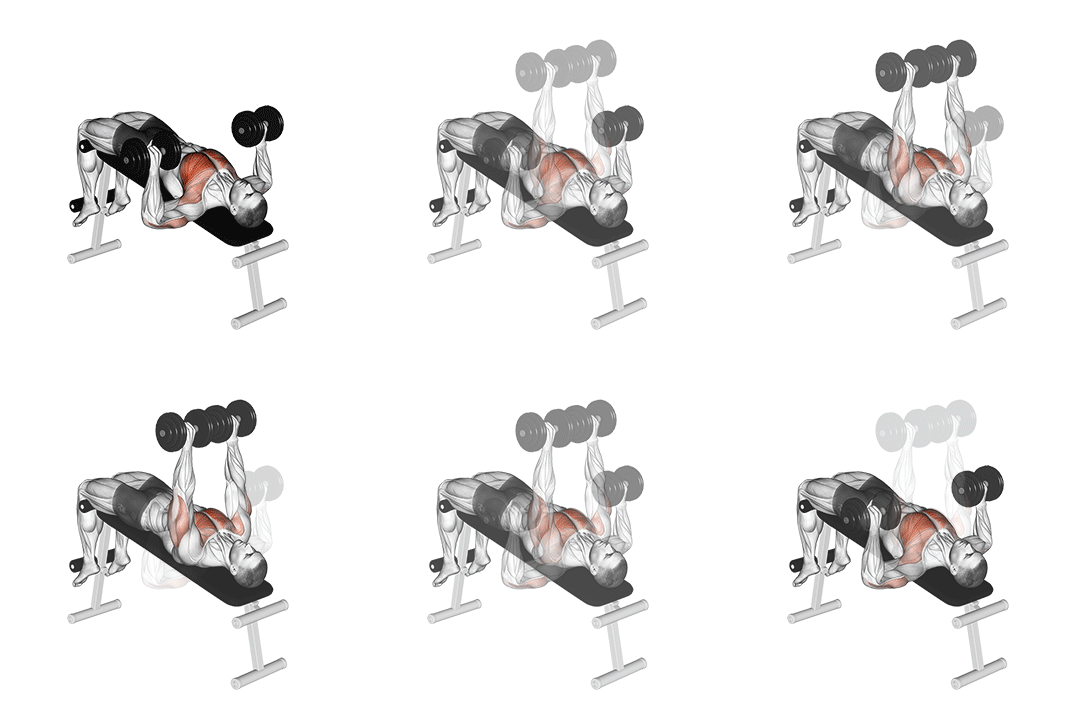
Dumbbell Decline Hammer Press
Head-to-Head Comparison
| Attribute | Dumbbell Decline Fly | Dumbbell Decline Hammer Press |
|---|---|---|
| Target Muscle |
Pectorals
|
Pectorals
|
| Body Part |
Chest
|
Chest
|
| Equipment |
Dumbbell
|
Dumbbell
|
| Difficulty |
Beginner
|
Intermediate
|
| Movement Type |
Isolation
|
Compound
|
| Secondary Muscles |
1
|
2
|
Secondary Muscles Activated
Dumbbell Decline Fly
Dumbbell Decline Hammer Press
Visual Comparison
Overview
Dumbbell Decline Fly vs Dumbbell Decline Hammer Press — you’re choosing between an isolation move that stretches and sculpts the lower chest and a compound press that lets you load the pecs and triceps heavily. I’ll walk you through mechanics, muscle activation, equipment needs, injury risk, and practical programming: angles to use, rep ranges (8–15 for flies, 4–10 for heavy presses), and when to pick each exercise based on your goals and training level.
Key Differences
- Dumbbell Decline Fly is an isolation exercise, while Dumbbell Decline Hammer Press is a compound movement.
- Difficulty levels differ: Dumbbell Decline Fly is beginner, while Dumbbell Decline Hammer Press is intermediate.
- Both exercises target the Pectorals using Dumbbell. The main differences are in their movement patterns and muscle activation angles.
Pros & Cons
Dumbbell Decline Fly
+ Pros
- Direct isolation of the pectorals with strong stretch stimulus
- Lower absolute load requirement — easier for beginners and rehab work
- High time under tension for hypertrophy (8–15+ reps)
- Minimal triceps involvement, isolates chest fatigue
− Cons
- Higher shoulder joint stress if range is excessive
- Limited progressive overload due to lighter weights
- Less carryover to pressing strength and compound performance
Dumbbell Decline Hammer Press
+ Pros
- Greater overall mechanical tension — better for strength and heavy hypertrophy
- Builds triceps and anterior deltoid alongside pecs for functional pressing
- Easier to progressively overload by adding 2.5–10+ lbs per dumbbell
- Better transfer to bench-pressing and pushing movements
− Cons
- Requires better technique and stability under load
- Higher nervous system demand and recovery cost
- Not ideal when shoulder pain limits heavy pressing
When Each Exercise Wins
The hammer press allows higher absolute loads and greater mechanical tension on the pecs and triceps, which drives more hypertrophy when programmed in the 6–12 rep range with progressive overload.
Because you can use heavier weights and overload the movement, the hammer press better develops pressing strength and neural adaptations needed for lower-rep strength work (3–6 reps).
The fly is easier to learn as an isolation movement and lets beginners feel pec activation without heavy elbow extension demands; use 8–15 reps and moderate weight to build mind-muscle connection safely.
Flies require lighter dumbbells and less spotter support, so they’re more practical when you have limited equipment or space.
Frequently Asked Questions
Can I do both Dumbbell Decline Fly and Dumbbell Decline Hammer Press in the same workout?
Yes. Use the hammer press early as a primary compound (3–5 sets of 4–10 reps) and finish with flies as an isolation superset or finisher (2–3 sets of 10–15 reps) to maximize mechanical tension and muscle stretch without excessive fatigue from heavy presses.
Which exercise is better for beginners?
Dumbbell Decline Fly is better to start with for learning pec activation because it isolates horizontal adduction and uses lighter loads. Teach safe range (avoid excessive drop behind the line of the torso) and build 8–15 rep tempo work before adding heavy presses.
How do the muscle activation patterns differ?
Flies emphasize horizontal adduction with long eccentric stretch of pec fibers and minimal elbow extension, increasing tension across the muscle length. Hammer presses combine horizontal adduction with substantial elbow extension, shifting some load to the triceps and allowing higher peak force.
Can Dumbbell Decline Hammer Press replace Dumbbell Decline Fly?
If your goal is overall chest mass and strength, the hammer press can replace flies because it provides greater overload. If you need targeted lower-pec stretch, improved muscle shape, or lower-load training for joint reasons, keep the fly in your program.
Expert Verdict
Use the Dumbbell Decline Fly when your goal is to maximally target the lower pecs with a high-stretch, time-under-tension approach, or when you need a lower-load option for technique work, rehab, or home sessions. Keep the decline at 15–30°, control the eccentric for 2–3 seconds, and stop short of painful end-range. Choose the Dumbbell Decline Hammer Press when you want heavier loading, better overload potential, and transfer to pressing strength — program it for 4–10 reps with progressive increases and ensure tight scapular position and elbow tracking. Ideally, rotate both into your program: presses for heavy loading and flies for focused hypertrophy and finishers.
Also Compare
More comparisons with Dumbbell Decline Fly
More comparisons with Dumbbell Decline Hammer Press
Compare More Exercises
Use our free comparison tool to analyze any two exercises head-to-head.
Compare Exercises