

Dumbbell Decline Triceps Extension vs Dumbbell Forward Lunge Triceps Extension: Complete Comparison
Dumbbell Decline Triceps Extension vs Dumbbell Forward Lunge Triceps Extension — two dumbbell moves that both hammer the triceps but in very different ways. You’ll get clear guidance on muscle targets, biomechanics, and step-by-step technique cues so you can pick the right tool for your goal. I’ll compare primary and secondary muscle recruitment, show how joint angles and force vectors change tension on the long head, and give rep ranges (6–12 for heavy work, 10–20 for metabolic sets) plus progressions and safety tips.
Exercise Comparison
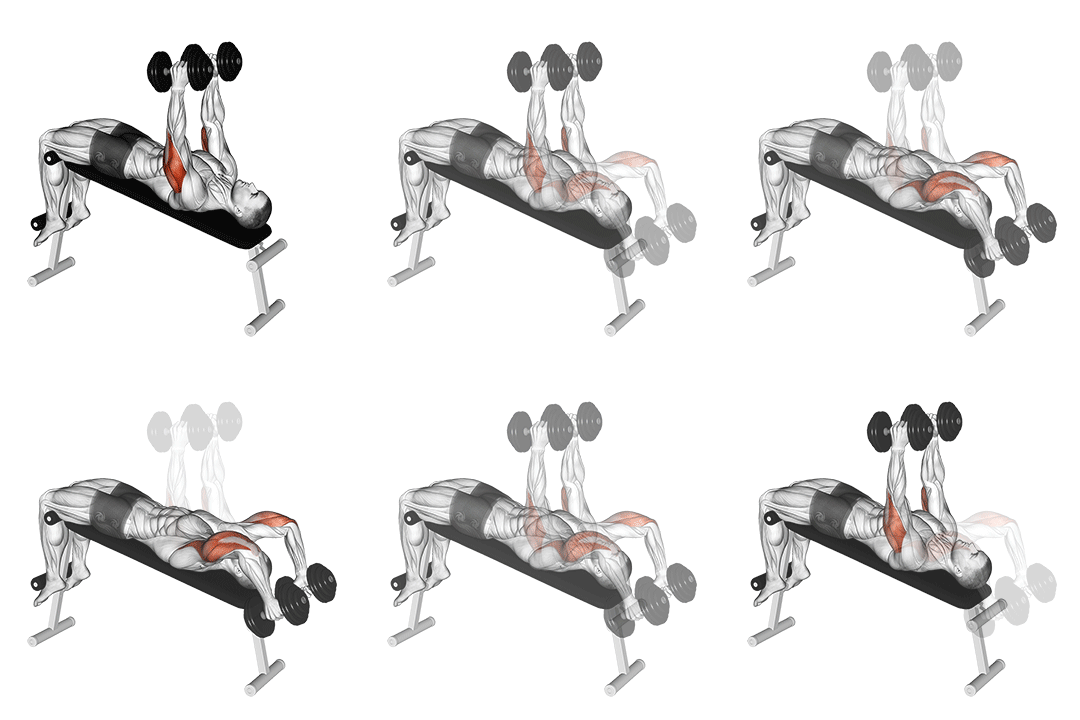
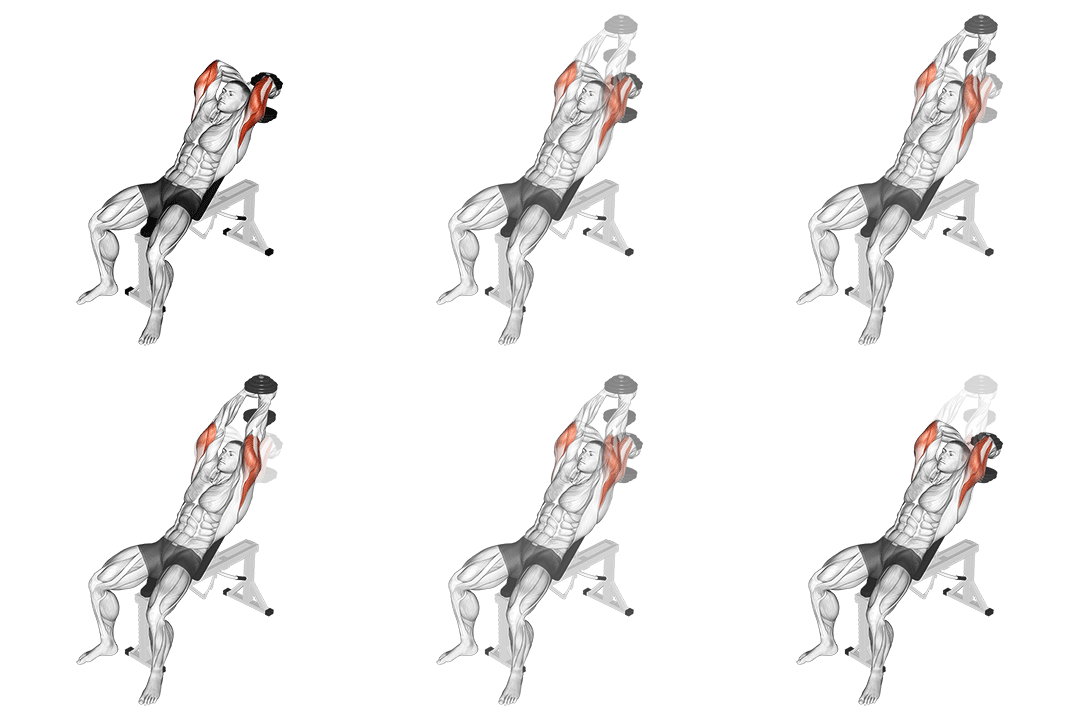
Dumbbell Decline Triceps Extension
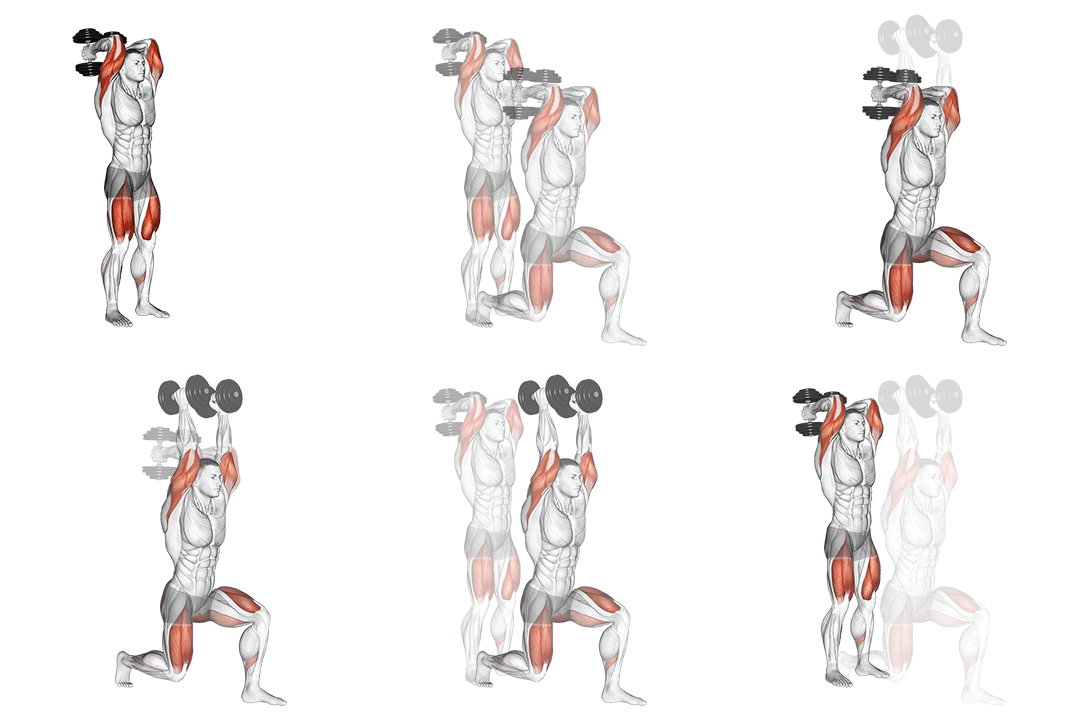
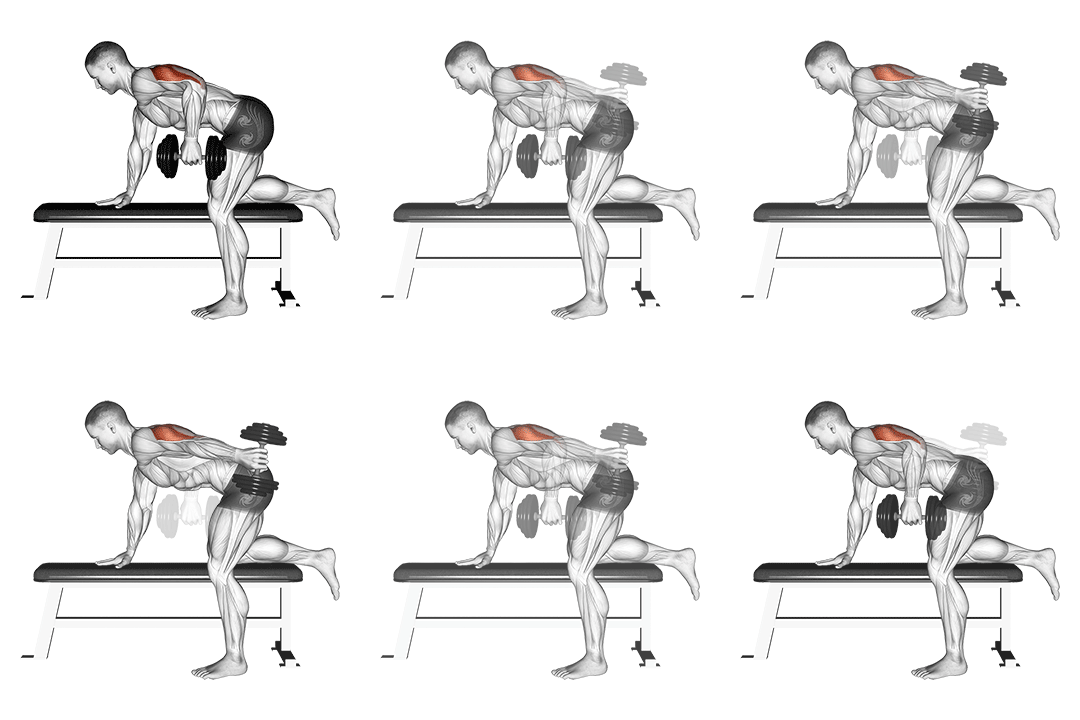
Dumbbell Forward Lunge Triceps Extension
Head-to-Head Comparison
| Attribute | Dumbbell Decline Triceps Extension | Dumbbell Forward Lunge Triceps Extension |
|---|---|---|
| Target Muscle |
Triceps
|
Triceps
|
| Body Part |
Upper-arms
|
Upper-arms
|
| Equipment |
Dumbbell
|
Dumbbell
|
| Difficulty |
Intermediate
|
Intermediate
|
| Movement Type |
Isolation
|
Compound
|
| Secondary Muscles |
1
|
2
|
Secondary Muscles Activated
Dumbbell Decline Triceps Extension
Dumbbell Forward Lunge Triceps Extension
Visual Comparison
Overview
Dumbbell Decline Triceps Extension vs Dumbbell Forward Lunge Triceps Extension — two dumbbell moves that both hammer the triceps but in very different ways. You’ll get clear guidance on muscle targets, biomechanics, and step-by-step technique cues so you can pick the right tool for your goal. I’ll compare primary and secondary muscle recruitment, show how joint angles and force vectors change tension on the long head, and give rep ranges (6–12 for heavy work, 10–20 for metabolic sets) plus progressions and safety tips.
Key Differences
- Dumbbell Decline Triceps Extension is an isolation exercise, while Dumbbell Forward Lunge Triceps Extension is a compound movement.
- Both exercises target the Triceps using Dumbbell. The main differences are in their movement patterns and muscle activation angles.
Pros & Cons
Dumbbell Decline Triceps Extension
+ Pros
- Direct long-head bias from 20–30° decline, improving muscle length-tension for hypertrophy
- Controlled, repeatable range of motion for strict overload and tempo work
- Lower total-body fatigue—easier to focus on triceps volume sets
- Easy to measure progressive overload by increasing dumbbell load or reps
− Cons
- Requires a decline bench or adjustable platform
- Higher shoulder stress if form breaks, especially at end-range extension
- Less carryover to functional movement patterns and core strength
Dumbbell Forward Lunge Triceps Extension
+ Pros
- Compound pattern builds triceps while training balance, core stability, and leg drive
- Minimal equipment—ideal for home or limited gym setups
- Greater caloric and systemic demand—useful in conditioning sessions
- Offers unilateral training benefits to correct asymmetries
− Cons
- Harder to isolate the triceps—other muscles share the load
- Coordination and balance demand increases technical complexity
- Higher risk to knees/ankles if step mechanics or footwear are poor
When Each Exercise Wins
The decline angle increases long-head stretch and time under tension, letting you overload the triceps with strict eccentrics. Use 8–12 reps, 3–5 sets, 2–3s eccentrics to maximize muscle growth.
For pure elbow-extension strength you can progressively load the decline extension with heavier dumbbells while maintaining strict form, improving mechanical tension on the triceps without whole-body interference.
Beginners benefit from the simpler motor pattern and stable position, which makes it easier to learn elbow control and build baseline triceps strength before adding balance challenges.
Requires no bench and trains multiple qualities—triceps, core, and unilateral leg strength—so it gives more value per exercise when equipment is limited.
Frequently Asked Questions
Can I do both Dumbbell Decline Triceps Extension and Dumbbell Forward Lunge Triceps Extension in the same workout?
Yes. Start with the decline extension for heavy, high-tension sets (6–10 reps) to pre-exhaust the triceps, then follow with the lunge extension for metabolic finishers or unilateral work. Keep total volume moderate to avoid excessive fatigue—3–4 sets each.
Which exercise is better for beginners?
Dumbbell Decline Triceps Extension is usually better for beginners because the stable bench position simplifies the motor pattern and lets you focus on elbow extension mechanics before adding balance or gait elements.
How do the muscle activation patterns differ?
Decline extensions emphasize the long head via increased shoulder extension and stretch, producing sustained triceps activation through the eccentric-to-concentric phases. The lunge variation creates phasic triceps activation combined with elevated core and shoulder stabilizer activity due to unilateral loading and step mechanics.
Can Dumbbell Forward Lunge Triceps Extension replace Dumbbell Decline Triceps Extension?
It can replace it when your goal is functional conditioning, core integration, or equipment-free training, but it won’t match the isolation and long-head stretch the decline variation provides for maximal hypertrophy. Choose based on whether you prioritize targeted muscle growth or multi-joint utility.
Expert Verdict
Use the Dumbbell Decline Triceps Extension when your goal is targeted triceps hypertrophy or to increase elbow-extension strength with strict control—set the bench to 20–30°, cue a full but pain-free stretch, and work in 6–12 reps with controlled eccentrics. Choose the Dumbbell Forward Lunge Triceps Extension when you want a time-efficient, functional movement that builds triceps while improving balance and core stability—focus on a short, controlled step, braced core, and rhythmical breathing. Both have a place: prioritize decline extensions for isolated growth blocks and use lunges to add metabolic demand and carryover to real-world strength.
Also Compare
More comparisons with Dumbbell Decline Triceps Extension
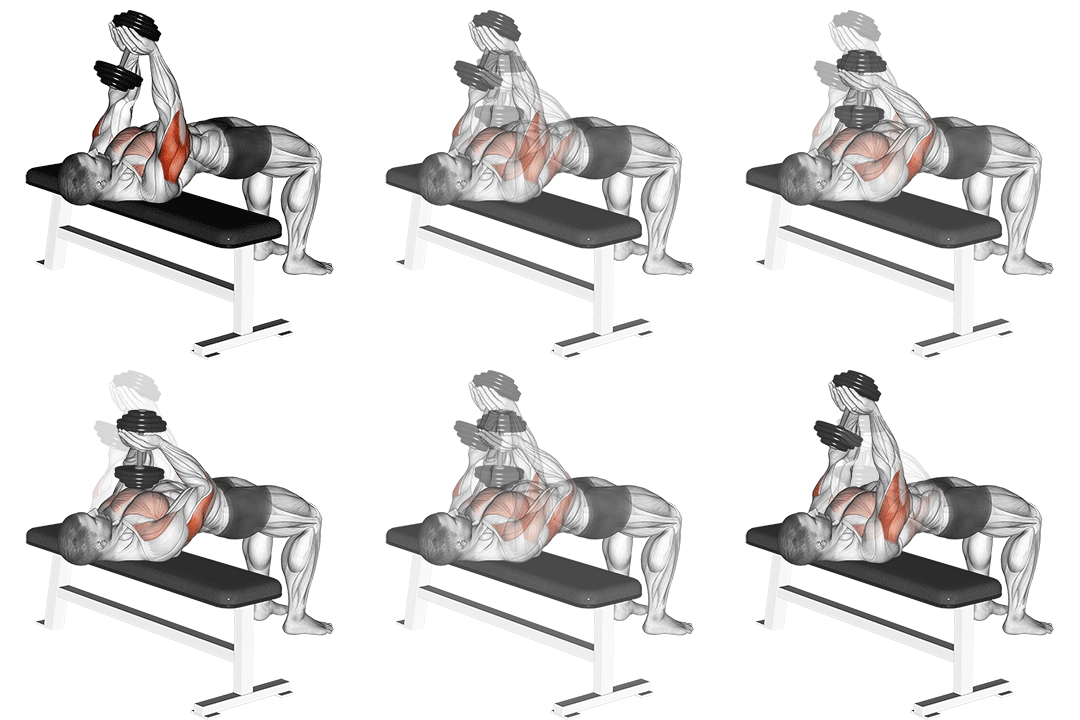
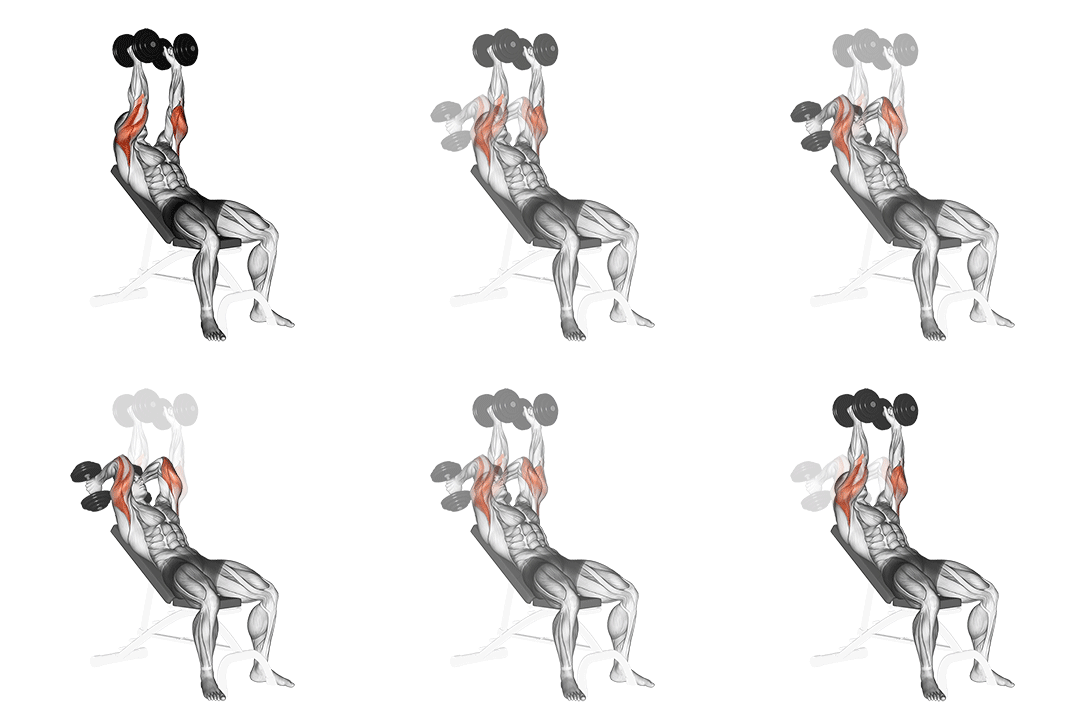
More comparisons with Dumbbell Forward Lunge Triceps Extension
Compare More Exercises
Use our free comparison tool to analyze any two exercises head-to-head.
Compare Exercises