

Dumbbell Floor Press vs Dumbbell Kickback: Complete Comparison Guide
Dumbbell Floor Press vs Dumbbell Kickback — both hit the triceps but in very different ways. You’ll get a clear breakdown of which exercise loads the triceps harder, how each recruits chest and shoulders, the technique cues you should use, and when to pick one over the other for strength, hypertrophy, or convenience. Read practical rep ranges (4–8, 6–12, 8–15), setup and joint-angle notes, and short programming swaps so you can choose the right movement for your goals.
Exercise Comparison
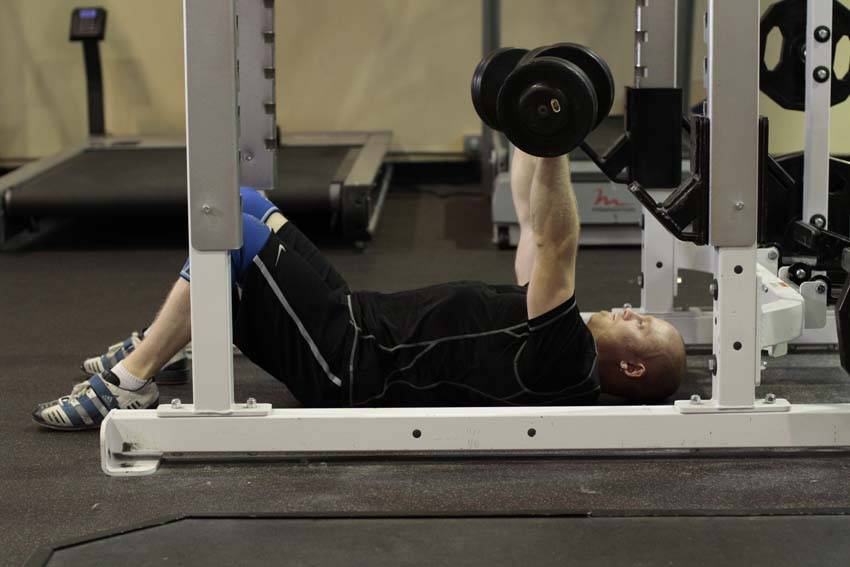
Dumbbell Floor Press
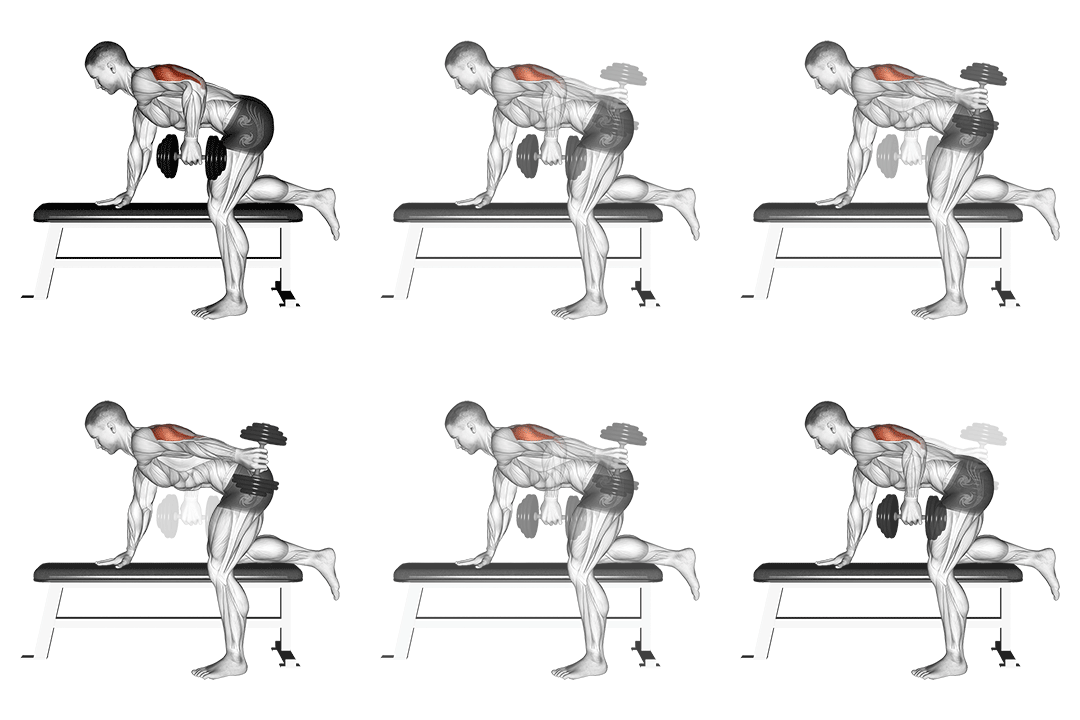
Dumbbell Kickback
Head-to-Head Comparison
| Attribute | Dumbbell Floor Press | Dumbbell Kickback |
|---|---|---|
| Target Muscle |
Triceps
|
Triceps
|
| Body Part |
Upper-arms
|
Upper-arms
|
| Equipment |
Dumbbell
|
Dumbbell
|
| Difficulty |
Intermediate
|
Beginner
|
| Movement Type |
Compound
|
Isolation
|
| Secondary Muscles |
2
|
1
|
Secondary Muscles Activated
Dumbbell Floor Press
Dumbbell Kickback
Visual Comparison
Overview
Dumbbell Floor Press vs Dumbbell Kickback — both hit the triceps but in very different ways. You’ll get a clear breakdown of which exercise loads the triceps harder, how each recruits chest and shoulders, the technique cues you should use, and when to pick one over the other for strength, hypertrophy, or convenience. Read practical rep ranges (4–8, 6–12, 8–15), setup and joint-angle notes, and short programming swaps so you can choose the right movement for your goals.
Key Differences
- Dumbbell Floor Press is a compound movement, while Dumbbell Kickback is an isolation exercise.
- Difficulty levels differ: Dumbbell Floor Press is intermediate, while Dumbbell Kickback is beginner.
- Both exercises target the Triceps using Dumbbell. The main differences are in their movement patterns and muscle activation angles.
Pros & Cons
Dumbbell Floor Press
+ Pros
- Allows heavier external load for strength and hypertrophy
- Recruits chest and shoulders for greater overall muscle stimulus
- Floor stops prevent excessive shoulder extension, protecting the joint
- Multiple progression paths: unilateral, tempo, paused lockout
− Cons
- Requires heavier dumbbells to be effective
- More technical control needed to keep elbows safe
- Less continuous tension on triceps through full extension
Dumbbell Kickback
+ Pros
- Excellent isolation for the triceps long head and lockout
- Minimal equipment and space required
- Simple technique with low external load
- Great for high-rep sets and metabolic work (8–15+ reps)
− Cons
- Limited ability to progressively overload with heavy weight
- Easily cheated with shoulder movement if fatigued
- Less carryover to pressing strength or compound lifts
When Each Exercise Wins
Floor press allows heavier loads and recruits chest and anterior delts in addition to triceps, increasing overall mechanical tension—use 6–12 reps with controlled tempo and a 1–2 second eccentric.
You can progressively overload the floor press with heavier dumbbells and train 4–8 reps to raise maximal elbow and lockout strength; its compound nature translates better to pressing strength.
Kickbacks have a shorter learning curve and lower external load, so beginners can master strict elbow extension and 8–15 rep ranges without complex setup or heavy weights.
Kickbacks need minimal space and a single light-to-moderate dumbbell, making them easier to perform at home; use them for direct triceps work when heavy dumbbells aren’t available.
Frequently Asked Questions
Can I do both Dumbbell Floor Press and Dumbbell Kickback in the same workout?
Yes — program the floor press as your heavy compound (4–8 or 6–12 reps) and add 2–4 sets of kickbacks as an isolation finisher (8–15 reps, slow tempo) to increase triceps volume without overstressing the shoulders.
Which exercise is better for beginners?
Dumbbell Kickback is better for beginners due to its simple motor pattern and low-load requirement. Start with strict form, focus on controlled elbow extension, and progress reps and tempo before adding weight.
How do the muscle activation patterns differ?
Floor press produces rising triceps activation toward lockout while also loading pecs and delts because of a horizontal push vector; kickbacks keep continuous end-range tension on elbow extensors with a shorter lever arm, favoring isolation of the long head and constant torque at the elbow.
Can Dumbbell Kickback replace Dumbbell Floor Press?
Not if your primary goal is maximal strength or heavy hypertrophy—kickbacks don’t permit the same progressive overload. Use kickbacks as a supplemental isolation movement, not a full replacement for compound pressing.
Expert Verdict
Use the Dumbbell Floor Press when your goal is increased mechanical tension, compound overload, and transferring strength to pressing movements. It’s the go-to for 4–8 strength blocks or 6–12 hypertrophy cycles, and it stresses triceps under heavier loads while engaging chest and shoulders. Choose Dumbbell Kickbacks when you want isolation, a simple home-friendly movement, or to target the triceps long head with high reps and long time under tension (8–15+ reps). Pair them: floor press as the heavy compound, kickbacks as a finishing isolation exercise to add volume and shape.
Also Compare
More comparisons with Dumbbell Floor Press
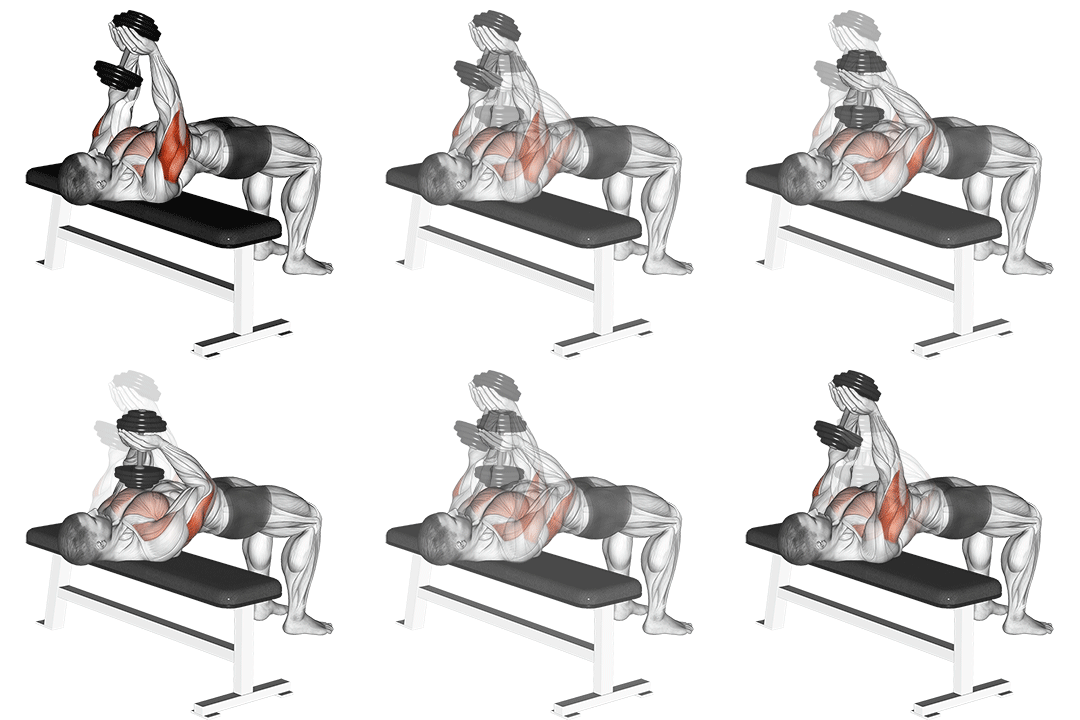
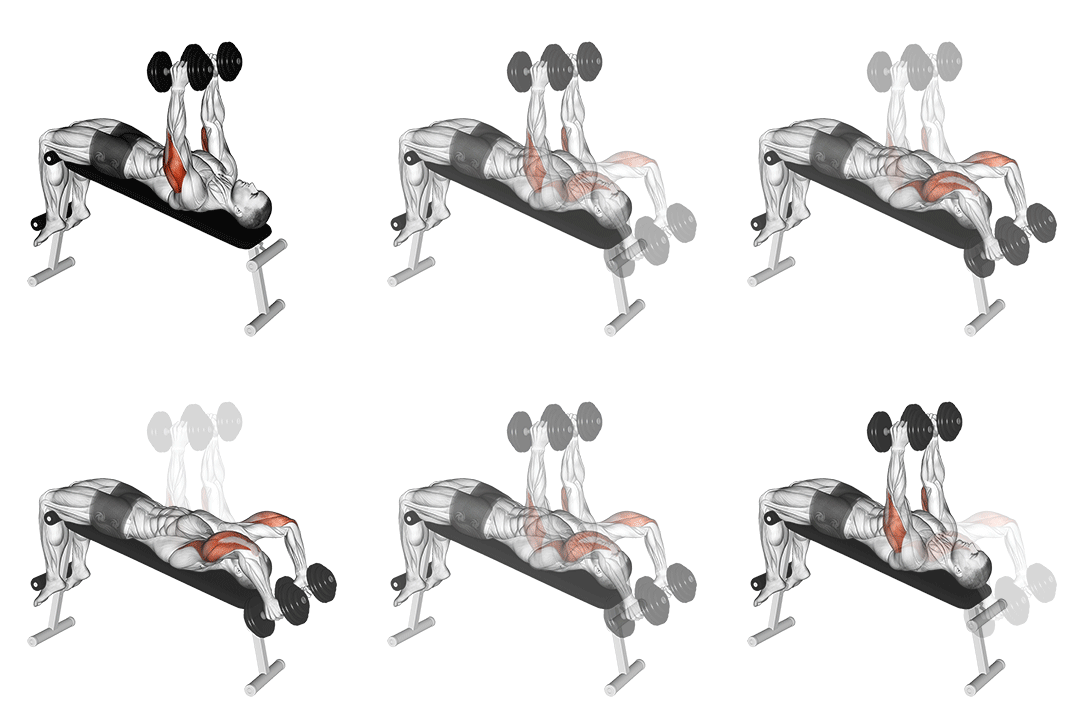
More comparisons with Dumbbell Kickback
Compare More Exercises
Use our free comparison tool to analyze any two exercises head-to-head.
Compare Exercises