

Dumbbell Forward Lunge Triceps Extension vs Dumbbell Kickback: Complete Comparison Guide
Dumbbell Forward Lunge Triceps Extension vs Dumbbell Kickback — both hit the triceps, but they do it in very different ways. In this guide you'll get clear, actionable comparisons on muscle activation, biomechanics, technique cues, rep ranges, and when to pick each exercise for muscle growth, strength, or rehab. I'll show you which movement stresses the long head versus the lateral head, how stability and force vectors change load, and practical programming tips so you can pick the right movement for your goals and training level.
Exercise Comparison
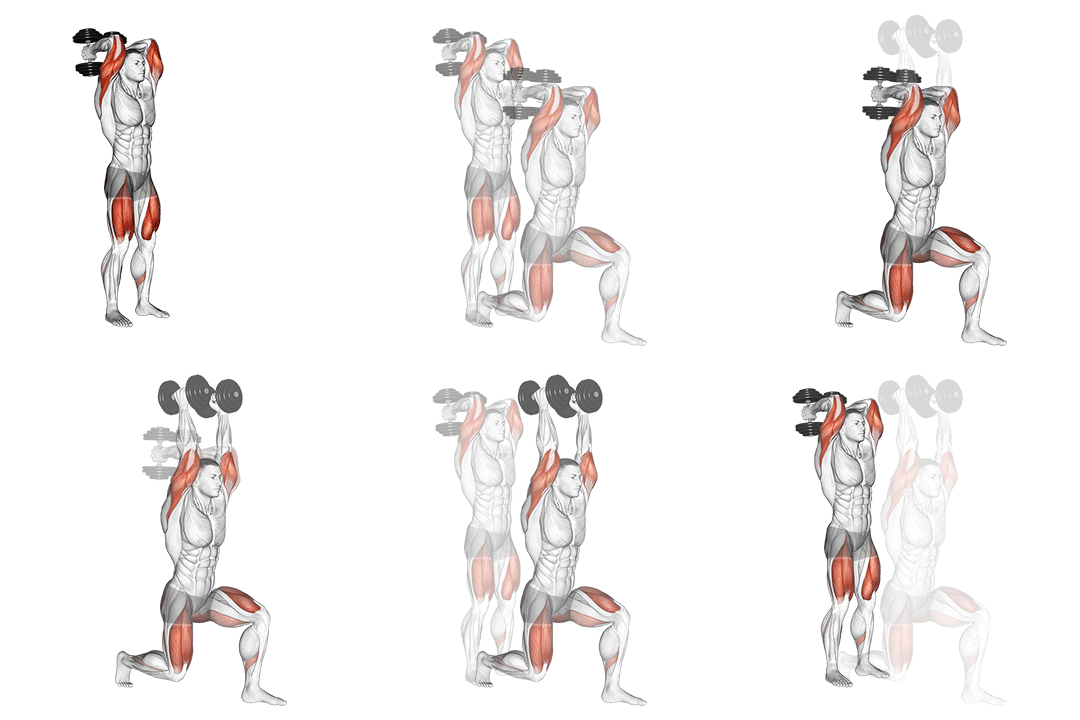
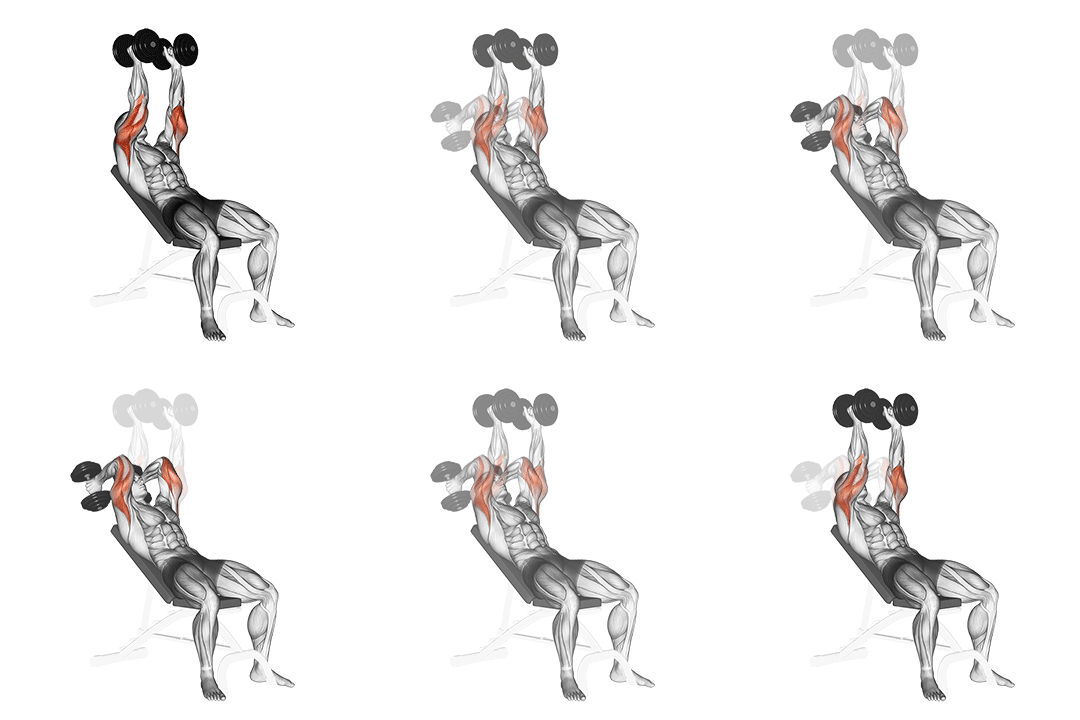
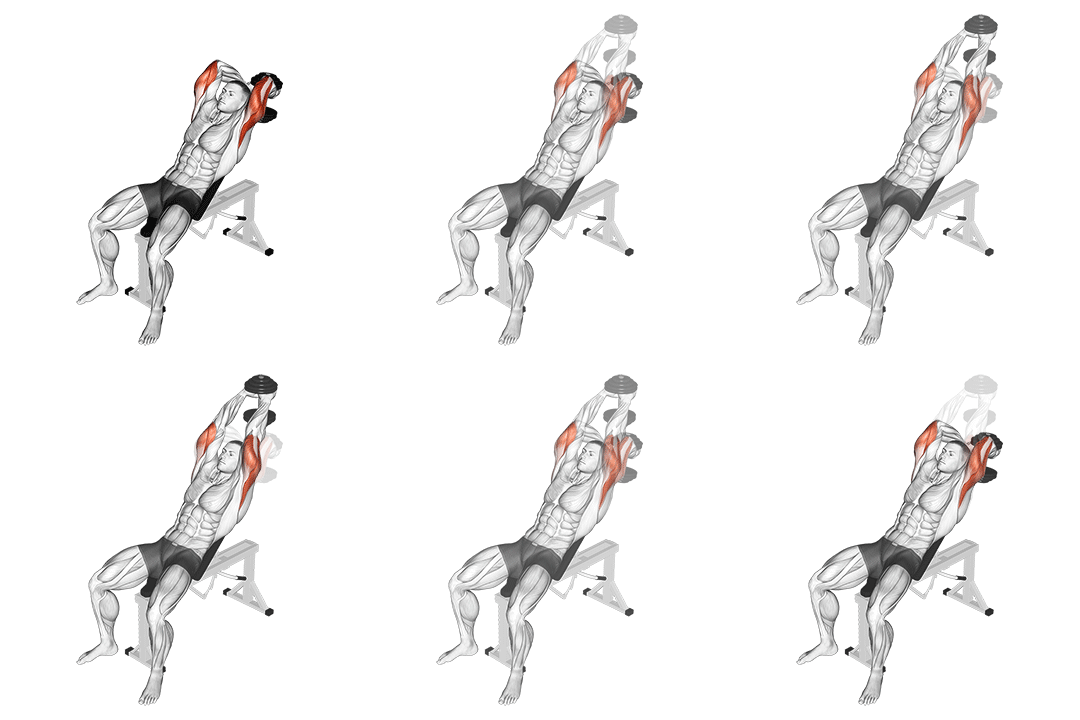
Dumbbell Forward Lunge Triceps Extension
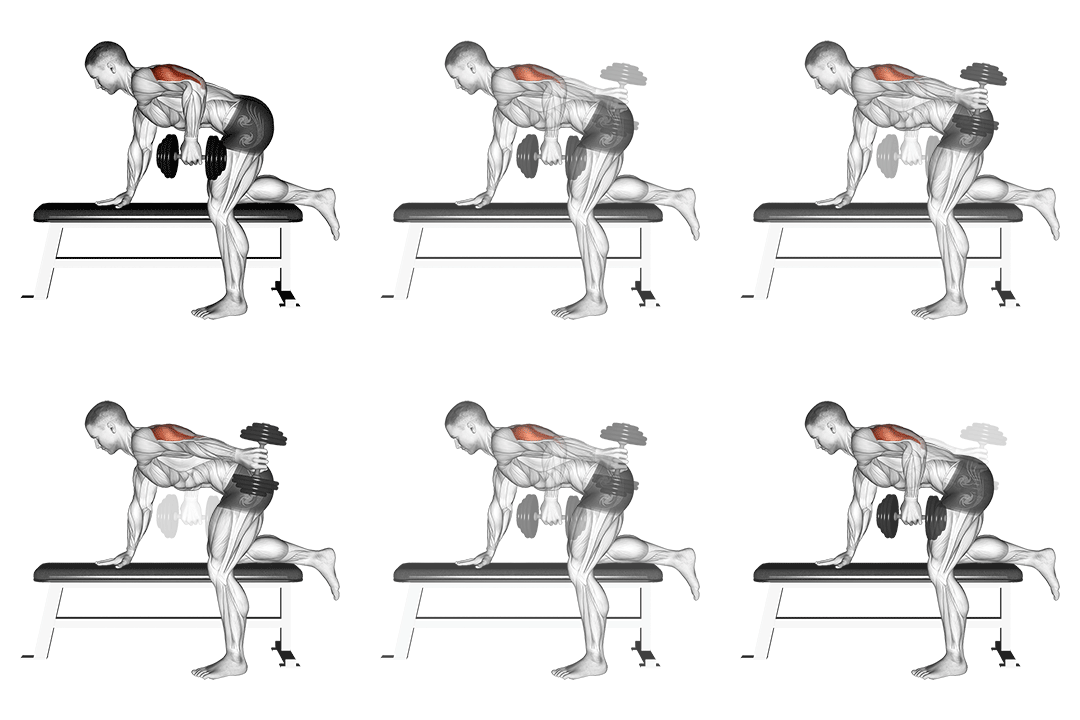
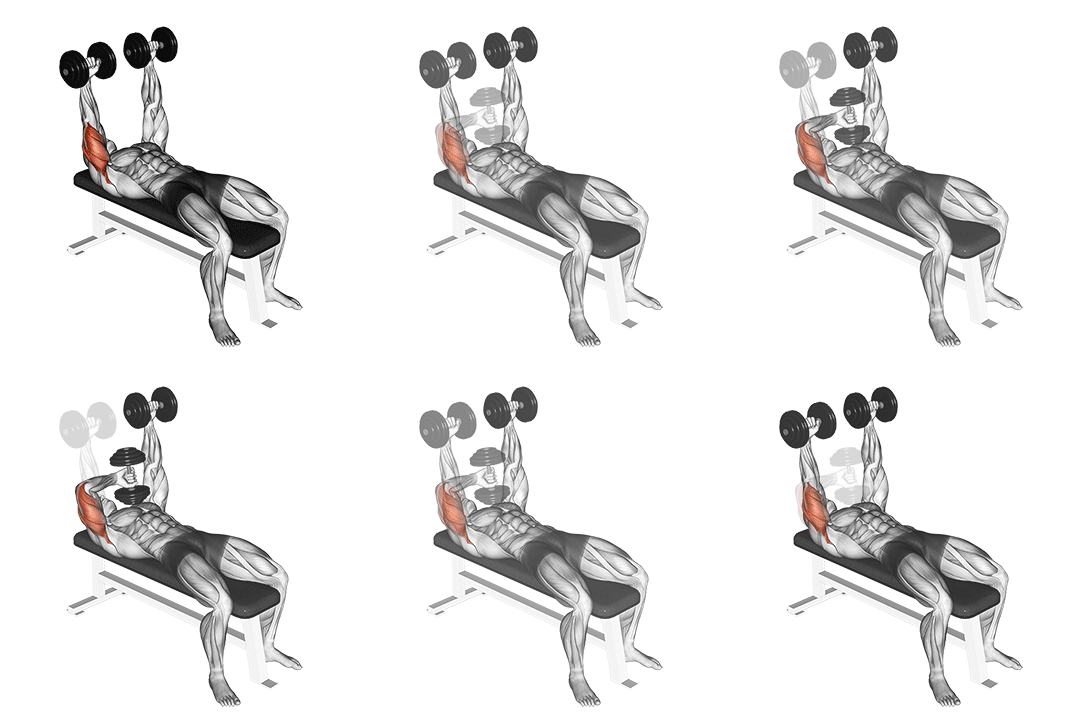
Dumbbell Kickback
Head-to-Head Comparison
| Attribute | Dumbbell Forward Lunge Triceps Extension | Dumbbell Kickback |
|---|---|---|
| Target Muscle |
Triceps
|
Triceps
|
| Body Part |
Upper-arms
|
Upper-arms
|
| Equipment |
Dumbbell
|
Dumbbell
|
| Difficulty |
Intermediate
|
Beginner
|
| Movement Type |
Compound
|
Isolation
|
| Secondary Muscles |
2
|
1
|
Secondary Muscles Activated
Dumbbell Forward Lunge Triceps Extension
Dumbbell Kickback
Visual Comparison
Overview
Dumbbell Forward Lunge Triceps Extension vs Dumbbell Kickback — both hit the triceps, but they do it in very different ways. In this guide you'll get clear, actionable comparisons on muscle activation, biomechanics, technique cues, rep ranges, and when to pick each exercise for muscle growth, strength, or rehab. I'll show you which movement stresses the long head versus the lateral head, how stability and force vectors change load, and practical programming tips so you can pick the right movement for your goals and training level.
Key Differences
- Dumbbell Forward Lunge Triceps Extension is a compound movement, while Dumbbell Kickback is an isolation exercise.
- Difficulty levels differ: Dumbbell Forward Lunge Triceps Extension is intermediate, while Dumbbell Kickback is beginner.
- Both exercises target the Triceps using Dumbbell. The main differences are in their movement patterns and muscle activation angles.
Pros & Cons
Dumbbell Forward Lunge Triceps Extension
+ Pros
- Higher total load potential — you can use 10–30% heavier dumbbells due to leg support and stability
- Builds unilateral leg stability and core anti-rotation alongside triceps work
- Greater long-head triceps stretch when shoulder is flexed ~20°–45°, improving length-tension stimulus
- Versatile for metabolic or strength-focused sets (6–12 reps heavy, 12–20 reps tempo)
− Cons
- More complex motor pattern — requires coordination of lunge and elbow extension
- Higher technical demand increases injury risk for knees and lower back if done poorly
- Not ideal when you want pure triceps isolation due to secondary muscle involvement
Dumbbell Kickback
+ Pros
- Excellent isolation of elbow extension for focused triceps work
- Low technical barrier — quick to learn and easy to coach
- Lower overall injury risk if performed with controlled tempo and light-to-moderate load
- Minimal space and equipment required; great for supersetting and high-rep work (10–20+ reps)
− Cons
- Limited absolute load due to long lever arm and poor mechanical advantage
- Less carryover to compound pushing strength since it lacks multi-joint demand
- Can become stale for progression without changing tempo, reps, or angles
When Each Exercise Wins
The lunge-extension lets you use heavier loads and combines time under tension from both the leg drive and elbow extension. That multi-joint stress increases total work and recruits triceps across varied lengths, improving hypertrophy when programmed for 6–12 or 8–15 rep ranges.
Because you can load heavier and challenge the triceps under multi-joint tension, it transfers better to pushing strength. Use lower reps (4–8) with controlled pauses to maximize force production and neural adaptation.
Kickbacks isolate the elbow extension pattern with a simple torso brace, making it easier to master form and feel the triceps. Start with light weight and 10–15 reps to build motor control before progressing to complex compound variations.
Kickbacks need minimal space and no extra setup, and they let you target the triceps effectively with a single pair of dumbbells. They integrate well into circuits or supersets in constrained spaces.
Frequently Asked Questions
Can I do both Dumbbell Forward Lunge Triceps Extension and Dumbbell Kickback in the same workout?
Yes. Pair the lunge-extension earlier as a primary compound movement (3–5 sets of 6–12 reps) and use kickbacks as a finisher (2–4 sets of 10–20 reps) to increase time under tension and address any weak points.
Which exercise is better for beginners?
Dumbbell Kickback is better for beginners because it isolates the elbow-extension pattern and demands less coordination. Start light to learn the hinge and full extension before attempting the combined lunge-extension.
How do the muscle activation patterns differ?
The lunge-extension produces variable triceps activation across joint angles and recruits core, hip, and shoulder stabilizers due to multi-joint force transfer. The kickback maintains a fixed humeral position, concentrating activation at terminal elbow extension with a consistent horizontal force vector.
Can Dumbbell Kickback replace Dumbbell Forward Lunge Triceps Extension?
Not entirely. Kickbacks can replace the lunge-extension if you only need isolation work or have space limits, but they won’t provide the same multi-joint overload or stability challenge. For strength and heavier loading, keep the lunge-extension in your program.
Expert Verdict
Use the Dumbbell Forward Lunge Triceps Extension when you want to maximize overall workload and build both triceps mass and functional strength — it favors multi-joint overload, stabilizer recruitment, and progressive loading (6–12 reps heavy or 8–15 for hypertrophy). Choose the Dumbbell Kickback when your goal is strict triceps isolation, motor-pattern learning, or limited space; it’s ideal for beginners or as a finisher with higher reps (10–20+). Program both: prioritize the lunge-extension for heavy compound work and add kickbacks to target the triceps head you want to emphasize at the end of a session.
Also Compare
More comparisons with Dumbbell Forward Lunge Triceps Extension
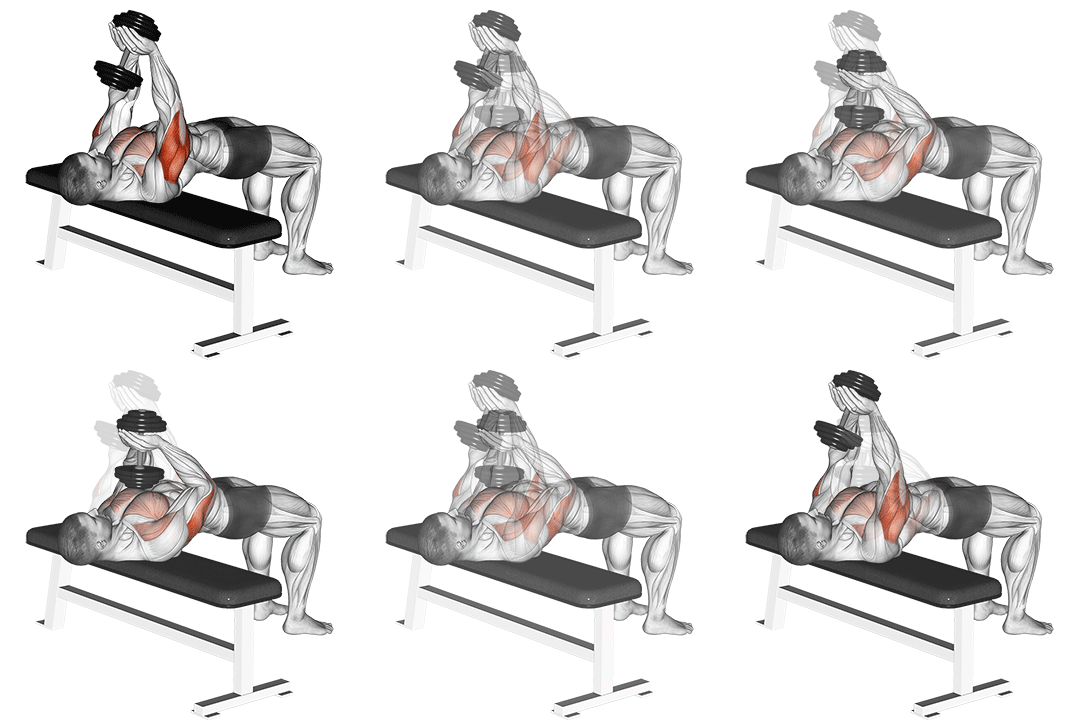
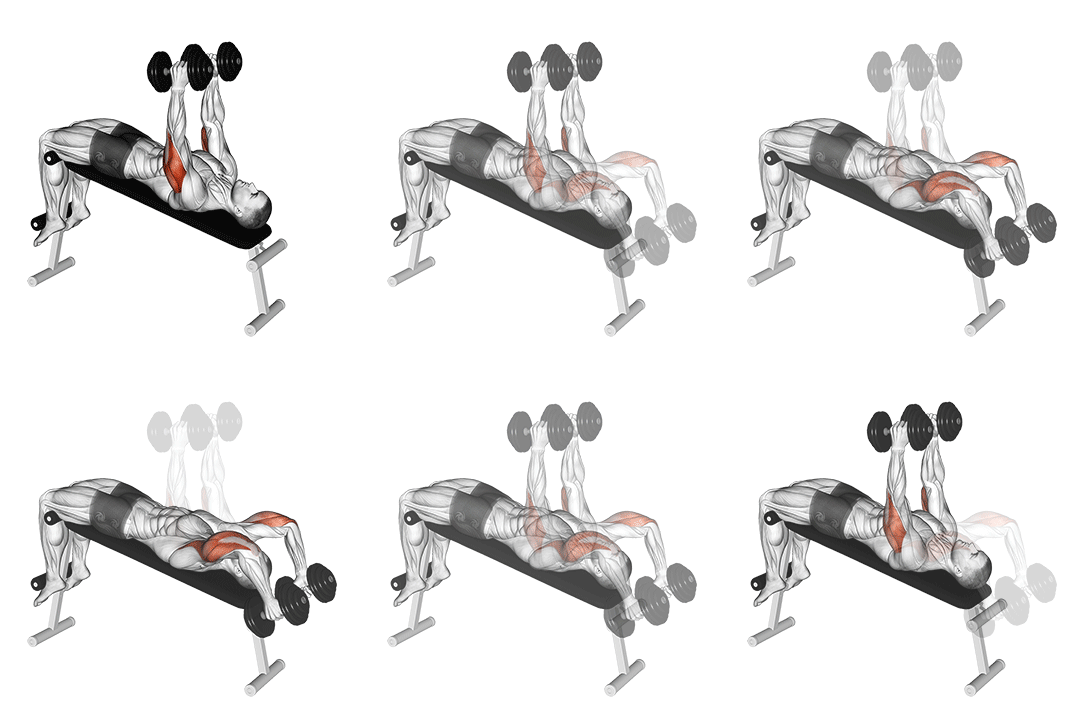
More comparisons with Dumbbell Kickback
Compare More Exercises
Use our free comparison tool to analyze any two exercises head-to-head.
Compare Exercises