

Dumbbell Forward Lunge Triceps Extension vs Dumbbell Lying Extension (across Face): Complete Compari
Dumbbell Forward Lunge Triceps Extension vs Dumbbell Lying Extension (across Face) — you’re comparing a unilateral compound move against a strict isolation lift to decide how to train your triceps. This guide breaks down primary and secondary muscle activation, equipment needs, difficulty and injury risk, plus programming tips (rep ranges, tempos, and progressions). You’ll get clear technique cues, biomechanical reasoning (force vectors, length-tension relationships, joint angles), and scenario-based winners so you can pick the exercise that best advances your triceps muscle growth and overall training goals.
Exercise Comparison
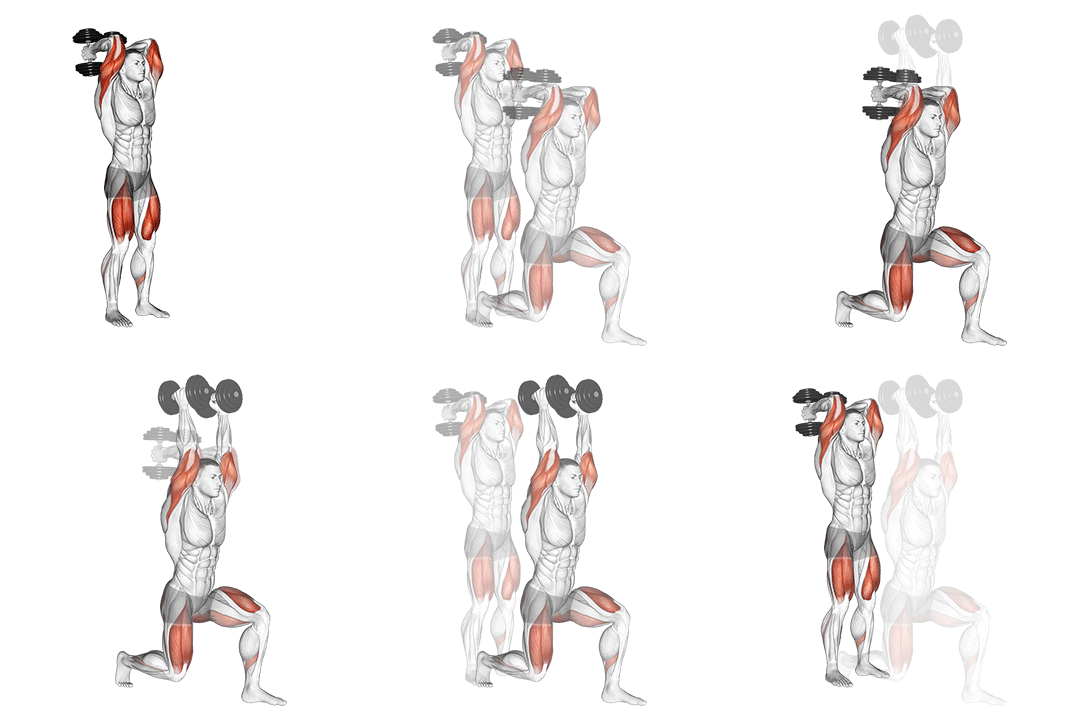
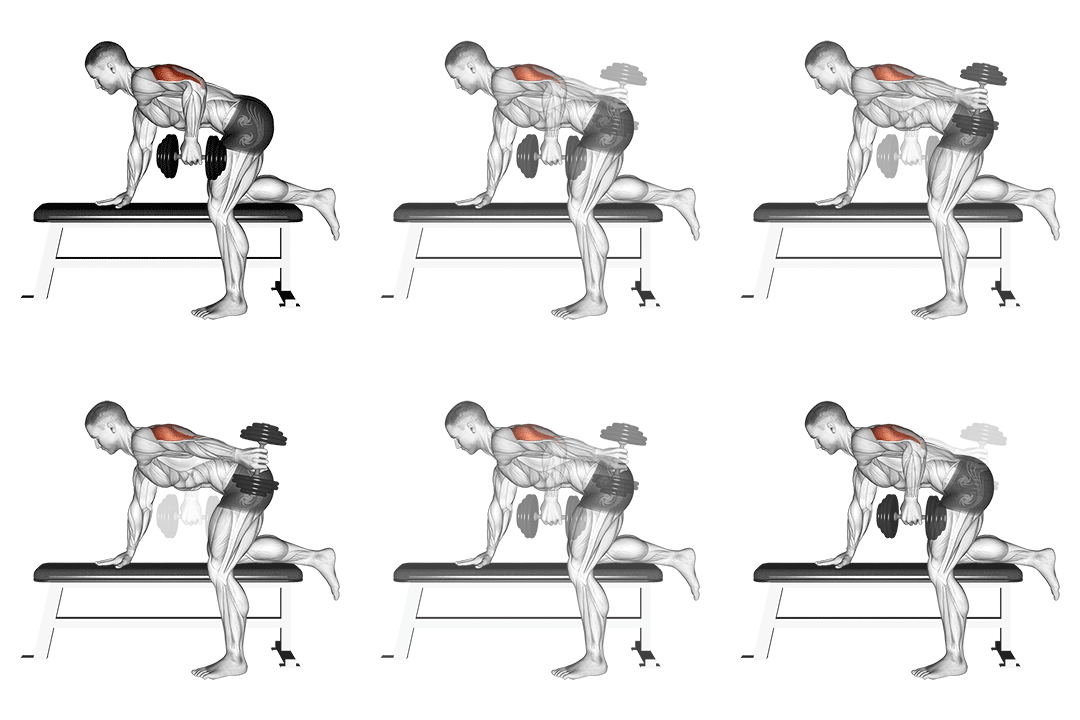
Dumbbell Forward Lunge Triceps Extension
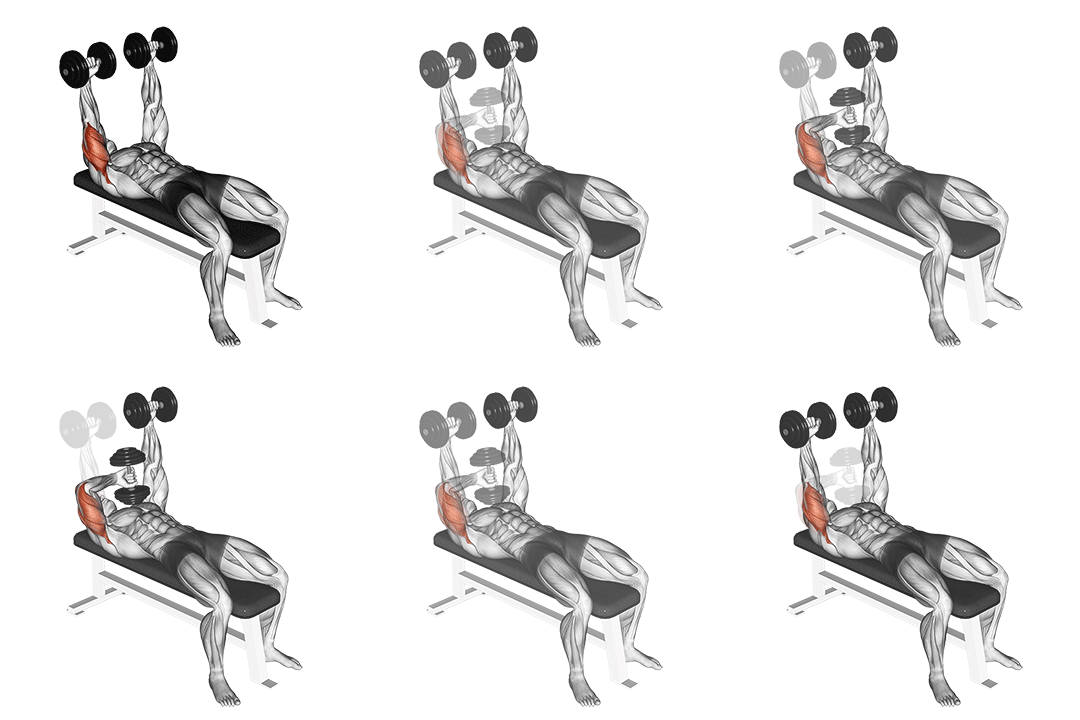
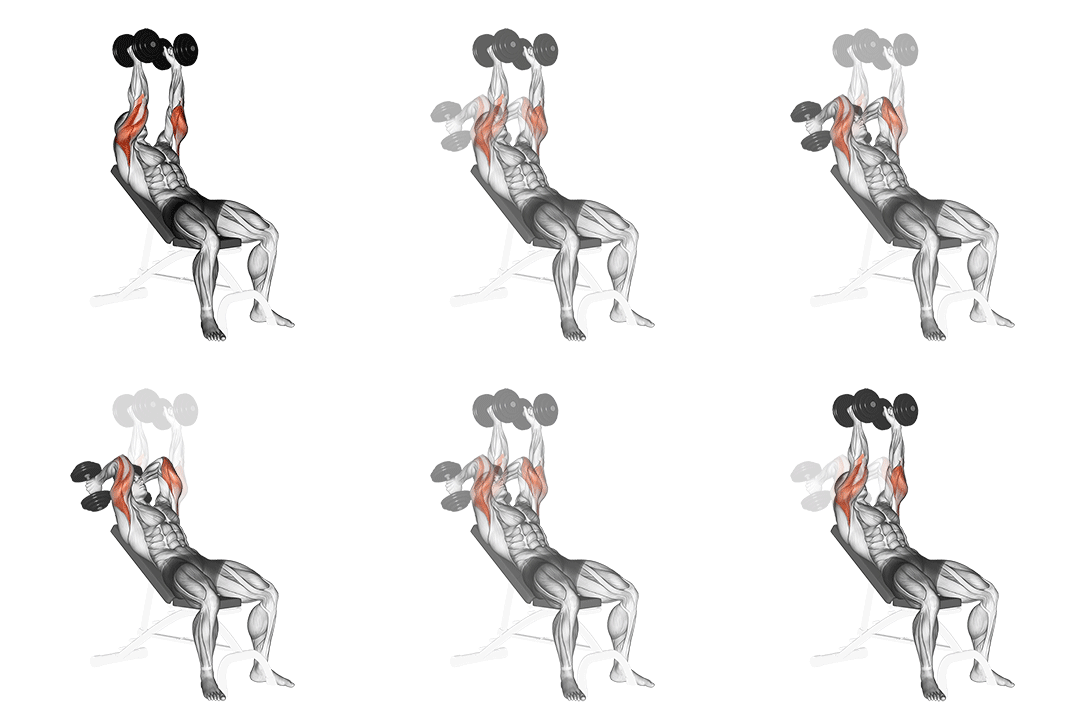
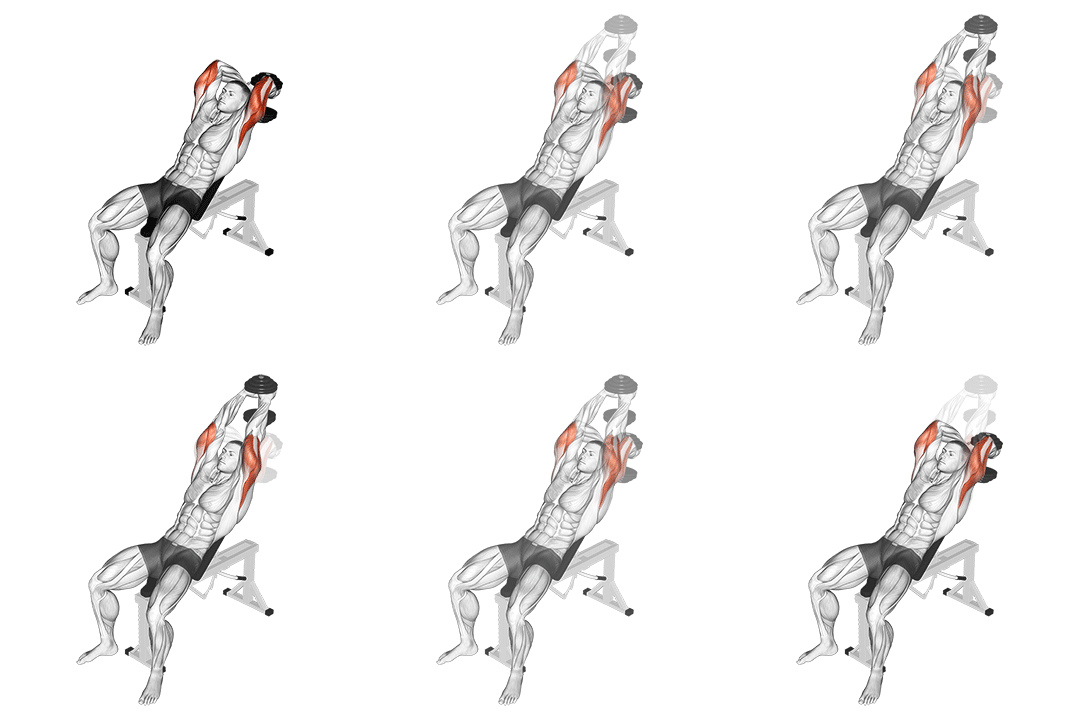
Dumbbell Lying Extension (across Face)
Head-to-Head Comparison
| Attribute | Dumbbell Forward Lunge Triceps Extension | Dumbbell Lying Extension (across Face) |
|---|---|---|
| Target Muscle |
Triceps
|
Triceps
|
| Body Part |
Upper-arms
|
Upper-arms
|
| Equipment |
Dumbbell
|
Dumbbell
|
| Difficulty |
Intermediate
|
Intermediate
|
| Movement Type |
Compound
|
Isolation
|
| Secondary Muscles |
2
|
1
|
Secondary Muscles Activated
Dumbbell Forward Lunge Triceps Extension
Dumbbell Lying Extension (across Face)
Visual Comparison
Overview
Dumbbell Forward Lunge Triceps Extension vs Dumbbell Lying Extension (across Face) — you’re comparing a unilateral compound move against a strict isolation lift to decide how to train your triceps. This guide breaks down primary and secondary muscle activation, equipment needs, difficulty and injury risk, plus programming tips (rep ranges, tempos, and progressions). You’ll get clear technique cues, biomechanical reasoning (force vectors, length-tension relationships, joint angles), and scenario-based winners so you can pick the exercise that best advances your triceps muscle growth and overall training goals.
Key Differences
- Dumbbell Forward Lunge Triceps Extension is a compound movement, while Dumbbell Lying Extension (across Face) is an isolation exercise.
- Both exercises target the Triceps using Dumbbell. The main differences are in their movement patterns and muscle activation angles.
Pros & Cons
Dumbbell Forward Lunge Triceps Extension
+ Pros
- Compound movement builds triceps plus core and shoulder stability
- Unilateral loading corrects imbalances and improves anti-rotation strength
- Higher overall metabolic demand — good for work capacity
- Multiple progression variables (step length, tempo, load, unilateral carry)
− Cons
- Less pure triceps isolation — harder to fully fatigue the muscle for hypertrophy
- Requires space and balance, increasing skill demand
- Higher mechanical stress on knees and lower back if performed with poor form
Dumbbell Lying Extension (across Face)
+ Pros
- Excellent triceps isolation for focused hypertrophy
- Stable position allows consistent ROM and heavier distal load per rep
- Simple to learn and easy to program (sets/reps/tempo)
- Can emphasize different heads by changing shoulder angle across face
− Cons
- Limited core and functional carryover compared with compound options
- Potential shoulder or elbow stress if humerus angle or grip is poor
- Less total-body metabolic stimulus
When Each Exercise Wins
The lying extension isolates the elbow extensor moment and allows you to target time under tension (8–15 reps, 2–3 second eccentrics) and progressive overload specifically for the triceps long and lateral heads.
As a compound unilateral lift it enables heavier systemic loading, improved core integration, and functional strength adaptations; you can overload multiple systems simultaneously to increase overall pressing and stabilization strength.
It’s mechanically simpler: you stabilize the shoulder and isolate the elbow joint which reduces coordination demands so beginners can learn load management and safe ROM before adding complexity.
Requires minimal space and a single dumbbell and can be performed on the floor, making it the easier option for limited-equipment home sessions.
Frequently Asked Questions
Can I do both Dumbbell Forward Lunge Triceps Extension and Dumbbell Lying Extension (across Face) in the same workout?
Yes — pair them strategically: perform the forward lunge variation earlier to use fresh strength for compound work, then follow with lying extensions as a finisher to fully fatigue the triceps (2–4 sets of 8–12 reps). Monitor total volume to avoid excessive elbow stress.
Which exercise is better for beginners?
Dumbbell Lying Extension (across Face) is better for beginners because it reduces balance and coordination demands, allowing you to focus on safe elbow mechanics and progressive loading before introducing unilateral complexity.
How do the muscle activation patterns differ?
The lying extension produces concentrated elbow-extension activation with a consistent moment arm across the ROM, while the forward lunge version produces variable activation tied to torso angle and balance demands, adding shoulder and core co-contraction rather than pure triceps torque.
Can Dumbbell Lying Extension (across Face) replace Dumbbell Forward Lunge Triceps Extension?
If your goal is pure triceps hypertrophy, the lying extension can replace the lunge for targeted work. If you need unilateral strength, balance, or core carryover, keep the lunge — they serve complementary roles in a well-rounded program.
Expert Verdict
Use the Dumbbell Lying Extension (across Face) when your priority is direct triceps muscle growth and controlling elbow-extension torque — program it for 3–4 sets of 8–15 reps with slow eccentrics (2–3 seconds) to exploit length-tension and time under tension. Choose the Dumbbell Forward Lunge Triceps Extension when you want to build unilateral strength, core stability, and carryover to functional pressing under load; treat it as a compound accessory for 3–5 sets of 6–12 reps, focusing on step mechanics and torso brace. Combine both across phases: isolate to finish a session or prioritize compound work earlier for systemic overload and progression.
Also Compare
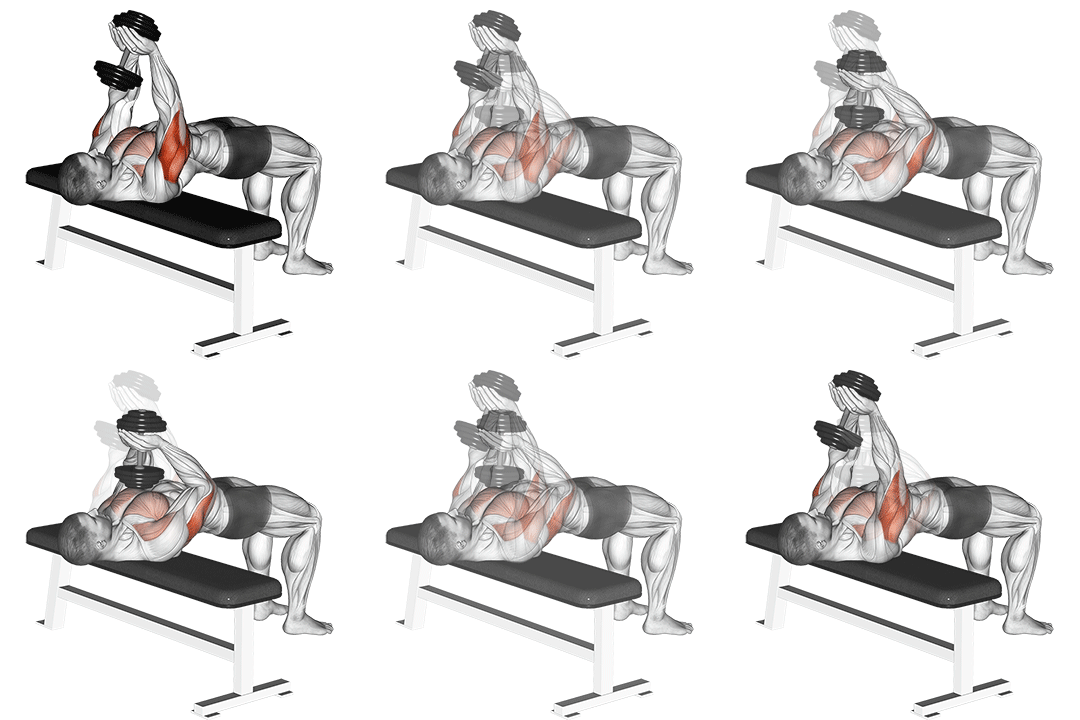
More comparisons with Dumbbell Forward Lunge Triceps Extension
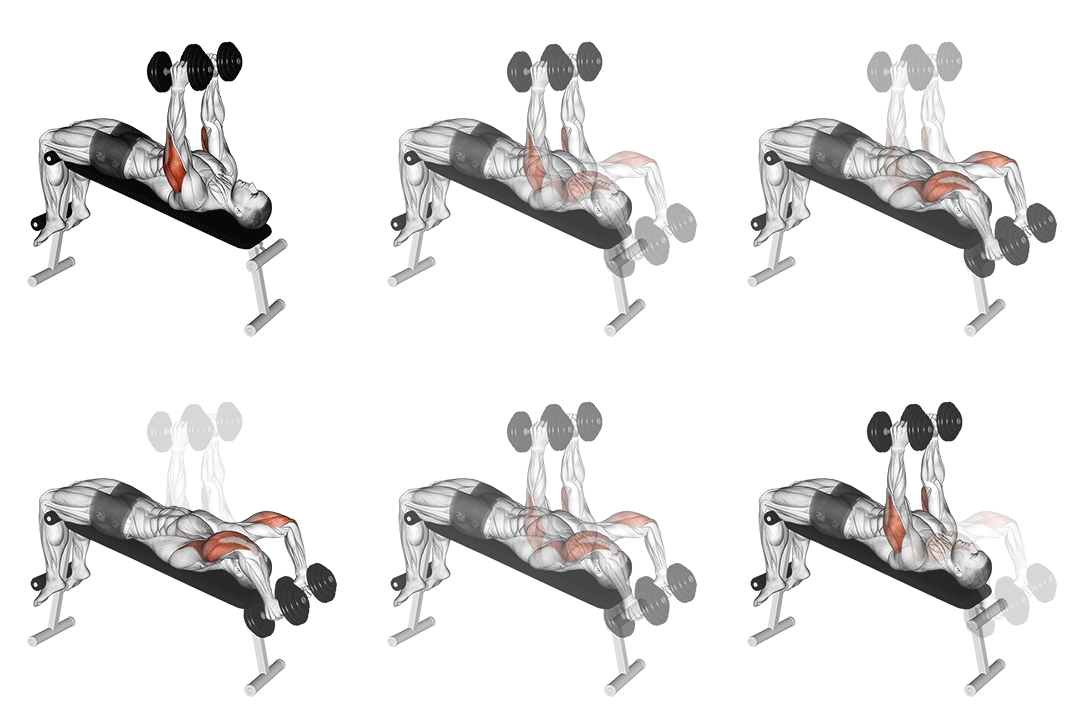
More comparisons with Dumbbell Lying Extension (across Face)
Compare More Exercises
Use our free comparison tool to analyze any two exercises head-to-head.
Compare Exercises