

Ez Bar Seated Close Grip Concentration Curl vs Ez Barbell Reverse Grip Curl: Complete Comparison Gui
Ez Bar Seated Close Grip Concentration Curl vs Ez Barbell Reverse Grip Curl — you’ve got two isolation moves that both hit the upper-arms but feel very different. If you want specific guidance, this comparison breaks down muscle activation, biomechanics, technique cues, rep ranges (6–12 for strength/hypertrophy focus, 12–20 for pump), equipment needs, and risk factors. I’ll show you which exercise emphasizes peak biceps contraction, which recruits more forearm and brachioradialis, how to set up each rep, and which to pick depending on your goal and training environment.
Exercise Comparison
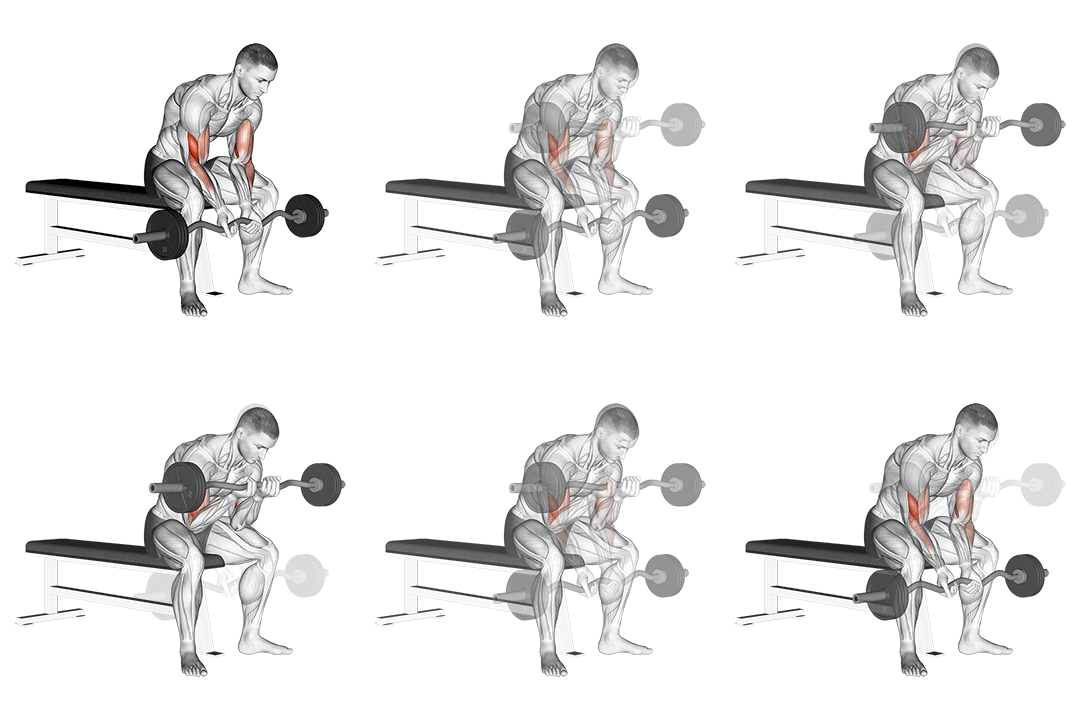
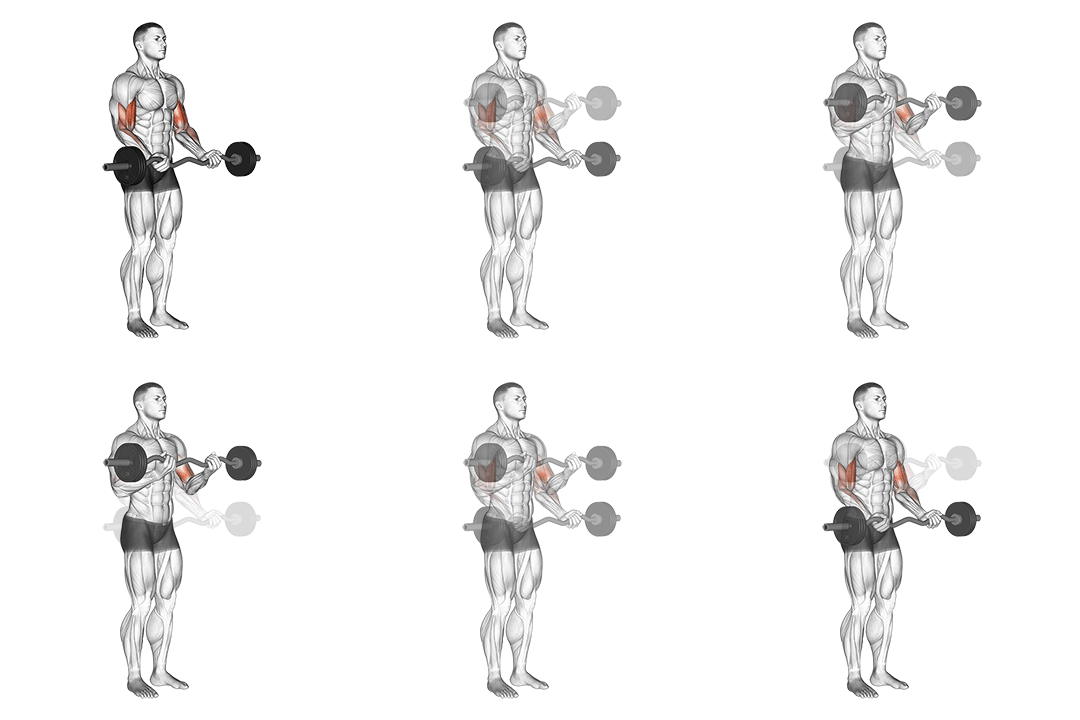
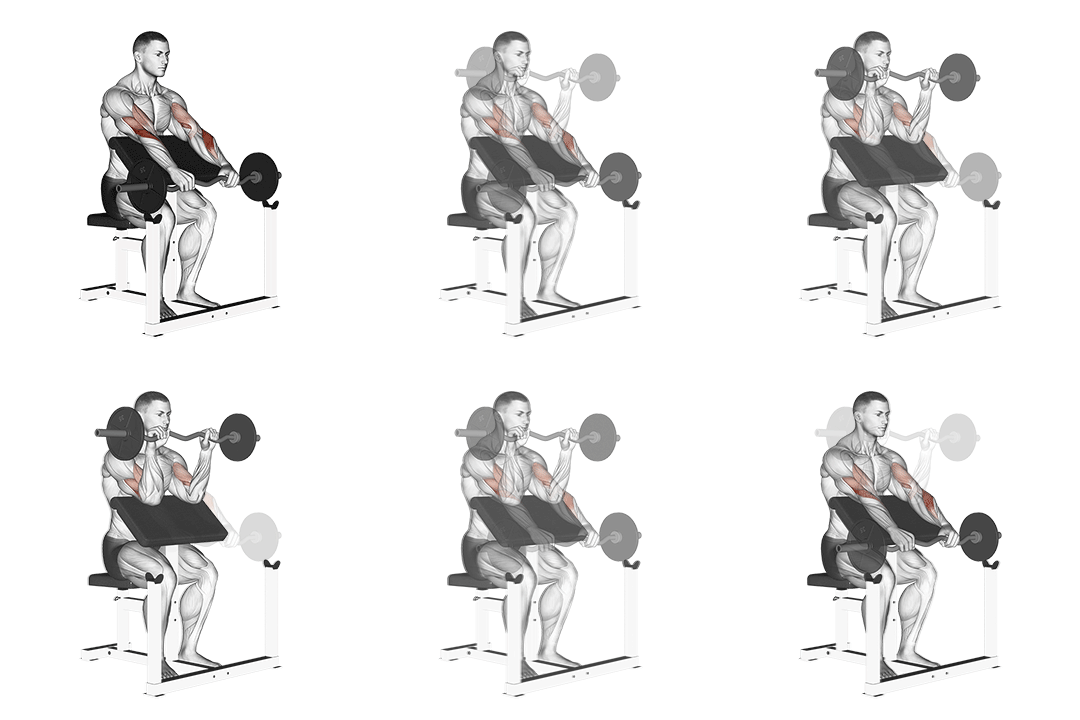
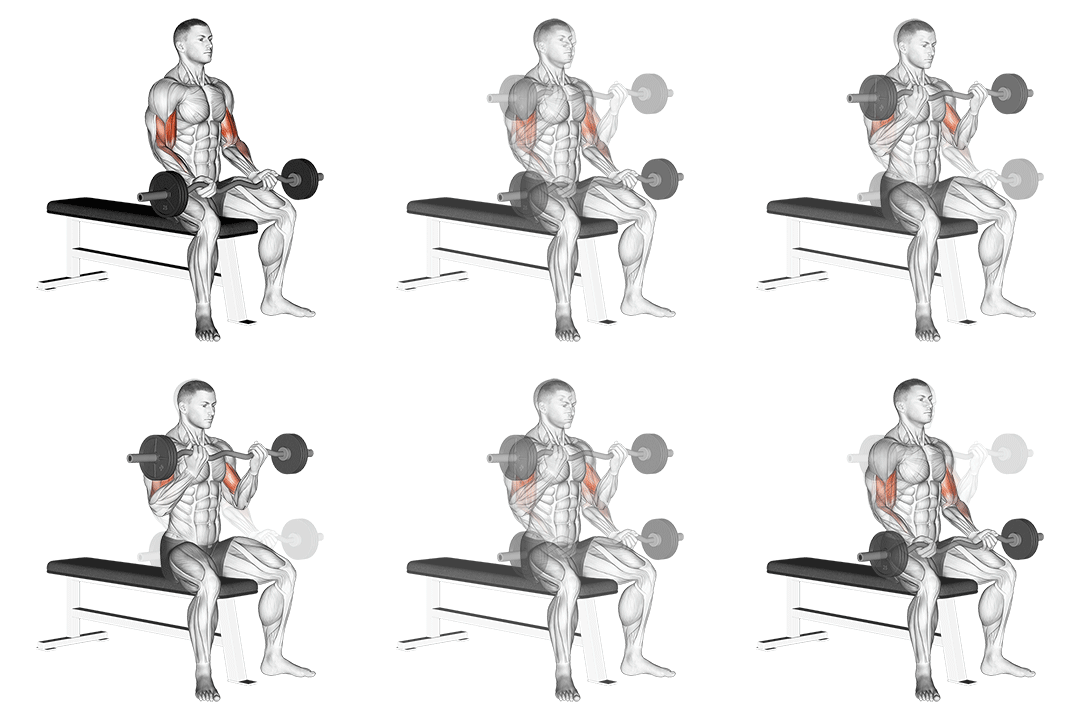
EZ Bar Seated Close Grip Concentration Curl
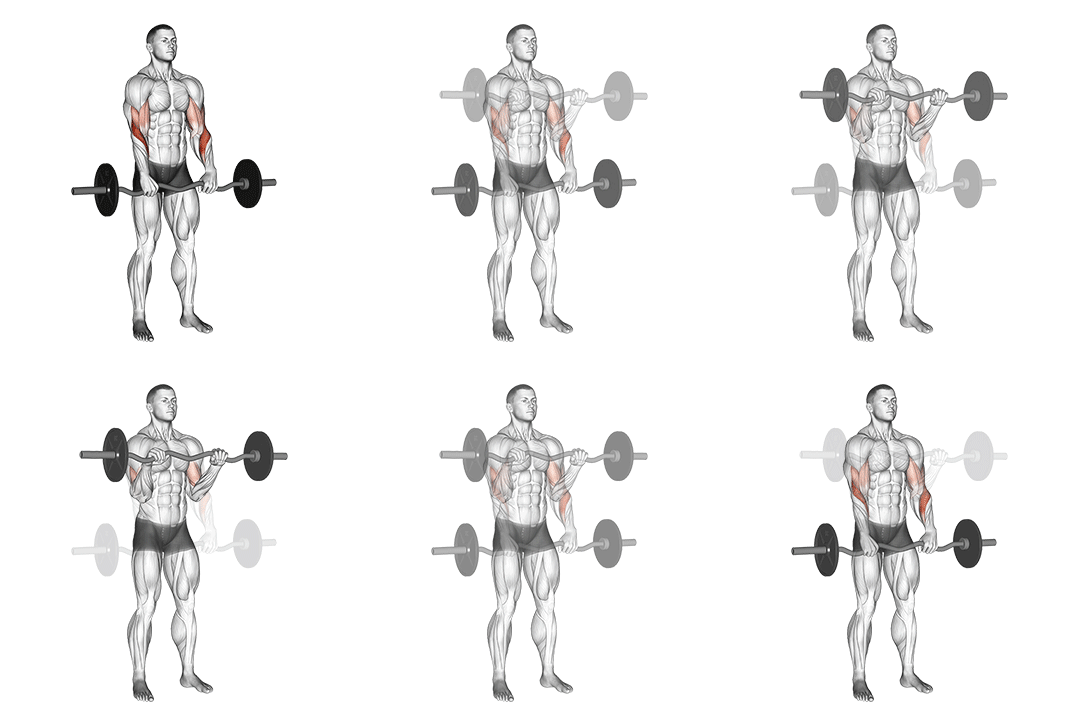
EZ Barbell Reverse Grip Curl
Head-to-Head Comparison
| Attribute | EZ Bar Seated Close Grip Concentration Curl | EZ Barbell Reverse Grip Curl |
|---|---|---|
| Target Muscle |
Biceps
|
Biceps
|
| Body Part |
Upper-arms
|
Upper-arms
|
| Equipment |
Ez-barbell
|
Ez-barbell
|
| Difficulty |
Intermediate
|
Intermediate
|
| Movement Type |
Isolation
|
Isolation
|
| Secondary Muscles |
1
|
1
|
Secondary Muscles Activated
EZ Bar Seated Close Grip Concentration Curl
EZ Barbell Reverse Grip Curl
Visual Comparison
Overview
Ez Bar Seated Close Grip Concentration Curl vs Ez Barbell Reverse Grip Curl — you’ve got two isolation moves that both hit the upper-arms but feel very different. If you want specific guidance, this comparison breaks down muscle activation, biomechanics, technique cues, rep ranges (6–12 for strength/hypertrophy focus, 12–20 for pump), equipment needs, and risk factors. I’ll show you which exercise emphasizes peak biceps contraction, which recruits more forearm and brachioradialis, how to set up each rep, and which to pick depending on your goal and training environment.
Key Differences
- Both exercises target the Biceps using Ez-barbell. The main differences are in their movement patterns and muscle activation angles.
Pros & Cons
EZ Bar Seated Close Grip Concentration Curl
+ Pros
- Maximizes peak biceps contraction by fixing the elbow against the thigh
- Limits shoulder and torso involvement for true isolation work
- Easier to strictly control eccentric and concentric tempo for hypertrophy
- Low-tech setup (bench/seat) and minimal balance demand
− Cons
- Requires a bench or seat with stable thigh bracing
- Close-grip hand position can feel cramped with thicker bars
- Limited to moderate loads; not ideal for building heavy forearm strength
EZ Barbell Reverse Grip Curl
+ Pros
- Better recruitment of brachioradialis and forearm extensors for thicker forearms
- Requires no bench—doable standing in small spaces
- Allows heavier loading for improving elbow-flexor force and grip
- Transfers well to functional pulling and gripping tasks
− Cons
- Increased wrist and distal tendon stress with improper form
- Less peak biceps contraction compared to a braced concentration curl
- Easier to cheat with torso or shoulder involvement under heavy load
When Each Exercise Wins
It fixes the elbow and emphasizes peak contraction and time under tension in the final 20–30° of flexion—ideal for stimulating biceps hypertrophy with 8–12 rep ranges and slow eccentrics (3–4 seconds).
The pronated grip shifts load to brachioradialis and allows heavier loads and lower rep ranges (4–8 reps), improving raw elbow-flexor and grip strength that transfers to lifts involving pronated pulls.
Bracing the elbow reduces degrees of freedom and makes it simpler to learn strict elbow flexion mechanics while feeling the biceps work, lowering the chance of compensation from shoulders and torso.
You only need an EZ-bar and standing space—no bench. That makes reverse curls easier to slot into limited-equipment home routines while still offering solid progression.
Frequently Asked Questions
Can I do both Ez Bar Seated Close Grip Concentration Curl and Ez Barbell Reverse Grip Curl in the same workout?
Yes. Pair them smartly: do the concentration curl first to pre-exhaust the biceps with strict form (3 sets of 8–12), then follow with 2–3 sets of reverse curls for forearm and grip work (6–10 reps). Watch total volume to avoid elbow tendon overload.
Which exercise is better for beginners?
The seated close-grip concentration curl is better for beginners because the elbow bracing reduces cheating and makes it easier to learn pure elbow-flexion mechanics. Start light and focus on full range and slow eccentrics.
How do the muscle activation patterns differ?
The concentration curl produces a high biceps peak contraction late in the range of motion by optimizing length-tension at the top; reverse curls distribute more load through the mid-range to brachioradialis and brachialis because pronation reduces the biceps’ supination advantage.
Can Ez Barbell Reverse Grip Curl replace Ez Bar Seated Close Grip Concentration Curl?
Not entirely—reverse curls are a valid substitute if you need more forearm or grip emphasis or lack a bench, but they won’t match the concentration curl’s peak biceps isolation. Use reverse curls when your goal shifts to forearm strength or standing loading.
Expert Verdict
Use the seated close-grip concentration curl when your priority is targeted biceps development: brace the elbow, control the eccentric for 3–4 seconds, and aim for 8–12 reps to overload the muscle at peak contraction. Choose the ez barbell reverse grip curl when you want thicker forearms, better grip strength, or a standing movement you can load heavier—work in 4–8 reps for strength or 10–15 for conditioning. Both are intermediate isolation moves; rotate them across blocks (4–8 weeks) to address different force vectors and avoid adaptation while protecting wrists and elbows with proper setup and wrist alignment.
Also Compare
More comparisons with EZ Bar Seated Close Grip Concentration Curl
More comparisons with EZ Barbell Reverse Grip Curl
Compare More Exercises
Use our free comparison tool to analyze any two exercises head-to-head.
Compare Exercises