EZ Bar Seated Close Grip Concentration Curl vs EZ Barbell Reverse Grip Curl
Compare target muscles, equipment, difficulty, movement type, and secondary muscles for EZ Bar Seated Close Grip Concentration Curl and EZ Barbell Reverse Grip Curl.
Change comparison Share

Get comparison link

Select the link and use your device's Copy command.

Comparison overview

AI-generated
Ez Bar Seated Close Grip Concentration Curl vs Ez Barbell Reverse Grip Curl — you’ve got two isolation moves that both hit the upper-arms but feel very different. If you want specific guidance, this comparison breaks down muscle activation, biomechanics, technique cues, rep ranges (6–12 for strength/hypertrophy focus, 12–20 for pump), equipment needs, and risk factors. I’ll show you which exercise emphasizes peak biceps contraction, which recruits more forearm and brachioradialis, how to set up each rep, and which to pick depending on your goal and training environment.
Exercise Comparison

Exercise A
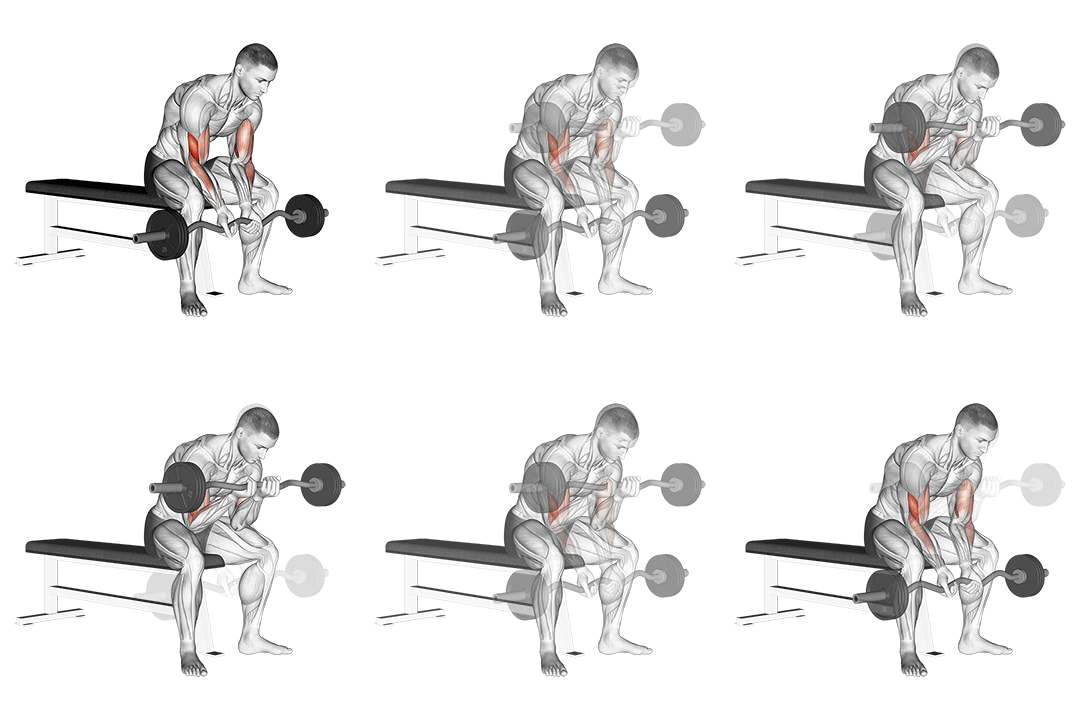
EZ Bar Seated Close Grip Concentration Curl demonstration
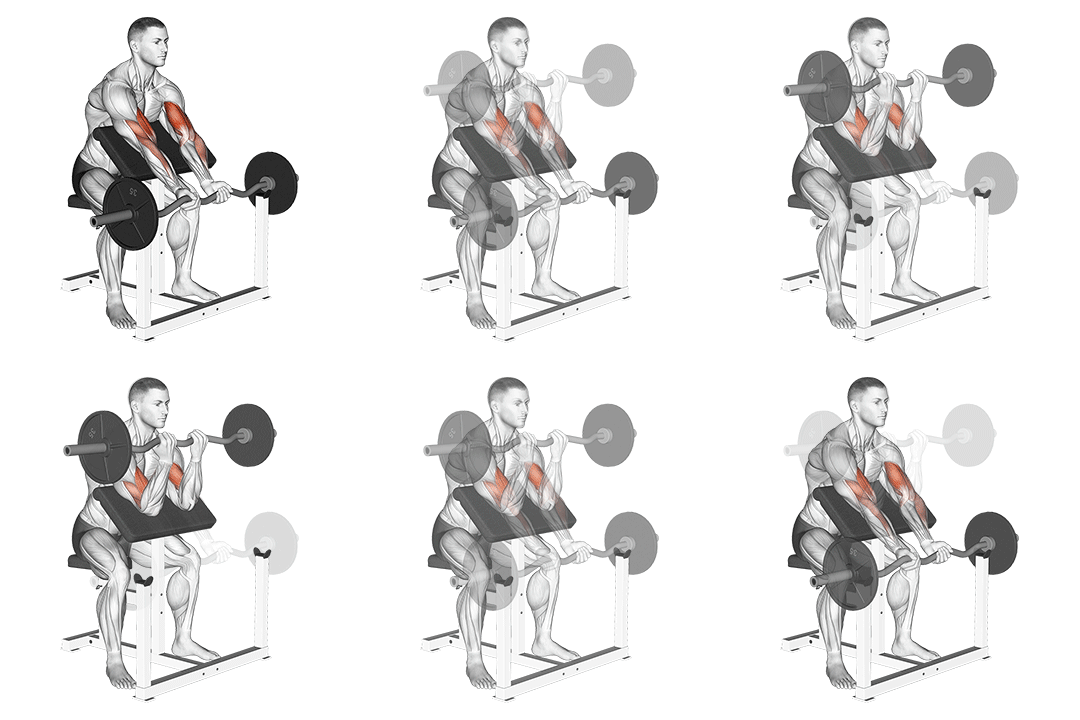
EZ Bar Seated Close Grip Concentration Curl
Target Biceps
Equipment Ez-barbell
Body Part Upper-arms
Difficulty Intermediate
Movement Isolation
Secondary Muscles
Forearms
VS
Exercise B
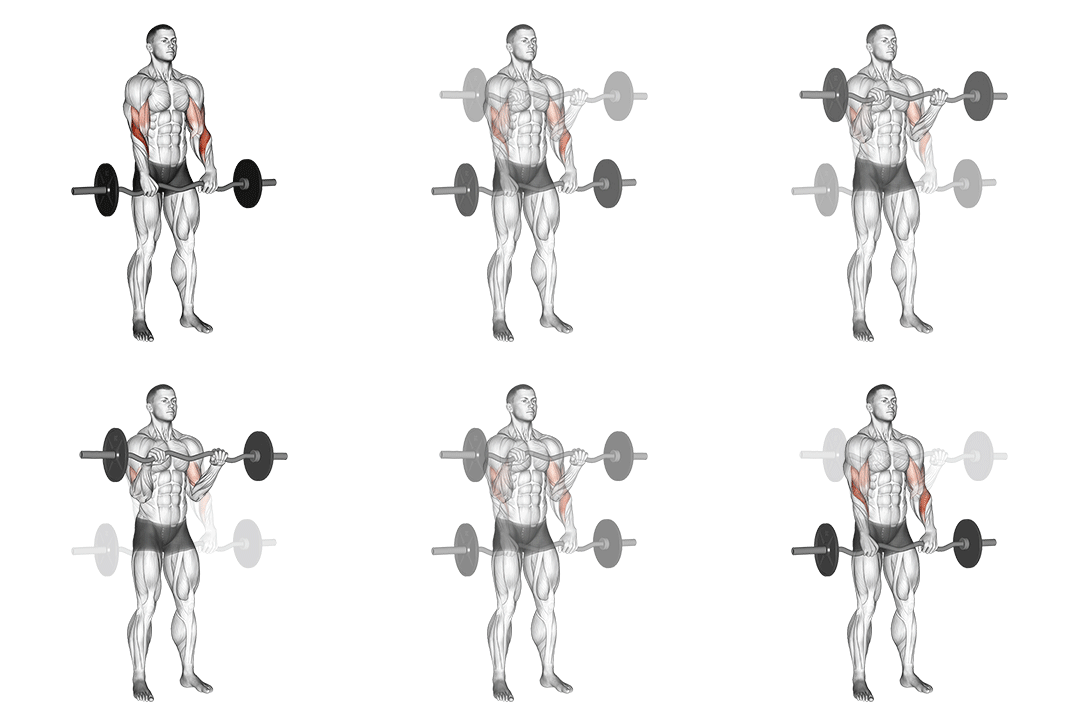
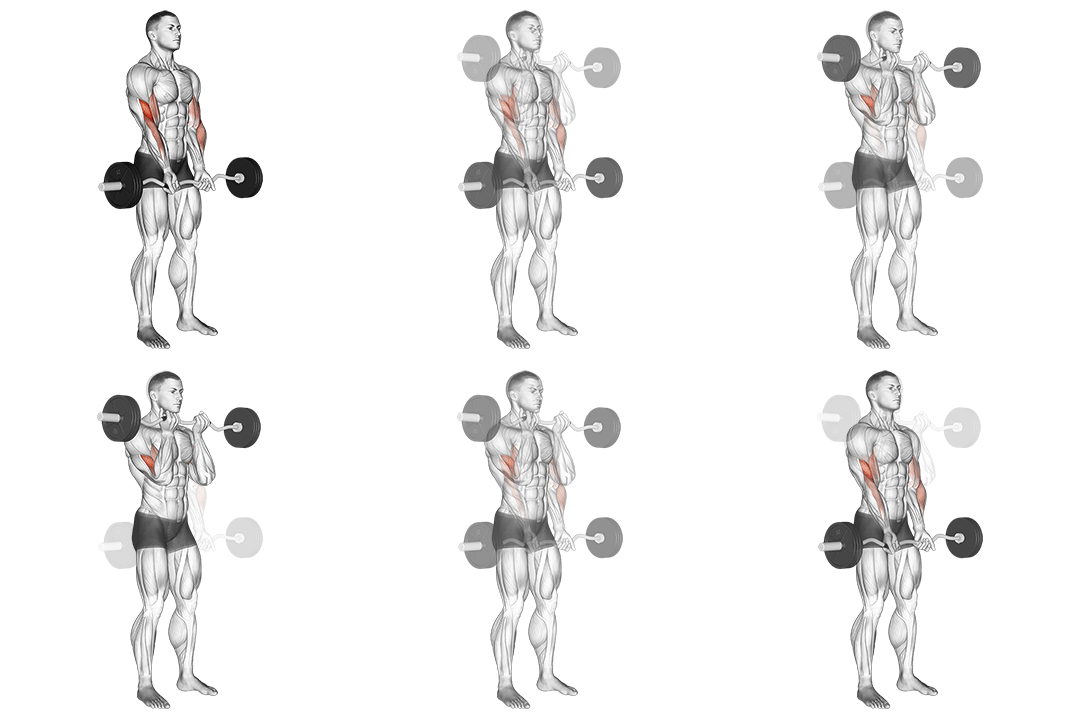
EZ Barbell Reverse Grip Curl demonstration

EZ Barbell Reverse Grip Curl

Target Biceps
Equipment Ez-barbell
Body Part Upper-arms
Difficulty Intermediate
Movement Isolation
Secondary Muscles
Forearms

Head-to-Head Comparison

Different values are marked. These are catalogue attributes, not performance scores.

Muscles used

Listed target and secondary muscles, shown on the body. Locations, not activation or strength scores.

  • Target
  • Secondary
  • Not highlighted

EZ Bar Seated Close Grip Concentration Curl
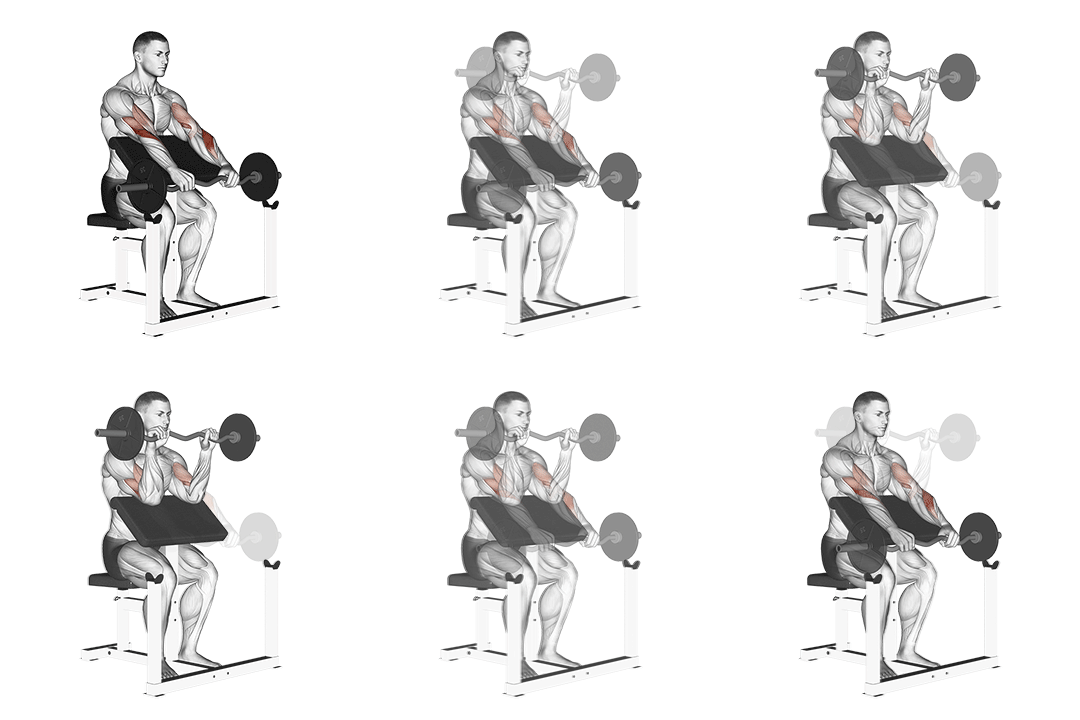
Front
EZ Bar Seated Close Grip Concentration Curl: front muscle locationsSolid: listed target. Striped: listed secondary. Grey: not highlighted. Locations, not activation or strength scores. See the muscle names below.
Back
EZ Bar Seated Close Grip Concentration Curl: back muscle locationsSolid: listed target. Striped: listed secondary. Grey: not highlighted. Locations, not activation or strength scores. See the muscle names below.
Target
Biceps
Secondary
Forearms

EZ Barbell Reverse Grip Curl

Front
EZ Barbell Reverse Grip Curl: front muscle locationsSolid: listed target. Striped: listed secondary. Grey: not highlighted. Locations, not activation or strength scores. See the muscle names below.
Back
EZ Barbell Reverse Grip Curl: back muscle locationsSolid: listed target. Striped: listed secondary. Grey: not highlighted. Locations, not activation or strength scores. See the muscle names below.
Target
Biceps
Secondary
Forearms

Grey does not mean a muscle is unused. The diagrams show only the mapped catalogue labels.

Attribute EZ Bar Seated Close Grip Concentration Curl EZ Barbell Reverse Grip Curl
Target Muscle
Biceps
Biceps
Body Part
Upper-arms
Upper-arms
Equipment
Ez-barbell
Ez-barbell
Difficulty
Intermediate
Intermediate
Movement Type
Isolation
Isolation
Secondary Muscles
Forearms
Forearms

Visual Comparison

An illustrative 1–10 profile derived from catalog difficulty, equipment, and listed-muscle fields—not measured performance or muscle activation.

Key Differences

  • Both exercises target the Biceps using Ez-barbell. The catalogue does not establish which exercise is better for an individual goal.

Muscle comparison

Shared target muscles

Both exercises primarily target the biceps brachii via elbow flexion. They overlap in producing concentric elbow flexion torque and both load the short and long heads of the biceps, but the seated close-grip concentration curl places the biceps at a more favorable length-tension for peak contraction and isolation of the muscle peak during the top 20–30° of flexion.

Secondary muscle differences

The Ez Barbell Reverse Grip Curl recruits the brachioradialis and brachialis more strongly because the pronated hand position removes forearm supination as a primary function of the biceps. The seated close-grip concentration curl reduces wrist and shoulder involvement and therefore stresses the biceps while also lightly engaging the forearms to stabilize the ez-barbell.

Muscle involvement analysis

During the seated concentration curl the force vector is vertical with the elbow fixed against the thigh, producing a high peak biceps activation during the final 20–30° of flexion (near full contraction). The reverse grip curl shifts line of pull and internal torque so the brachioradialis takes more load throughout the mid-range (roughly 30–90° elbow flexion), while the biceps contribution drops slightly, especially in the last 20° where supination torque normally aids contraction.

Equipment and setup

EZ Bar Seated Close Grip Concentration Curl: setup

Ez Bar Seated Close Grip Concentration Curl requires an EZ-barbell, a bench or seat with inner-thigh support, and enough space to brace the elbow against your thigh. A curl pad or towel can help position the arm and protect the elbow.

EZ Barbell Reverse Grip Curl: setup

Ez Barbell Reverse Grip Curl requires an EZ-barbell or straight bar and open floor space to stand. No bench is necessary, but a rack for loading/unloading and wrist sleeves or straps can help with heavier sets.

Access and practicality

Ez Barbell Reverse Grip Curl — it needs only a bar and space to stand, whereas the concentration curl requires a seat and precise bracing. That makes the reverse curl more accessible in minimal gym or home setups.

Learning and progression

Learning the movements

The seated close-grip concentration curl is easier to learn for isolating the biceps because you brace the elbow and minimize cheating; beginners can feel the biceps contract quickly. The reverse curl has a slightly steeper skill curve to keep wrists neutral and avoid elbow swing.

Progression considerations

Reverse grip curls offer broader progression via heavier loads, tempo changes, and integrated loading patterns (e.g., heavy sets for 6–8 reps for forearm strength). The concentration curl offers microprogression through increased time under tension, peak contractions, and higher-rep density work for hypertrophy.

Limitations and precautions

Reverse grip curls carry a higher wrist strain risk due to pronation under load and may stress the brachioradialis and distal tendon if form breaks. Seated concentration curls lower injury risk if you maintain a neutral wrist and keep the elbow braced, though jerking or excessive weight can still stress the elbow joint.

Pros & Cons

EZ Bar Seated Close Grip Concentration Curl

+ Pros

  • Maximizes peak biceps contraction by fixing the elbow against the thigh
  • Limits shoulder and torso involvement for true isolation work
  • Easier to strictly control eccentric and concentric tempo for hypertrophy
  • Low-tech setup (bench/seat) and minimal balance demand

Cons

  • Requires a bench or seat with stable thigh bracing
  • Close-grip hand position can feel cramped with thicker bars
  • Limited to moderate loads; not ideal for building heavy forearm strength

EZ Barbell Reverse Grip Curl

+ Pros

  • Better recruitment of brachioradialis and forearm extensors for thicker forearms
  • Requires no bench—doable standing in small spaces
  • Allows heavier loading for improving elbow-flexor force and grip
  • Transfers well to functional pulling and gripping tasks

Cons

  • Increased wrist and distal tendon stress with improper form
  • Less peak biceps contraction compared to a braced concentration curl
  • Easier to cheat with torso or shoulder involvement under heavy load

When Each Exercise Wins

1
For muscle hypertrophy: Ez Bar Seated Close Grip Concentration Curl

It fixes the elbow and emphasizes peak contraction and time under tension in the final 20–30° of flexion—ideal for stimulating biceps hypertrophy with 8–12 rep ranges and slow eccentrics (3–4 seconds).

2
For strength gains: Ez Barbell Reverse Grip Curl

The pronated grip shifts load to brachioradialis and allows heavier loads and lower rep ranges (4–8 reps), improving raw elbow-flexor and grip strength that transfers to lifts involving pronated pulls.

3
For beginners: Ez Bar Seated Close Grip Concentration Curl

Bracing the elbow reduces degrees of freedom and makes it simpler to learn strict elbow flexion mechanics while feeling the biceps work, lowering the chance of compensation from shoulders and torso.

4
For home workouts: Ez Barbell Reverse Grip Curl

You only need an EZ-bar and standing space—no bench. That makes reverse curls easier to slot into limited-equipment home routines while still offering solid progression.

Frequently Asked Questions

Can I do both Ez Bar Seated Close Grip Concentration Curl and Ez Barbell Reverse Grip Curl in the same workout?

Yes. Pair them smartly: do the concentration curl first to pre-exhaust the biceps with strict form (3 sets of 8–12), then follow with 2–3 sets of reverse curls for forearm and grip work (6–10 reps). Watch total volume to avoid elbow tendon overload.

Which exercise is better for beginners?

The seated close-grip concentration curl is better for beginners because the elbow bracing reduces cheating and makes it easier to learn pure elbow-flexion mechanics. Start light and focus on full range and slow eccentrics.

How do the muscle activation patterns differ?

The concentration curl produces a high biceps peak contraction late in the range of motion by optimizing length-tension at the top; reverse curls distribute more load through the mid-range to brachioradialis and brachialis because pronation reduces the biceps’ supination advantage.

Can Ez Barbell Reverse Grip Curl replace Ez Bar Seated Close Grip Concentration Curl?

Not entirely—reverse curls are a valid substitute if you need more forearm or grip emphasis or lack a bench, but they won’t match the concentration curl’s peak biceps isolation. Use reverse curls when your goal shifts to forearm strength or standing loading.

Comparison Summary

Use the seated close-grip concentration curl when your priority is targeted biceps development: brace the elbow, control the eccentric for 3–4 seconds, and aim for 8–12 reps to overload the muscle at peak contraction. Choose the ez barbell reverse grip curl when you want thicker forearms, better grip strength, or a standing movement you can load heavier—work in 4–8 reps for strength or 10–15 for conditioning. Both are intermediate isolation moves; rotate them across blocks (4–8 weeks) to address different force vectors and avoid adaptation while protecting wrists and elbows with proper setup and wrist alignment.

Exercise instructions

Steps from the exercise catalogue. Read the full sequence before starting.

EZ Bar Seated Close Grip Concentration Curl

  1. Sit on a bench with your feet flat on the ground and hold an EZ barbell with an underhand grip.
  2. Rest your elbow on the inside of your thigh, just above the knee.
  3. Curl the barbell up towards your shoulder while keeping your upper arm stationary.
Read remaining steps for EZ Bar Seated Close Grip Concentration Curl
  1. Squeeze your biceps at the top of the movement, then slowly lower the barbell back down to the starting position.
  2. Repeat for the desired number of repetitions.

EZ Barbell Reverse Grip Curl

  1. Stand up straight with your feet shoulder-width apart and hold the ez barbell with an underhand grip.
  2. Keep your elbows close to your torso and your upper arms stationary throughout the exercise.
  3. Curl the barbell upwards by contracting your biceps, while exhaling.
Read remaining steps for EZ Barbell Reverse Grip Curl
  1. Continue to raise the barbell until your biceps are fully contracted and the barbell is at shoulder level.
  2. Hold the contracted position for a brief pause as you squeeze your biceps.
  3. Slowly begin to bring the barbell back to the starting position as you inhale.
  4. Repeat for the desired number of repetitions.

Also Compare

Compare another pair

Choose two exercises to see their differences side by side.

Compare Exercises