EZ Barbell Close-grip Curl vs EZ Barbell Curl

Compare target muscles, equipment, difficulty, movement type, and secondary muscles for EZ Barbell Close-grip Curl and EZ Barbell Curl.

Change comparison Share

Get comparison link

Select the link and use your device's Copy command.

Comparison overview

AI-generated
Ez Barbell Close-grip Curl vs Ez Barbell Curl — you’re choosing between two staple isolation moves for the biceps. I’ll walk you through how each one loads the biceps and forearms, the subtle biomechanics that change which fibers work harder, and practical programming picks (rep ranges, progressions, and technique cues). You’ll get clear guidance on which exercise to use for muscle growth, strength, or simply to reduce wrist pain. Read on to learn exact grip widths, movement cues, and when to rotate these curls into your routine.

Exercise Comparison

Exercise A
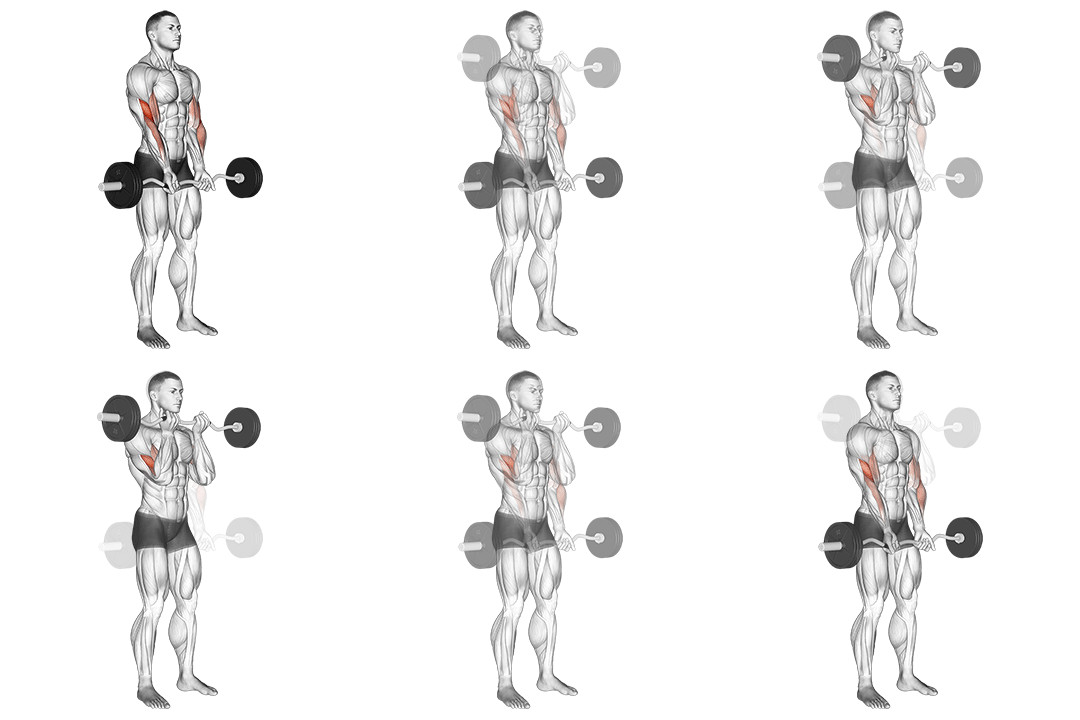
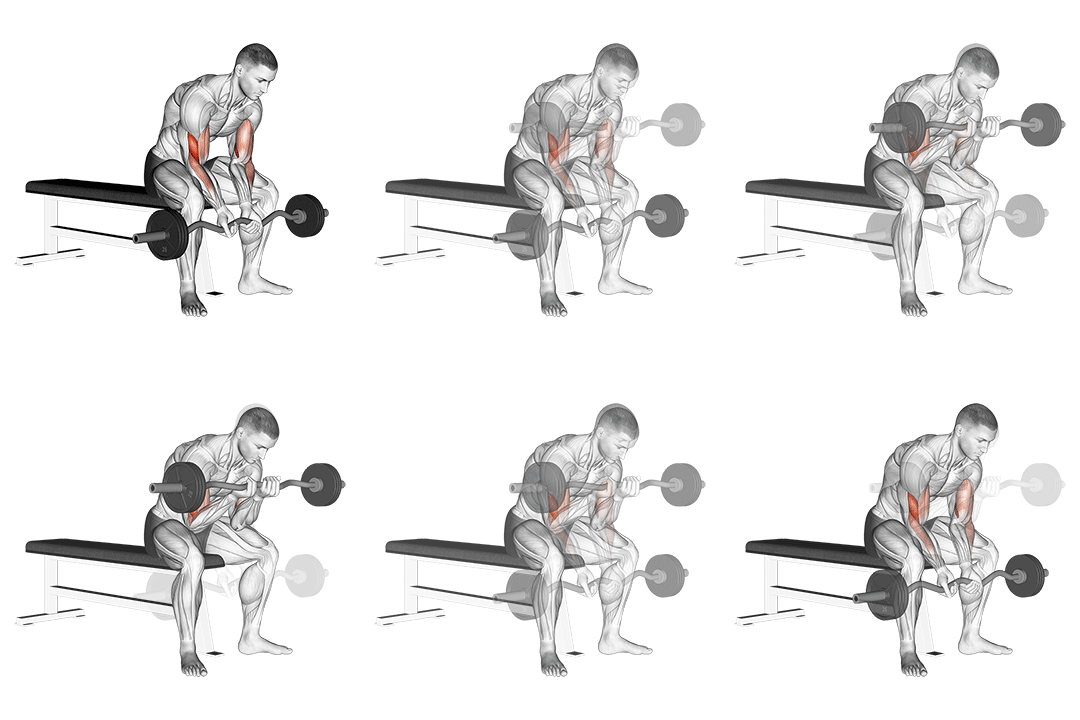
EZ Barbell Close-grip Curl demonstration

EZ Barbell Close-grip Curl

Target Biceps
Equipment Ez-barbell
Body Part Upper-arms
Difficulty Intermediate
Movement Isolation
Secondary Muscles
Forearms
VS
Exercise B
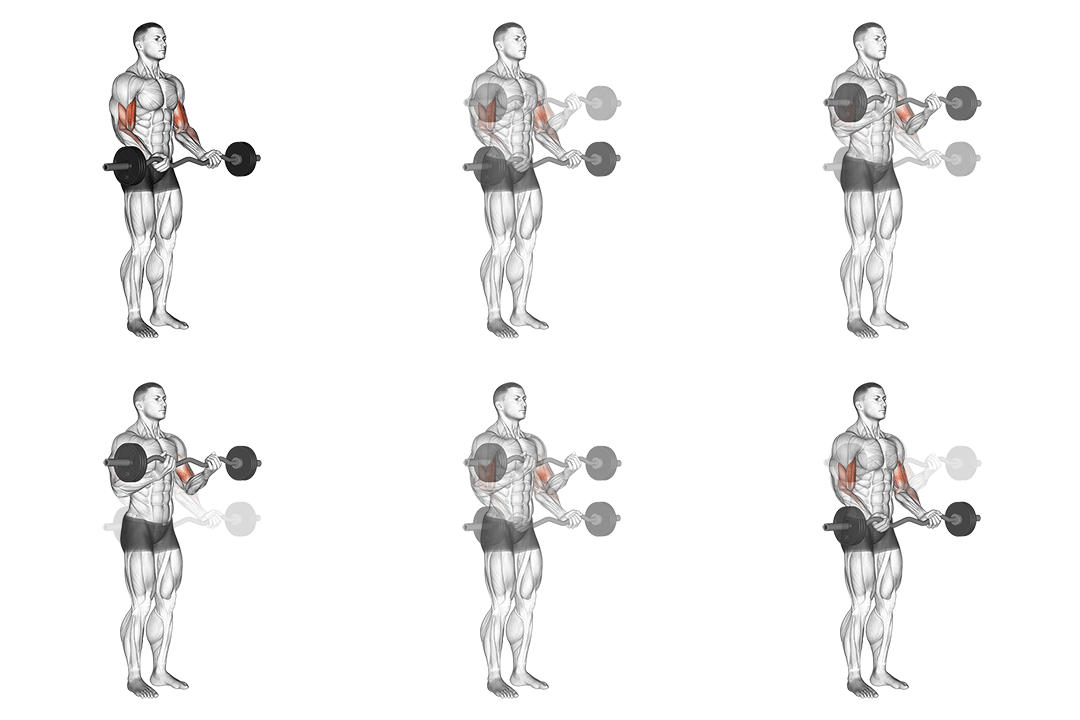
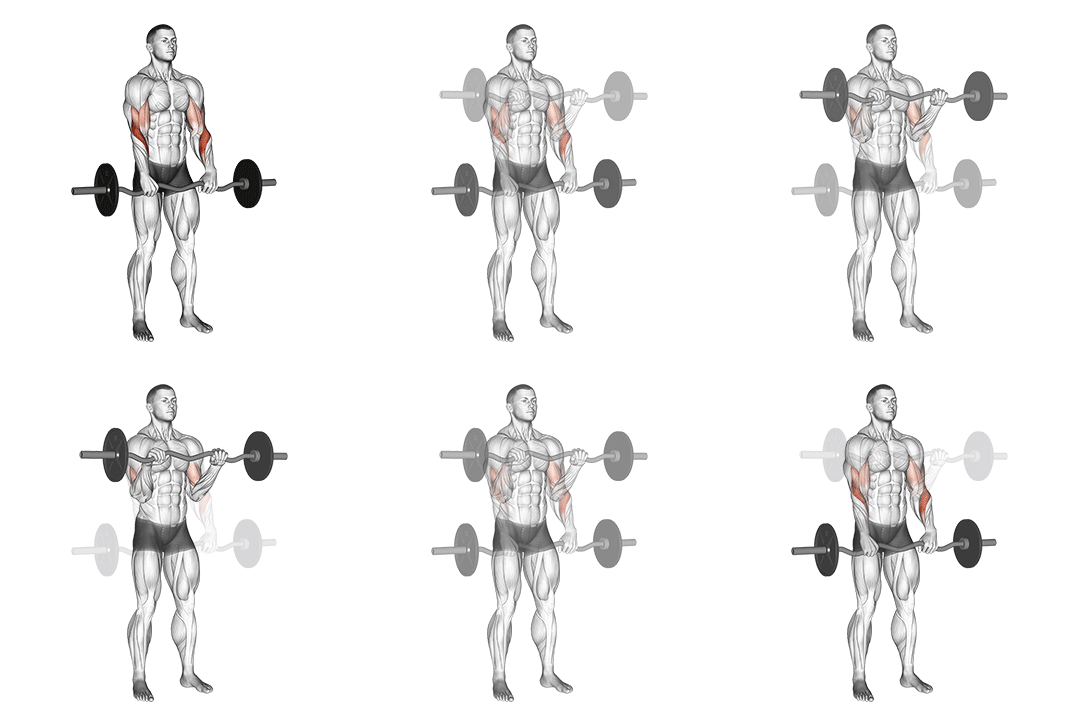
EZ Barbell Curl demonstration

EZ Barbell Curl

Target Biceps
Equipment Ez-barbell
Body Part Upper-arms
Difficulty Intermediate
Movement Isolation
Secondary Muscles
Forearms

Head-to-Head Comparison

Different values are marked. These are catalogue attributes, not performance scores.

Muscles used

Listed target and secondary muscles, shown on the body. Locations, not activation or strength scores.

  • Target
  • Secondary
  • Not highlighted

EZ Barbell Close-grip Curl

Front
EZ Barbell Close-grip Curl: front muscle locationsSolid: listed target. Striped: listed secondary. Grey: not highlighted. Locations, not activation or strength scores. See the muscle names below.
Back
EZ Barbell Close-grip Curl: back muscle locationsSolid: listed target. Striped: listed secondary. Grey: not highlighted. Locations, not activation or strength scores. See the muscle names below.
Target
Biceps
Secondary
Forearms

EZ Barbell Curl

Front
EZ Barbell Curl: front muscle locationsSolid: listed target. Striped: listed secondary. Grey: not highlighted. Locations, not activation or strength scores. See the muscle names below.
Back
EZ Barbell Curl: back muscle locationsSolid: listed target. Striped: listed secondary. Grey: not highlighted. Locations, not activation or strength scores. See the muscle names below.
Target
Biceps
Secondary
Forearms

Grey does not mean a muscle is unused. The diagrams show only the mapped catalogue labels.

Attribute EZ Barbell Close-grip Curl EZ Barbell Curl
Target Muscle
Biceps
Biceps
Body Part
Upper-arms
Upper-arms
Equipment
Ez-barbell
Ez-barbell
Difficulty
Intermediate
Intermediate
Movement Type
Isolation
Isolation
Secondary Muscles
Forearms
Forearms

Visual Comparison

An illustrative 1–10 profile derived from catalog difficulty, equipment, and listed-muscle fields—not measured performance or muscle activation.

Key Differences

  • Both exercises target the Biceps using Ez-barbell. The catalogue does not establish which exercise is better for an individual goal.

Muscle comparison

Shared target muscles

Both exercises primarily load the biceps brachii to produce elbow flexion and assist with forearm supination. Peak biceps torque for both tends to occur around mid-range elbow flexion (~60–100°). The long and short heads both contribute; neither movement completely isolates one head, so both drive similar overall biceps hypertrophy when programmed with sufficient volume (8–12 reps).

Secondary muscle differences

The close-grip curl shifts the line of pull slightly and increases contribution from the brachialis and brachioradialis because reduced hand separation limits maximal supination torque. The standard (shoulder-width) EZ bar curl allows more effective supination at the top of the movement, slightly favoring biceps’ role in supination and producing marginally higher short-head activation when the shoulder is more neutral.

Muscle involvement analysis

With a close grip your forearms adopt a more neutral to pronated orientation on the EZ bar’s inner angle, increasing brachialis torque and steady elbow flexion throughout the ROM. The standard EZ-bar curl places the forearm in a semi-supinated position (~30–45°), enhancing biceps’ supination action at end-range and concentrating peak tension near 70–100° of elbow flexion. In short: close-grip increases forearm-driven elbow flexion, standard grip emphasizes supination and the biceps’ peak contraction.

Equipment and setup

EZ Barbell Close-grip Curl: setup

Ez Barbell Close-grip Curl requires an EZ-barbell and standard plates; set hands 6–8 inches apart (inner bends of the bar). A flat space and a rack or collars for safety are sufficient.

EZ Barbell Curl: setup

Ez Barbell Curl needs the same EZ-barbell and plates; grip is about shoulder-width (16–18 inches). You can perform seated or standing with the same minimal equipment.

Access and practicality

Ez Barbell Curl — shoulder-width grip is more intuitive, easier to teach, and places less strain on wrist mechanics for most lifters, making it marginally more accessible for general training.

Learning and progression

Learning the movements

Ez Barbell Curl is easier to learn: shoulder-width grip and visible elbow path make coaching cable simple cues (keep elbows tucked, avoid torso swing). The close-grip variation requires finer wrist and elbow control to avoid ulnar stress.

Progression considerations

Both offer solid progression via load, sets, tempo, and volume. The standard EZ bar curl edges out slightly because it typically allows heavier loading and clearer rep quality for progressive overload (stick to 4–6 heavy reps for strength or 8–12 for hypertrophy).

Limitations and precautions

Relative risk is moderate for both. Close-grip can raise local wrist and medial elbow stress if the grip is excessively narrow; standard EZ bar curl risks are more from ego-driven momentum and shoulder extension. Use strict form and controlled eccentrics (2–3s) to minimize injury risk.

Pros & Cons

EZ Barbell Close-grip Curl

+ Pros

  • Greater brachialis and brachioradialis recruitment, adding arm thickness
  • Narrower grip increases elbow flexion torque throughout the range
  • Can reduce wrist extension discomfort for some lifters thanks to EZ-bar angle
  • Useful variation to overload the mid-range differently from standard curls

Cons

  • Higher medial elbow and wrist stress if grip is too narrow
  • Less effective at maximizing supination and peak biceps contraction
  • Requires tighter elbow control to avoid cheating and shoulder swing

EZ Barbell Curl

+ Pros

  • Better for achieving full supination and the classic biceps peak
  • More intuitive shoulder-width grip, easier to teach and learn
  • Typically allows heavier loading and cleaner progressive overload
  • Lower risk of ulnar-sided wrist irritation for many lifters

Cons

  • Can encourage torso momentum if not kept strict
  • Less emphasis on brachialis/brachioradialis thickness compared with narrow grip
  • May irritate wrists for people who prefer a fully supinated (dumbbell) grip

When Each Exercise Wins

1
For muscle hypertrophy: Ez Barbell Curl

The shoulder-width EZ bar grip allows better supination at the top and consistent mid-range tension around 60–100° elbow flexion, maximizing biceps peak contraction. Use 8–12 reps, 3–4 sets, and controlled eccentrics (2–3s) for best hypertrophy.

2
For strength gains: Ez Barbell Curl

You can typically load the standard curl heavier and maintain strict form, which favors low-rep strength work (3–6 reps). The stable grip and clearer progression make it superior for increasing raw elbow-flexion strength.

3
For beginners: Ez Barbell Curl

Shoulder-width grip is easier to cue and safer for wrist alignment; beginners learn elbow path control and avoid compensatory torso swing more quickly with this setup.

4
For home workouts: Ez Barbell Curl

Both require the same equipment, but the standard EZ-bar curl is more versatile, easier to self-coach, and works across seated or standing positions when space and spotting are limited.

Frequently Asked Questions

Can I do both Ez Barbell Close-grip Curl and Ez Barbell Curl in the same workout?

Yes — pair the standard EZ-bar curl as your main set (heavier, 3–6 or 8–12 reps) and use the close-grip curl as a secondary finisher for 8–15 reps. Sequence the heavier pattern first to preserve technique and avoid pre-fatiguing the biceps.

Which exercise is better for beginners?

Ez Barbell Curl is better for most beginners because the shoulder-width grip is easier to self-cue and tends to place less awkward stress on the wrist and medial elbow. Start here to learn strict elbow tracking and tempo control.

How do the muscle activation patterns differ?

Close-grip shifts some load to the brachialis and brachioradialis due to reduced supination torque and a more neutral forearm orientation, while the standard EZ-bar curl allows stronger supination at end-range, increasing biceps brachii peak contraction around 70–100° of elbow flexion.

Can Ez Barbell Curl replace Ez Barbell Close-grip Curl?

If you must pick one, the standard EZ-bar curl covers general biceps development and is the better all-around choice. However, it doesn’t fully replicate the increased brachialis emphasis of the close-grip variation, so include close-grip periodically to diversify stimulus.

Comparison Summary

Both EZ-bar curls are valuable. Use the standard Ez Barbell Curl as your primary curl: it’s easier to load, coach, and produces strong supination and peak biceps tension for hypertrophy and strength (3–6 reps for strength, 8–12 for hypertrophy). Rotate the Ez Barbell Close-grip Curl as an accessory to increase brachialis and brachioradialis involvement, add variety, and address mid-range carrying thickness — keep grip 6–8 inches, control the eccentric for 2–3 seconds, and watch wrist/elbow comfort. Program both across a block (4–8 weeks) to hit slightly different force vectors and stimulus patterns.

Exercise instructions

Steps from the exercise catalogue. Read the full sequence before starting.

EZ Barbell Close-grip Curl

  1. Stand up straight with your feet shoulder-width apart and hold the ez barbell with an underhand grip, hands shoulder-width apart.
  2. Keep your elbows close to your torso and your upper arms stationary throughout the movement.
  3. Curl the barbell up towards your shoulders, contracting your biceps.
Read remaining steps for EZ Barbell Close-grip Curl
  1. Pause for a moment at the top, then slowly lower the barbell back down to the starting position.
  2. Repeat for the desired number of repetitions.

EZ Barbell Curl

  1. Stand up straight with your feet shoulder-width apart and hold the ez barbell with an underhand grip, palms facing up.
  2. Keep your elbows close to your torso and your upper arms stationary throughout the movement.
  3. Exhale as you curl the barbell up towards your shoulders, contracting your biceps.
Read remaining steps for EZ Barbell Curl
  1. Pause for a moment at the top, then inhale as you slowly lower the barbell back down to the starting position.
  2. Repeat for the desired number of repetitions.

Also Compare

Compare another pair

Choose two exercises to see their differences side by side.

Compare Exercises