EZ Barbell Close-grip Curl vs EZ Barbell Reverse Grip Preacher Curl

Compare target muscles, equipment, difficulty, movement type, and secondary muscles for EZ Barbell Close-grip Curl and EZ Barbell Reverse Grip Preacher Curl.

Change comparison Share

Get comparison link

Select the link and use your device's Copy command.

Comparison overview

AI-generated
Ez Barbell Close-grip Curl vs Ez Barbell Reverse Grip Preacher Curl — if you want bigger, harder-working upper-arms, these two isolation moves are staples. You’ll get a clear breakdown of which exercise emphasizes the long or short head of the biceps, how each loads the forearms, and the biomechanical reasons behind the differences. I’ll cover setup, technique cues (elbow placement, wrist angle, pad angle), rep ranges (6–12 for strength/hypertrophy, 8–15 for isolation), equipment needs, progression strategies, and when to pick each move for focused progress.

Exercise Comparison

Exercise A
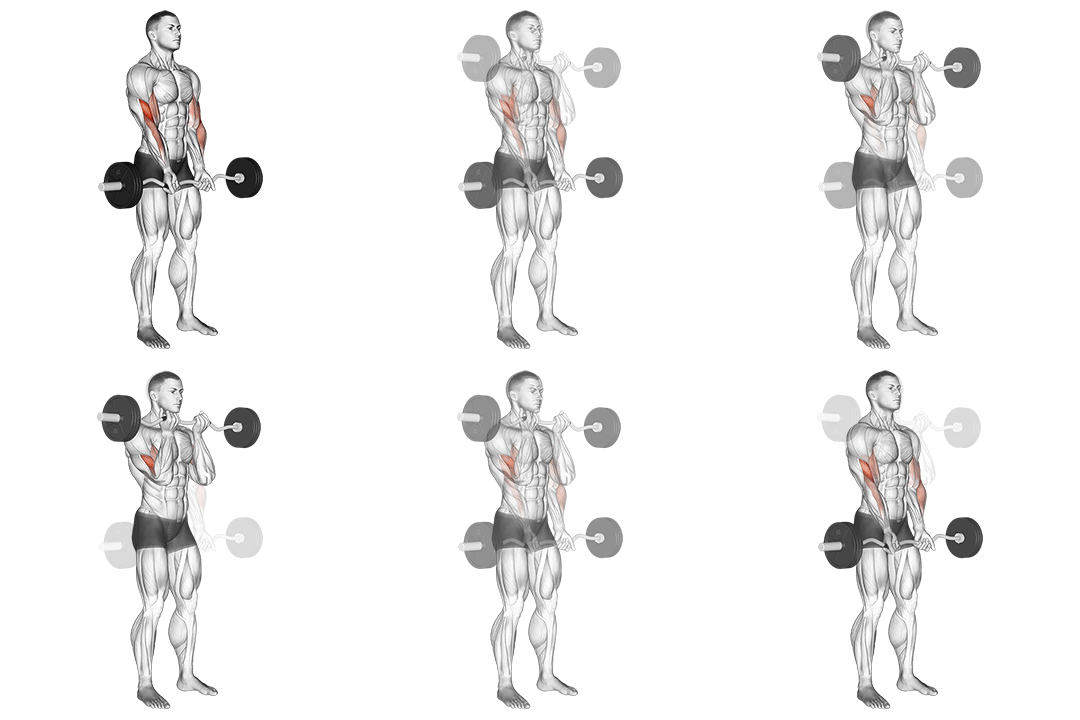
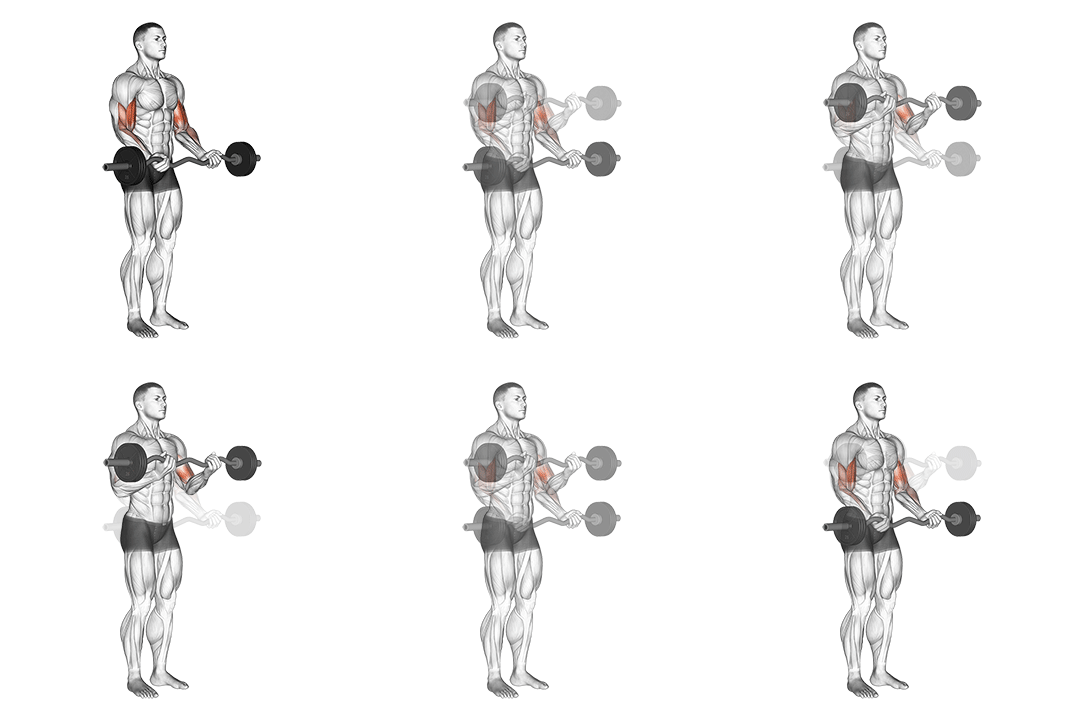
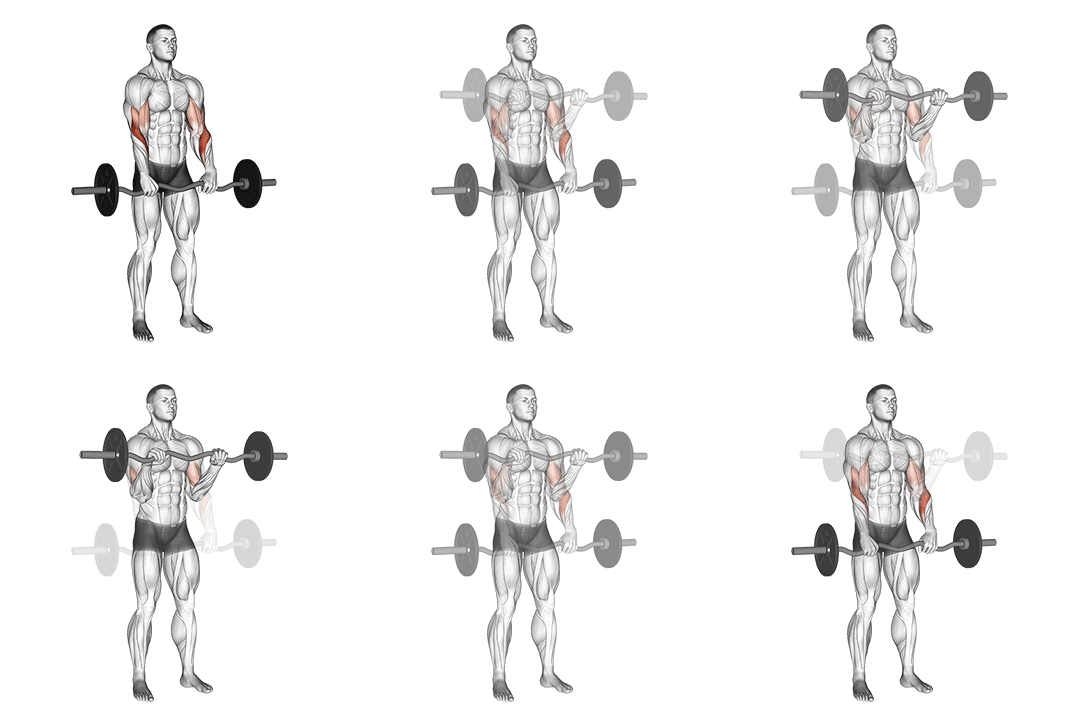
EZ Barbell Close-grip Curl demonstration

EZ Barbell Close-grip Curl

Target Biceps
Equipment Ez-barbell
Body Part Upper-arms
Difficulty Intermediate
Movement Isolation
Secondary Muscles
Forearms
VS
Exercise B
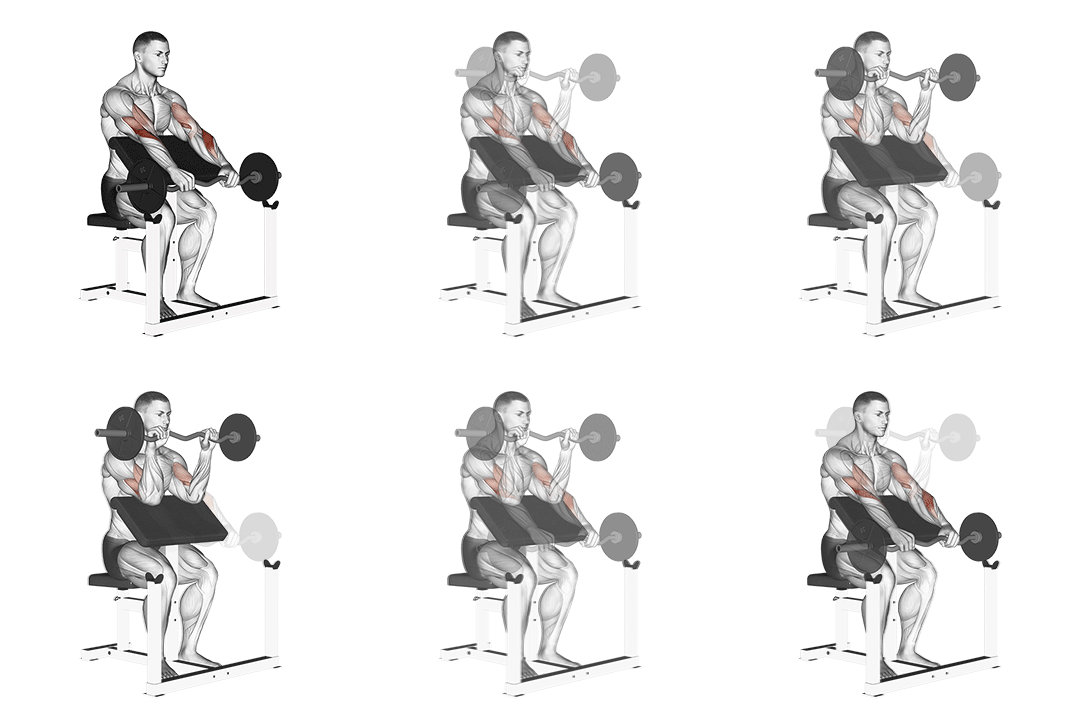
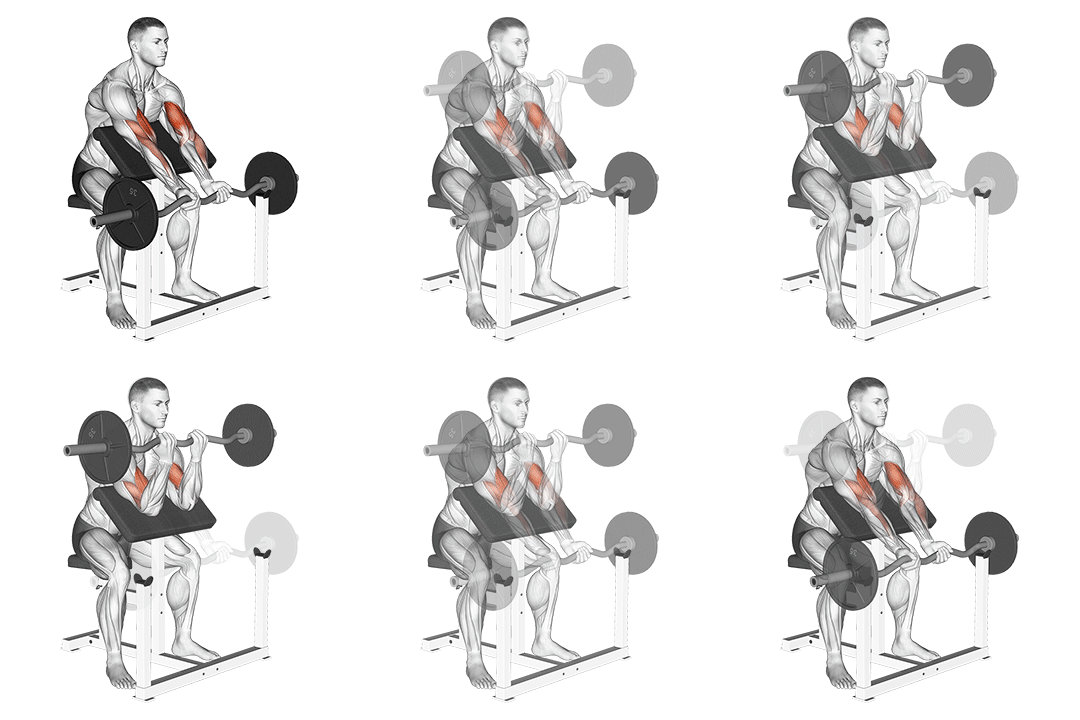
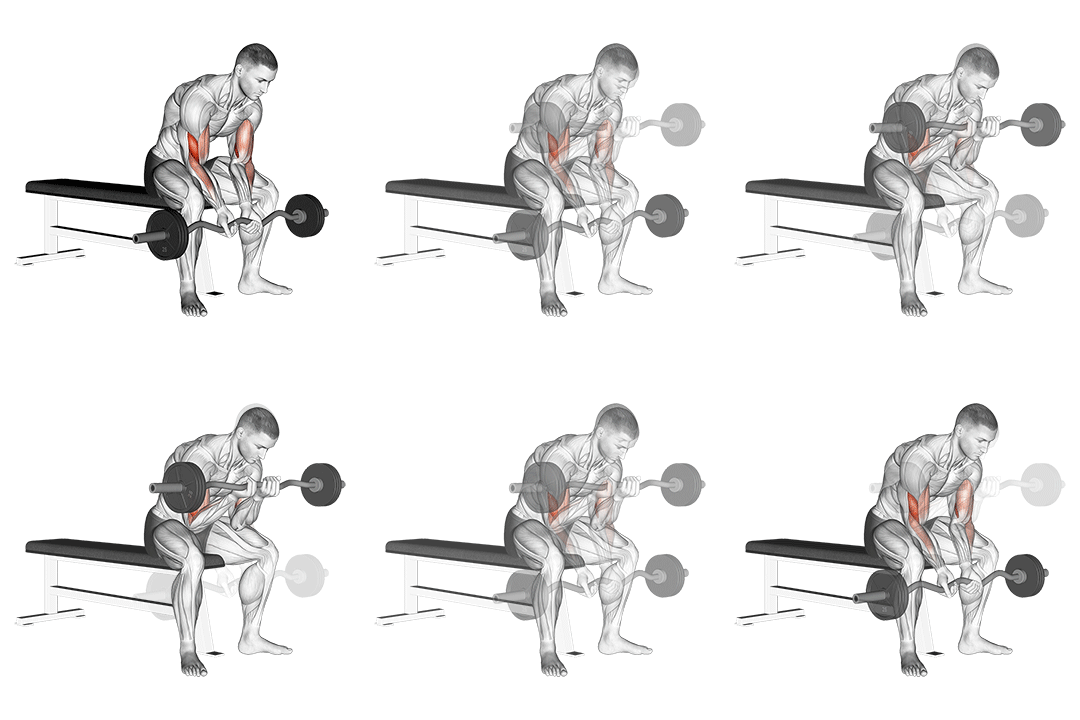
EZ Barbell Reverse Grip Preacher Curl demonstration

EZ Barbell Reverse Grip Preacher Curl

Target Biceps
Equipment Ez-barbell
Body Part Upper-arms
Difficulty Intermediate
Movement Isolation
Secondary Muscles
Forearms

Head-to-Head Comparison

Different values are marked. These are catalogue attributes, not performance scores.

Muscles used

Listed target and secondary muscles, shown on the body. Locations, not activation or strength scores.

  • Target
  • Secondary
  • Not highlighted

EZ Barbell Close-grip Curl

Front
EZ Barbell Close-grip Curl: front muscle locationsSolid: listed target. Striped: listed secondary. Grey: not highlighted. Locations, not activation or strength scores. See the muscle names below.
Back
EZ Barbell Close-grip Curl: back muscle locationsSolid: listed target. Striped: listed secondary. Grey: not highlighted. Locations, not activation or strength scores. See the muscle names below.
Target
Biceps
Secondary
Forearms

EZ Barbell Reverse Grip Preacher Curl

Front
EZ Barbell Reverse Grip Preacher Curl: front muscle locationsSolid: listed target. Striped: listed secondary. Grey: not highlighted. Locations, not activation or strength scores. See the muscle names below.
Back
EZ Barbell Reverse Grip Preacher Curl: back muscle locationsSolid: listed target. Striped: listed secondary. Grey: not highlighted. Locations, not activation or strength scores. See the muscle names below.
Target
Biceps
Secondary
Forearms

Grey does not mean a muscle is unused. The diagrams show only the mapped catalogue labels.

Attribute EZ Barbell Close-grip Curl EZ Barbell Reverse Grip Preacher Curl
Target Muscle
Biceps
Biceps
Body Part
Upper-arms
Upper-arms
Equipment
Ez-barbell
Ez-barbell
Difficulty
Intermediate
Intermediate
Movement Type
Isolation
Isolation
Secondary Muscles
Forearms
Forearms

Visual Comparison

An illustrative 1–10 profile derived from catalog difficulty, equipment, and listed-muscle fields—not measured performance or muscle activation.

Key Differences

  • Both exercises target the Biceps using Ez-barbell. The catalogue does not establish which exercise is better for an individual goal.

Muscle comparison

Shared target muscles

Both exercises primarily target the biceps brachii. The close-grip curl (supinated or neutral hand position on the EZ bar) biases the short head slightly by reducing shoulder abduction and placing the biceps at a slightly more shortened starting length. The reverse-grip preacher curl (pronated grip, pad support) still hits the biceps but shifts some load toward the brachialis and brachioradialis because the pronation reduces long head dominance.

Secondary muscle differences

Close-grip curls recruit forearms and wrist flexors but keep the wrist in a more neutral/supinated position, lowering wrist strain. Reverse-grip preacher curls increase activation of the brachioradialis and wrist extensors due to pronation; the preacher pad also reduces shoulder and trap involvement, putting more sustained tension on forearms throughout the range.

Muscle involvement analysis

Close-grip standing or seated curls allow a longer muscle length change for the biceps with a larger concentric contribution — the force vector sits more anterior to the elbow, increasing biceps moment arm in mid-range. Reverse-grip preacher curls fix the shoulder and stabilize the humerus, so the biceps works through a shorter, more isolated arc; the pronated hand increases brachialis recruitment, shifting peak activation slightly earlier in the concentric phase.

Equipment and setup

EZ Barbell Close-grip Curl: setup

Ez Barbell Close-grip Curl: EZ bar, 2–3 collars, and optional standing space or preacher bench. You need nothing more than a bar and plates to perform standing or seated versions.

EZ Barbell Reverse Grip Preacher Curl: setup

Ez Barbell Reverse Grip Preacher Curl: EZ bar, preacher bench or incline pad (approx. 30–45° pad angle), collars and plates. The preacher pad is required to lock out shoulder movement and get the intended mechanical effect.

Access and practicality

Ez Barbell Close-grip Curl — it only needs an EZ bar and floor space, so it’s easier for most home setups. The preacher variant requires a bench or pad to get the isolation benefit.

Learning and progression

Learning the movements

Close-grip curls are easier to learn because standing form is intuitive (avoid swinging, keep elbows fixed). Reverse-grip preacher curls require proper pad setup and wrist control to maintain pronation without excessive elbow flaring.

Progression considerations

Close-grip curls offer broader progression options — heavier loading, tempo variations, and standing variations (e.g., incline or seated). Preacher reverse curls progress best via strict loading, higher reps (8–15), and incremental weight increases because the pad limits momentum.

Limitations and precautions

Reverse-grip preacher curls carry slightly higher wrist strain risk if you force heavy weight in full pronation; preacher pad misalignment can also stress the anterior elbow. Close-grip curls risk lower back swing if loads are too heavy, but wrist strain is typically lower with the EZ bar hand positions.

Pros & Cons

EZ Barbell Close-grip Curl

+ Pros

  • Greater versatility — can be done standing, seated, or on an incline for varied angles
  • Lower wrist strain due to EZ-bar camber and semi-supinated grip
  • Easier to overload for progressive strength and hypertrophy (6–12 rep range)
  • Good for emphasizing short head biceps through a longer range of motion

Cons

  • Can encourage elbow migration or body swing if load is too heavy
  • Less isolation than preacher variations because shoulders can assist slightly
  • May under-recruit brachioradialis and brachialis compared with pronated grips

EZ Barbell Reverse Grip Preacher Curl

+ Pros

  • Strong isolation — preacher pad locks out shoulder contribution and enforces strict form
  • Pronated grip increases brachialis and forearm (brachioradialis) engagement
  • Consistent tension at the bottom of the ROM due to pad support
  • Excellent for high-rep metabolic work and sculpting forearm detail (8–15 reps)

Cons

  • Requires preacher bench or pad, limiting accessibility
  • Greater wrist and distal forearm stress in heavy pronation
  • Less ability to overload with heavy triples due to fixed position and limited momentum

When Each Exercise Wins

1
For muscle hypertrophy: Ez Barbell Close-grip Curl

Close-grip curls allow you to use heavier loads and longer ROM, making them better for progressive overload in the 6–12 rep range. You can modulate tempo (2–3s eccentric) and use partials to extend sets for greater muscle tension.

2
For strength gains: Ez Barbell Close-grip Curl

Standing close-grip curls let you handle more absolute weight and train lower rep ranges safely, increasing mechanical tension on the biceps. The EZ-bar grip reduces wrist stress so you can pursue progressive strength increases.

3
For beginners: Ez Barbell Close-grip Curl

Beginners pick up close-grip curls faster because the movement pattern is simpler and wrist position is more forgiving. It’s easier to learn elbow stability and tempo before moving to fixed-pad isolation work.

4
For home workouts: Ez Barbell Close-grip Curl

Close-grip curls need only an EZ bar and plates, so they fit most home gyms. The preacher reverse curl needs a dedicated pad or bench to be truly effective, reducing practicality at home.

Frequently Asked Questions

Can I do both Ez Barbell Close-grip Curl and Ez Barbell Reverse Grip Preacher Curl in the same workout?

Yes. Start with the close-grip curl as your heavier compound-isolation variant for 3–4 sets of 6–10 reps, then follow with 2–3 sets of reverse-grip preacher curls for 8–15 reps to target the brachialis and forearms. Keep total volume in line with your weekly plan to avoid elbow fatigue.

Which exercise is better for beginners?

The Ez Barbell Close-grip Curl is better for beginners because it’s easier to learn and less taxing on the wrists. It builds foundational elbow control and strength before introducing the stricter mechanics of the preacher reverse curl.

How do the muscle activation patterns differ?

The close-grip curl emphasizes biceps brachii through a longer ROM with a larger anterior force vector and more supinated hand position, while the reverse-grip preacher curl fixes the humerus and uses pronation to increase brachialis and brachioradialis activation. That shifts peak activation timing and reduces shoulder contribution.

Can Ez Barbell Reverse Grip Preacher Curl replace Ez Barbell Close-grip Curl?

Not entirely. Reverse-grip preacher curls are great for isolation and forearm emphasis, but they limit overload capacity and don’t provide the same long-range biceps tension. Use them as a complement or for targeted weak-point training rather than a wholesale replacement.

Comparison Summary

If your priority is raw mechanical tension, progressive overload, and flexible programming, the Ez Barbell Close-grip Curl is the default pick — it’s more accessible, easier to progress, and cleaner on the wrists. Use sets of 6–12 reps, strict 2–3 second eccentrics, and dial in elbow placement (elbows tucked, fixed) to drive biceps hypertrophy. Choose the Ez Barbell Reverse Grip Preacher Curl when you need strict isolation and want to shift emphasis to the brachialis and forearms (8–15 reps), or when you’re addressing weak points and form. Both have a place: favor the close-grip for strength and mass, add the reverse-preacher to target forearm detail and isolation.

Exercise instructions

Steps from the exercise catalogue. Read the full sequence before starting.

EZ Barbell Close-grip Curl

  1. Stand up straight with your feet shoulder-width apart and hold the ez barbell with an underhand grip, hands shoulder-width apart.
  2. Keep your elbows close to your torso and your upper arms stationary throughout the movement.
  3. Curl the barbell up towards your shoulders, contracting your biceps.
Read remaining steps for EZ Barbell Close-grip Curl
  1. Pause for a moment at the top, then slowly lower the barbell back down to the starting position.
  2. Repeat for the desired number of repetitions.

EZ Barbell Reverse Grip Preacher Curl

  1. Sit on a preacher bench with your chest against the pad and your feet flat on the floor.
  2. Grasp the ez barbell with an underhand grip, hands shoulder-width apart.
  3. Rest your upper arms on the pad, allowing your forearms to hang down.
Read remaining steps for EZ Barbell Reverse Grip Preacher Curl
  1. Keeping your upper arms stationary, exhale and curl the barbell up towards your shoulders.
  2. Pause for a moment at the top, then inhale and slowly lower the barbell back down to the starting position.
  3. Repeat for the desired number of repetitions.

Also Compare

Compare another pair

Choose two exercises to see their differences side by side.

Compare Exercises